
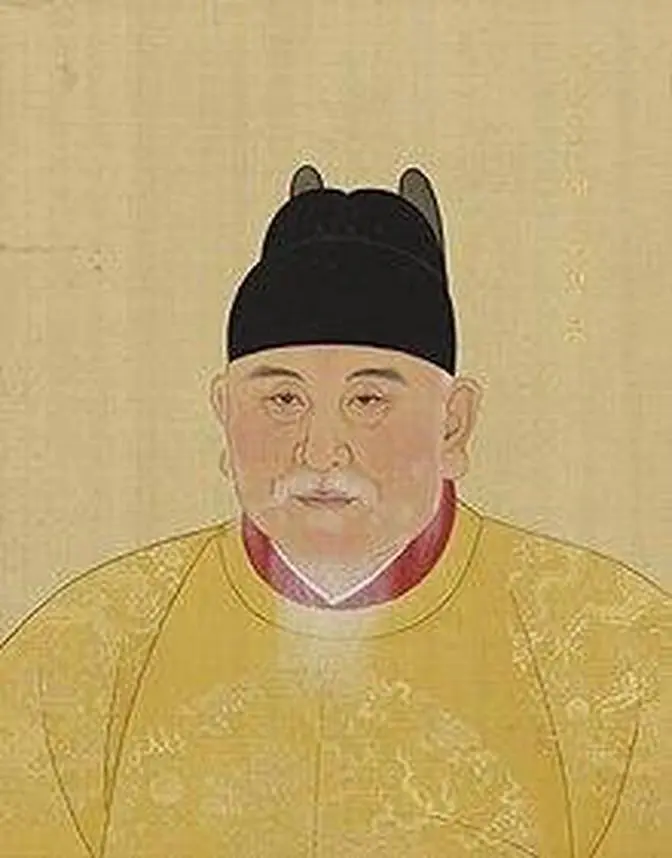

Consolidating control
Manicheanism, and White Lotus were prohibited and outlawed by Hongwu.
The Hongwu Emperor expected everyone to obey his rule and was infamous for killing many people during his purges. His tortures included flaying, and slow slicing. One of his generals, Chang Yuchun, carried out massacres in some places in Shandong and Hunan provinces to take revenge against people who resisted his army. As time went on, the Hongwu Emperor became increasingly fearful of rebellions and coups, even going so far as to order the execution of those of his advisers who dared criticise him. He was also said to have ordered the massacre of several thousand people living in Nanjing after having heard one talked about him without respect. In 1380, after much killing, a lightning bolt struck his palace and he stopped the massacres for some time, as he was afraid divine forces would punish him.
The Hongwu Emperor also noted the destructive role of court eunuchs under the previous dynasties. He drastically reduced their numbers, forbidding them to handle documents, insisting that they remain illiterate, and executing those who commented on state affairs. The emperor had a strong aversion to the eunuchs, epitomized by a tablet in his palace stipulating: "Eunuchs must have nothing to do with the administration". This aversion to eunuchs did not long continue among his successors, as the Hongwu and Jianwen emperors' harsh treatment of eunuchs allowed the Yongle Emperor to employ them as a power base during his coup. In addition to the Hongwu Emperor's aversion to eunuchs, he never consented to any of his marital relatives becoming court officials. This policy was fairly well-maintained by later emperors, and no serious trouble was caused by the empresses or their relatives.
The Hongwu Emperor attempted, and largely succeeded in, the consolidation of control over all aspects of government, so that no other group could gain enough power to overthrow him. He also buttressed the country's defences against the Mongols. He increasingly concentrated power in his own hands. He abolished the Chancellor's post, which had been head of the main central administrative body under past dynasties, by suppressing a plot for which he had blamed his chief minister. Many argue that the Hongwu Emperor, because of his wish to concentrate absolute authority in his own hands, removed the only insurance against incompetent emperors.
However, the Hongwu Emperor could not govern the sprawling Ming Empire all by himself and had to create the new institution of the "Grand Secretary". This cabinet-like organisation progressively took on the powers of the abolished prime minister, becoming just as powerful in time. Ray Huang argued that Grand-Secretaries, outwardly powerless, could exercise considerable positive influence from behind the throne. Because of their prestige and the public trust which they enjoyed, they could act as intermediaries between the emperor and the ministerial officials, and thus provide a stabilising force in the court. He executed tens of thousand officials and their relatives over sedition, treason, corruption and other charges.
In the Hongwu Emperor's elimination of the traditional offices of grand councilor, the primary impetus was Hu Weiyong's alleged attempt to usurp the throne. Hu was the Senior Grand Councilor and a capable administrator; however over the years, the magnitude of his powers, as well as involvement in several political scandals eroded the paranoid emperor's trust in him. Finally, in 1380, the Hongwu Emperor had Hu and his entire family arrested and executed on charges of treason. Using this as an opportunity to purge his government, the emperor also ordered the execution of countless other officials, as well as their families, for associating with Hu. The purge lasted over a decade and resulted in more than 30,000 executions. In 1390, even Li Shanchang, one of the closest old friends of the emperor, who was rewarded as the biggest contributor to the founding of the Ming Empire, was executed along with over 70 members of his extended family. A year after his death, a deputy in the Board of Works made a submission to the emperor appealing Li's innocence, arguing that since Li was already at the apex of honour, wealth and power, the accusation that he wanted to help someone else usurp the throne was clearly ridiculous. The Hongwu Emperor was unable to refute the accusations and finally ended the purge shortly afterwards.
Through the repeated purges and the elimination of the historical posts, the Hongwu Emperor fundamentally altered the centuries-old government structure of China, greatly increasing the emperor's absolutism.
The Hongwu Emperor was extremely authoritarian, a virtual dictator, and governed directly over all affairs. He wrote essays posted in every village throughout China warning the people to behave and of the horrifying consequences if they disobeyed. The 1380s writings of Hongwu are known as the "Great warnings" or "Grand Pronouncements". They were called "Ancestral injunctions". He wrote the Six Maxims which inspired the Sacred Edict of the Kangxi Emperor, 六諭 聖諭六言
Legal reform
The legal code drawn up in the time of the Hongwu Emperor was considered one of the great achievements of the era. The History of Ming mentioned that as early as 1364, the monarchy had started to draft a code of laws. This code was known as Code of the Great Ming or Laws of the Great Ming (大明律). The emperor devoted much time to the project and instructed his ministers that the code should be comprehensive and intelligible, so as not to allow any official to exploit loopholes in the code by deliberately misinterpreting it. The Ming code laid much emphasis on family relations. The code was a great improvement on the code of the Tang dynasty in regards to the treatment of slaves. Under the Tang code, slaves were treated as a species of domestic animal; if they were killed by a free citizen, the law imposed no sanction on the killer. Under the Ming dynasty, the law protected both slaves and free citizens.
Economic reform
Supported by the scholar-bureaucrats, he accepted the Confucian viewpoint that merchants were solely parasitic. He felt that agriculture should be the country's source of wealth and that trade was ignoble. As a result, the Ming economic system emphasised agriculture, unlike the economic system of the Song dynasty, which had preceded the Yuan dynasty and had relied on traders and merchant for revenues. The Hongwu Emperor also supported the creation of self-supporting agricultural communities.
However, his prejudice against merchants did not diminish the numbers of traders. On the contrary, commerce increased significantly during the Hongwu era because of the growth of industry throughout the empire. This growth in trade was due in part to poor soil conditions and the overpopulation of certain areas, which forced many people to leave their homes and seek their fortunes in trade. A book titled Tu Pien Hsin Shu, written during the Ming dynasty, gave a detailed description of the activities of merchants at that time.
Educational reforms
Quan Tang, the Minister of Justice, stood up against Hongwu over his command to downgrade Mencius.
At the Guozijian, law, math, calligraphy, equestrianism, and archery were emphasized by the Hongwu Emperor in addition to Confucian classics and also required in the Imperial Examinations. Archery and equestrianism were added to the exam by Hongwu in 1370 like how archery and equestrianism were required for non-military officials at the 武舉 College of War in 1162 by the Song Emperor Xiaozong. The area around the Meridian Gate of Nanjing was used for archery by guards and generals under Hongwu. A cavalry based army modeled on the Yuan military was implemented by the Hongwu and Yongle Emperors. Hongwu's army and officialdom incorporated Mongols.
Equestrianism and archery were favorite pastimes of He Suonan who served in the Yuan and Ming militaries under Hongwu. Archery towers were built by Zhengtong Emperor at the Forbidden City. Archery towers were built on the city walls of Xi'an erected by Hongwu.
Around 1384, the Hongwu Emperor ordered the Chinese translation and compilation of Islamic astronomical tables, a task that was carried out by the scholars Mashayihei, a Muslim astronomer, and Wu Bozong, a Chinese scholar-official. These tables came to be known as the Huihui Lifa (Muslim System of Calendrical Astronomy), which was published in China a number of times until the early 18th century,
Religious policy
The Hongwu Emperor ordered the construction of several mosques in Nanjing, Yunnan, Guangdong and Fujian provinces, and had inscriptions praising the Islamic prophet Muhammad placed in mosques. He rebuilt the Jinjue Mosque (literally meaning: Pure Enlightenment Mosque) in Nanjing and large numbers of Hui people moved to the city during his rule.
Chinese sources claim that the Hongwu Emperor had close relations with Muslims and had around ten Muslim generals in his military, including Lan Yu, Ding Dexing, Mu Ying, Feng Sheng and Hu Dahai, and that "His Majesty ordered to have mosques built in Xijing and Nanjing [the capitals], and in southern Yunnan, Fujian and Guangdong." He also personally wrote a 100 word praise (baizizan) on Islam, Allah and the Prophet Muhammad.
During the war fighting the Mongols, among the Ming Emperor Zhu Yuanzhang's armies was the Hui Muslim Feng Sheng.
Vietnam
The Hongwu Emperor was a non interventionist, refusing to intervene in a Vietnamese invasion of Champa to help the Chams, only rebuking the Vietnamese for their invasion, being opposed to military action abroad. He specifically warned future Emperors only to defend against foreign barbarians, and not engage in military campaigns for glory and conquest. In his 1395 ancestral injunctions, the emperor specifically wrote that China should not attack Champa, Cambodia or Annam (Vietnam). He was advised to concentrate on defending against the Rong and Di "Barbarians", rather than attacking. With the exception of his turn against aggressive expansion, much of Taizu's foreign policy and his diplomatic institutions were based on Yuan practice.
"Japanese" pirates
The Hongwu Emperor sent a harsh message to the Japanese that his army would "capture and exterminate your bandits, head straight for your country, and put your king in bonds". In fact, many of the "dwarf pirates" and "eastern barbarians" raiding his coasts were Chinese and the Hongwu Emperor's response was almost entirely passive. The Ashikaga shogun cheekily replied that "Your great empire may be able to invade Japan but our small state is not short of a strategy to defend ourselves" and the necessity of protecting his state against the Northern Yuan remnants meant that the most the Hongwu Emperor was able to accomplish was a series of "sea ban" measures. Private foreign trade was made punishable by death, with the trader's family and neighbors exiled; ships, docks, and shipyards were destroyed and ports sabotaged. The initial conception seems to have been to use the Japanese need for Chinese goods to force them to terms, but it was at odds with Chinese tradition and extremely counterproductive: it tied up resources (74 coastal garrisons were established from Guangzhou to Shandong, albeit mostly manned by local gangs) and limited tax receipts, impoverished and provoked both coastal Chinese and Japanese against the regime, increasing piracy, and offered too little, decennial tribute missions comprising only two ships, as a reward for good behavior and enticement for Japanese authorities to root out their smugglers and pirates. In fact, piracy dropped to negligible levels upon the abolition of the policy in 1568.
Nonetheless, the sea ban was added by the Hongwu Emperor to his Ancestral Injunctions and so continued to be broadly enforced through most of the rest of his dynasty: for the next two centuries, the rich farmland of the south and the military theaters of the north were linked only by the Jinghang Canal.
Byzantine Empire
The History of Ming, compiled during the early Qing dynasty, describes how the Hongwu Emperor met with an alleged merchant of Fu lin (拂菻; the Byzantine Empire) named "Nieh-ku-lun" (捏古倫). In September 1371, he had the man sent back to his native country with a letter announcing the founding of the Ming dynasty to his ruler (i.e. John V Palaiologos). It is speculated that the merchant was actually a former bishop of Khanbaliq (Beijing) called Nicolaus de Bentra, sent by Pope John XXII to replace Archbishop John of Montecorvino in 1333. The History of Ming goes on to explain that contacts between China and Fu lin ceased after this point, and diplomats of the great western sea (the Mediterranean Sea) did not appear in China again until the 16th century, with the Italian Jesuit missionary Matteo Ricci.
Development of dynasty
Although the Hongwu era saw the introduction of paper currency, its development was stifled from the beginning. Not understanding inflation, the Hongwu Emperor gave out so much paper money as rewards that by 1425, the state was forced to reintroduce copper coins because the paper currency had sunk to only 1/70 of its original value.
During the Hongwu era, the Ming Empire was characterised by rapid and dramatic population growth, largely due to the increased food supply from the emperor's agricultural reforms. By the end of the Ming dynasty, the population had risen by as much as 50%. This was stimulated by major improvements in agricultural technology, promoted by the pro-agrarian state which came to power in the midst of a pro-Confucian peasants' rebellion. During his reign, living standards also greatly improved.
Death
The Hongwu Emperor died on June 24, 1398 after reigning for 30 years at the age of 69. After his death, his physicians were penalized. He was buried at Ming Xiaoling Mausoleum on the Purple Mountain, east of Nanjing.
Assessment
Historians consider the Hongwu Emperor to have been one of the most significant emperors of China. As historian Ebrey puts it, "Seldom has the course of Chinese history been influenced by a single personality as much as it was by the founder of the Ming Dynasty, Zhu Yuanzhang." His rise to power was fast despite his having a poor and humble origin. In 11 years, he went from being a penniless monk to the most powerful warlord in China. Five years later, he became emperor of China. Simon Leys described him this way:
'an adventurer from peasant stock, poorly educated, a man of action, a bold and shrewd tactician, a visionary mind, in many respects a creative genius; naturally coarse, cynical, and ruthless, he eventually showed symptoms of paranoia, bordering on psychopathy.'
Parents and ancestors
- Great-great-great-grandfather: Zhu Zhongba (朱仲八)
- Great-great-grandfather: Zhu Bailiu (朱百六), posthumously honored as Emperor Xuan (玄皇帝) with the temple name Dezu (德祖).
- Great-great-grandmother: Lady Hu (胡氏), posthumously honored as Empress Xuan (玄皇后).
- Great-grandfather: Zhu Sijiu (朱四九), posthumously honored as Emperor Heng (恆皇帝) with the temple name Yizu (懿祖).
- Great-grandmother: Lady Hou (侯氏), posthumously honored as Empress Heng (恆皇后).
- Grandfather: Zhu Chuyi (朱初一), posthumously honored as Emperor Yu (裕皇帝) with the temple name Xizu (熙祖).
- Grandmother: Lady Wang (王氏), posthumously honored as Empress Yu (裕皇后).
- Father: Zhu Shizhen (朱世珍, original name Zhu Wusi 朱五四) (1283–1344), posthumously honored as Emperor Chun (淳皇帝) with the temple name Renzu (仁祖).
- Mother: Chen Erniang, posthumously honored as Empress Chun (淳皇后).
Zhu's parents, grandparents, great-grandparents and great-great-grandparents were given posthumous imperial titles.
The great-great-grandfather of the Emperor was given the posthumous name of Emperor Xuan and the temple name Dezu, and the great-great-grandmother was given the title of Empress Xuan. The great-grandfather was given the posthumous name of Emperor Heng and the temple name Yizu, and the great-grandmother was given the title of Empress Heng. The grandfather of the Emperor was given the posthumous name of Emperor Yu and the temple name Xizu, and the grandmother was given the title of Empress Yu. The father of the Emperor was given the posthumous name of Emperor Chun and the temple name Renzu, and the mother of the Emperor, whose maiden name was Chen, was given the title of Empress Chun.
Consorts
The Hongwu Emperor treated his ladies-in-waiting badly, forcing them to live in the palaces for life without freedom and behind cemented walls. He massacred thousands of them. He restricted the freedom of many concubines and killed several. He also forced many of them to commit suicide and ordered that they will be buried with him after his death. He had several Korean concubines, including Lady Han, who bore him a son, and Lady Gong.
Sons
One of the Princes was noted for delinquent behavior. Zhu Shuang 朱樉 (Prince Min of Qin 秦愍王) while he was high on drugs, had some Tibetan boys castrated and Tibetan women seized after a war against minority Tibetan peoples and as a result was reprimanded after he died from overdose. 征西番,將番人七八歲幼女擄到一百五十名,又將七歲,八歲,九歲,十歲男童,閹割百五十五名,未及二十日,令人馱背赴府,致命去處所傷未好,即便挪動,因傷致死著大
Hongu had a "mirror" 宗藩昭鑒錄 宗藩昭鉴录 宗藩昭鑑錄 written for Ming Princes to educate them and stop misbehavior after having to discilpine his nephew Zhu Wenzheng's son, grandnephew Zhu Shouqian.
Comments