
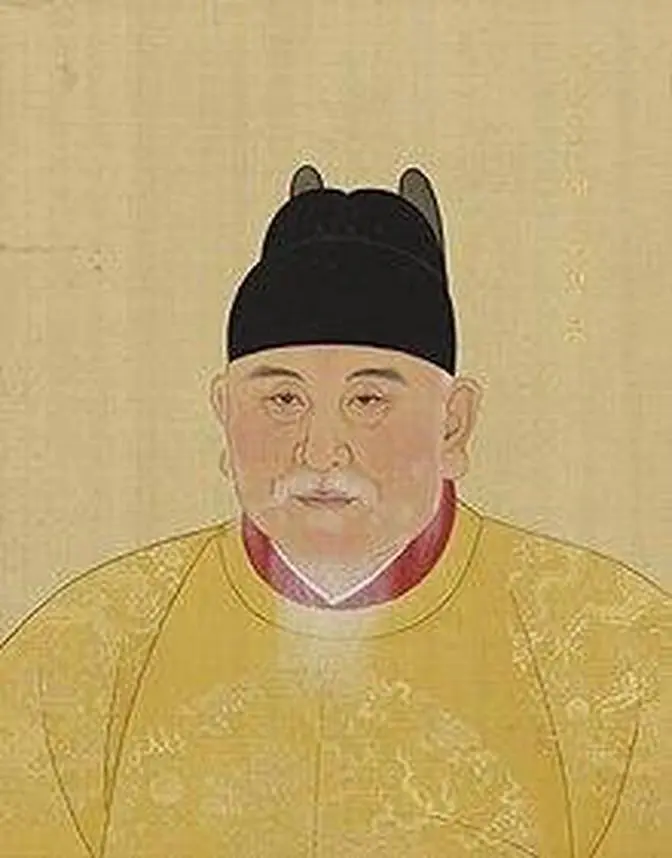

Predecessor Dynasty establishedRole PrinceName Hongwu EmperorSuccessor Jianwen EmperorSuccessor Jianwen EmperorRoyal line Ming dynasty
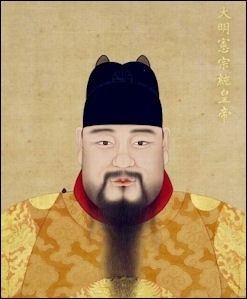
Reign 23 January 1368 – 24 June 1398Reign 14 September 1368 – 24 June 1398Predecessor Emperor Huizong of YuanDied June 24, 1398, Nanjing, ChinaDescendants Yongle Emperor, Zhu Biao, Mu YingSpouse Beauty Lady Choi, concubinePartner Li Jiehao, concubine, Consort Xian, concubineSimilar People Yongle Emperor, Liu Bowen, Jianwen Emperor, Chen Youliang, Xu DaThe Hongwu Emperor (21 October 1328 – 24 June 1398), personal name Zhu Yuanzhang (formerly Romanized as Chu Yuan-Chang), was the founder and first emperor of China's Ming dynasty.
In the middle of the 14th century, with famine, plagues, and peasant revolts sweeping across China, Zhu Yuanzhang rose to command the force that conquered China and ended the Mongol-led Yuan dynasty, forcing the Mongols to retreat to the Central Asian steppes. Zhu claimed the Mandate of Heaven and established the Ming dynasty at the beginning of 1368, later in the same year his army occupied the Yuan capital, Khanbaliq (present-day Beijing). Trusting only in his family, he made his many sons powerful feudal princes along the northern marches and the Yangtze valley. Having outlived his first successor, the Hongwu Emperor enthroned his grandson via a series of instructions; this ended in failure, when the Jianwen Emperor's attempt to unseat his uncles led to the Ming Yongle Emperor (r. 1402–1424)".
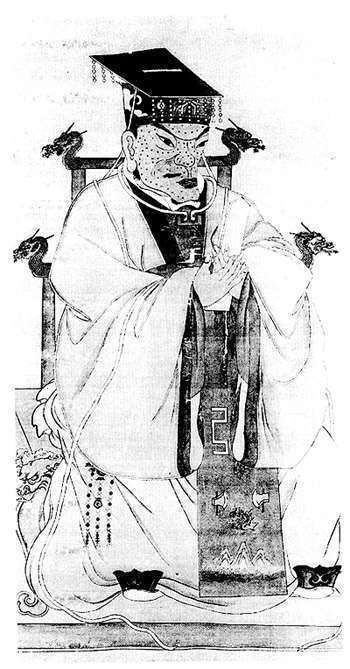
Most of the historical sites related to the Hongwu Emperor are located in Nanjing, the original capital of the Ming dynasty.
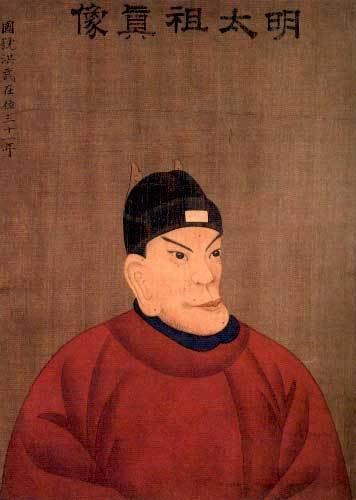
Early life

Zhu was born into a desperately poor peasant tenant farmer family in Zhongli Village in the Huai River plain, which is in present-day Fengyang, Anhui Province. His father was Zhu Shizhen (朱世珍, original name Zhu Wusi 朱五四) and his mother was Chen Erniang. He had seven older siblings, several of whom were "given away" by his parents, as they did not have enough food to support the family. When he was 16, severe drought ruined the harvest where his family lived. Subsequently, famine killed his entire family, except one of his brothers. He then buried them by wrapping them in white clothes.
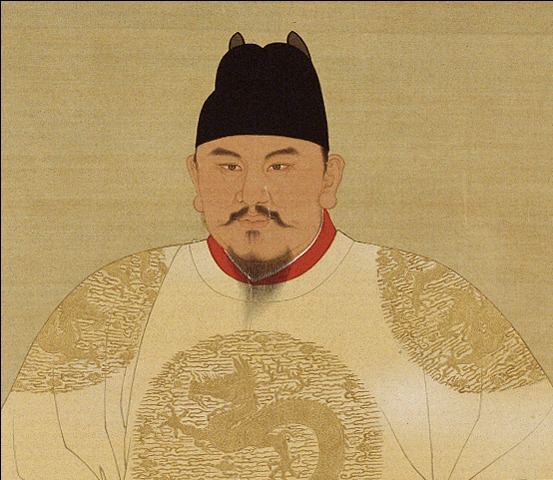
Destitute, Zhu accepted a suggestion to take up a pledge made by his brother and became a novice monk at the Huangjue Temple, a local Buddhist monastery. He did not remain there for long, as the monastery ran short of funds, and he was forced to leave.
For the next few years, Zhu led the life of a wandering beggar and personally experienced and saw the hardships of the common people. After about three years, he returned to the monastery and stayed there until he was around 24 years old. He learned to read and write during the time he spent with the Buddhist monks.
Rise to power
The monastery where Zhu lived was eventually destroyed by an army that was suppressing a local rebellion. In 1352, Zhu joined one of the many insurgent forces that had risen in rebellion against the Mongol-led Yuan dynasty. He rose rapidly through the ranks and became a commander. His rebel force later joined the Red Turbans, a millenarian sect related to the White Lotus Society, and one that followed cultural and religious traditions of Buddhism, Zoroastrianism and other religions. Widely seen as a defender of Confucianism and neo-Confucianism among the predominant Han Chinese population in China, Zhu emerged as a leader of the rebels that were struggling to overthrow the Yuan dynasty.
In 1356, Zhu, and his army conquered Nanjing, which became his base of operations, and the capital of the Ming dynasty during his reign. Zhu's government in Nanjing became famous for good governance, and the city attracted vast numbers of people fleeing from other, more lawless regions. It is estimated that Nanjing's population increased by 10 times over the next 10 years. In the meantime, the Yuan government had been weakened by internal factions fighting for control, and it made little effort to retake the Yangtze River valley. By 1358, central and southern China had fallen into the hands of different rebel groups. During that time the Red Turbans also split up. Zhu became the leader of a smaller faction (called "Ming" around 1360), while the larger faction, under Chen Youliang, controlled the center of the Yangtze River valley.
Zhu was able to attract many talents into his service. One of them was Zhu Sheng (朱升), who advised him, "Build high walls, stock up rations, and don't be too quick to call yourself a king." Another, Jiao Yu, was an artillery officer, who later compiled a military treatise outlining the various types of gunpowder weapons. Another one, Liu Bowen, became one of Zhu's key advisors, and edited the military-technology treatise titled Huolongjing in later years.
Starting from 1360, Zhu, and Chen Youliang fought a protracted war for supremacy over the former territories controlled by the Red Turbans. The pivotal moment in the war was the Battle of Lake Poyang in 1363, one of the largest naval battles in history. The battle lasted three days and ended with the defeat and retreat of Chen's larger navy. Chen died a month later in battle. Zhu did not participate personally in any battles after that and remained in Nanjing, where he directed his generals to go on campaigns.
In 1367, Zhu's forces defeated Zhang Shicheng's Kingdom of Dazhou, which was centered in Suzhou and had previously included most of the Yangtze River Delta, and Hangzhou, which was formerly the capital of the Song dynasty. This victory granted Zhu's government authority over the lands north and south of the Yangtze River. The other major warlords surrendered to Zhu and on 20 January 1368, Zhu proclaimed himself Emperor of the Ming dynasty in Nanjing and adopted "Hongwu" (lit. "vastly martial") as his era name. His dynasty's mission was to drive away the Mongols and restore Han Chinese rule in China.
In 1368, Ming armies headed north to attack territories that were still under Yuan rule. The Mongols gave up their capital, Khanbaliq (present-day Beijing), and the rest of northern China in September 1368 and retreated to Mongolia. On 15 October 1371, one of the Hongwu Emperor's sons, Zhu Shuang, was married to the sister of Köke Temür, a Bayad general of the Yuan dynasty.
The Ming dynasty defeated Ming Yuchen's Xia polity, which ruled Sichuan.
The Ming army captured the last Yuan-controlled province of Yunnan in 1381, and China was unified under Ming rule.
Reign
Under the Hongwu Emperor's rule, the Mongol, and other foreign bureaucrats, who dominated the government during the Yuan dynasty along with Northern Chinese officials, were replaced by Han Chinese officials. The emperor re-instituted, then abolished, then restored the Confucian civil service imperial examination system, from which most state officials were selected based on their knowledge of literature and philosophy. The Ming examination curriculum followed that set by the Yuan in 1313: a focus on the Four Books over the Five Classics, and the commentaries of Zhu Xi. The Confucian scholar-bureaucrats, previously marginalised during the Yuan dynasty, were reinstated to their predominant roles in the government.
Mongol-related things, including garments and names, were discontinued from use and boycotted. There were also attacks on palaces and administrative buildings previously used by the rulers of the Yuan dynasty. But many of Taizu's government institutions were actually modelled on those of the Yuan dynasty: community schools required (not necessarily successfully) for primary education in every village are one example. ' Hongwu founded Qinhuai.
Land reform
As the Hongwu Emperor came from a peasant family, he was aware of how peasants used to suffer under the oppression of the scholar-bureaucrats, and the wealthy. Many of the latter, relying on their connections with government officials, encroached unscrupulously on peasants' lands and bribed the officials to transfer the burden of taxation to the poor. To prevent such abuse, the Hongwu Emperor instituted two systems: Yellow Records and Fish Scale Records. They served both to secure the government's income from land taxes and to affirm that peasants would not lose their lands.
However, the reforms did not eliminate the threat of the bureaucrats to peasants. Instead, the expansion of the bureaucrats and their growing prestige translated into more wealth, and tax exemption for those in the government service. The bureaucrats gained new privileges, and some became illegal money-lenders and managers of gambling rings. Using their power, the bureaucrats expanded their estates at the expense of peasants' lands through outright purchase of those lands, and foreclosure on their mortgages whenever they wanted the lands. The peasants often became either tenants, or workers, or sought employment elsewhere.
Since the beginning of the Ming dynasty in 1357, great care was taken by the Hongwu Emperor to distribute land to peasants. One way was by forced migration to less-dense areas. Some of those people were tied to a pagoda tree in Hongdong (洪洞大槐樹) and moved. Public works projects, such as the construction of irrigation systems, and dikes, were undertaken in an attempt to help farmers. In addition, the Hongwu Emperor also reduced the demands for forced labour on the peasantry. In 1370, the Hongwu Emperor ordered that some lands in Hunan and Anhui should be given to young farmers who had reached adulthood. The order was intended to prevent landlords from seizing the land, as it also decreed that the titles to the lands were not transferable. During the middle part of his reign, the Hongwu Emperor passed an edict, stating that those who brought fallow land under cultivation could keep it as their property without being taxed. The policy was well received by the people and in 1393, cultivated land rose to 8,804,623 ching and 68 mou, something not achieved during any other Chinese dynasty.
The Hongwu Emperor instigated the planting of 50 million trees in the vicinity of Nanjing, reconstructing canals, irrigation, and transporting southern people to the north for repopulation. He successfully managed to increase the population from 60 to 100 million.
Military
The Hongwu Emperor realised that the Mongols still posed a threat to China, even though they had been driven away after the collapse of the Yuan dynasty. He decided to reassess the orthodox Confucian view that the military was an inferior class to the scholar bureaucracy. He kept a powerful army, which in 1384 he reorganised using a model known as the weisuo system (simplified Chinese: 卫所制; traditional Chinese: 衛所制; literally: "guard battalion"). Each military unit consisted of 5,600 men divided into five battalions, and ten companies. By 1393 the total number of weisuo troops had reached 1,200,000. Soldiers were also assigned land on which to grow crops, whilst their positions were made hereditary. This type of system can be traced back to the fubing system (Chinese: 府兵制) of the Sui and Tang dynasties.
Training was conducted within local military districts. In times of war, troops were mobilised from all over the empire on the orders of the Ministry of War, and commanders were appointed to lead them to battle. After the war, the army was disbanded into smaller groups and sent back to their respective districts, and the commanders had to return their authority to the state. This system helped to prevent military leaders from having too much power. The military was under the control of a civilian official for large campaigns, instead of a military general.
Nobility
When the Ming dynasty emerged Emperor Zhu Yuanzhang's military officers, who served under him, were given noble titles which privileged the holder with a stipen but in all other aspects was merely symbolic. Mu Ying's family was among them. Special rules against abuse of power were implemented on the nobles.
Comments