
Who Was Caesar Augustus and How Did He Transform Rome?
26 Video Views·Dec 21, 2022
Our show is sponsored by Memoria Press. Check out our website for a complete lineup of classical
Christian curriculum for all ages. In 47 BC, a promising young Roman statesman set sail for
Hispania. He had only recently donned the toga, the Roman sign of manhood, at the age of 16 and
taken on ambitious responsibilities. Despite a shipwreck and getting lost deep in enemy territory,
he persevered and reached his great-uncle Julius Caesar and fought alongside the self-proclaimed
dictator in one of his many conquests as a key ally and courageous warrior. This young man was
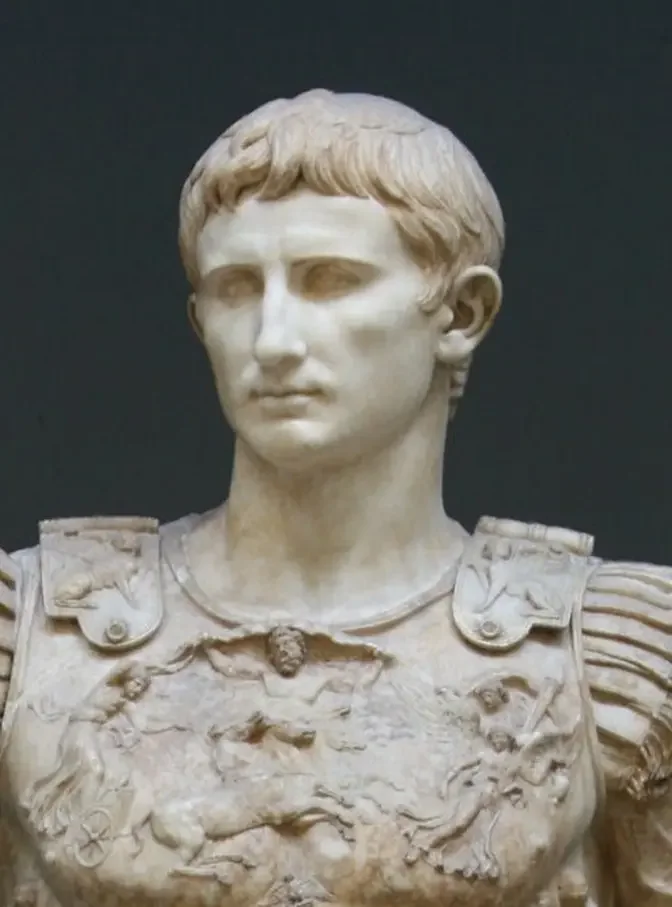
Gaius Octavius Thurinus, later known in history as the first Roman emperor, Caesar Augustus.
The bravery and tenacity of Octavius so impressed his great-uncle that Julius Caesar named him his
With his father a senator and governor in the Roman Republic, Octavius was now ideally placed
to grow into one of the most powerful positions in the ancient world. Lo and behold, the infamous
Ides of March saw the assassination of Julius Caesar in 44 BC, leaving Octavius on the brink
of inheriting the power of the Roman throne. However, the story of Octavius, the story of
great Caesar Augustus, is not one of simple succession. It's a story of a civil war,
a civil war that pitted duty against disregard, devotion against negligence, loyalty against
treachery. In a time of strife and infighting, Rome needed a hero to restore respect for its
culture, its government, and its notion of family. It needed a leader to restore pietas,
the virtue of patriotism and devotion for Rome and its countrymen.
Through patience and providence, Octavius saw Rome's glory restored, improving the conditions
of commoners, enhancing infrastructure, promoting religion and art, and establishing civil service.
In spite of every obstacle, Octavius transformed a rickety republic into one of the most enduring
empires in the history of classical civilization. How did he do it? Stick with us and you'll soon
find out. This episode is brought to you by Famous Men of Rome, a collection of stories
gathered from the chronicles of history and myth. It's a perfect addition for parents and teachers
looking for a better classical curriculum for their homes and classrooms. Shortly after Caesar's
assassination, Octavius began to take an active part in the political proceedings of the Roman
Republic. He quickly became frustrated by the state of affairs left behind after his stepfather's
death, with squabbling senators all vying for petty political power. Octavius wished to change
this aspect of Rome, to bring an era of peace and stability to a country steeped with infighting,
and to return Rome to the original ideals that made it a world power. A major obstacle to
achieving all this was the vehement veteran named Mark Antony. At the time, Antony was wrestling for
control of the empire with much of the Roman Senate. He had been an intimate friend of Caesar
and a respected military commander, and even though he had obtained a great deal of power,
Rome didn't like him very much. As Caesar's right-hand man, Antony's presence served as a
living reminder to those in the Senate of the former leader they had assassinated.
On top of that, Antony was more interested in his Egyptian engagements, but more on that later.
Though the Senate had no plans to kill Antony as they had Caesar, they would do whatever it took
to get rid of him. Octavius used this to his advantage, and ingratiated himself with much
of the Senate and city populace. He celebrated public games and gave both money and property
to the common man from his own pockets. Antony was loathed to bequeath his friend's legacy to
a 19-year-old, so he used what power he had to prevent Octavius from being elected to public
office and to block his inheritance from Caesar. This led to a growing resentment in Octavius
and a plan to bring about Antony's downfall. Antony was eventually ousted from Rome by the
Senate. He was granted parts of Gaul and northern Italy as his province, and despite the obstacles
laid down by Antony, Octavius advanced to political offices until he obtained command of an army.
With his newfound power, Octavius immediately traveled to northern Italy to confront his
rival. The opposing armies began a fierce battle that reddened the northern plains with blood of
soldiers. When the fighting had gone on for some time, and neither side emerged the clear victor,
Antony retreated to consolidate his forces. Octavius, meanwhile, returned to Rome with
the prestige and experience necessary to be seen as Caesar's successor. However,
Octavius was not the Augustus we know just yet. Octavius had established himself as a
force to be reckoned with, this is true, but Antony remained at large with powerful resources at his
command. Rather than choose to charge out and attack Antony head-on, once again, Octavius
decided for a different approach that signaled his growth in forethought. He reached out to Antony,
feigning friendship, and proposed to unite their forces along with another general called Lepidus.
The three men agreed to a plan by which they would hunt down Caesar's assassins and rule the Roman
territories together. This government was called the Second Triumvirate. Antony was given the east,
Lepidus the south, and Octavius the west, placing Octavius closest to the Roman capital. After
defeating Brutus and his rebel army in Greece, the triumvirs each settled into their roles managing
the Roman provinces. Antony married the sister of Octavius, endeavoring to formally reconcile
their relationship, while Octavius maintained a close eye on his fellow triumvirs, waiting to see
if Lepidus or Antony would give him cause to take power for the good of Rome. Soon enough, Lepidus
became unsatisfied with his amount of authority and attempted a revolt in Sicily. Unfortunately
for him, Lepidus lacked the loyalty of his soldiers and was soundly defeated. Octavius
showed mercy to Lepidus by allowing him to retain a lower public office, and showed mercy to his
soldiers by graining land to many who fought in Sicily. But while Octavius was distracted by dilemmas
at home, Antony was creating a far bigger one abroad. As ruler of the east, Antony had been
wooing the famous queen of Egypt, Cleopatra, for some time. This posed a problem. As you'll remember,
Antony was married to the sister of Octavius, and an affair with a foreign ruler would give Octavius
and the Roman Senate good reason to expel Antony from the triumvirate. Furthermore, Octavius managed
to produce documents that found Antony delegating large sections of Roman territory to Cleopatra's
rule, while also using Egypt as a source of supplies and funds for a future war against Octavius.
This was undeniable treason, both against the family of Octavius and Rome itself. And it's
important to remember that family, in addition to piety, was one of the pillars that Rome was built on.
Octavius cherished these foundations and embodied this notion of family and loyalty,
both through military defense of his country and the lavish sums he had committed to the adornment
of Rome. Antony embodied the exact opposite, siding with a foreign ruler and committing a public
extramarital affair, proving to Rome who the true protector of Pietas actually was. As such, Octavius
stirred up public clamor against Egypt easily. With Antony's affair and territorial gifts to
Cleopatra, Rome was quite angry. Octavius then declared war against Cleopatra and by proxy Antony,
and sailed from Italy with experienced military advisors and a massive fleet for one last
decisive battle. Antony would not go down without a fight, but he faced huge disadvantages. For one,
Antony's military experience did not translate to naval prowess. For another, Octavius was two steps
ahead of Antony. He had employed an expansive propaganda campaign against Antony ahead of their
fight, fatally damaging his reputation and relationships with fellow Romans. And so, with no
virtues or history of helping the Roman populace, Antony stood little chance. The fleets of Octavius
and Antony clashed in the infamous Battle of Actium. For several hours, the fighting raged,
screaming men, crashing waves, clashing swords, and flying arrows everywhere. Ultimately, the naval
superiority of Octavius prevailed and the morale of Antony's fighting forces deteriorated under
the leader who allied himself with a foreign power. With their fleet nearly destroyed, Cleopatra
and Antony retreated with their remaining forces. The rest either surrendered or defected to Octavius.
Seeing no hope of escape, having lost his political career, and believing Cleopatra had already died,
Mark Antony committed suicide. Cleopatra followed suit soon after, ending the Ptolemaic dynasty
and surrendering Egypt to Roman imperial rule. Octavius would continue to fight for several years
in different parts of the Roman territories to strike down any remaining opposition. But he had
at last arrived at the inheritance he had fought for since he first donned a toga. He was in command
of the most powerful army in the world, he was supported by most of the Roman government,
and he was greatly loved by the Roman people for all his military success. The only question was,
what next? Octavius first named himself a mere consul rather than an emperor and started reforming
his battle-worn country slowly. He secured his military rule by seizing captured Egyptian
treasures and using it to pay his soldiers instead of filling his coffers, an act that
secured the bonds of loyalty. He instituted a landmark building program, improving and beautifying
the city of Rome with temples and forums devoted to the gods, cementing the heritage and ideals of
Roman values in the hearts and minds of the people. Octavius even passed laws that hearkened
back to the traditions of the Roman Republic, which pacified the Roman senate and ruling classes.
The senate was so receptive to the actions of Octavius that they conferred on him the title
Augustus, meaning sacred, leaving no question regarding the power of his position.
And so the newly crowned Caesar Augustus soon gained total control of what was unquestionably
now the Roman Empire. Caesar Augustus accomplished many feats during his 41-year reign that solidified
Rome as the dominant power in the classical world. He doubled the size of the empire from Britain to
India. He expanded the Roman network of roads, increasing travel and trade. He encouraged
literature and art and was himself an author. He distributed corn and money to the poor and
and gave the people grand exhibitions to amuse them. He even founded a postal service and
established a permanent police and fire department in the city to maintain order.
Through all of this, Augustus proved his patriotic veneration of Rome,
his pietas, by reviving the ancient culture that built Rome in the first place.
And though we ourselves cannot imagine fighting ancient battles or ruling archaic kingdoms,
we can understand the ideas of devotion, loyalty, and family. Octavius grappled with many problems
in his youth, and though his problems extended to bloody civil wars and ours might not, we all find
ourselves in complicated situations that pit our own personal wants against duty, devotion,
and goodwill to those around us. In the end, allowing oneself to learn from those who both
to protect the virtue of pietas in the past might just make our future a little more united.
Caesar Augustus died in AD 14, his empire secured and his people content. Most historians agree
that the strong and stable rule of Augustus is the primary reason for the Pax Romana,
or Roman peace, that began with his reign and lasted for 200 years. This time period was a
golden age of order, prosperity, and expansion that far outdid the success of the Roman Republic.
Among his last thoughts are words that solidify his intention and desire as leader of Rome,
I found Rome a city of clay, I leave it to you of marble. Thank you for watching this episode
of Famous Men of Virtue. If you enjoyed this episode, go ahead and press the thumbs up button
down below. And if you'd like to learn more about Augustus and characters like him, check out
Famous Men of Rome right now from Memoria Press.