
What to plant in January in TEXAS!
Hi guys, it's Vanessa coming to you from the garden just northwest of Austin, Texas, in
the Burbs, which is the Central Texas area.
And today I'm going to give you a full guide on what you can plant in January in Central
Texas and what you can do to prepare your garden for an amazing spring season, keeping
in mind that we are about to hit the coldest timeframe of the year for our region.
In this video, we'll talk about day length and how this affects how fast and how slow
your plants grow.
How to prepare for hard frost that we get a couple times here in Texas, what you can
direct sow, what you can start inside in a grow room safely, and how you can protect
your soil and your perennial plants, including root trees and trees trees during this timeframe
to make sure that your garden is ready, set, and thriving as soon as spring starts to peak
around the corner.
Now I know the burning question on everyone's mind is what seeds can I plant?
And it's not that simple because we have now entered the Persephone period.
And that is actually the period of time where the daylight link is the shortest.
Even though we've just passed the winter solstice, the daylight in our area is going to be about
10 and a half hours.
And it kind of just stays around that until we get into the February timeframe where it
starts to creep up a little bit quicker into the 11 to 11 and a half hour range.
I know it may not seem like that doesn't make a big difference when it comes to how fast
your plants will grow, but it really does.
So if you want to plant any of the seeds outside right now that I'm going to list off, just
know that you are investing in early spring germination and potentially blooms, but you
may not be seeing a lot of growth and progress happening over the period of the next four
to six weeks.
The Greek mythology behind the name for this time period is that Persephone was the daughter
of Demeter, Demeter being the goddess of fall.
At one point, Hades lusted after Persephone, which was the goddess of spring and cracked
open the earth and dragged her down to the underworld.
Demeter grieved the earth died, winter hit.
Over a period of time, Zeus became aware of this imbalance and offered a deal to Persephone
and Demeter that for half of the year, Persephone would live above ground.
And then for the other half, she would go back down to her rightful place as Hades' wife.
Now we recognize this as the timeframe where the least amount of sunlight and warmth is
seen across a lot of the Northern hemisphere, whether it be in the Northern part of the
U.S. or the Southern part, we have a different amount of daily, but it still affects our
plants the same.
And the biggest thing that plants actually need is sun.
In Texas, we think of the sun in a negative way a lot of the time, but it is necessary
at a base level for plants to photosynthesize and grow.
So during the Persephone period, while Persephone is not here, you will see plants stay in a
state of suspended animation.
You may see some growth happen and you might see some germination happen, but if you plant
things like beets and carrots and leafy greens right now, you will notice that although they
may germinate, they will almost seem to take forever to grow.
It's like watching a pot of water come to boil, except for your stove isn't hot enough
to get it to the boiling point.
In the information in this video, I will have a link to a really cool website that allows
you to put in your zip code and your area to track the day length at any given time
of the calendar year so that you can get a visualization on how short the days currently
are and how they will continue to get longer.
Because we have passed the winter solstice, which was December 21st.
The solstice is something that we celebrate in my household because it means the return
of the sun, but that does not happen very quickly.
Although it does not mean that we're losing any more daylight.
It is very small increments of daylight that we receive over the next four to six weeks.
Is it worth it to still plant things?
Yes, because when it is time and the days do get longer, the plants will know what to
do.
When Persephone begins to return and spring comes around, it's really a great timeframe
for you to sneak in an extra round of cooler weather, veggies and flowers before our intense
heat in the Texas summer months really starts to set in.
And sometimes by late April, going into May, a lot of these early spring plants will start
to struggle and become pest magnets because of the stress.
Let's go over the list of things that you can direct.
So outside and what you can and should start inside.
If you are going to do seed starting inside to get ready for the spring right now is a
great time to plant lettuce and you could have been planting lettuce since October.
We've had some warm days in December, but lettuce does not need as much sunlight as
other things.
So it will tend to do better and is pretty frost tolerant from variety to variety.
And you can direct sow lettuce in most areas of the garden.
The one trick with lettuce is to make sure your seeds aren't super old because the viability
of the seeds goes down a lot faster than other types of veggie seeds and to sow them on the
surface of your soil.
They need light to germinate and so although they don't need really more than five to six
hours to grow properly, they will germinate a lot quicker for you if you don't cover up
your freshly sowed seeds with a thick layer of mulch.
Everything you see growing in the background here will mostly be harvested in the next
week and a half because we finally reached peak maturity on a lot of my cabbages and
my broccolis, which is right on time because we may have some very cold weather very soon
in the forecast.
But that doesn't mean that I couldn't technically re-sow a lot of these things now in order
to try to get an early spring harvest before I need the room out in the garden for things
like tomatoes or things going into the summertime.
Things like tatsoi, mustard greens, bok choy, they all do pretty well in the cold weather,
mustard being very tolerant of very cold conditions, and spinach can be tossed out indiscriminately
as a cover crop technically.
It will take a while to get going, but once it gets going you can just pick and pick and
pick to your heart's delight until it gets too hot and then the spinach will kind of
just taste gross.
But you can also dig a hole in the middle of a patch of spinach and bury a tomato plant
if you're not quite ready to let go of your spinach yet and it's not too hot.
I sow carrots pretty much from August all the way until May and sometimes later than
May, but carrots really need the sun to grow.
They are going to grow really slow this time of year and young carrot sprouts are very
tender if you've never seen them, so if we get a really hard frost it will melt those
baby sprouts.
So you can see I have established carrots here, but then I have newly sprouting baby
carrots right here and these guys are so tender they're definitely going to need to either
be mulched well or covered when it comes to our next frost.
But right now is a good time to at least make a spot for your carrot seeds.
Go ahead and sow some if you want.
Mulch them really, really well and keep them really well watered and you can also plant
leek seeds and celery seeds, which is what I love to do this time of year, which will
leave me with a nice early spring harvest of some mirepoix that I like to chop up and
add to my fridge, add to my freezer or my dehydrator and have a nice stash for making
soups all year round because we are a summer soup household.
As far as beets goes, this is a little controversial of me to say.
Beets will do okay this time of year, but when it comes down to our really hard frost
that we might get in the next few weeks, beets tend to melt.
They do not do as well as carrots.
My top veggies that you could safely plant right now that I know will withstand some
pretty hard frost are going to be spinach, leeks, garlic, Tuscan kale, mustard greens
and carrots.
And if you're overwhelmed with the idea of actually planting food right now, you can
still plant a cover crop.
I have Elbon rye and mustard that will help reduce nematodes and build up my soil over
the next few months and you can still plant that right now.
If you have already planted your bulbing onions from a live plant, they may look like this.
You'll want to cover them pretty well with mulch and a frost cloth during a frost, but
if you haven't planted them, just hold off until our temps aren't as hard freezing.
Right now is a really great time to start a lot of your herbs.
Now you can direct sow herbs outside and in fact, some herbs like St. John's wort really
like to be cold stratified, which means that they need a period of cold and damp to be
able to germinate properly or just get better germination in general.
So you can treat them like a wildflower and plant them outside and hope that you can keep
track of these tiny little sprouts, but I like to put them in a wet paper towel in a
baggie in my fridge for 30 days and then go ahead and get them started in February.
And that usually gives me really good germination.
If you happen to have your seeds now and you want to go ahead and just try your hand, it's
okay.
Test out germinating a few of them.
For medicinal herbs, I find the cold stratification method really does a lot better.
I find that herbs like oregano, parsley, and thyme do really well started inside this time
of year and then transplanted out within about four to six weeks.
You can try your hand at direct sowing them.
Right now is a good time to start considering what herbs you may want to get started from
seed, whether medicinal or culinary.
As far as starting things inside goes, it would be a great time for you to start really
spicy peppers inside.
Now, jalapeno is not really considered a very spicy pepper, but most spicy, spicy peppers
take a lot longer to germinate and get going.
So it is a good time to get that early three to four extra weeks in to get some really
spicy pepper varieties like ghost peppers, habaneros, scorpion peppers, get those going
now because you'll have time for them to not be too big inside before they need to go
outside. When our last frost threat has passed, peppers that aren't as spicy can be
started sometime over the next three to four weeks and you'd still be doing good.
But with peppers and eggplants, they tend to take the longest.
So you really aren't ever going to get in a pickle if you start them too early.
Snap peas and snow peas are really one of the more difficult things to grow in Texas, I
feel. So what I do instead of trying to time it perfectly is I go ahead and sow a ton of
snow peas and snap peas throughout my garden between January and early February.
And they tend to come up when it's warm enough and bright enough outside and we get a little
bit of precipitation going into the early spring.
And they tend to take off pretty quickly by then because the Persephone period will have
ended and our day length is getting rapidly longer.
So they will take off, cover a small trellis wherever I put them, and then I get quite
a bit of harvest in a very short time frame.
And then as soon as it gets too hot for more than three to four days, they get powdery
mildew, aphids, and then they're done, leaving room for me to put in some beautiful,
ready to go tomato plants at that stage.
Cold weather flowers.
Now, whether you are a flower gardener or you're somebody who is cut flower curious,
it's important to know that there are a variety of more of the cottage like flowers
that we see in videos that will not grow through the summer heat for us here in Texas.
But you can get them started now, whether that be direct sowing outside right now and
making sure that the young sprouts get covered when and if we get a really hard frost, or
you can start these inside and transplant them out about five to six weeks before our
last frost, which is usually in the February timeframe.
So not far off.
Snapdragons really cannot handle the heat, but if they do get a period of cold, it will
make the stems on the flowers quite a bit longer, making them more favorable for bouquets.
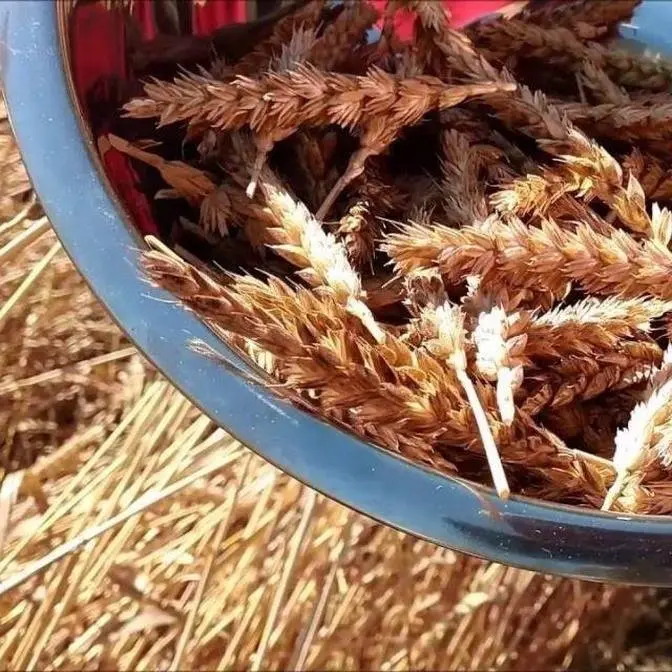
Straw flowers are something I love to grow because the head of the flower actually feels
and looks like this.
So it can be preserved for years and use in dried bouquets throughout the summer.
So even if you can't grow straw flowers during the summertime, you can harvest them and have
them to add to your summer bouquets.
And bachelor buttons or cornflower are not a native flower and they can be invasive if
you don't take care of them, but they do have medicinal purposes.
They're beautiful, dried, and they are an edible flower.
Technically, bachelor buttons really do best, in my opinion, when they're direct sown outside
this time of year.
They can germinate and then get ready for early spring blooms before the heat nukes
them.
You do still have time to plant wildflowers.
Just know that the clock is ticking.
You need your wildflowers to at least get a period of cold and precipitation in order
to germinate properly.
And so the sooner you can get your wildflowers in the ground, the better.
And I already have some wildflowers that are germinating throughout the garden.
I'll need to make sure those young sprouts are covered properly in case we get a really
hard frost coming up soon.
But typically they are relatively cold tolerant as they would be if nature planted them itself.
This is not a wildflower, but it's one of my favorite cold tolerant flowers and that
would be the poppy.
There is a native Texas red poppy that tends to come up in my yard because birds poop those
seeds out regularly and I have a haven for birds back here.
But I like to add in new colors of poppies throughout the year, but they need to be planted
right now if you want them to have any chance at getting some blooms in before it gets too
hot for them.
Because anything over regular days at 80 degrees or more, it's just not a favorable condition
for poppies unless you have a little cooler microclimate in your garden.
So we need to touch on potentially some weather systems that are coming into our area in the
next week and a half here in Texas.
But if you lived in Texas in the 2021 timeframe, you experienced snowpocalypse.
And snowpocalypse was something that we refer to as the coldest and wettest and snowiest
iciest timeframe that most of us native Texans have ever experienced.
And it put a huge strain on our power grid, which left a lot of Texans without power for
very extended amounts of time.
And they were stranded inside their homes because the roads were undriveable.
So when I say you should just always be prepared for some type of weather event like that,
I mean you should first make sure that your household has provisions, that you have a
way to have battery operated items, electricity, emergency routes to getting help in case you
are not able to call 911.
But if we're talking about protecting the garden, it's important to understand where
your focus should be when it comes to looking down the barrel of maybe single digit temps
or temps that are in the low teens.
Frost tolerant and frost hardy are terms that do not apply to young sprouts.
So if you're wanting to direct sow something right now in your garden, when something germinates,
if we get hit with a really hard frost, as in 25 degrees or lower, even with some really
good protection, sometimes those baby sprouts will not make it.
Does that mean that you can't grow that veggie through the cold weather?
No, it just means that the timing was not in your favor.
So there's different thicknesses of frost cloth.
There's different options besides frost cloth.
And when you have a frost that's in the forecast and it's happening within two to three days,
your chances of finding frost cloth in an affordable manner are going to be pretty low.
So understand that some blankets and sheets can get you like covered for a little bit
and then you can order frost cloth online.
It is cheaper to get it in a big roll.
Sometimes your local nurseries will have it by the foot and you can go get it there.
Frost cloth comes in usually a 0.5, 0.9, 1.2 and 1.5 thickness, sometimes a 2.5 and
a 4 on the density.
This is a 1.5.
You can see that I can't really see through it very well.
It's a lot like a sheet and it does repel water.
So your plants are not going to get watered when it rains or when it snows.
There'll be a little bit of moisture that comes in, but it has kind of a repellent on
this one.
This is from my local nursery, but you can get them on Amazon too.
Bootstrap Farmer online also sells it in bulk.
This works pretty well to give you about two to four degrees, sometimes five to six degrees
of cushion.
If your plants are covered well and this is kind of sealed to the ground, there's not
like a draft coming in and you've got some good mulch on your plants.
Anything that is like 0.5 and 0.9 thickness, when it comes to really, really cold weather,
they're kind of useless.
If you think you're going to get down into the teens or the single digits and it's not
something that your area is used to, you can do a combination of things like a bed sheet
or some thicker frost cloth.
And then I like to get cheap tarps from Harbor Freight.
And the cool thing is I have a grommet maker, but they come with grommets and you can get
a big enough tarp that goes entirely over your raised bed if you're covering a raised
bed and then you can stake it into the ground.
You can put PVC hoops or sticks or anything just to keep your coverings from smashing
down your plants.
And then you can put your sheet or your frost cloth over that.
And then when it's really, really intensely cold for like a couple nights here in Texas,
you can put this on top of that.
Is it going to fully save all of your plants?
Probably not.
You're going to see some damage, but if you really are trying to keep a few things alive,
this is a really great method.
One mistake that a lot of gardeners use when it comes to trying to protect their plants
from a frost is using this really thin painter's drop cloth or plastic.
This does not hold in warmth very well.
Yes, it can act like a greenhouse when the sun is out, but as soon as the sun goes down,
it's not harboring that warmth inside of it because it's so thin.
Also, if this touches your plants, the leaves of your plants, while there's a frost, it
will most likely freeze that leaf.
So you really don't want this type of material touching your plants.
If this is all you can get, then get some bed sheets, put those on first, and then put
this doubled over on top.
You can find tarps like this and the thicker tarp at Walmart as well, if you don't have
a Harbor Freight near you.
Now I'm going to show you how I set up just one of those PVC hoops, just like I did in
this video where I used the hoops to make a mosquito netting contraption that covers
some of my brassicas in the early fall season here in Texas, when a lot of pests are still
really prevalent.
You can use that same method for covering for a frost.
So it's really great to just have hoops over your beds going into the fall and into the
winter.
So I've got these two PVC pieces and then they just have garden stakes shoved in the
end.
Is it necessary for the garden stakes?
Not really.
The PVC will shove into the soil just as is.
So in this area, I'm going back and just covering those small carrot sprouts.
This is just PVC hoops and I'm throwing that thicker frost cloth over it.
And since it's pretty much packed in here between some bigger leafy greens, I'm just
smashing it down and clipping it with a clip.
Understanding the different thicknesses of frost cloth versus plastic covering, tarps,
and even incandescent Christmas lights like I like to use to raise the ambient temperature
around a plant when it comes to a hard frost can really help you understand whether you
will be able to get a four to five degree increase what your plant may be experiencing
if it wasn't going to be covered during one of those weather events and whether or not
you should expect that plant to still be there when you lift the covering off of it after
the weather has passed.
And when you use a combination of mulching your plants heavily and watering the root
zone really deeply right before a hard frost comes in, you can actually protect your plants
more from those two things and then add a layer of a thick frost cloth or a sheet.
If for some reason we lose power, the incandescent plugged in Christmas lights are going to be
of no use in this scenario, but we can always set them up and hope for the best.
It may seem crazy to deeply water your plants before a frost because we think ice, we think
damage, but ice is actually an amazing insulator.
And when we're looking at plants experiencing a really, really hard frost that they may
not have ever experienced, then we're just trying to preserve the actual root system
of a plant, knowing that the top of the plant may die entirely back down to the ground.
But if the root system is preserved, then it can actually grow back, meaning that we
don't have a total loss.
And this applies to trees as well.
There is a technique that's used by citrus orchard growers and maybe other orchard growers
where when a hard frost is coming, they will put on misting sprinklers and those sprinklers
will then add a layer of ice as a frost is happening to insulate the branches of the
trees.
You can use that same concept when it comes to some of your perennial plants as well.
Perennials being the plants that go dormant during the wintertime and typically come back
in the spring.
When it comes to annual veggies, like the things that are growing behind me, you have
to decide what is worth the stress.
How much time and financial ability do you have to actually cover those things?
If you have the ability to actually just harvest something and eat it or preserve it, and that's
going to be your best bet.
If you really are super invested in a few plants and a few areas of the garden, then
yes, it's absolutely worth it to cover those things.
And you will find me covering probably more than I need to on a regular basis.
When it comes to perennials like blackberry vines and berry bushes and fig trees, you
want to do the best that you can to protect the root zone of those plants.
And sometimes the size of the plant makes it impossible for you to fully wrap and protect.
But that's why we grow perennials that are rated for the lowest temps that we experience
in our zone.
Although my zone is 9A through the USDA growing zone, I always try to grow plants that are
perennials that are rated for zone 8 because that means that they may do okay if we get
below the 20 degree mark for a few days and I end up having less loss.
When it comes to citrus trees, my citrus trees will not only not be going in the garage,
they'll be coming inside my living room.
This will help protect them when it comes to a really hard frost, especially since they're
in pots and the root zone is at risk of freezing solid.
Knowing what you can safely plant, what you may want to plant, and what you should plant
is really important for you to come up with a good garden game plan right now.
I'll be posting a video soon of my own personal garden plan, but I wanted to make sure that
you guys had a really great idea about what it is that you can plant right now in January
in Central Texas.
I hope this video has been helpful.
I really appreciate all the feedback and support you guys have given me and I hope that I have
instilled a little bit more confidence so you know what direction to go in for the month
of January to set yourself up for success.
Stay tuned for my next video on how I'm planning my spring garden and how I plan from garden
bed to garden bed on what to plant and when to be able to grow continuously in the Texas
weather year round.
As always, don't be afraid to get out there, throw some seeds in the ground, even with
a threat of frost coming.
Use some of the easy techniques that we've talked about so that you can protect your
plants and if they die, it's okay because you learned.
Because remember, if you never grow, you'll never know.