
Understanding Your Dog's Sit: LWT #85
89 Video Views·Nov 11, 2024
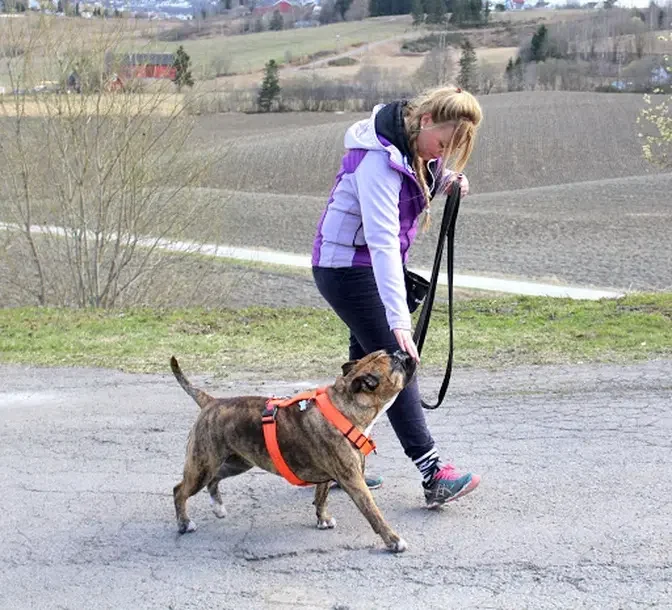
Learn, walk and train with me! We’re focusing on your dog’s “sit”. I’ll be giving you prompts during this episode for when you are with your dog so we can be dog training together. We’re also covering the 12 things that I consider fundamental for all dogs. Mastering the fundamentals will make anything you want to do with your dog so much easier.
Today's podcast was inspired by a student of mine, John, who said,
you talk about walking your dog and training them. I would love to know what that looks like.
And so, today's podcast is meant to be one that you do with your dog. So,
take your phone, plug into your earphones, grab some cookies and a bait bag and a leash,
if appropriate. And you're going to go outside and train your dog while you're listening to
this podcast. You see, this is a great quote. The goal of education is not knowledge. The
goal of education is action. So, this could be a regular segment here on Shaped by Dog.
And we're calling it Learn, Walk, and Train. You're going to leave me a comment if you're
watching this on YouTube, or at the end, you can drop us a note at waggagdogsthat.com to let us
know what you think about Learn, Walk, and Train. Here's how it's going to work. I'm going to
interrupt the podcast throughout to instruct you on what I would like you to train.
Michael Jordan, he once said, you need to become a master of the basics,
and then the level of everything you do from there is going to rise. Another great quote
I've heard is that mastery is just mastering the fundamentals. So, on Learn, Walk, and Train,
what I want to do is we're going to focus on those fundamentals. So, what I want you to do,
grab your treats, make sure you have various values, some super high value and some moderate
value, some regular low-value treats. Have a treat pouch. We're going to change that up
every time you walk, not every time, but mix it up so the treats aren't always in the same place.
And if you're walking your dog off leash, just carry that leash with you.
Today, what I want you to focus on is the behavior of sit. So, in fairness to the dog,
we're going to set a base level. Before you go out the door, I want you to ask your dog to sit.
Everybody grab your dog. You might want to pause the podcast so that you're ready. Before you get
anywhere near the dog, say do this one in the living room. You're going to ask your dog to sit
and I want you to evaluate what that criteria is right now. So, can you now walk out in front and
look at your dog? And I want you to praise the dog without going back. Does the dog start moving
their paws? Because that's not a sit. They've broken the sit. So, if your dog doesn't wiggle
their paws, then you can go back in and give them a treat. Now if your dog does wiggle their paws,
just go back in and move them in a circle and ask for another sit.
If you're doing this with a wee puppy, you're going to alter everything I say. If you're doing
this with an extremely experienced dog, I'm going to challenge you a little bit on this. Okay. So,
you alter the criteria or the difficulty of the criteria based on your puppy or dog.
So, if you're doing this with a puppy, you might ask the puppy to sit and not move.
Just continue to reward them and then give them the release cue.
All right. So, ask your dog to sit, go out in front. Now I want you to twirl around. You're
going to have to change hands with your leash. So, out in front, twirl around,
come back, feed your dog. Now you're going to, from the sit position, you're going to back up,
go behind your dog. Do they move their front feet to see where you are? All we're doing right now
is looking at what your dog understands for the criteria of sit. Is it a specific position?
Is there a duration? Now many of you are going to say,
oh Susan, but I didn't get to say stay. Well, you might want to go back and revisit
episode number 19 where I talk about one of my pet peeves in dog training. And well,
I really don't think you need to say stay. Okay. So, we've evaluated what that sit looks
like in the living room. Let's go out and take a walk. Criteria has many components to it.
So, there's something called latency, which is when you ask your dog to sit
in the living room, he might've initiated the behavior of sit right away. So, there's two
different parts about the sit. We give the dog the sit. How long does it take him to start to sit?
And how long does it take him to complete that sit? So, one is the speed of the behavior and
the other is the latency between you saying the cue and them starting the action.
Now for something like, you know, asking your dog to sit, I'll give you an example. My puppy,
she'll sit like lightning bolts in the living room or in the dog training arena. But when we go for
a walk, latency is much, much higher. So, it goes from maybe a 10th of a second to probably
three seconds. So, what I want you to do now is I want you guys to be cognizant of that fact,
and you're going to ask your dog to sit. And while you're waiting, you're going to start in
your head, say one and two and three and four. You don't say it out loud. Just say it in your
head. So, you know, how long did it take my dog to sit? You're going to go back and compare to
what it was in the house. Now, I didn't ask you to record keep that in the house because I wanted
you to get out and walk your dog. So, how long, what is that latency? If you've got a wee puppy,
there might be a ton of distractions and this is really tough stuff. And maybe they haven't
had this leash on a lot. And so, there's so much going on in their environment. You're going to
be kind, help them to be successful by maybe kneeling down and asking for that sit.
Right. So, what is the latency? Now give your dog a release and you're going to keep walking.
When we talk about the speed of the behavior, that's how fast once the dog starts to do it,
how fast does it take that dog to do it? And your goal is that they're doing it within
half a second to one second. You might not have that, but you can improve it by looking at what's
the average of how long it takes my dog to do it and giving them those super high value rewards
when they sit faster than what that average is. I call this phenomena using the average or better
rule. All right. So, you're going to give them super high value food. If it happens, let's say
it takes your dog three seconds to sit. And if they go on average, it's three seconds and they
suddenly they go, then they sit in two seconds, you're going to give them a much higher value
reward. You know, you might give them the outrageously high value reward when they sit
in one second. Okay. So, average or better in speed. And with that latency, you want to get
them away from what's distracting them. So, you can give them the high value rewards by getting
them in an area where that latency will go down. Remember latency is the time between when you say
the cue sit and when the dog actually does it. All right. So, we're going to get ready. We're
going to ask your dog to sit now. And what I want you to do is back up behind your dog.
What does that behavior look like compared to what it was like in the house? Remember,
we don't want your dog to be failing on this all the time. If they fail once in a while,
no big deal. Remember, the dog is just reflecting to you what you've trained them.
So, maybe you thought you trained them to do a really good sit, but they need your help of saying
sit, sit, sit, or saying stay, stay, stay. What that is, you go back to episode number 12 and
you're helping is not helping. You might think that it's helping, but it's not. You want to
stay closer if your dog can't tolerate you going all the way behind to the end of the leash.
Just ask the dog to sit and step sideways. What's that look like? Come back in and reward.
Remember, we're always building our dog's confidence. That's what we're looking for.
Building confidence. All right. So, come back, give your dog a cookie, release them. We're walking
on. Here's what I'd like you to do now. Just for fun, change sides. Your dog is now on your right
side. If that is something that is not super comfortable for you, then you're going to make
a mental note and think about when you get back home, doing more work on reinforcement zone on
your opposite side. Now I mentioned those great quotes about mastery, the Michael Jordan one,
and the one that I believe came from Bruce Lee. Although Dr. Google wouldn't support that.
Mastery is just mastering the fundamentals. Love that line. It's been really something
that stuck with my entire career as a dog trainer. But what are the fundamentals?
So, I'm going to give you a list of what I would consider my 12 fundamentals when I get a new
puppy or if I've brought a rescue dog into the house, what I would like to train. And this list
might be tweaked. I think it's pretty much in the order that I would train it. All right. So,
if you have been in any of our programs, you probably can guess what the first five or six
are. You probably could guess them all if you've been around for a long time.
All right. Number one, I would teach that puppy or dog what the word
search means. It means I'm about to throw cookies on the floor and you can now pick them up off the
floor. I want my puppy to know that so that they know to look for food or look for a toy. And also
that if they find food on the floor, they don't think about picking it up and eating it because
nobody said the word search. It's not the only thing that will teach them that behavior, but
it's certainly a part of the puzzle that the dog will need to learn so that they don't start eating
things off the floor. Okay. So, number one, I would like to teach search. Number two, I would
teach it's your choice. Number three, crate games. Now all of these games kind of build on themselves.
So, search helps the dog to know how it's your choice works. It's your choice makes it easy for
them to understand how to learn crate games. And crate games, I would put hot zone in there too,
meaning stay on a targeted area, stay on a raised dog bed. So, knowing crate games helps
them to understand that behavior much easier, but I kind of put those as the same behavior.
And then the number four would be recall. There's things in there. Recall would help
teach the dog their name. You know, name recognition, although it's a critical
fundamental, I didn't put it in as a part of my top 10 or 12 fundamentals because
it is really part of the recall itself. Okay. Stop what you're doing. Ask your dog to sit.
Now I want you to just step away. Don't say anything and see if your dog tries to come with
you when you step away. Again, if you have a puppy, make this super easy for your puppy.
Don't try and step away. Just see if they can hold that position for one second before you
release them. If you've got an advanced dog, I want you to go to the end of your leash.
And then I want you to bend down and pat the ground. What does your advanced dog do? Do they
keep holding that position? Do they drop to a down? Now go on back. I want you everybody to
circle around your dog. One 360-degree circle, and then go back to the position with your dog
on your whatever side you want. Give them a cookie, release them. Let's move forward.
So, search. It's your choice. Create games. The recall. Value for reinforcement zone. It would
make walking on both sides super easy so that the dog understands that all good things in life
happen on your seam, your out seam of your pants. Remember from episode number 53,
be seen on my seam. Super important. From that reinforcement zone comes loose leash walking.
Now that could be, see how I'm squeezing a lot more skills into my top 12. I didn't give name
recognition its own bill, and I'm not giving loose leash walking its own bill because I'm saying if
the dog's got brilliant value for reinforcement zone, loosely walking is a given. All right.
Next, this one might be a surprise and it might be one that, you know, you're going to say,
my dog just likes cookies. But here's number six to me is play with the toy I have.
Super important skill. That is just another layer of it's your choice. You may want the
happy hippo, but I'm giving you the squeaky monkey. Play with the toy I have. Number seven
is the ever so important skill of retrieve. If I ask you to bring me no matter what it is,
you're going to bring it right to my hand. Okay. Number eight. That's the skill of sit.
You all got that on some level because you're playing along with my game here.
Number nine in my top list of all the things important on your level towards mastery is down.
You could have guessed that after sit comes down. Look how far down the list those are.
Now my dog already has an understanding of sit because they learned it in crate games. I just
didn't put a name on it, but at this number eight stage, I'm actually naming it something.
I'm going to recap for you. I've got search, it's your choice, crate games, recall,
reinforcement zone, play with the toy I have, retrieve, sit, down, and I'm going to extend the
down to be lie on your side for cooperative care. And that is, so allow me to clip your nails and
brush your teeth. And I call it the game on position. And the game today is I want to cut
your nails. So, it's an extension of down. It's lying on your side. Yeah, I'm stretching it. I'm
getting a lot of things into my top 10. Next is going to be functional tricks.
And I would say the most important functional tricks is a hand touch. So, functional tricks
would be 11. And functional tricks probably has an endless number of tricks that you can add there.
So, it's open. Weave between your legs is something I like to teach my dogs,
but hand touch is the number one functional tricks.
Okay. Speaking of functional, I'd like everybody to ask your dog to sit,
and you're going to walk out in front, praise the dog in a really high squeaky voice.
Your dog is still holding position and didn't get all wiggly. Go back and give them a cookie.
Come on out in front, hold the leash, change hands because you're going to do a 360 spin
in front of your dog. And if you guys are advanced, here's what I want you to do.
I want you to pat your leg. Pat your leg, which is kind of unfair because it is sort of a formal
recall. So, you know, this one is just like, yeah, you're pushing the boundaries. My puppy
would fail on that one every time because I kind of pat my leg to get them into reinforcement zone.
So, it's like giving them a formal cue. They should really be, but I'm just testing. You know,
you might say, Susan, that's unfair. I'm not doing it, but I'm putting another one out there for you.
Okay. So, that pretty much is my list. Search, it's your choice. Crate games,
including hot zone, recall, reinforcement zone, including loose leash walking,
play with the toy I have, retrieve, sit, down, including cooperative care, functional tricks,
and the hand target. All right. I could keep going on and on and on, but remember,
mastery is mastering the fundamentals. If you master those fundamentals, anything you want to
do with your dog for the rest of your life is going to be so much easier. So much easier.
All right. So, focus on the fundamentals. And what I'd like you to focus on now
is did you enjoy this session? Did you enjoy learn, walk, and train? If you did,
go to my YouTube page, leave a comment on that video, which is going to be like a static picture
with maybe some lines, you know, where I'm talking. Leave a comment. Of course, while you're
there, you might as well like it. And if you're not a subscriber, subscribe. If you are listening
to this, go to shapebydog.com forward slash 85 and go to the show notes. There in the show notes
will be my list of the top 10 or 11 or 12 fundamentals that I think everybody should
focus on. Next, if you're listening to this, I'd love for you to send me an email to wag
at dogs that.com. Let me know what you think of our new segment, learn, walk, and train.
Is it something we should carry on? Did you like it? Did you get benefit from it?
There's more upcoming if you think it's worthwhile. I'll see you next time on Shaped by Dog. And yes,
for those of you who are used to watching this on YouTube, I am making a heart right now.
That's me making a heart with my hand. See you next time.