
Fix Dog Training and Behavior Problems Before They Happen #93
74 Video Views·Nov 6, 2024
You know, there's an old adage in dog training, the absolute best time to fix a behavior or
training problem with your dog is before it happens. And although that may be true,
it doesn't help those of you who have a puppy and you're right in the midst of a behavior breakdown
or a dog training problem. And that's why today I'm going to share with you the systematic
approach that I've laid out for myself and my students to tackle any dog training problem.
Hi, I'm Susan Garrett. Welcome to Shaped by Dog. And today I'm also going to share with you how
you can get my brand new book, an ebook that I wrote specific to overcoming dog training
challenges. You can get that plus I'm going to put a download in the show notes of a template
to help you get things straightened out. Now I'm going to start by reading to you
a list of behavior challenges from one dog that was presented to me.
Okay. So, this was a 50-pound dog. So, not a small dog, just over a year old. And he was a
chewer, but he loved to chew like personal belongings, things that smelled like people,
including furniture. He had a very high prey drive, loved chasing cats, but also that chasing
turned into chasing any kind of critters and killing the ones he could catch.
He was a great escape artist and would bolt any time he would get out of the backyard or
slip through the front door and he was gone. So, zero need to come when called.
He would play keep away with any personal items or things, even if they were dangerous,
that he would either try and eat them or he would just keep them away from you.
And so, that was problematic because there was nothing in him that made him want to bring it
back to you. He was a biter. So, he would bite people, but the good news on this, it was low
risk of there were never puncture wounds, but that was his number one reflex where humans were
concerned was just to bite when he was put in a corner and wanted to do something else.
Loved to get things off the counter, food or whatever he found up there.
Very low appetite for food from a dog bowl though. So, wasn't a regular eater.
Zero respect for personal space with humans or other dogs. So, with humans,
he would push against you. He would take a toy and chew it against your personal body.
With dogs, he would just run them over. So, because of that, he was actually thrown out of
three puppy daycares. He had great anticipation of what was to come. And so, if he knew something
was about to happen that he didn't want to have happen, he had great avoidance. So, avoidance for
a crate, avoidance for going somewhere he didn't want to go, and he became an immovable object.
He would throw himself on the floor and then would use his mouth so you can interact with him.
Okay. So, all of these, I think there's 11 or 12 dog training challenges. Where do you start?
What do you do? The challenge is people tend to try to get information on how to overcome
dog training problems or behavior problems from Google, Dr. Google. But then you're getting random
opinions from people you have no idea what their history is. You might go to just a local person
or somebody who you know who has a dog who had some success and everybody's got an opinion.
That's the sad thing. You might get things like, Oh, just put a cookie in front of his nose and
he'll do anything you want. There'll be a lot of trainers that are trying in the kindness of their
heart to do the best thing for the dog and they'll just say, get a cookie in front of the dog when
they're doing something bad. But all that you're teaching the dog is in order to get something
good, you have to be bad. Then you might come across a trainer who say that dog is being stubborn
or even worse, that dog's trying to dominate you. You need to teach him to do it or else.
And so, you get the trainers who have the do-it-damn-it attitude and they will forcefully
make that dog do what he should be doing. Now the approach that I take is that we need to
look at all this behavior. And in order to overcome behavior challenges, we need to number
one, inventory these challenges. And that's where the download that I have for you here today,
where you're going to write down all of those behaviors that frustrate you on one side of this
page. Inventory. And you might take several days to do this because you might've forgot,
oh, I forgot he always runs off with the kid's socks when he can get them.
Like you might forget these things. Just write down this inventory. Because from that inventory,
what we're going to do then is to categorize these behaviors into dog training challenge
categories. And there's three of them that I'm going to talk about. Because at the end of the
day, the approach that I take hasn't just worked for my own dogs, but now after training dogs for
almost 30 years and for the last 10 years, having tens of thousands of online dog training students,
I have seen our approach work for all kinds of people with all kinds of history of having
zero success in the past with their dog to being professional dog trainers who've never thought
of an outside the box approach. And the same success happens dog after dog. And what we do
is we give the dog the opportunity to make good choices. We want to create autonomy for the dog
that they become the controller of their life. That's where success happens. Whether it's a
human or a dog where you get the ability, the freedom to choose what you want. That's when
things get to be repeatable. It isn't dependent upon getting a bribe of a big meatball on your
nose. It's not dependent on the intimidation of you do it, damn it. And that only holds up
when the dog is within your vision that you know they're doing something wrong.
Growing that autonomy for the dog. Hold that thought. We're going to get to it. Because
back to categorizing these challenges. So, we have all of the challenges you're going to inventory
for all the things that your dog does. And we're going to categorize them into three categories.
And these are things that I just made up over the last 20 years of helping people with their dogs
because it helps people to see the problems for what they are. So, the three categories.
Number one is sun showers. You know what a sun shower is, right? It's harmless. Sometimes it's
actually refreshing or maybe even entertaining to have a sun shower. But you don't want sun
showers every minute of every day of every day of your life. So, eventually you might want to,
you know, enjoy the odd sun shower, but then be prepared so you don't get to see them all the
time. And then there's icebergs. Now, as you know, an iceberg, you can only see 10% of it that sticks
above the water. And that 90% of it is below the water. And that's where the danger happens.
Now the third category, hurricanes. A hurricane is obvious, right? It's a massive big storm that
instantly strikes panic in your heart and you're incredibly afraid for your life. But a hurricane
in a lot of cases, you can do a lot of things to prevent them. Icebergs, you can see them ahead
and you can steer away from them. Dog training challenges are exactly like that. So, let's think
of a sunshine, a sun shower challenge for your dog. It's like a lot of times it's age-related.
So, if it's a puppy, it's something that kind of would make you laugh. So, maybe a puppy just
chasing their tail or digging like mad in their bed, or an older dog, like a geriatric dog that
maybe has the odd poop on the floor like that. Okay. Maybe that's not going to make you smile,
but you're going to be more tolerant of it because it's your 17-year-old dog that's doing it, right?
So, a sun shower might be your dog getting on the furniture. Now for some people, a dog getting
on the furniture could be white noise. That isn't a dog training challenge at all. I don't care if
my dog gets on the furniture. For my mother, a dog on the furniture was an instant hurricane.
It was a five alarm, OMG, dogs should never be on the furniture. It's up to you. You decide
where these dog training challenges belong. Now I'm going to help guide your decisions because
sometimes what you might think is a sun shower actually is an iceberg.
It looks like just a small problem that you could sidestep, but there's a deep lurking problem
below. For example, a lot of terriers, if there are puppies and they start chasing their tail,
and that becomes an OCD behavior, it becomes a real problem as they get to be an adult.
So, what looks like a meaningless little sun shower actually is an iceberg starting.
Sometimes you have to be aware, is this really a sun shower? Now the icebergs are things that
you sometimes won't even notice. Like when you ask your dog to do something and it might take
the second or the third time before they do it. You might not even notice that, but the dog is
learning. When she says something to me, I don't always have to like follow through right away.
And those are behaviors that down the road create dogs that just don't listen.
Or a dog that when you say, ask them to sit and they're super excited and their butt almost goes
to the ground, but then it starts coming back up and you don't notice it and then you release them.
You're starting an iceberg down the road, especially anybody that plays or wants to
play any kind of performance sport. That is the beginning of an iceberg. It's starting to happen.
Dogs or when they're puppies and they're playing with you and then they leave work and people think,
oh, this is a sun shower. He's like 18 weeks old. He's probably just starting to teeth.
So, he stopped tugging on his own and so that's okay. You think it's a sun shower, but actually
that dog got distracted. It was like, yeah, this is fun tugging with you. Oh look, there's a new
dog and that would be more fun. And they get into the habit of deciding when work is done with you.
That is the potential to grow into an iceberg. So, you want to really be on top of what those
problems are. Now the hurricanes, those are obvious. Those are often related to fear,
to frustration, anxiety. Those are just sometimes it's panic that you can see it.
It's like a neon light that your dog suddenly started growling at children. That your dog,
when you put down their food bowl starts snarling and snapping at any other dogs around them or
other people nearby. Now you might think that's a hurricane, but a lot of times there was a little
iceberg that showed itself. It might've been just maybe your dog got their favorite toy and they
just lifted their lip a little bit and you didn't notice it. Or you noticed it, but you thought,
oh, that's just a sun shower. That's just a little eight-week-old puppy being cute.
Look at her. Look at her little grrr. Okay. Sun showers can turn to icebergs and you might not
even notice the sun shower iceberg until it all five alarm, hurricane. And then it's crazy.
Biting. That's a hurricane, right? Now there's puppy nipping that could be an iceberg.
Puppy nipping is something that we all have to deal with. But if you ignore it thinking it's a
sun shower, it could be an iceberg that suddenly it's a hurricane. Right? So, biting is a problem.
A lot of time these are based in fear. So, it's super important that you are very conscientious
at how you're moving forward with this. And if you aren't sure, then I always tell people to
never be afraid to invest in a really good veterinarian behaviorist who understands dog
training because they can help or dissolve a problem for you or diffuse a situation super
quick. All right. So, separation, anxiety, anything like this, these are hurricanes because
you think, oh my gosh, my precious little angel, we're going to have to re-home him.
We might have to euthanize him. Like you have to be aware that what may seem to be a hurricane to you
could be easily diffused with the help of the correct trainer.
For example, I have brought in many rescue dogs over my lifetime. And one of them was a
golden retriever. I think Sesame when we got her was three years old. At that time, I used to call
on veterinary clinics. I was a pharmaceutical representative and I was in at a clinic and
this dog was being brought in to be put down. And I was just making conversation with people
in the waiting room and I found out they're bringing this dog in for euthanasia. And long
story short, it was because she was biting people. As it turns out, a lot of golden retrievers like
to put things in their mouth. I knew that. So, I said, do you mind if I take the dog home and
evaluate it and I will pay for the euthanasia if I feel that she needs to be put down.
She lived to be I think 15 or 16 years old with a long and happy life with my niece. So,
what you think is a hurricane might just be a sunshower or it might've been an iceberg that
you allowed to develop and we could fix that problem.
All right. So, you've got your list of problems and you've set them into categories. What do you
do now? I know what they are. I've decided I think these are sunshowers. Sunshowers,
you're just going to let them go for a bit and you're really going to focus on the hurricanes
and the icebergs. And here's the formula that's going to help you. First and foremost,
our approach we call is do-land. We don't want to set the dog up to don't, don't lunge,
don't growl, don't bite. I love this quote from Gene Donaldson. When there's obvious emotion,
you have to deal with the emotion first. You can't correct the dog or tell them they're wrong
because it's emotion. You cannot correct emotion. You need to help guide emotion to get to
a joyful place. And that's why we call our training being here in do-land.
And here's your first step. With this list of behaviors that I started this podcast with,
you may or may not have guessed the dog I was describing is none other than our own
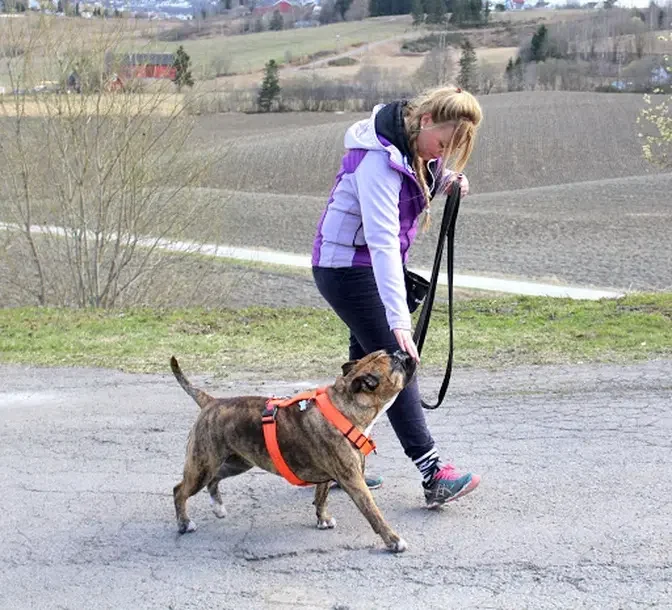
tater salad. Our bulldog, Boston Terrier, Pug Cross, who we adopted as a 15-month-old dog,
who came with all of these problems. Some of them, somebody might've thought they were a
sunshower and they turned into an iceberg. And then they were all out hurricanes when we got
him. And actually, when we got into the car after we picked him up, Kim who works here, who we
co-share Tater Salad's ownership, she looked at me, she said, what have I done?
Because he was that much of a hot mess. All right. Number one thing we did is we need to
prevent the rehearsals of these bad behaviors. All right. We can't correct him when he's wrong.
We just need to prevent rehearsals of the things we don't like, which means we're not going to give
him access to chasing small animals. We're not going to give him access to run away.
We're going to set him up by giving him plenty of exercise and immediately teaching him games
that allows him to take back the power. To not be told he's wrong. To not be told,
give that to me. Giving him over the power. And it starts by playing simple little games.
And those simple little games all create layers of learning for your dog that help him make
really good choices. And there's three critical games we call part of our critical core.
We teach in all of our programs, Home School the Dog or Recallers or our agility training programs,
because even for performance dog, these games are so important. And I've spoke about one of
these games so many times here in the podcast. It's your choice. It's like the dog takes this
big, big sigh. Oh, I get how I can control earning my rewards. And that's what we want.
And so, what I've got for you is I am going to give you this e-book. And this e-book
maps out a lot of the things that I talked about. It maps out what leads to some of these behavior
problems. And when you know that, you could prevent those things. And I'm also going to
give you access to those three games that I spoke about. So, you'll see in the show notes,
wherever you're listening to this podcast, just come on over, download the show notes,
click on the link, go to recallers.com. And there you'll be able to have access to the
e-book and access to those three games that are going to start turning over the power to your dog.
And that sounds weird because so many people will say, he's got all the power. He's trying
to dominate you. No, he needs to be in control of things so he can make good choices and he can grow
into the dog who can show you how brilliant he can be because every dog has that in them,
has that possibility. So many people come to visit us now and they think tater salad is their
idea of a dream dog. And if they had seen him that night when we caught him in the car and
Kim thought, what a hot mess this dog is. All dogs can become that great dream dog.
Yes, even your dog. It doesn't matter how old they are. It doesn't matter what the history is.
You may say, oh, Susan, this is a rescue dog. You've got to leave the past behind.
Now, there may be 1% of the dogs out there that have a chemical imbalance in their brain
and that they are attacking other dogs or attacking people. And possibly those dogs,
there is no solution and they maybe have to be euthanized. But those cases are so rare.
Most of those dogs that are lashing out are just misunderstood and they can be rehabilitated.
So, go into the show notes, get this download, and let's start now by doing something. A lot
of times people have just been avoiding these issues. Avoiding the sun showers,
allow them to turn into icebergs, and then all out hurricanes. Managing the behavior is part of
getting to a better place. And I always say there's three things we can do. We can ignore
behavior or under that would be redirecting. So, if a dog wants to resource guard, you might want
to get their attention onto something else while you deal with fixing the resource guarding problem.
And if that's you, I've got a podcast that you can go deep dive into how I fix that problem with my
own puppy. Three things we can do. We can ignore it and hope it gets better. And while we're doing
that redirect the dog onto something else, we can manage their behavior so we never see it again.
That might mean we never take the dog for a walk because they're being reactive to other dogs.
Or you could just fix it. And fixing means we're helping that dog to learn how to make
good choices even when you're not around. That's it for today. Please check out the
show notes. Please download these resources that I have for you. And let's start dealing
with those sun showers and icebergs before they ever turn into hurricanes.
I'll see you next time on Shaped by Dog.