
The Troubled Life Of Einstein
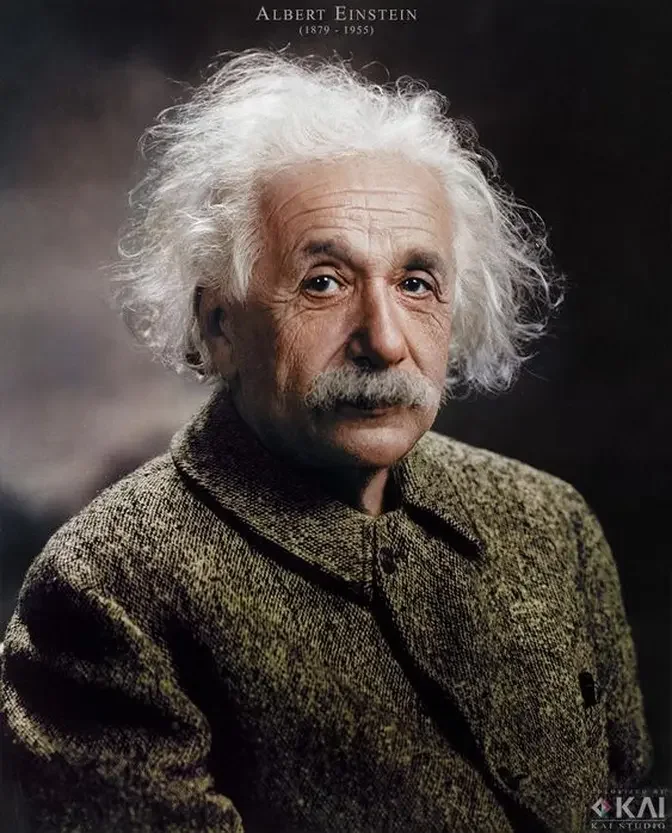
Albert Einstein, often regarded as one of the most brilliant minds in human history,
experienced a challenging and turbulent journey during his early years,
a period that shaped his character and ultimately his revolutionary contributions to science.
Born on March 14, 1879 in the German city of Ulm, Einstein was not immediately recognized
as a prodigy. In fact he was a late talker, causing his parents to worry about his intellectual
development. However, his quiet demeanor belied an intense curiosity and an extraordinary capacity
for abstract thought. As a child, Einstein was captivated by the mysteries of nature.
He often recalled the moment his father showed him a compass, an object that left him fascinated
with the invisible forces governing the universe, a fascination that would define his life.
Einstein's early education, however, was not entirely smooth. He despised the rigid structure
of the German education system, which emphasized rote memorization over creativity.
His teachers often misinterpreted his independent and questioning nature as laziness or rebellion.
Frustrated, Einstein dropped out of high school at 16, seeking a more stimulating
intellectual environment. He moved to Switzerland and enrolled in the Polytechnic Institute in
Zurich in 1896 to pursue a career in teaching mathematics and physics. While there, Einstein's
unconventional methods continued to alienate him from his professors. Though he excelled in
mathematics and had an extraordinary ability to visualize complex physical phenomena,
his disdain for academic protocol and lack of deference to authority led to strained
relationships with influential figures who might have otherwise supported his career.
When Einstein graduated in 1900 his prospects were bleak. Unlike many of his peers he failed
to secure a teaching or research position. His professors, unimpressed by his rebellious
attitude, withheld strong recommendations, which were essential for entering academia.
Thus began a period of immense difficulty for Einstein. For nearly nine years he was unable
to find a stable academic job. To make ends meet he took on various temporary positions including
tutoring school children, a role he found unfulfilling and frustrating. He married his
college sweetheart Mileva Marek in 1903, and the couple faced significant financial strain as they
struggled to build a life together. The birth of their first child only added to their burdens.
Einstein's family life was also fraught with challenges, as his demanding pursuit of scientific
understanding often left Mileva feeling neglected and overwhelmed. In 1902 at the age of 23,
Einstein managed to secure a position as a technical assistant at the Swiss Patent Office
in Bern. Though this was far from the academic career he had envisioned, the job became a
Working at the Patent Office proved to be surprisingly liberating. The routine nature
of the work allowed Einstein ample mental space to think deeply about the physical problems that
intrigued him. During his lunch breaks and evenings, he devoted himself to scientific exploration,
discussing ideas with a small group of friends he called the Olympia Academy.
This informal circle of intellectuals would debate philosophy, science and mathematics,
helping Einstein refine his thoughts. The years of frustration and intellectual isolation
culminated in 1905, a year that would forever change Einstein's life in the course of science.
Dubbed his Annus Mirabilis or Miracle Year, Einstein published four groundbreaking papers
in the prestigious journal Annalen der Physik. These papers addressed foundational issues in
physics, including the photoelectric effect which laid the groundwork for quantum theory,
Brownian motion, providing empirical evidence for the existence of atoms,
special relativity revolutionizing our understanding of space and time,
and the famous equation which revealed the relationship between mass and energy.
These works, developed during his evenings after work, catapulted Einstein into the
scientific limelight. The path to these achievements was far from straightforward.
Einstein's early struggles were a blend of personal, professional and systemic obstacles.
His unorthodox approach to learning, coupled with a lack of support from his mentors,
delayed his entry into the academic world. Yet, his perseverance, fueled by an insatiable
curiosity and a deep belief in his ideas, ultimately allowed him to overcome these barriers.
By the end of 1905 Einstein had gone from an obscure patent clerk to one of the most promising
physicists of his time, a trajectory that demonstrates the extraordinary power of
This difficult period of his life became the foundation for his later successes,
proving that even the greatest minds can face rejection,
uncertainty and doubt before achieving greatness.