
The Past Lives of Buddha Fact or Fiction Mythik
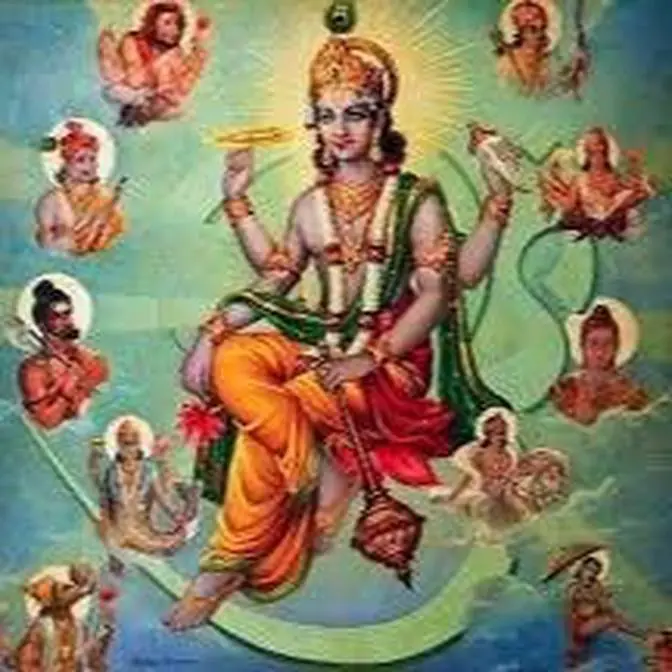
Who was Buddha in his past lives before he was born as Siddhartha?
We have an amazing collection of 547 stories recounting the various past lives of the Buddha
before he became the Buddha.
The Buddha is either born as an animal or he is born as a human being, often a king
or a universal monarch, a Chakravarti or a renunciant monk.
Do you still believe in the concept of one life?
Everything in life is impermanent, just keep going with diligence and keep striving.
We just have interesting stories of monkeys and beer and kings and aesthetics.
Not random tales, an origin story, an unspoken universe.
Something in the Marvel universe where you know the story keeps going on and on and there
are infinite universes and infinite iterations in each of them.
I feel it's not just about multiple lifetimes, but also within one lifetime, you know, sort
of let go of something and discover your true identity, discover your true power, your true strength.
Hello everyone and welcome back to another episode of our podcast series Mythic Dialogues.
My name is Preeti Vyas and I am your host for today.
Today we have for you a really wonderful session on a very special topic, which is Buddhism.
Our guest today is a very renowned Buddhist scholar.
His name is Dr. Sri Nahata.
Sri has completed his PhD at the Faculty of Asian and Middle Eastern Studies at Oxford.
His work delves deep into Jain and Buddhist philosophy and explores the intersection of
Buddhism and Jainism with Persian poetry and deep intellectual philosophy.
So it's absolutely a pleasure and a privilege to be here with you, Sri.
Welcome to Mythic Dialogues.
Thank you for your kind introduction, Preeti.
It's wonderful to have this discussion with you as someone who's very committed to Indian
narratives and storytelling and a big shout out to Mythic especially for trying to revive
ancient Indian storytelling in a big way.
Sri, this podcast is especially, you know, very special for me because I am a practicing Buddhist.
I have been practicing Middle Eastern Buddhism since 2011.
So I am really fascinated and looking forward to all that you have to share.
So let's jump right into it.
My very first question for you is, Mythic is all about story.
So let's begin with a story.
What's your favorite story of the Buddha as Buddha himself?
Yeah.
So before we even delve into the past life stories, the most interesting story for me
from the life of Siddhartha Gautama, the historical Buddha, comes from the Mahaparinibbana Sutra,
which is actually one of the final discourses of the Buddha before he passes away into nirvana.
So in this Sutra or Sutta in Pali, which is a very long narrative, the Buddha, in his
final days, as he's approaching 80 years of age, spends his time walking all around the
eastern Gangetic plane, talking to people, giving them advice, preaching with compassion.
As he reaches his last few days, he senses, you know, that he's not going to survive for
much longer.
And his closest disciple, Ananda, is heartbroken that his teacher, his confidant, the Buddha,
is going to pass away.
But the Buddha comforts him and reminds him that everything is subject to change and life
too is impermanent.
The most touching episode and the crescendo for me arrives when the Buddha goes out for
his final meal on his alms round and he chooses the house of a simple blacksmith named Chunda
for his final meal.
And after the final meal, he falls ill and his time for passing away is nearing.
But the first thing he does is to make sure that nobody blames Chunda, the blacksmith,
for his death.
He wants to make sure that nobody supposes that it was anything to do with the food he
ate there or anything that made this happen.
As he's reaching his final moments, he's sitting, he's lying down on his right side in the
sihasana, the lion's pose, between two sal trees.
And his final teaching is so beautiful, you know,
वयद्धम्मा संखारा अप्पमा देन संपाधेत
Everything in life is impermanent.
Just keep going with diligence and keep striving.
And I think that's so beautiful that it's something so practical and this worldly.
It's not some abstract philosophy.
And the text ends beautifully because the text ends with the passing away of the Buddha
into Nirvana.
And immediately his relics are distributed and there's the construction of stupas and
monuments begin.
So the text which is about impermanence ends with people trying to make permanent the memory
of the Buddha.
Wonderful.
Thank you.
Thank you so much for sharing that.
That's indeed very touching and you're absolutely right.
For me also personally, and I think for anybody who enjoys Buddhist stories, the real attraction
is how relevant and how practical all the teachings and all the stories are, how easily
accessible they are.
So, I mean, I grew up listening to these, reading and listening to Panchatantra and
Jataka tales.
But for somebody who's new to Jataka tales, what exactly is this body over?
Yeah.
So for listeners out there who may not have encountered the Jatakas before, basically
the Buddhist canon is called the Pali Tipitaka and it contains various books.
And one of the books in them is the Jataka, which literally means the past lives of the
Buddha.
So what's going on here is that we have an amazing collection of 547 stories recounting
the various past lives of the Buddha before he became the Buddha in his final life.
And all of them have this kind of structure where there is a verse in Pali originally
and then eventually in Sanskrit and various Asian languages, which gives you a very, very
broad outline of the story.
And then we have a prose elaboration of the story, which tells you all the characters,
all the incidents, the actual plot that is supplied by the prose.
And the story always ends with a Nidana, which basically says that this is a story in which
this character, let's say character X, was the Buddha in a past life.
This character, character Y, was Ananda, his closest disciple in a past life.
So the story ends by linking it to the Buddha's life trajectory or across many lives.
And what's very interesting is that there are multiple kinds of stories, but there are
two basic kinds of patterns.
You know, the Buddha is either born as an animal, which is itself very interesting,
which I hope we'll talk about sometime down the line, or he's born as a human being, often
a king or a universal monarch, a chakravarti, or a renunciant monk.
So there's this constant interplay where the Buddha traverses across samsara, but he's
constantly taking different life forms.
You know, he's literally experiencing life from different perspectives.
What would it be to be a monkey?
What would it be to be a great king?
What would it be to be a merchant?
And that, I think, is the charm and the beauty of these stories, that you get to understand
how the Buddha lives or how the Buddha-to-be lives, I should say, in different life forms.
That's actually quite fascinating.
And again, I think spiritually very beautiful to think of the Buddha being reborn as different
life forms and not only as a human being.
It shows the deep respect for nature, for animals in all our ancient traditions.
So when I hear you say this, the question that comes up to my mind is that why did these
past life stories of the Buddha emerge in the first place?
What need were they serving in the early Buddhist communities?
Because Gautam Buddha himself, Siddhartha Gautam, was enough teachings that he has left
behind.
So what was the need for this kind of body to emerge?
So there are two needs that I can identify from a historical perspective.
The first, I would say, is pedagogical.
So the Buddha himself always taught to particular disciples or particular lay followers in a
particular context.
And most of his sermons were about practical things one could do to improve one's life
or philosophical ideas.
But of course, one knows that things get very, very easily understandable and something you
really can buy into when it's wrapped up in stories.
So stories somehow make you feel connected to the idea in a way that dry philosophizing
or sermonizing doesn't.
So when Shakespeare says there are more things in heaven and earth than your philosophy can
tell us, I mean, we don't have to analyze it.
He just says it so beautifully that we automatically buy into it.
And I think the Jatakas serve that pedagogical purpose.
How do you communicate Buddhist ideas to people in a way that is interesting and entertaining
rather than something dry and boring?
And that's where these stories come in.
These are fascinating, entertaining, riveting stories which communicate Buddhist ideas.
And just the sheer thrill of listening to the stories makes the audience buy into those
ideas.
The second thing is, I think, legitimizing.
I think what was probably the case is that in ancient India and India in general is a
land of stories.
So there are so many folktales, folklores, every community one meets, every region one
travels to, there are particular unique stories specific to that region, to that group of
people, and so on.
So what the Buddhists wanted to do, and I think this is a characteristic of all of Indian
thought, is it's very inclusive.
They didn't want to dismiss this folklore, dismiss these stories.
They wanted to incorporate it within the Buddhist corpus and say that, yes, these stories that
are circulating within this broader Indic cultural sphere, these are very, very interesting
and important stories.
And look, we are going to tell you the deep ideas and the deep points these stories are
making.
So this is a way of legitimizing Buddhist ideas as well by incorporating folklore, legends
and popular stories, which I think is a beautiful model of inclusivity.
They barely mention Gautama's life in detail.
So what is the role that these later traditions, and how did they actually expand his biography
to the Jatakas?
Yeah, that's a very interesting question.
So for our listeners out there who are interested in how the history of the life story of the
Buddha evolves, what we have in the earliest records, which is the Pali Canon, the Pali
Tipitaka, is a very brief outline of the Buddha's life prior to him becoming a monk.
The focus is on his ascetic life as a monk and his enlightenment and his teachings after
that.
All we know about his early life is that he was very frustrated and disillusioned with
the violence that he saw in the world.
Remember that this is a time of great conflict between these small kingdoms in the eastern
Gangetic plain.
And seeing the violence all around him made him quite frustrated and he decided to give
up this worldly life as a prince.
That's all we have in the initial biography.
Over time, this biography evolves into the classic biography that I'm sure most of our
readers have heard of and loved.
This is the Buddha going out at night secretly from the palace, encountering the four sights.
He sees an old man, he sees a sick man, he sees a dead man, and he sees a happy ascetic
renunciate.
And these four sights inspire deep philosophical reflection inside him.
What is the purpose of life?
What is happiness?
And eventually he decides to flee from the palace at night in order to pursue happiness
and truth for himself and for all sentient beings.
So this is how the biography evolves.
And over time, this biography evolves even further.
Over time, there is a sense that it's not just this life.
It's not just the decisions the Buddha took in this life that made him the Buddha.
But to become the Buddha is something really extraordinary.
And what it requires is serious cultivation and practice across multiple lifetimes.
Because it's not just that, you know, I might decide to become a monk or a renunciate and
I might perfect myself, but that wouldn't make me the Buddha.
There is a sense that the Buddha's compassion is something even greater.
And that's when we have the idea of the Jatakas, you know, that this is a multi-life journey,
almost like a very famous series of movies or something in the Marvel universe, where,
you know, the story keeps going on and on and there are infinite universes and infinite
iterations in each of them.
And that's the idea that develops.
So this is how the biography of the Buddha evolves over time.
And the Jatakas fit right into this cosmic multi-life journey of the Buddha.
Yeah, I think it's almost like you rightly said, it's taking it from being a very inspiring
story of one human being to taking this epic, mythic level proportion, very, very dramatist,
unfolding lifetime upon lifetime, you know, and to infinity, you know.
Right.
So the next question is what is the role of the Nidana Katha in shaping the Jataka traditions
and why is it significant even if it was compiled centuries later?
So the Nidana Katha is a commentarial addition to the Jataka tales found in the Pali canon.
So what they explain to us is how did this entire journey of the Buddha becoming the
Buddha, how did it all start?
So what this tells us is that countless eons ago, there was a renunciate named Sumedha
who was a monk and he was practicing his austerities devoted to leading a good life.
He even could fly through the air through his magical powers.
Suddenly, one day he hears that a Buddha, the Buddha Deepankara, a Buddha of the former
age is passing through the village where he stays and he's very excited.
He wants to meet the Buddha, maybe learn from him.
But then he hears that the villagers are planning to build a new road to welcome the Buddha.
But the road, unfortunately, has not been completed on time, something I think we can
relate to even today.
And what he decides to do, therefore, is he says, OK, the Buddha is coming, the Buddha
Deepankara is coming, but the road is not completed.
So the portion that's still muddy, the portion that's not yet been paved properly, I'm going
to lie down on it and spread my matted hair so that the Buddha's feet does not touch
the mud.
So the Buddha Deepankara arrives and when he sees this absolute act of generosity and
self-dissolution of the ego, you know, when you're so humble that you're not thinking
about what this is me and I'm too proud to do that, the Buddha notices this and he makes
a prediction that this Sumedha, who's right in front of me here, will eventually become
the Buddha Gautama countless eons later.
And this is how the entire journey begins.
And at that point, Sumedha takes a vow that over multiple lifetimes, I will perfect myself
and cultivate such virtues like generosity, courage, patience, kindness, so that eventually
I might become a Buddha who can help each and every sentient being lead better and happier
lives.
So this is how the Jataka stories actually begin.
And this is what the Nidana Katha supplies, you know, this origin story, what's it all
about?
Otherwise, without the Nidana Katha, we just have interesting stories, you know, we just
have interesting stories of monkeys and deer and kings and ascetics.
But the Nidana Katha is what provides the entire universe, you know, it's like the Marvel
universe or the DC universe, like which frames everything and which gives you the context
for understanding what these stories are.
So it provides the backstory of this great vow.
So after each Jataka story, the Nidana Katha identifies, you know, this character was the
Buddha and this is the virtue that the Buddha cultivated in that life.
And eventually the Nidana Katha works its way all the way to the contemporary present
of that time, which is the final life of Siddhartha Gautama, the historical Buddha.
And that is where we get this story of the four sides going out of the palace, seeing
these four sides, deciding to become a monk.
So it's this grand, epic, multi-life story, but for the first time arranged chronologically
such that people can see how it all fits together.
Right.
So it's almost like providing a bookshelf, right, for all these different books.
So if the bookshelf were not there, then they would just be random books scattered around
and you wouldn't know which one to read first and which one to read next.
And it just provides that coherent framework for it all to be organized.
That's amazing.
Exactly, yeah.
A little bit of time travel.
How do you think that the ordinary people of those times received these tales?
Like, were they more effective than the abstract doctrine?
So absolutely, Preeti, I think they were definitely more effective than abstract doctrine because
as we were discussing, stories are very visceral.
They appeal directly to your emotions, you know, with the adventure, with the twists
and turns, with the narrative.
And something which goes directly to your heart is more likely to influence your behavior
than something which goes to your head, you know.
So an abstract philosophical doctrine may not transform you, but a beautiful story or
a beautiful poem might bring about wondrous transformations in your personality.
And I think this is what the Buddhists realized and I think most Indian traditions realized
that stories are the best way of communicating doctrine because it's very subtle.
It's not very in-your-face.
You don't go up to someone and say, you know, don't talk too much.
Instead, you give them a very interesting story, which is the Kacchapa Jataka, the Tortoise
Jataka.
So what this story tells us is that in the past, in the distant past, there was a king
who used to just keep talking too much and he would never shut up.
And there was a minister who wanted to just say to the king, you know, let others talk
and that'll be good for you and for everyone.
But of course, you can't say that directly to the king.
And even if someone said that to you directly, would you listen to them?
You would just be annoyed, probably.
So basically what this minister did, just like what the Jatakas are doing, is wait for
the perfect opportunity to arise.
And what the Jatakas do is then there's a story within the story.
It's like a frame.
We have a frame where there's the king and the minister.
Now we cut to another scene.
In the Himalayas, there's a beautiful pond and there's a tortoise living near that pond
and two geese fly there and meet the tortoise.
And like things go in ancient Indian fables, the tortoise and the geese, different animals
talk to each other and become friends.
So the geese tell the tortoise, you know, there's this beautiful golden cave far away
in a different peak in the Himalayas where we live.
Would you like to go there and see what it's like?
And the tortoise is like, of course, I would love that.
And now I'm friends with you.
I would love to go on this trip with you.
And basically, the geese say, OK, but how are we going to transport you?
How are we going to take you there?
So they come up with a solution.
They come up with this piece of stick and they say to the tortoise, just bite onto the
stick and hold on to it with your mouth and we'll hold on to the two ends of the stick
with our feet and we are going to fly you there.
The only thing we would say is that don't open your mouth for any reason because you'll
fall off otherwise.
But the story continues.
The tortoise holds on to the stick and they're flying all over the beautiful North Indian
landscape. Now, people on the ground, and this is very Indian, they notice something
very weird, like what's the tortoise doing holding on to a stick?
And they start making fun of the tortoise, you know, like what does this tortoise think
he's doing?
Doesn't he look ridiculous doing this?
And the tortoise is just not able to bear it, you know, he's like, why do these people
have a problem if I'm becoming friends with the geese?
And he opens his mouth and says, tries to say instead, you know, what's your problem?
It's my life.
I can do what I want.
And he immediately falls.
And this is the beauty of stories.
He falls immediately in the king's palace, the very king who was very talkative.
And the king and his minister are just taking a walk in the courtyard where the tortoise
has fallen and died.
And the king is like, whoa, what's happened?
How did this tortoise fall here?
And the minister says, aha, this is my chance to finally explain to the king why talking
too much is bad.
And he narrates what has happened and says, you know, this is what happens if you talk
too much and respond to everything everyone around you is saying.
So this story itself illustrates how stories are essential to communicate ideas, you know,
because the minister doesn't just go up to the king and say, you know, don't talk too
much.
It's not good for you.
He waits for a story, a narrative occasion where there's a tortoise which suddenly falls
from the sky.
And that's when you make your point.
And I think this is the beauty of these stories.
You see how fun they are, how entertaining they are, how relatable they are.
We'll just never forget the story.
The visual of a tortoise flying in the sky almost is something we'll never forget.
Exactly.
And that is, once you get to the end of this story and then someone says to you, you know,
don't talk too much and don't respond to everything everyone around you is saying about you, then
you're like, yeah, okay, maybe I buy into that, you know, that makes sense.
And also, like a story in the story, the lesson within the lesson is if you want to, you know,
point out a shortcoming in your boss or in your manager or someone senior, then find
the story to say that instead of, you know, telling him upfront because the minister could
not do that either.
Right.
He had to look for the right story.
Exactly.
Can you now walk us through the story, the Kuta Danta story, where the Buddha turned
the planned animal sacrifice into an ethical lesson.
I actually love this story.
Can you take us through it?
So yeah, this is a really interesting and beautiful story.
This is actually not necessarily a Jataka, but it has a Jataka within it.
So the story goes that the Buddha arrives in a village and there's a great brahmana
who was planning a very big sacrifice, a Vedic sacrifice.
And in that sacrifice, alongside vegetable offerings, he's planning to slaughter many
different kinds of animals as part of a sacrificial offering to the gods.
And what happens is that there's a rumor that's going around that the Buddha actually knows
a lot about sacrifices and this brahmana hears about it and he's like, OK, let me go
to the Buddha and ask him, you know, what's the best way of performing the sacrifice?
And when he goes to the Buddha, he patiently sits down and asks the Buddha and tells the
Buddha, you know, I'm planning this great sacrifice.
I've got these many goats, these many sheep, these many things and animals and plants that
I'm planning to offer sacrifice.
Can you tell me how I should perform this sacrifice?
And what the Buddha does for me is really beautiful because he doesn't say this is
wrong immediately, because that is a way to stop, ensure that the other person will
just not listen to you because you completely invalidate their feelings and their perspective
on life.
What the Buddha says instead is, you know, it's very good that you're performing a sacrifice
and that's a wonderful thing.
You know, in one of my past lives, and this is where the Jataka within the Sutra begins,
I too was a great brahman priest who was advising a king on his sacrifice.
You know, there was a king who was planning a great royal sacrifice and I was the brahman
priest who was helping him with it.
And you know, what I noticed there is, you know, that so many sacrifices involve so much
killing of animals and they go through so much pain.
So I advised the king, you know, don't involve any animals or don't even cut down any trees.
Let's just keep the offerings very simple.
Then I noticed in many of the sacrifices, there are like bonded laborers who are forced
to do various things which they don't want to do.
And they go through a lot of pain and suffering.
So I told the king, you know, let's do a sacrifice in which people who want to participate can
participate but there's no coercion and force.
And then he performed the sacrifice and it was wonderful.
And the king's popularity grew and his subjects started to love him even more.
And this is how the Buddha frames it.
And then he comes back to Kuta Danta, the Brahmana and tells him, this is the best way
to perform a sacrifice.
And this is when the Brahmana begins to realize, you know, that animal sacrifice might not
be the best way, that even if he wants to perform a sacrifice, it's best to do something
which doesn't harm anyone.
But the Buddha then goes one step further.
He says that, yes, you are performing the sacrifice.
There's no problem with that if you do it nonviolently.
But there's even more important things in life than rituals and sacrifices.
For example, if you give something to a poor person who is needy, that's an even better
thing than performing a big sacrifice.
If you practice meditation to get rid of suffering, to purify your mind, that is something even
better than performing a sacrifice.
So what this story shows, and this is what I love, you know, is that the Buddha does
not reject any ritual or any practice of any religion.
And this is why Buddhism, for example, traveled to East Asia, where in Japan, it becomes intermingled
with Shintoism.
In China, it sits perfectly with Confucianism.
In India, it was perfectly harmonious with Hinduism.
So the Buddha doesn't reject anything.
The only thing he says is that don't do anything that is unethical, that harms other sentient
beings.
And also that there is something beyond the rituals and sacrifices.
You don't have to give them up, you can continue doing them.
That's a part of your social and cultural life.
That's wonderful.
But there's something beyond it.
And that is striving to purify your mind so that you can lead a happier life.
And I just love the non-confrontational, the universal approach of the Buddha.
He's not sectarian, you know, and he's not saying this is wrong, and my way is the only
right way, kind of.
Okay.
So beyond moral instruction, how did the Jatakas fit into the Buddha's enlightenment, especially
the idea that recalling past lives was his first insight?
So even in our literature in Buddhism, we have this concept of casting off the transient
and revealing the truth.
The moment when the Buddha realizes that that was a transient identity and this is my true
identity.
So yeah, how does this concept show up here?
Absolutely.
So there's two ways of approaching this.
One way is the cosmic way, which is the multi-life trajectory of the Buddha, where he's going
through multiple lives, perfecting the different paramis, which is the Pali and Sanskrit word
for perfections, which a Buddha or any enlightened being must cultivate.
So that's the overall chronological trajectory.
But coming back to the final life of the historical Buddha as Siddhartha Gautama, when he attains
enlightenment, there are three different kinds of knowledge, knowledges he attains.
And the first one is the knowledge of past lives.
So that is when the Buddha in his final life becomes aware of the fact that what he's been
doing has been a multi-life cosmic journey, where in each life he's been born in all of
these different amazing realms of the cosmos.
And in each life he's learned something, and that's something that the Buddha becomes aware
of when he becomes enlightened, that this was a multi-life journey for him.
The second knowledge is the knowledge that this applies to all sentient beings, that
we're all on this journey.
And the third life, third knowledge rather, is the realization that there is a path to
the end of suffering.
This is the idea of the noble truths and so on.
So I think the Jataka tales, what they do is that they fit right into the Buddha's enlightenment
because they are a realization or an affirmation of the fact that what the Buddha did was a
perfecting of himself, of his true self, as you were hinting, in the Nichiren Buddhist
tradition, over multiple lives.
And that somehow it's a big puzzle in which everything fits together, that you have been
on this long journey without even realizing it.
And it's so rich and colorful, and each moment in that journey, and what is a life in this
cosmic journey except a moment, each moment has taught you something.
And that's how the Jataka fit right into the Buddha's enlightenment.
And I think again, relevance for us today, right?
Because I feel it's not just about multiple lifetimes, but also within one lifetime.
The multiple times when you will, you know, sort of let go of something and discover your
true identity, discover your true power, your true strength.
And all of us go through those multiple, and we can almost look back at our lives as adults
and say, these were the moments which were the moments of crisis or the moments of, of
real reflection, where I stepped out of something and now became somebody else.
And that sort of renewal is the core concept of Buddhism, right?
That continuous renewal, it's not a one time activity, it's just something that keeps going
on multiple times in the same lifetime and over multiple lifetimes.
Exactly.
And as someone who's in the Nichiren Buddhist tradition, you know that Nichiren, for example,
views these stories, not as necessarily even stories of past lives, but as allegories for
how we should live this life, you know, that that is the moment we are faced with a choice
where we can be like the tortoise and cause ourselves harm.
Or we can be like a wise king, or we can be like a patient monk or what, what have you
and that these are choices that are facing us constantly.
And that fits in very nicely with the Buddhist worldview, because the Buddhist worldview
is that change is the only constant, you know, and we're constantly changing.
And every day is a new choice.
So every day, we have the option of being like the tortoise or being like a wise king.
And this is how many Buddhist traditions read it as well, that these stories are not just
meant to be stories of the past lives of the Buddha, but they are meant to be guides for
how we should live our life in the present.
100%.
Yes, very true.
Absolutely.
And still very relevant today, which is why they've survived because they continue to
remain relevant.
So the next question is, how did the Jatakas absorb history and politics, for example,
in retelling the annihilation of the Shakyas?
So that's a fantastic question, Preeti.
And this is something we don't pay attention to, because we often read them purely as stories,
but we forget that these stories often encode historical memory.
So what's really interesting, most of our listeners might be aware that the Buddha was
from the Shakya clan, which is a clan roughly in eastern Gangetic plains and modern in Nepal.
And this was a royal clan with its own princes and kings and so on.
And the Buddha belonged to this clan until he became a renunciate and eventually became
the Buddha.
But what many people don't know is that almost immediately after the passing away into nirvana
of Siddhartha Gautama, the historical Buddha, the king of Kosala attacked the Shakya kingdom
and conquered the entire kingdom such that the entire clan and the entire royal family
was annihilated almost immediately after the death of the Buddha.
So this is a very, very, so this is a very, very traumatic historical memory.
And what the Jatakas do is that these stories encode this historical memory, this traumatic
historical memory, but they turn it into a moral parable.
So this is this very interesting phenomenon that's going on.
So in some of the Jatakas, for example, you will find a reference to one of the past lives
of the Buddha where he was born in the Shakya clan.
And what will be depicted is that the kings of this clan, the kings of this kingdom were
not very good.
They were prone to greed and they were just taxing the public for no reason.
They were prone to violence and they were not taking care of the king of their kingdom
and protecting their subjects.
And this is kind of why, you know, in the long run, they are annihilated and they are
destroyed.
So what's going on is that the historical memory of the annihilation of the Shakya
kingdom is encoded in the Jatakas, but it's turned into a moral parable.
It's turned into a lesson that, you know, if we want to avoid this, make sure that you
take care of your soldiers, make sure that you take care of your subjects, make sure
that you have a good administrative system, a good defense system and so on.
And this is, you know, the thing that the Jatakas do.
They take these historical memories, but they turn them into occasions for reflecting on
what could have been done better in a way.
And that is encoded in some of these stories.
So absolutely, the Jatakas are fables, they're entertaining stories.
They also teach us things which we can apply in our daily lives.
But even more so, the stories, all of these stories probably have some historical core,
at least the stories about particular kings and kingdoms and so on.
These definitely have some historical core and the historical core is preserved, but
then fable-ized and turned into an occasion for improving oneself.
But in the whole Indic way of storytelling, in stories from our side of the world, a lot
of them don't have definite endings, a lot of them are open to a lot of reflection.
I think that's the purpose that the story serves, to make the listener think of, is
there another way this could have fanned out?
Or what if this character had behaved in another way?
How could, how would things have been then?
And it then makes you reflect on your own behaviors or things that you see around you.
So they're very layered and they're very reflective in nature.
And here, there isn't even one story, there's like a series of stories, you know, which
are loosely connected, but then there's an overall arc, an overall frame story, which
connects these series of independent stories.
And each of these independent stories often are stories within stories.
So the Jatakas, actually, if you read them, they always begin, you know, with the Buddha
and the historical Buddha in some location.
And someone says, you know, there's this red rain that I saw falling today.
It's something mysterious.
And then the Buddha says, oh, this is not the first time that it has happened.
Actually, in the past.
And that's when the Jataka begins.
And even within the Jataka, there can be a story, there can be one frame, like the king
and the minister we talked about earlier.
And then it can cut to another frame, like the geese and the tortoise.
So you have stories within stories within stories, you know.
And so it's like a tapestry of stories.
And it's so rich and colorful.
And it definitely doesn't follow that simple linear model.
And I think in our art today, we kind of want something crazy and different from the simple
linear model.
Even when we go to watch movies or we catch up with our latest TV shows, you know, it's
something exciting, non-linear, full of mystery and not clearly resolved.
That's the kind of thing that appeals to us rather than a simple beginning, middle end
kind of model.
So the Jatakas are really beautiful.
Exactly.
All these binge watch worthy shows and movies, they have that element, right?
Because they take you deeper and deeper.
And you're so immersed in that world that you've kind of really lost yourself in that
immersive world and disconnected from your reality.
And that's the power of a great story.
Exactly.
Jataka are kind of like an ancient Indian model for that and a precursor to that.
And I think that's why they're even more appealing to a modern audience.
Wonderful.
Absolutely.
So Shree, the idea of the Buddha as either a renunciant or a universal monarch, how did
that idea enter the Jataka framework?
So that's a very good question, Preeti.
I think what must have been the case historically is that Buddhism had to speak to two kinds
of audiences.
So Buddhism was, of course, an ascetic renunciatory religion with a very strong monastic community.
The religious life definitely centers around the monks and the nuns.
And they are the guiding force of the entire religious tradition.
So they definitely had to speak to the monastic community.
And that explains why the Buddha is often a monastic, himself a monk or a renunciate
in various past lives.
But of course, Buddhism also had to speak to the royal patrons, because religions were
often patronized by different royal groups.
I mean, many kings in India were Buddhists, for example, Ashoka and various others.
And so speaking to the royal audience meant that the Buddha also had to be a king in various
lives.
But another more interesting, that's the historical answer.
But another more interesting answer for me as a literary person is, you know, life has
two dimensions, you know, if broadly speaking, there's many more.
One is the things of this world, you know, like being in this world, doing your job,
all the social relations that are involved, all the things you need to do to get by in
the world.
But then there's this other dimension of like trying to transcend this world, just
taking a break from this world, trying to go beyond and search for something more meaningful.
And I think the trope of the monk and the king captures both aspects of our personality,
because we are also kings who are literally like stuck in innumerable tasks every day.
And we just need to figure out how to get these tasks done and be happy at the same
time.
But we also have these monk-like moments where we're just sitting quietly watching the rain
and wondering what life is all about and what I'm doing here and what happiness is and what
the mystery of life is.
So I think the more interesting answer for me as a literary connoisseur is that these
two archetypes, if one might call them that, the monk and the king archetype, speak to
both dimensions of our personality.
You know, because the historical Buddha, okay, he too was a prince and then a monk.
And the jatakas too have this dual dimension.
So these jataka tales, these Buddhist stories are not denying any dimension of our life,
you know.
We are the kings who have to get things done, but we're also the monks who want to figure
out something deeper and more meaningful in life.
And I think having this dual dimension, especially in the Buddha's human lives, really speaks
to both aspects of our existence.
Yes, absolutely.
And the point about being that being and having to deal with life, right, that's what makes
Buddhism so powerful, that it's not about just kneeling or renunciation.
So in Nirjana Buddhism also, we have this concept of earthly desires are enlightenment,
right?
Where we say that all earthly desires, when you have earthly desires, and which means
in trying to accomplish those desires, there'll be so many obstacles and challenges.
And application of Buddhist principles and application of these philosophies to those
challenges is where your enlightenment lies, right?
It's almost like saying that if you're a surfer, you need waves.
If you don't have waves, how are you going to surf?
Or if you're going to the gym, you need weights.
If you don't have weights, how are you going to become strong?
So that kind of embracing of challenges or looking at life as, in moments I have to be
a monk, and sometimes I have to be the king, and sometimes I have to be a fighter, and
sometimes I have to be quiet.
It just depends on what challenges life is throwing at me.
And I think that's really powerful.
Were the Jatakas only Buddhist creations, Sri?
Or did they also share narrative patterns with other traditions of the time?
That's a brilliant question.
And the answer is that they 100% shared narrative patterns with other traditions of the time.
So there are two examples I will give you.
The first, of course, is one of the most amazing stories of ancient India, which is the Ramayana.
But what very few readers know, and very few listeners might know,
is that there is a Jataka in the Pali canon called the Rama Pandita Jataka,
in which there is King Dasaratha, who has two sons, Rama and Lakshmana.
Yes, absolutely.
And once again, there's an evil queen mother who banishes Rama and Lakshmana to the forest,
because she wants her son Bharata to be king.
But when Dasaratha passes away, Bharata asks Rama to return to the kingdom.
Rama says, no, I'll only return after my exile is done.
After his exile is done, he returns.
So this is clearly parallel to the Ramayana, but it's very different.
Why? Because there's no Ravana in the Buddhist version.
So in the Buddhist Jataka, there is no Ravana and there is no abduction of Sita.
There is no battle.
And in fact, in this version, Sita is the sister of Rama and Lakshmana.
So they're all children of Dasaratha.
And they all are banished by the evil queen mother into the forest.
So what you can see here is that it's recognizably the same kind of story.
However, it's different.
And this is the beauty of Indian storytelling, where there are shared stories,
but every community, every region has its own variation.
So if you look at the Ramayana too, for example, every region of India,
every language, there are certain subtle twists and turns which are different.
And again, the Buddhists too have the Ramayana kind of Jataka, but slightly different.
Coming to the animal fables,
they obviously share a pattern with the basic tradition of the Panchatantra and the Hitopadesha.
So if you look at the Panchatantra and the Hitopadesha,
the stories and the Jatakas and the Panchatantra and the Hitopadesha,
they're remarkably similar.
And actually, these stories traveled west into Iran,
translated into Middle Persian, then into Arabic, then into Latin, then into modern Europe.
As a result of which, many Jatakas also share similarities with Aesop's fables,
for example, or the European fable tradition.
So the story of the tortoise, for example,
holding onto the stick is found in the European fable tradition as well.
So they definitely share narrative patterns, not just with Indian stories,
but in fact, with the broader Indo-European folkloric tradition.
That's a strength of these stories.
And I feel if the world just knew that these stories unite us
at such a deep and old, ancient level, we wouldn't be fighting so much with each other.
Absolutely.
And this is why, for example, Rama is so popular in Thailand and Buddhist countries.
It's because Rama is actually one of the past lives of the Buddha.
And so these stories definitely unite us.
And for me, the beauty is the openness of these stories.
As you said, there's no one fixed, authentic, correct version.
It's you can take up the story.
Every community can make it their own.
And that's the beauty of it.
Right.
And then over here, we also have the Buddha looked at
as a 10th avatar of Vishnu sometimes, right?
So you have that as well, which is...
I think it's really wonderful.
It's really wonderful.
Absolutely.
Okay, my next question.
So finally, what do you think the Jatakas tell us about
how people at that time wanted to remember the Buddha?
Not as a teacher of philosophy, but as a storyteller across lifetimes?
Absolutely.
I think what the Jatakas tell us is that for the Buddhist community
across the ancient world and even today,
the Buddha isn't just this prince who renounced the world
and became a monk and achieved enlightenment.
The Buddha is literally in every creature, everything you see in the world,
because at some point or the other,
the Buddha has been a monkey in one of his past lives
or a king in one of his past lives
or a clever merchant in one of his past lives.
So the entire world, and this is something that becomes
very prominent in East Asian Buddhism,
that the Buddha is everywhere in the world
and the entire world is the Buddha in some sense,
you know, because the Buddha in everything,
in every aspect of the world, you can see the Buddha.
And that, for me, what that does is that
Buddhism is no longer an elite ascetic thing
because not all of us can become monks or nuns, you know,
that is a very elite and a specific thing.
But if the Buddha isn't just a monk or an ascetic,
but has also been a king or a merchant or a monkey or a deer,
then you can live like the Buddha or the Buddha-to-be
in some sense in whatever your role in life is.
If you're a student, you can do that.
If you're working, you can do that, you know.
If you're even an animal, you can live like the Buddha.
And so you can see the Buddha
or some aspect of the Buddha in your own life.
And that is really, really beautiful
because it isn't then just some unobtainable, unattainable ideal,
but it's something very relatable and felt and immediate to you.
And it's very inspirational that the answer then is to
live like the Buddha in your own life, in whatever you're doing,
and that there is a way of doing that.
And I think that is the appeal, you know,
that the Buddha is so much more than a dry philosopher or sermonizer.
And I think that is part of the reason why Buddhism spread across the Asian world,
because people connected with these stories,
with these situations that arise, with these narratives.
And they had such an expanded and interesting and fascinating concept,
our understanding of what it means to be the Buddha.
And like you said, so very inspiring,
like it's a guide, like a guiding light or a lighthouse for life.
Because unfortunately, like if you don't read the Jataka tales
and all these other stories,
the Buddha has been appropriated by, you know,
this whole Zen movement or people thinking it's all about,
you know, not reacting and just being calm all the time.
And that's not what Buddhism is about.
So it's only when you read the Jataka and you read all these stories
that you know that the Buddha is talking about
sort of being your best self in whatever role you are in
and whatever the situation calls for.
It's not just about shutting your eyes and meditating.
That's not what Buddhism is about.
And I think these stories play a very important role in reminding us of that.
Absolutely, Preeti.
And as I said, the story of the monkey, you know,
and him coming up with this plan to save all the other monkeys,
that's the opposite of not reacting and just passively accepting the situation.
It's like very active leadership to get things done.
In charge of protection.
Exactly.
So that's the other side of Buddhism, right?
Buddhism is about letting go of meditation.
That is a part of Buddhism.
That is an aspect.
But there's this other aspect, as you rightly pointed out,
which you miss out on if you don't read the Jatakas,
which is a very active, engaged aspect of Buddhism,
where you're not trying to avoid everything in the world and ignore it,
but you're trying to engage with everything in the world
and in fact going beyond the ordinary to help other people
and improve their lives and protect the weak
and ensure that everyone can live happily.
And it's not just about you ignoring everything around you
and being peaceful within yourself.
Absolutely.
And also in the face of injustice, it's not about being passive,
but actually, again, like the Monkey King showed us,
taking a stand for something or taking concrete steps
and making concrete action and not being a passive bystander
or just a witness to what's happening, but showing that agency.
And I think that's really important to recognize
about these stories and the role they play.
So last bit of time travel.
That, you know, when you imagine these tales being told
in gatherings or monasteries,
what might that scene have looked like?
Yeah, that's a very interesting question.
I mean, I imagine that there could be multiple scenarios.
You know, you go to a Buddhist monastery
and there's a monk or a nun giving a pravachana, a sermon,
and the story comes up there.
Or there could be another scenario where there's a village storyteller,
a storyteller who comes to your village on the streets,
and he or she is telling you these stories
and all the children gather around him and listen to these stories.
Or it could be, you know, going to a temple, a stupa,
and encountering these stories visually.
But the common thread in all of them, I think,
is that it would be highly entertaining.
Because as you rightly pointed out,
stories were the main means of entertainment in the ancient world.
That is what people did for fun, you know.
That was fun, basically, in the ancient world.
Even in like Indian culture, there's shastra and kavya.
Shastra is the serious stuff about learning.
Kavya, poetry, literature is fun.
You know, that's the point of it.
And these stories, I imagine, you know,
people sitting comfortably in padmasana or something,
just gathered around the storyteller and just listening.
And the storyteller isn't just narrating the story, you know,
reading the book and just looking at it and just narrating it.
No, he or she probably knows the story by heart.
And they are acting out the story with dramatic gestures
and changes in their voice, you know,
almost a kind of theatrical aspect as well to the storytelling.
And I can imagine the audience, you know,
reacting at every change of tone or every, you know,
dramatic gesture that happens and being absolutely riveted
to the point where the story ends
and you finally get to the point that the moral lesson,
it almost becomes secondary
because you've just been on this rollercoaster ride
of this adventurous storytelling.
It's like, you know, it's like the credits after the movie,
like almost you almost ignore them.
It's like the movie has been so good
that you forget that the credits are telling you the facts
about who made it or the moral lesson.
And I think that's what I imagine, you know,
this would be so highly entertaining and fun.
This was an absolutely wonderful conversation.
I learned so many new things, was so insightful,
so much to think about, very inspiring.
Thank you so much, Sri, for sharing all your knowledge,
all the wealth of, you know, stories that you carry.
It's been fabulous.
Thank you so much.
And we are indeed very privileged to have you
as our guest today.
Thank you.
Thank you, Preeti.
It's been wonderful having this conversation with you
and your questions have been really spot on
and they've provided the foundation
for this very stimulating conversation.
Wonderful.
So thank you to all our viewers
and watch out for the next episode of Mythic Dialogues
coming soon.
Thank you.