
The Nazca Lines Make Absolutely No Sense
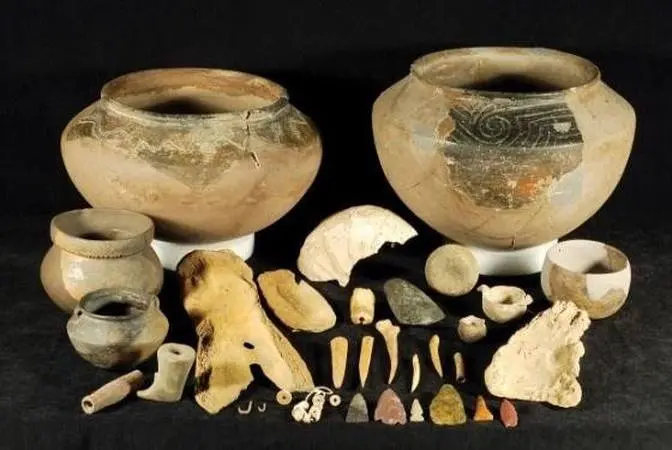
#Archaeology#archaeological artifacts
If someone ever tells you that they definitively understand
or know the true purpose of the Nazca Lines,
I am giving you the permission to ignore them
because they're definitively wrong.
People have been trying to explain the purpose
and function of the Nazca Lines for nearly a hundred years
now, and still no one has figured it out.
And as I've been researching the Nazca Lines,
I realized something about them that I don't think
I've ever seen acknowledged before.
I think that the Nazca Lines are the very first time
in ancient history that we see ancient people
breaking reality.
They transcend beyond the horizon of the natural world.
And what I mean by this is you can build giant pyramids
that boggle the mind as to how you've done this.
You can erect megalithic stone heads like the Olmec heads,
and you look at the size of it and the distance
with which it has traveled, and it just boggles your mind.
But yet you can still comprehend the size of the monuments,
the size of the scale of ancient buildings.
No matter from where you stand,
you can comprehend the size of these things.
The Nazca Lines may be the first
and maybe the only example in all of the ancient world
where no matter where you stand,
no matter what strategic position you put yourself in,
it is not possible to comprehend the size
of the Nazca Lines.
And this is what I mean by this may be
the first and only example of a radical transformation
in which ancient people are perceiving their natural world.
If the Nazca people didn't invent flight
to perceive or see these lines from the sky,
which I think is probably unlikely,
then what this means is that the Nazca Lines
can only be perceived intellectually.
They can only be perceived through the mind.
So the Nazca people are breaking reality.
They are transcending, again, beyond the horizon of nature.
I find that fascinating.
So if I'm not marching through a jungle
searching for an ancient lost city
or stepping through the desert
looking for lost ancient temples,
I'm usually searching for a good historical show
or documentary.
But unfortunately, there are so many shows
like The Pyramid Code, The Story of Egypt,
Time Team, Caligula, In Search of the Trojan War,
and so many others that are only available outside the US.
And that's why I've partnered
with today's sponsor, Surfshark.
With Surfshark, I'm not limited to only watching shows
and documentaries that are available within my region.
In a few simple clicks, I'm connected to my region of choice
and watching anything I want access to.
And I honestly had no idea just how much I was missing out
on before I started using Surfshark VPN.
And with using the code CAVERNS,
you can receive an extra four months for free
as well as a 30-day money-back guarantee.
And you can join me in watching historical shows
and documentaries
that you probably never had access to before.
And believe me, there's a lot of them.
Click the link in the description below
or somewhere on screen and use the code CAVERNS,
that's all caps C-A-V-E-R-N-S,
for an extra four months free with Surfshark VPN.
Now, back to the show.
Okay, so the Nazca culture.
We don't know exactly when it begins.
It probably starts sometime around 500 to 400 BC,
but their pottery really gets amped up
sometime around 100 BC.
Now, when you mention the Nazca,
most people are going to think of the Nazca lines,
the thing that makes them famous,
this enigmatic mystery that is unlike anything else
around the ancient world.
But one of the things that I love about the Nazca,
which is probably my nerdy anthropology side coming out,
is Nazca pottery.
It is so colorful, so vibrant, so well-preserved.
The colors just pop out at you.
You have these really vibrant reds and blues
and whites and greens and yellows.
And they have these wonderful depictions
of the Nazca mythology, the Nazca pantheons.
You have feline gods, you have snake-headed gods,
you have gods who cut the heads off of people
and carry them around and fly in the sky.
It's a beautiful style.
And I've actually been looking around
for Nazca-style decor to put around my house,
and for some reason, it just doesn't exist.
And when I look at Nazca pottery and Nazca art,
I always wonder, we have evidence of this art
beginning sometime around 100 BC,
and it's really ramping up after that point.
But the art style is so perfect and it's so beautiful
and so unique to the Nazca people,
and yet iconic and just perfect.
There's nothing wrong with it.
And I wonder, how many generations,
how many centuries or millennia does it take
for a culture to get to the point
where their artisans have developed their own iconic style
that even 2,000 years later, I look at and I'm like,
man, that's beautiful, I wanna put that in my house.
It takes a long time to get to that point.
And I just wonder how much lost history there is
just behind these artisans.
This is something I think about all over the ancient world.
So the Nazca people begin sometime around 500 to 400 BC,
and they continue to about 400 AD.
And then they essentially evolve or dissolve
into the greater Indian culture
as the Indian world begins to become more unified,
which leads into the unification of the Wari Empire
and the unification of the later Inca Empire as well.
Now, one thing that you may not have known,
but it may not necessarily surprise you,
is that the two, at least what I consider
the weirdest cultures in ancient Peru,
which I think is the place where the most strange
and bizarre ancient cultures in the ancient world
are all packed in together in Peru.
But the Paracas people and the Nazca people,
we've gone over why the Nazca are so strange,
but the Paracas people,
these lived on the Paracas Peninsula on the coast of Peru.
And they're famous,
not because of any structures that they built,
not because of any large towns that they built,
but because of their burials, their textiles,
their iconic art, and from their giant elongated skulls.
They practice skull elongation,
and we don't know exactly why they did this.
We don't know where the precipice of this comes from.
There are some explanations out there
that I think are kind of silly
and not nearly significant enough.
But at some point,
the Paracas culture leaves this Peruvian coast.
They go down onto the Southern Peruvian coast
into the Nazca Valley,
where the Nazca lines are later going to be carved
into the ground,
and they evolve into the Nazca culture.
Now, when they start doing this,
sometime around 500 to 400 BC,
and leading up into around the year zero,
the Nazca developed something
that's going to be very important later on in Andean society
and in some places had already been important,
which is urbanization.
We see the development of what we used to think
was the Nazca capital called Kawachi,
and it's about 40 different mound sites
with two major large pyramids.
And what these pyramids are
are essentially just modified mounds
where you have these Adobe hand-laid brick structures
that are all laid together,
and these are labyrinths of rooms.
Now, there's an anomaly here
that's pretty similar to, let's say, Machu Picchu.
For a long time,
we thought that maybe Machu Picchu
was this big, bustling city,
and later on, archeological evidence actually shows
that there really weren't that many people
living there year-round.
What Kawachi may have been is something more like
a Mecca site or a pilgrimage site,
where people who lived in the same way
that the Paracas culture did, let's say, 1,000 years before,
where they live in very, very small towns,
just little, small villages.
Some are made out of stone,
but most are made out of wood with thatched roofs.
These little, small villages
scattered around the Nazca Valley,
probably next to streams and rivers
that head out into the Pacific Ocean,
they would all meet at certain times of the year
at the Mecca center of Kawachi.
And the reason that we don't think
that there were a bunch of people living here year-round
is because we just don't find
that many artifacts at Kawachi.
Now, this may be because of looting,
or it may just be because
there really weren't that many people living there.
So what the idea is that probably,
from my point of view,
what I've seen traveling around the ancient Americas
is that typically traditional cities are very, very rare.
Traditional cities with actual stone buildings
are very rare.
Most of the time, it's an inner sanctum
with the most important people of that culture.
Now, we don't have evidence for kings in the Nazca culture,
and maybe kings didn't exist at all.
What it may have been more similar to are sacred priests,
people who understand the stars
and can make astrological, I'm sorry,
that can make astronomical predictions about the seasons.
Usually these people develop power
and they become important
because they understand the sacred knowledge of the world.
And through this person that acts as an oracle
between the natural world and the divine or the heavens,
this person needs to be taken care of.
They need to be exalted.
And so usually they're at the center of the civilization.
I say all that to say,
Kaua'ci was probably a temple center.
It was probably an astronomical observatory.
It was probably where the priests
and the astronomers lived.
And I don't know if it was annual.
I don't know if it was multiple times a year.
It probably was.
Everyone would come in from around the Nazca Valley,
migrate to Kaua'ci,
and they would have some kind of festival,
some kind of thing
that brought them all together periodically.
It was officially found by William Farabee in 1922.
And Farabee actually said that he saw evidence of looting
and that he thinks that, quote unquote, mercenaries,
which are just looters,
had already sold all of the Nazca treasures of Kaua'ci
to museums and collectors all around the world.
And that all of the important artifacts
basically had already disappeared.
Now, in the last hundred years,
some Nazca artifacts seem to have just appeared
out of nowhere,
almost as though the black market artifact trade
has been booming for hundreds of years now.
So the Russians are heavily involved in this as well.
Mexico is heavily involved in this.
And so sometimes ancient artifacts
just appear out of nowhere,
but we haven't seen this massive influx
of Nazca treasures appearing anywhere.
And I'm not saying that I doubt Farabee.
I actually believe him.
If he saw major amounts of looting at Kaua'ci,
I just think that these are probably
in private collections around the world
and will likely never see the light of day.
And I've always thought
that there should be some kind of anonymous website
where people can at least send photos
of the things that they own anonymously
in private collections
so that people like me could look at them
and study them and know that they exist,
because there could be something on a piece of pottery
or like a golden artifact.
There could be a golden idol that's found
that confirms something we've wondered for a century or so.
That's just sitting in some trillionaires basement museum.
There's another site that's nearby Kaua'ci
called Esta Correa.
And it's a small, it's definitely residential
based on the artifact record
that was found in the ground around there,
which is basically broken pots
and little bits of burnt ground
where it looks like there were kitchens
or there were fires where food was being made.
But this is a small urban area
where we find the outlines of the foundations of stone homes
and they have these wooden stakes
that are still sitting out of the ground nearly 2000 years
or maybe more than 2000 years later.
And for a long time, they thought what these stakes were,
but they were probably the corners of buildings
where you have these wooden stakes
that would have wooden lentil beams going across
and thatched triangular roofs hanging over them.
That's a pretty iconic building style
for all of the pre-Columbian Americas.
And these little villages
are probably where the Nazca people, the main people,
your farmers and your fishermen were living
while the priests,
the people who hold and covet this sacred knowledge
got to live in the big palaces
that are at the center of the civilization
that everyone eventually migrates to.
And this is actually why I think that,
let's say in the Maya world,
the Maya world, which is not in South America,
it is in Mexico and Central America,
what we call Mesoamerica in pre-Columbian terms.
This is why I think that the priesthood
was eventually corrupted and was turned into divine kingship
because you would have these cults of people
who are studying the stars,
they're studying the moon and the sun.
What they realized is that there is a cycle to the sky
and that by studying these cycles,
you can actually predict things in the future.
And the more you're able to predict astronomical events,
the more you're able to have a control
or a mastery of your natural world.
And the more it essentially elevates you as an individual.
And so I think that these started out
as priests who are carrying out these rituals
to keep the cosmic wheels turning in the sky,
the proverbial cosmic wheel.
And eventually they needed to be propped up.
You need these people who are constantly studying the stars.
So you need people who are employed to bring them food.
You need people who are employed to keep them comfortable.
Medicine begins to be created to keep these priests alive.
And the priest inherently at some point realized
that this sacred knowledge elevates them
and puts a wall or a distinction
between them and everyone else.
And so they become powerful.
And eventually all of this knowledge
somehow culminates in a single person.
Or the priesthood eventually turns into a family.
That may be another possibility.
It turns into a family and eventually culminates
in one divine center of that family,
perhaps the biggest personality, the strongest person.
And that eventually through natural processes
becomes a divine God-King
who is divinely connected to the heavenly realm.
I think that's how kingship forms.
I think it forms through the shamanic world
and through religious practices.
And so I think that we were at least seeing
the first chapter, the first stages of that
in the Nazca world.
But we see that entire transition
or that evolution of civilization
all throughout the pre-Columbian Americas.
So getting to the Nazca lines,
they were actually discovered
by a Peruvian archeologist named Torebo Zespi
while he was hiking through the Nazca Valley.
And he was probably, it doesn't say explicitly,
but there are small mountains around the valley
where you can sort of get a viewpoint
to see some of the smaller lines.
Or at the very least, you can see one end of the line
running off into the distance.
And so it's likely that the indigenous locals
are the direct descendants of the Nazca people themselves
and that these lines had always been known about
since the beginning of time.
But this was the first official Peruvian archeologist
to actually go down there and give them a look-see.
So he probably goes up on one of the hillsides
and documents them.
Now, this is the early 1920s,
but they're later fully realized in the early 1930s
when commercial planes began flying over them
and then small privately owned planes
were flying over them and photographing them.
These are some of the most iconic images
found anywhere in the Nazca realm.
These black and white images,
these crisp black and white images of the Nazca lines.
The actual process of how they were made
is not that complicated in a physical sense.
Essentially what they're doing
is they are taking the stones that are on the ground
and clearing them away
because the bedrock that lies underneath
contains stones that are not as heavily eroded
and weathered.
So you have this white color that appears underneath.
So you can kind of, in a way, sweep the lines
or you can sweep the desert floor, sweep the stones away,
and it reveals this white line from underneath.
Now, the planning, the math and the geometry
behind how the lines are organized
and how they stay perfectly straight
and how they're able to make very complicated images
like the monkey, the spider, the hummingbird, the condor,
or even the people that you see,
I don't know exactly how you do that.
It must've been extremely complicated
having not been able to see it from the sky.
And so from the 1930s,
there's been a countless amount of theories
on what the Nazca lines were used for, what they mean,
what information about the ancient world
we can glean from studying them and what their purpose was.
Were they being used by the Nazca people
or were they just symbolic of something?
They were created in the ground and never visited again.
Well, we don't think that that's true
because we have found evidence of Nazca people
continuously visiting the lines throughout the ancient world.
We can see where people are perhaps on purpose
shattering pottery on the lines
and there's organic material inside the pottery
that can be carbon dated.
And we find multiple piles of it
that come from different centuries all in the same area.
So the Nazca people are continuously visiting these lines
and it looks like that they're continuously
maintenancing them.
Like they have people going out
and sweeping the lines to keep them visible,
which is really interesting.
Visible for what?
Visible for who?
For the people walking it?
I don't know.
Now, one of the theories is that they are sacred paths
related to cemeteries and aqueducts
that are possibly carved into the ground
above sacred burial grounds
while also pointing toward aqueducts or bodies of water
that are somewhere off in the distance.
They've also been proposed to be ritual sites
or enclosures for ancestor worship.
And ancestor worship, like I've said,
maybe it was in the last video,
is pretty wide throughout all of
the pre-Columbian Americas.
It's almost a universal thing.
I think it is a universal thing.
In some places we don't have evidence for actual gods.
Like in the Olmec world,
there's not really evidence,
definitive evidence for gods per se,
but the presence of the worship of ancestors
is basically a universal reality
across all of the pre-Columbian Americas.
So if there's a big mystery about something
that pre-Columbian Americans are doing,
if you say it probably has something to do
with their ancestors,
well, that's probably at least in part correct
because they were all obsessed with ancestor worship.
Another idea which I think I sort of agree with
in some kind of way
is that they're an astronomical clock of sorts,
but this can mean a plethora of different things.
It's said that they may have been lines
pointing towards astronomical bodies in the night sky
or maybe in the daytime sky
and the geoglyphs representing constellations
that the Nazca identified.
So it would be like if today we carved constellations
of the Big Dipper, the Little Dipper, Leo, Draco
into the desert sand,
we would be printing the constellations
that we identify onto the desert sand.
I don't think that this is really a bad explanation
because when I'm looking at the night sky,
sometimes I think I see the Big Dipper
and the Little Dipper in every constellation.
So there's probably an infinite number
of combinations of stars
that you could turn into some kind of image,
some kind of identifiable constellation.
So I don't think it's crazy to think
that the actual images rather than the lines
and the trapezoidal formations
and the triangles that we see,
I think the images that we see are probably constellations.
Another idea is that these are guidelines
that point towards other cities, sacred mountains,
caves, or other large sources of water.
But I don't buy this at all.
I have read a paper,
or I read an entire section of a book
on the lines yesterday in relation to the Nazca
that said that they were pointing
towards the local sacred mountain, which is Quiroblanco.
And I looked on Google Earth
where you can kind of flatten your perspective.
There are almost no lines
that point directly to this mountain,
which is the largest mountain
that sits just above the Nazca Valley.
And pre-Columbian Americas,
it's not like they started figuring out their geography
and the lay of their land around,
let's call it 500 BC in the year zero.
They had it figured out for thousands of years before that.
We know that that's the reality.
So they didn't need a guideline that says,
okay, so we're here today and we wanna be in Lima.
So we need to follow this line just to find Lima.
No, they had all of that figured out
thousands of years beforehand.
So they're definitely not guidelines
that are pointing people towards certain locations
just so that they can get there.
That just makes no sense whatsoever.
And then we have Eric Von Daniken's idea
that these are landing strips for spacecraft.
Totally ignoring the fact
that aliens probably don't need landing strips.
They probably have zero point energy or something like that.
And they can just raise up,
sit in the middle of the air, hover and go back down.
They could probably land wherever they want to.
Also, there's nothing in the Nazca archeological record
that makes us think that they were interacting
with extraterrestrial beings.
Now I'm not an alien denier.
I'm not saying that aliens never visited the ancient world
and they didn't poke around with ancient people
and mess with them.
I don't know.
But I definitely don't think that the Nazca lines
are landing strips for ancient spacecraft.
I think that landing strips are only necessary
for our very limited human technology
where we need a thousand yards for a Boeing 747 to land
and finally slow down and release all of its energy
to be able to come to a stop.
I don't think that aliens that are able to travel
all the way across the universe
really need to worry about something like that.
I'm kind of just poking fun,
but Eric Von Daniken's theory on the Nazca lines
used to be a big deal long before I was born.
So I thought it's worth mentioning.
And then we have a guy called Jim Woodman.
And he was an author, journalist, explorer in the 1970s.
And this actually blew my mind.
I think this is pretty interesting.
It's kind of like a Contiki,
raw Thor Heyerdahl expedition here
that I was completely unaware of.
So Jim Woodman, after he had flown over the Nazca lines
in the 70s, it must've been a little prop plane
and he's looking down on them.
He was absolutely convinced that there is no way
that with the massive scale of the Nazca lines
and how they're completely imperceivable
from any position that you're standing in the Nazca Valley,
even if you try to get up on the mountaintop,
you can barely see or comprehend
the lines that you're looking at.
You can only see a portion of them
as they just disappear off into the horizon.
And so he's looking at the incomprehensible scale
of these things and how high you have to fly
just to be able to see them.
And he's like, there's no way
that ancient people were not in the sky,
that the ancient Nazca people were not in the sky
looking down on these things,
which is, I mean, I don't think that's a crazy thought.
I mean, this is something that's breaking reality.
The Nazca people, their creation,
even to be able to conceive of making the lines,
think about this, you're breaking out
of the prehistoric mindset
where there are things in front of you
and you can only interact with what's in front of you.
They are now imagining and perceiving things
and creating things that may only be able
to be perceived in the mind.
They're breaking out of nature.
I'm just trying to help you comprehend this idea.
They are breaking out of the fabric of reality,
which is mind-blowing.
When I realized that, when I thought about that,
I was like, whoa, that's,
I don't think that there's anything else like this.
Even the pyramids in Egypt
are nothing like the Nazca lines.
You can stand at the foot of the pyramids
and you can look up and be like,
wow, that's a giant pyramid.
How did they get those stones up there?
How did they make something this large?
But you can comprehend it.
I mean, no matter what position you're standing at
on the Giza Plateau, you can look at the pyramids
and be like, yeah, that's a giant pyramid,
but it's right there.
Imagine something so big
that no matter where you're standing,
it's still too big to see the whole thing to comprehend it.
That's what I'm saying.
They're breaking out of the fabric of reality here.
Just trying to get that into our brain.
And so he, like Thor Heyerdahl,
how he would, Thor Heyerdahl would create these,
would create these wraps that are consistent
with the materials of the ancient culture
that he was studying, whether it was Polynesians
or whether it was the ancient Egyptians
or the ancient Mesopotamians.
This guy used naturally woven textiles,
using indigenous methods to create a hot air balloon.
And he dug this hole in the ground nearby the Nazca Lines.
And he burned a bunch of wood in the hole
to fill up this essentially hot air balloon.
And he had it like a little indigenous native raft
that was connected to it.
And sure enough, he flew over the Nazca Lines
in this indigenously, materially created hot air balloon.
And while that's absolutely amazing,
there just isn't, I mean, we just don't have any evidence
of the fact that the Nazca people
were able to make hot air balloons.
Now, the method by which he did it was
he created this little tunnel or chamber under the ground
and he burned a bunch of wood in it.
Well, that leaves a lot of residue
of burned wooden material,
charcoal and soot inside that hole.
And probably, it's not impossible,
but probably we would have found burn marks
somewhere around the Nazca Valley.
And with the amount, I mean,
there are thousands of these lines.
If they're going up and checking the lines every time,
there would probably be a plethora of evidence
of something burning to be able to make the hot air balloon.
That said, I often say this about Native Americans,
we're not studying people who were anything like us.
These were basically aliens.
And they don't think like we do.
They didn't perceive the world in the same way that we do.
The way that they comprehend science
and the material realm is so different and so foreign to us.
That said, I sure would love to find the evidence for it.
All right, so the latest theory on the usage
and the purpose and the reason
for the creation of the Nazca lines,
they've kind of dusted off an old theory
that these are sacred walking paths.
That by walking the path, walking this line,
you would somehow conjure up the energy of the glyph
or the image or the line that you're walking.
And that it was a, it's described in a very vague way.
Like sometimes when I read these academic papers,
I feel like they are writing it in a way where,
in a way where they kind of want to have an answer,
but they don't really have an answer.
So it's written as though they know what it is,
but it's some kind of vague thing where it's like,
this is a cultural expression of the Nazca people
onto the ground.
And these are sacred walking paths
that are walked to imbue the civilization
with the energy of the geoglyph.
It's something vague like that.
And I just wish they were more blatant about the fact
that they don't really know,
that they don't really have a comprehensive understanding
of these things,
rather than some incredibly vague explanation
that is kind of, I'm like rattling my brain at like,
is there something wrong with me when I'm reading this?
Why can I not comprehend what they're trying to say?
I think it's because it just doesn't make sense.
I think it's because the Nazca lines in general
make no sense.
Well, why do they make no sense?
Well, okay, so first off,
I'm not gonna say that walking the paths
isn't what they were doing.
They were definitely very active on the Nazca lines.
If you could walk around the Nazca Valley on the lines,
you would find millions of pieces of pottery
that are shattered on the ground,
or maybe even full pieces of pottery.
You'd probably find spear points
and arrow points all around there.
You would be able to tell that the Nazca people
were walking all over these lines.
So the idea that they're walking the lines
is probably not wrong,
but it's definitely an incomplete explanation
as to what these are.
They definitely are cultural expressions,
but we don't really know what the cultural expression is.
Another thing that's strange
is that the geoglyphs themselves,
the ones, not the lines,
but the images that are in the ground
are sometimes but are usually inconsistent
with the Nazca pottery.
So all the images and these mythological beings
that we think must exist in the Nazca pantheon
or in the Nazca consciousness,
not all of them appear in geoglyphs.
And some things that appear in geoglyphs
are not depicted on Nazca pottery,
of which there's a lot of Nazca pottery.
So there's something else going on here.
I'm not exactly sure what it is.
Now, as far as the lines
pointing in every direction imaginable, why is this?
And one explanation is that
when they're walking along these lines,
the lines are usually pointed towards what we call huacas,
which are like sacred places.
They can be mountains
or they can be bodies of water or streams.
I encourage you just go on Google Earth
and try to follow one of those lines.
It'll go on and on and on and on and on and on
and on off into the distance
and usually to nowhere in particular.
There are thousands of these lines
that are being marked all across and on top of each other.
I don't think that the purpose of the lines
is that you would start at one end and walk to the other
and that it would lead you
to some kind of sacred source of water
or some kind of sacred hill or sacred geological formation.
I don't think that they're leading to what we call huacas,
which are sacred places.
I don't think that's what it is.
My theory is, as I've been studying the Nazca lines
and as I've been studying
the pre-Columbian Americans in general,
the reality of astronomy and the study of stars
is pretty universal.
It's almost everywhere, especially by about 500 BC.
All across the Americas,
almost everyone is an astronomer by this point.
And by the time we get to 500 AD,
everyone is involved in astronomy
because it's just, it's the sacred clock.
You need astronomy to have a thriving civilization.
And as all the civilizations get larger
and larger and larger,
militaries become formed
and you need food to feed the military.
So you have to be dialed into the cosmological wheel
that's spinning in the sky
that tells you when the seasons are coming
so that you can plant and harvest your crops
and feed your army and feed your people.
It's this momentum,
this wave of civilization that moves in
that forces people to be involved in astronomy.
So the Paracas people,
of which the Nazca are descendant from,
we have no evidence
of significant archeological sites like cities.
What they're famous for, again,
are their skulls and their textiles and their art,
the woven art that they would be buried essentially within.
The Paracas people may be a pre-astronomy culture
that existed in their late period around 1000 BC.
So it doesn't seem like astronomy has hit these people yet.
They're living on the coast.
They're able to fish.
They have everything they need.
And they're not agricultural people
as much as other cultures around the Americas are.
They're doing a lot of fishing.
So they don't have to be tuned into the cosmic wheel.
Now, as they move down and away from the waters
and they're not fishing as much,
they're still fishing a little bit in the Nazca realm,
but they're also growing corn in these valleys
that lead to the Nazca valleys,
these valleys that go off into the Andes.
So they have to be tuned into astronomy.
Now, what's the dead giveaway for this?
I haven't seen this said anywhere,
but as I've said all over the place
on like every podcast I've ever been on
is that almost all pre-Columbian cities,
it depends on how ancient they are,
but almost all of them are oriented not to true north
of which the ancient pre-Columbian Americans
would have been certainly aware of,
they are angled slightly northeast.
And this can vary.
It depends on where the sun rises on the Eastern horizon
to these cultures and what hemisphere they're on
and what their latitude is.
But usually it's somewhere around 15 to 25 degrees northeast.
Now, this coincides like I was talking about
in the last video, secrets of the Mexican pyramids.
This coincides with the helical rising
of the Pleiades in the night sky.
And I'm not gonna get overly into this.
If you wanna watch this, you can see the last video,
but essentially the rising of the Pleiades in the night sky
as it brings the sun into the sky,
it's the last constellation that appears
on the northeast horizon.
It symbolizes rebirth and growth.
And if you align your structure to it,
you will be tapped into the astronomical clock
that essentially runs the ancient world.
And if you can align to this and be tapped into this,
you will know when the harvest is coming.
You will know when it's time to plant,
when the rainy season is coming.
That's a whole other thing.
The sacred priest city that we used to think
was the capital city of the Nazca realm,
Koachi, is aligned to northeast.
So the Paracas people migrate away
from the Paracas Peninsula,
and they become the Nazca people,
and they adopt astronomy.
So the orientation of the city itself
or of this priestly Mecca site is telling us
that the Nazca are involved in astronomy.
This is something that is not widely acknowledged
by South American archeologists.
I just read a book on this,
and there's absolutely nothing about this in that book.
And there's nothing to indicate in that book
that the lines definitively have anything
to do with astronomy.
So the reason that I think that the Nazca lines
make absolutely no sense
is because I think that the Paracas people,
as they evolve into the Nazca,
they are trying to figure out astronomy.
They see all these other people around the Andes,
around the pre-Columbian world,
experimenting with the stars
and trying to understand them.
And I think that the reason
that we see so many thousands of lines,
one laid on top of the other,
laid on top of the other,
is because the Nazca people are experimenting
with what alignments to what constellations work.
And they're trying to,
I think they're trying to figure out the clock in the sky
and see where these alignments come in.
And I think that probably the vast majority of the lines
are not a mistake,
but a step towards fully understanding the night sky.
And so some of them become irrelevant
and they're carved over.
And that's why the Nazca were only repairing
and quote unquote sweeping some of the lines
and not all of them.
Also, there's evidence that the geoglyphs
that depict like animals and people,
these were being made in earlier periods
because we can see the lines
and trapezoidal formations
that just cut right through them and erase them.
So it's almost like at some point they move on
from making the geoglyph images in the ground
and they're just focused on lines.
And I can't explain that.
I don't know if anybody will ever be able to explain it.
I think it's just a proverbial mystery.
But what I think that the Nazca lines are,
are almost certainly early ancient astronomers
experimenting with the daytime and especially nighttime sky
and trying to figure out the cosmic wheel
that is spinning above them
and why some stars spin every day,
why some appear and why some disappear
and why some return to the place that they were at before.
And you can imagine, you look up at the night sky
and especially thinking about
when there's no light pollution,
just how many stars they may be interested in tracking
and when you're at the very precipice of learning astronomy,
there's a lot to figure out there.
And that's why I think that the Nazca lines
don't make sense because without a person
who is an actual ancient Nazca that could speak Spanish
or speak Quechua, some ancient South American language
that we can communicate with,
without somebody to explain the Nazca lines to us
and make sense of their process,
the Nazca lines just aren't going to make sense.
And that's why if anybody ever tells you
that they definitively understand
the true purpose of the Nazca lines,
I am giving you the permission to ignore them
because they're wrong.
Let me know if you guys like this style of video.
All I did here was I researched this video
the same way that I did before,
but really I just have some bullet points in front of me
and I'm just going off the top of my head.
I think this feels much more conversational.
I'm really kind of able to get a lot of the details out
that I may have not pondered on
or really spent a lot of time on before.
And I think it feels more casual,
more like we're sitting on a podcast
or having a conversation together.
So for those of you that have watched it to the end,
let me know what you think of this tone.
I kind of like the conversational tone
and I noticed that when I'm on podcasts,
people really enjoy that conversational tone
and they don't care too much
if it's not highly condensed and ultra produced,
if it's just more natural.
I'm always going to put the highest effort
into my camera quality, my office, my set,
make everything look nice.
I use high resolution images.
I make everything look nice,
but I think that I like this conversational tone a lot.
So let me know in the comment section below what you think.
I'm Luke Caverns.
If you want more videos on the history and mysteries
of the ancient world,
well, please like and subscribe for more.