
The Disturbing Truth About Ancient Egypts Rituals
AI GeneratedMay contain errors
Video Summary
AI GeneratedThis video delves into the mysterious and unsettling side of ancient Egyptian archaeology, moving beyond royal treasures to examine tragic family secrets, bizarre animal mummification, and violent historical records. From the \"Screaming Mummy\" to prehistoric cave art, it explores the complexities of funerary rites, political conspiracies, and early architectural experiments.
Hi, it's Katrina. Picture this, a mummy frozen in a scream of pure agony for 3,000 years,
then a 10-foot sacred crocodile stuffed with baby mummies inside its belly,
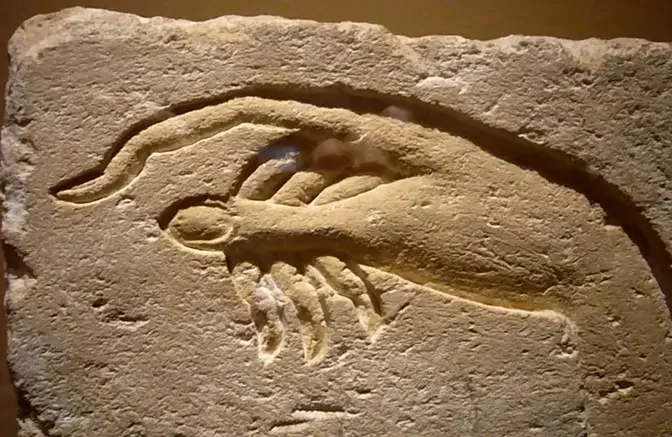
and buried right outside a pharaoh's throne room, pits of surgically severed human hands.
We usually picture ancient Egypt as all gold masks and clean limestone pyramids,
but the deeper archaeologists dig, the weirder and darker the truth gets.
These are the strangest, most unexplainable discoveries from Egypt.
The Tiny Coffins and King Tut's Tomb
Everyone knows the story of King Tut's tomb and the mountains of gold buried inside,
but behind all of the glittering treasures was an intimate family tragedy that most
history books skip over. Hidden among the relics were two tiny coffins.
While uncovering Tutankhamen's resting place rewrote Egyptian archaeology,
it also exposed the dark, heartbreaking reality of royal bloodlines and an empire
desperately clinging to survival. It was such a huge discovery because,
up until this point, nearly every single tomb found in the Valley of the Kings had been looted
in ancient times. Mummies were found, relics were discovered, but the tombs had already
mostly been picked over. Archaeologists were like scavengers at the end of the world,
showing up to rifle through a few leftover cans of soup in the empty supermarkets.
Then they found the sealed tomb of King Tut, and everything changed.
There were so many treasures inside the tomb that I could tell you about,
but today I'm here to talk specifically about Mummy 317A and Mummy 317B.
Tucked away among the glittering gold of King Tut's tomb was a quiet tragedy,
the mummies of two tiny infants. At first, people thought that these
children might have been sacrificed to serve the pharaoh in the afterlife,
but medical investigations uncovered a far sadder reality.
They were his daughters, stillborn late in pregnancy or lost in the moment surrounding
birth. The ancient royal obsession with keeping bloodlines pure meant that Tutankhamun and his
sister-wife had tried to have children, but they didn't make it. It wasn't a sacrifice,
it was his own children that had died. They were lovingly mummified and placed into elaborate
nested coffins just like their father. Mummy 317A was fitted with a gilded mummy mask,
which was typical for royalty. However, Mummy 317B was so tiny that her gilded mask wouldn't fit.
It was actually found more than a decade later in the leftover material from Tutankhamun's
mummification in KV54. KV54 was a cache built just to hold what couldn't fit in Tut's tomb.
The mummified infants have been examined several times since they were discovered.
Howard Carter unwrapped Mummy 317A in 1925. In 2008, both infants were CT scanned,
but scientists couldn't determine any cause of death.
Neither of the children had any observable conditions or any detectable diseases.
The most important tests were the DNA tests to determine the mother of the girls.
From the time they were discovered, it was assumed they were the children of Tutankhamun
and his only known wife, Ankesenamun. Between 2007 and 2009, researchers tested the DNA,
and sure enough, both the mummies were confirmed to be the children of Tutankhamun with a probability
of 99.97%. The DNA tests also revealed that the mummy discovered in tomb KV21 was the girl's
mother. Not with 99.97% certainty, but with strong enough results that archaeologists are
convinced. Here's where this historical mystery takes a wild left turn. For decades, historians
believed that the mother of these babies had to be Ankesenamun, King Tut's only known wife and
famously his half-sister. So when geneticists tested an unidentified female mummy discovered
in tomb KV21 and confirmed she was the biological mother of the two infants, everyone thought,
case closed, that has to be Ankesenamun. But then they ran the DNA up the family tree
and hit a brick wall. If that mummy really was Ankesenamun, she would be the daughter of the
famous heretic pharaoh Akhenaten, and that would make Akhenaten the maternal grandfather of those
tiny babies. But when the lab compared the infant's DNA directly to Akhenaten, the match
vanished. He wasn't their grandfather, which meant the woman resting in KV21 couldn't possibly be
his daughter. And suddenly, the woman that everyone assumed was Ankesenamun might be
someone else entirely. Think about what that means for a second. If this mysterious mother
wasn't Akhenaten's daughter, Tutankhamun wasn't having children with his sister. He might have
been with an unknown consort, meaning the royals might have finally realized, we have to diversify
this bloodline or we're doomed. Or, of course, the puzzle pieces are simply mixed up. Ancient
Egyptian genealogy is a tangled web. Maybe Akhenaten wasn't Ankesenamun's real dad. Or maybe
the body we think is Akhenaten is an entirely different nobleman. When you're testing 3,300-year-old
bones, nothing is ever easy. But no matter how you spin the family tree, the ending never changes.
King Tut died at just 19, leaving behind an empty throne and two miniature coffins
holding his unborn daughters. An entire empire's legacy snuffed out. The royals spent generations
obsessed with keeping their divine blood untainted. And in the cruelest twist of history,
the bloodline died out simply because they made it too pure to survive.
A Crocodile Mummy Stuffed With Crocodile Mummies
Finding a mummified crocodile is strange enough on its own. The Egyptians mummified plenty of them,
but seeing an apex predator wrapped neatly in linen bandages is always a little unsettling.
Now, imagine running a massive 10-foot croc through a CT scanner, only to discover its
belly is crammed like sardines with dozens of tiny baby crocodile mummies. In 1828,
a 10-foot-long crocodile mummy was put up for display at the National Museum of Antiquities
in the Netherlands. It's been there ever since, with no one realizing it was holding a seriously
disturbing secret. Scientists at the museum had previously subjected the mummy to X-ray and CT
scans, which revealed something strange. The crocodile is actually two juvenile crocodile
skeletons morphed into one. I'm not sure why, and neither are the museum experts,
but they knew it was unusual. A little while later, they decided to revisit the mummy and
perform a much more comprehensive 3D CT scan ahead of a new exhibit opening. Museum researchers
weren't sure what they were going to find, but they certainly did not expect 47 small crocodiles
packed like sardines into the much larger beast. To say they were shocked would be an understatement,
but why? What was the point of shoving 47 tiny crocodile mummies into a conjoined pair of
crocodile skeletons? It doesn't make any sense, at least not to us today. It also doesn't make
any economic sense. Let me tell you a little something about mummification. In ancient Egypt,
it was a huge business. Most people think the Egyptians only mummified themselves for burial,
but that's not the case. If you lived in Egypt 3,000 years ago and you had a job interview,
you would first go to the market and buy a mummy. Maybe it was a cat mummy, maybe a baby crocodile,
or maybe a much more expensive baboon from the land of Punt. You would then take your purchased
mummy and go to a temple where you would offer it to your god of choice during a religious ritual.
With the blessings of the gods upon you, you would go to your job interview with lots of confidence.
That's why it was a massive business that affected every single aspect of Egyptian society.
The 47 individually wrapped crocodiles inside the much larger specimen would have been worth
a fortune, but why were they inserted into the bigger one? Researchers at the National
Museum of Antiquities don't know. They don't even have a guess because it is that weird.
I mean, I guess they do have a guess. They said it could have something to do with the
Egyptian belief in resurrection, but that's a wild shot in the dark. I mean,
you could come up with that theory too. Let me know what you think in the comments.
Secrets of a Mummy from the Louvre
In September of 2024, a very strange patient was brought into the hospital in the town of
Lens in northern France. The patient was already dead and had been for 3,000 years.
The patient was prepped, laid onto the examination table, and slid into a modern CT scanner.
Peering through the safety glass was an anxious room packed with reporters and camera crews
all waiting to see what the 3D scans would show. The patient was named Neha,
normally seen on display at the Louvre Museum in Paris. Since Neha had never been unwrapped
in his 3,000 years of slumber, archaeologists thought it would be fun to peek underneath
his linen bandages. What they found was not what they expected. Neha is completely encased in his
funerary wrappings. He has the standard linen bandages that Egyptian mummies are famous for,
but he was also enclosed in a cartonnage, which is sort of like a papier-mâché funerary shell
made from glued layers of linen. It's like a cast that goes over the mummy to protect its body and
soul. Neha would have been inserted into his cartonnage through a slit in the back, which
was then sewn shut. Today, only his feet are visible because the bottom of his shell broke off.
The cartonnage served a dual purpose in Egyptian mummification. It protected the body from decay
and also provided a surface for sacred images. Neha's cartonnage depicts his own self being
brought before Osiris, god of the dead. Standing behind Osiris are the gods Horus,
Isis, and Nephthys, representing Neha's ultimate judgment in the afterlife.
Neha himself is depicted in a loincloth and linen tunic, with a cone on his head of perfumed
ointment. Ancient partygoers used to wear these solid cones of scented animal fat,
letting their body heat slowly melt the wax so it dripped fragrance all down their hair and clothes.
Everyone has always wanted to smell good. The inscription on the cartonnage identified Neha
as a scribe with the school of Amun, working at a temple. The specific temple is unknown,
but judging by the skilled artwork on the cartonnage and the fancy wrap job,
Neha was in the upper class. Scientists didn't want to break any more of his cartonnage to
investigate his body, so they opted for a CT scan. The scan produced a remarkably clear image
of the skeleton and some metallic objects inside his body. There was a long chest plate under the
wrappings, a smaller plate on his left side, an evisceration plate, several amulets gathered
around his chest, and a stone scarab placed over his sternum. Like I said, Neha was from the upper
class. He would have had to be extremely rich to afford this kind of send-off into the afterlife.
The strange part is the evisceration plate. Egyptian embalmers typically cut into the left
side of a person's abdomen to remove their organs. They didn't leave the incision open
because it was believed the soul might slip out, so it had to be sewn shut. Not only sewn shut,
but covered with a protective metal plate inscribed with the eye of Horus. This was to
ensure that no evil could get into the body. Evisceration plates are perfectly normal in
Egyptian mummies. The not normal part is that Neha's internal organs had been removed during
mummification and then put back into his body. Scientists think this might be evidence of a
bizarre practice in which embalmers started removing organs, drying them out like raisins,
wrapping them in cloth, and then sticking them back inside the body. The normal traditional
method was to remove the organs and place each one in its own special canopic jar.
But somewhere in history, a new method saw the organs get dried out and re-inserted into what
are now known as canopic packets. As if that weren't strange enough, the scan also caught
the aftermath of how they handled his head. Using long hooks, priests had pulled his brain out
through his nasal cavity, though they weren't entirely thorough. Tucked against the back of
his skull, a small piece of brain tissue had survived untouched for 3,000 years.
From organs packaged like luggage to botched brain removals, Neha is full of information
about ancient Egypt's relationship with death and mummification.
The Screaming Mummy The Screaming Mummy is without a doubt the
most terrifying of all Egyptian mummies. It's famous because its mouth is open in an eternal
scream of agony, making it seem as if the mummy's soul is being tortured in some ancient Egyptian
hell. The explanation behind the screaming mummy's mouth and pained expression eluded
scientists for years, but now they know exactly what happened, why the mummy is screaming,
and it's a doozy, it might be one of the most dramatic events in ancient Egyptian history.
The Screaming Mummy's real name is Prince Pentawerri. He was the son of Pharaoh Ramses III.
He also killed his own father and then died under suspicious circumstances after being put on trial.
You could recently stare at him at the Egyptian Museum in Cairo where he was on display.
The explanation for his scream is simple. He was never properly mummified. The embalmers didn't
use any embalming fluid. His body was not properly wrapped, being bundled in sheepskin instead of
linen. For the Egyptians, sheepskin was an impure material. It was something you'd wrap a degenerate
in who didn't deserve a proper funeral. Prince Pentawerri was then allowed to mummify naturally,
with his mouth already gaped and his facial muscles strained. By the time he was finished
drying out, he looked like he'd been screaming for the last 10,000 years. But did he actually
die screaming? Or did the Egyptian priest contort his face on purpose as punishment for what he did
to his father? That's the question that scientists can't really answer. Let me tell you the story
and then let me know what you think. In 2012, a team of scientists performing tests on the
mummified remains of Pharaoh Ramses III discovered how he died. Somebody slashed his throat, likely
as part of an assassination plot devised by his own son. The same scientists also performed a
genetic analysis to confirm the screaming mummy was indeed the Pharaoh's son, which of course he
was. If not for one very special document, this is where the investigation would have ended. Nobody
would have known about the assassination attempt. They only would have known that Ramses was
murdered and that he was related to Prince Pentawerri. Thanks to the judicial papyrus of
Turin, researchers have put the entire story together. This ancient document recounts the
trials that occurred after the prince's successful assassination of his father in the year 1155 BC.
The trial was overseen by a group of butlers loyal to Ramses III. A large number of people
were brought to this trial, all of them allegedly aiding the ambitious prince in his dreams of
murder. The accused included military officials, women from the royal harem where the murder
physically took place, civil officials, and a number of men who worked at the harem. Ramses III
was ambushed in the harem by multiple assassins working for his second wife Tighe and her
ambitious son, the prince. In a coordinated, violent strike, attackers chopped off the
pharaoh's big toe with a heavy blade before slicing a deep lethal gash straight across his
throat to the bone. Naturally, the group of butlers overseeing the trial condemned the conspirators to
death or mutilation, depending on the severity of their involvement. Pentaure was the ringleader,
so he was cooked no matter what. It seems that Tighe was the one who convinced the women of
the harem to join the plot, likely in an attempt to usurp the throne. In other words, she wanted
her son to be king. Instead, she may have killed him. The judicial papyrus is a little vague here.
It says that when the young prince was placed before the butlers to be examined,
they found him guilty and left him where he was. When they returned, he was dead.
How exactly he died is a matter of debate. Some think he went the Cleopatra route and
others are more convinced he pulled an Etsy. No matter how he died, he did not escape punishment.
Pentaure was not given a royal burial. He was not embalmed properly and went down in history
as the scariest mummy ever discovered. He wasn't even found in a tomb, but in a mummy cache at
Funny enough, that's where they found his father too. Although Ramses III was initially buried in
a royal tomb in the Valley of the Kings, his tomb was robbed and his mummy was dumped in the same
cache as Pentaure's mummy. Father and son remained together until the cache was found in the 19th
century. The pit of severed hands. In 2011, archaeologists excavating a palace courtyard
in the ancient city of Avarice dug into the earth and stumbled onto an absolute nightmare.
Three shallow pits packed with 12 severed human hands. Naturally, the discovery sent a chill
through the archaeological community. Was this the gruesome sight of mass royal executions?
Some kind of cruel legal punishment? Or did it point to a much darker ceremonial ritual?
For years, nobody knew for sure, but recent forensic analysis published in Scientific Reports
cracked the case wide open, revealing that these hands are the only physical evidence ever found
of a brutal ancient ceremony known as the Gold of Honor. This was a battlefield honor system
where soldiers traded gruesome war trophies for pure gold. To prove their body count,
soldiers severed specific body parts from slain enemies, most often the right hand or
occasionally the phallus, and brought them directly to royal scribes. The scribes would
tally everything up and then bury everything in pits. The hands were removed cleanly, with no
rough hack marks or forearm fragments left behind. It was almost surgical. They were carefully
prepared trophies buried right where a king could stand and gaze upon the spoils of war.
Most of the hands belonged to men between the ages of 14 and 21, prime fighting age.
Scientists also say the ceremony took place right after the rigor mortis ended, so between 24 and
48 hours after death. To understand why someone was burying hands right outside the throne room,
you have to look at who was running the show around 1640 BC. This part of Egypt was ruled by
the Hyksos, outsiders from the east who rolled into the Nile Delta with horses, chariots, and
some pretty intense new traditions. For centuries, historians had seen tomb art showing victorious
soldiers trading severed enemy hands for gold jewelry, but many assumed that it was just symbolic
propaganda, until researchers found these pits. The courtyard pits were positioned for maximum public
spectacle, buried right in front of the throne room so an entire crowd could watch.
The Bent Pyramid of Sneferu Not all strange archaeological
discoveries in Egypt have to do with tombs and mummies. Let's talk about the Bent Pyramid,
the most unusual of all the Egyptian pyramids. It was one of the first ones ever built,
discovered at the necropolis of Dahshur. The ancient Egyptians called it the Southern Shining
One because it was made of polished limestone which made it gleam like brilliant white marble
in the sunlight. It was built by the pharaoh Sneferu who ruled around 2600 BC. He was the
founder of the fourth dynasty and the stepfather of Pharaoh Khufu who years later would build the
Great Pyramid. But before that could happen, Sneferu got the ball rolling by constructing
his pyramid on the west bank of the Nile, about 25 miles from Cairo. The reason this pyramid is
so unique is that the walls bend inwards at the top section, making it a bent pyramid. It's only
one out of five old kingdom pyramids still standing. Even after all this time, it even
still has its limestone casing, which is more than can be said for Khufu's pyramid. But why the heck
did Sneferu bend his funerary monument? And why didn't other pharaohs follow suit? The bend itself
is due to a change in the pyramid's slope. The walls of the lower part rise at an angle of 54
degrees. Then, 161 feet above the base, all of a sudden the slope flattens to 43 degrees. But why
was the angle changed halfway through the project? One theory is that Sneferu changed the building
plan after another pyramid collapsed and he feared that his would be destroyed too. Another popular
theory is that the pyramid was taking too long to build. The pharaoh got impatient and reduced
the angle to speed up construction time. Then again, maybe the odd shape was intentional for
religious reasons that are so old and forgotten, there's no way anyone will ever figure them out.
Another interesting aspect of the Bent Pyramid is that some Egyptologists claim the Satellite
Pyramid nearby was built for the purpose of housing the pharaoh's soul. 180 feet from the
main structure is a much smaller pyramid only 85 feet high. I mean, I say only as if it's still not
a gigantic stone triangle. The faces of the Satellite Pyramid are inclined at an angle
similar to the Bent Pyramid's top portion. It contains a burial chamber accessed through a
corridors similar to what you see in the Great Pyramid of Giza. This familiarity has led some
experts to theorize Khufu's pyramid chambers were designed to hold different aspects of the pharaoh
such as his body and his spirit. Four and a half thousand years later, the Bent Pyramid stands as
a colossal monument to human trial and error, a bizarre shifting silhouette that proves
even kings had to learn the hard way. The Headless Woman in the Cave of Darkness
When you think of ancient Egypt, you imagine pyramids, mummies, and all of that. But
archaeologist Hisham Hussein with Egypt's Supreme Council of Antiquities is focused on a different
kind of ancient Egypt. Hisham recently surveyed around 350 petroglyphs in Egypt's Cave of Darkness
and a lot of them were headless women. This is certainly one of Egypt's weirdest discoveries
in recent memory. Hisham has been examining the prehistoric rock art of Egypt's Sinai Peninsula
for more than 25 years. But when he entered the Cave of Darkness, officially called Al Zulma Cave,
he found something he had never seen before. The petroglyphs inside the cave were unlike
anything he'd encountered in his entire career. The cave walls were covered with overlapping
petroglyphs depicting an estimated 150 animals, including some that are extinct. There were
camels, gazelles, ostriches, all of which would have been common sights in ancient Egypt. There
were also images of aurochs, the legendary extinct species of wild cow that once roamed
Europe and North Africa. Finding this many petroglyphs of animals was pretty great, but this
was just the tip of the iceberg. Hisham also found more than 100 engravings that show headless women.
That's it. So who in the world made these engravings and what are they supposed to mean?
Hisham said the engravings predate Egyptian civilization by 10,000 years. The engravings
during the Ice Age, 15,000 years ago by humans living in the Sinai Peninsula when it was a lush
savanna covered in greenery. During the Ice Age, while much of North America and Europe was
covered in an ice sheet, prehistoric humans likely lived here permanently in a much more
hospitable environment. It was the perfect location, full of food, lots of water, not too
cold, and lots of dark caves for making art. Even so, the headless women are unusual. You don't
see 100 headless women in European caves. Where you do see them, though, is in European trinkets
from the Ice Age, known as Venus figures. There are hundreds of Venus figures, prehistoric statues
of women with very specific physical attributes. They were crafted for a consecutive 30,000 years,
with the last ones being made at the end of the Ice Age, 11,000 years ago. The common
characteristics of these figurines are exaggerated feminine features, but the heads are usually
missing, or too small to even be heads. Scientists have always wondered why the Venus figures are
headless, but no one really knows. The connection with the cave of darkness is that the engraved
women have the same proportions as the Venus figures. It's just too uncanny for it to be a
coincidence. Even so, experts are clueless. Were the engravers part of the same Stone Age culture
that created the Venus figures? Do the figures and engravings depict a goddess or divine entity of
some kind? Or maybe Eve, the first woman? Sadly, there is very little additional information on
the cave of darkness. Hesham's discovery was only published a few days before I made this video,
so I'm sure there's going to be more information coming out as he continues his exploration,
so whenever there's anything new, you can bet I will let you know. Thanks for watching! What's
your favorite discovery ever made in Egypt? Let me know in the comments! Be sure to subscribe
if you haven't already and I'll see you soon for more videos on ancient history. Bye!