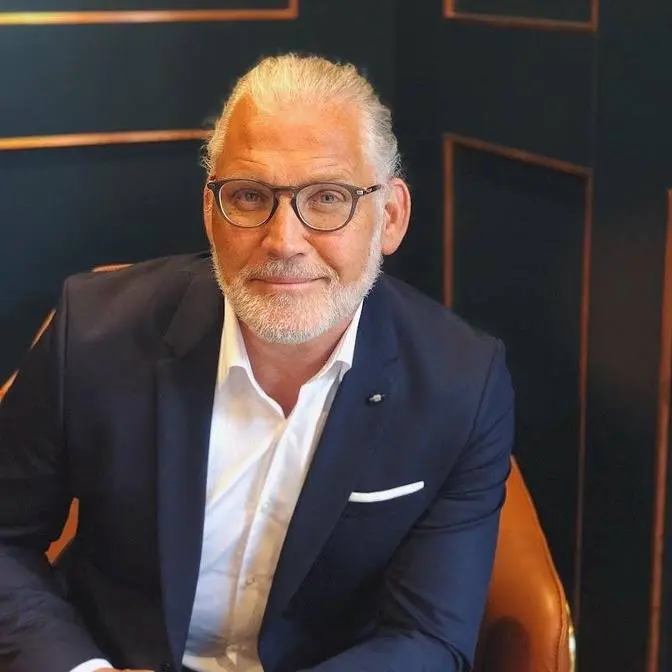
In this episode of Leadership Insider, I unpack an idea I’ve spoken about for years: leaders don’t come assembled.
When we say we’re “short of leaders”, what we often mean is we can’t see the finished product. But no one starts finished. Every accomplished leader you admire began as unassembled potential — an ingredient, not a completed dish.
Great leaders don’t look for the final form. They look for component parts: initiative, honesty, emotional intelligence, courage, independence. What others see as awkward, disruptive or unfinished, they see as raw material.
This episode is about training your eye to spot potential in ingredient form — and having the courage to assemble it.
If you can’t afford to hire the finished article, grow your own.
Stop searching for assembled leaders. Start building them.
Subscribe and follow for more inside conversations on leadership, culture and growth.
Hey, welcome to Leadership Insider. Today I want to speak to you about this idea that I articulated
years ago now and spoke about around the world at different times, that leaders don't come
assembled. As a leader, you didn't come assembled. I know now you are assembled. You forget the
unassembled version of you, which I don't want you to. We should remember that when you started
in leadership, you were a mess. I was a mess. And someone saw potential in us. Leaders don't
come assembled. And I think when we see leaders who are assembled, someone accomplished at what
they do, someone brilliant at what they do, we think, what's the point in trying?
All we say, as people often say to me, I'm short of those people. I'm short of leaders.
I don't have people like that. Nobody does. Nobody has people like that. If they have people like
that, then they either grew them or they bought them in. But if you don't have the budget to buy
them in, you have to grow your own, which is really what I want to talk to you about here.
Because all the leaders that you see that are at the accomplished assembled level
were grown somewhere by somebody. You were. I was. But that's not how we started. And this
episode today is about appealing to you as leaders to remember where you came from,
to remember that when you look at your team and your staff and you're looking for leaders,
you won't see any. What you'll see are the unassembled component parts of a leader that
by themselves don't look like they're a leadership ingredient because they're not assembled. And so
what we do is we look for leaders, meaning we look for the completed thing. You're not going
to find it. You're going to see component parts of the complete thing. And if you don't see the
potential in the part, you won't see the whole that's in process in that person. You'll see
a piece of, I suppose, a jigsaw, but you won't see the box lid that it belongs to.
And great leaders are able, like great master chefs are able, to see an ingredient or two or
three ingredients. And in those two or three ingredients, that to you and I would look no
good at all for an end result of a meal. We think, well, this isn't a meal. It's just a few bits on a
table. But a master chef can see six or seven possible options of a dish, a meal, in those
ingredients because in their mind, they've taught themselves that a complete meal doesn't arrive
assembled. It arrives in ingredient form. And their gift is to be able to see potential of a
complete outcome in unassembled pieces. That's what great leaders do. They are the assemblers
of unassembled people. They are the masters of bringing together the unassembled fragments of
potential in people around them. Great leaders see an initiative-taking person, for instance,
as leadership potential rather than a loose cannon, as some may see that.
Because you can see that two ways. Great leaders are not threatened by people taking initiative,
even though the initiative that's being taken may be unfocused and sometimes unhelpful
and unpermitted. But I would rather have, as a leader, someone that takes initiative
and gets on with stuff and is action-oriented than someone that takes no initiative at all
and only operates when permission is given and to the level and limit of that permission.
So as a leader, you see the initiative-taking as something to pay attention to because you think,
wow, this person does not need constantly being told what to do. They take initiative. And I
need people in this business that take initiative, that just get on and do stuff
because you can't stay at a parked car. And some of you people are a parked car waiting for
direction. And you look and think, well, this person that's moving didn't have direction other
than the big idea of what we're trying to do and the values that we have and what we're trying to
achieve or trying to deliver to our customers. That's all they know. They've only been here a
month compared to the people waiting for instructions that have been here a year.
So you see that that initiative-taking new staff member isn't a loose cannon. If the manager may
tell you, oh, they're going to be a problem because last week they did this and this and
I didn't tell them to, as a leader, that means it to your ears. You're like, what? Keep an eye on
that person. Managers are threatened often by initiative-taking that's outside of their
management permissions. Leaders see that's a potential ingredient of a Michelin star dish.
You may see, I don't know, someone's honesty, someone's flat-out honesty as a beautiful
quality. Others see it as a threat. Others feel that honesty is too uncomfortable,
is rude, is disrespectful. And that's what's reported back to you. But when you experience it
and when you hear what they said, you think, wow, well, what they said is true. I've been telling
you that for the last six months. But this staff member that's saying what you're saying
is being framed as a nuisance, as rude, as disrespectful, as rebellious, as a leader,
as a master chef. You see that honesty as an unassembled part of leadership potential because
what you want in your leaders is honesty, not people bullshitting you, telling you what you
want to hear. You don't want yes people around you. You want people that have autonomy in their
thinking, independent thinkers, but are on your side and tell you the truth. So you see what
others see as a threat as huge potential. And your job as a leader is to bring that person closer,
to empower that honesty, to let them know how much you value their honesty. That's your job
as a leader, is to feed and water and nurture the unassembled ingredient that you see value in
and see what happens next. Because when you give attention to something that's an ingredient on
its own and you water and you nourish that, the other things attached to it then grow with it
that you don't see in that person. So with the honesty that you water comes greater insight from
that person who now sees the honesty is celebrated instead of seen as a threat. When you celebrate
and you encourage the honesty, now this person comes to work every day with all these insights
they have that they've kept quiet about because their honesty has been punished. So when you
water and encourage and celebrate the honesty, now something else that was attached to it starts to
emerge of their insight. Now they feel permitted to be honest about all these things they see
that they were keeping quiet about because their honesty was getting in trouble. You understand
what I'm saying? So your celebration and assembling of one thing starts to awaken the other things
attached to it and suddenly you start to assemble something that looks like a leader. Someone in
your team for instance, let's give another example, that is the person that always spots
the lack of morale in the team, that always seems to be tuned into how people don't feel
emotionally safe and they're seen as someone that's an oversensitive person, that's a bit of
a snowflake or a crybaby, especially in a, you know, macho male ego-driven work environment.
This is a guy that's occasionally raised his voice and said, hey, you know, I think how you
spoke to me yesterday made me feel this way or how I saw you speak to my colleague, I think,
was really unkind and it made them feel not safe at work from then on and very intimidated around
you. That can be seen, as I just said, in a negative way or a leader may see it as this person
has a real good sense of emotional intelligence, not just about themselves but they seem to be
mindful of how this stuff affects their work colleagues and they keep pointing it out and if
you see that as an irritation or as, hey, we're not therapists here, this is a job to do, get on
with your job and that's communicated some way to them, then you're missing a quality, maybe you're
missing an unassembled emotional intelligence strength that you desperately need in your team
but instead you allow the people close to them or the people you listen to about them who are
threatened by them to put a bad angle on it. Great leaders don't do that, great leaders see that
as an unassembled quality, emotional intelligence is huge in business today and becoming more and
more important because we have too many businesses led by people that have great IQ but no EQ and
this is why people love their jobs but hate who they do it for and with. They hate their boss because
their boss can't get on with people, they have no emotional intelligence, they're good at the profit
margins and increasing the business but people don't like them so the best people leave all the
time because the boss is rude and unkind and misogynistic and unhelpful and doesn't listen and
so on. So if you have someone in your business that has good EQ, celebrate that, feed it, water it
because that's going to be a game changer for staff retention, for a safe working environment
but if people are putting it to you as what's the point of that, we don't need that around here,
listen to the wrong people. Great leaders, great master chefs see that random kicking about
the fringes ingredient of emotional intelligence as hugely valuable to our business because
no one else is doing it, it's rare, no one else is doing it, everybody else is
discarding it and not seeing value in it and so it's not growing in your business,
it doesn't grow because wherever it is, it's punished and devalued and so I'm saying to you
again through these multiple practical analogies, great leaders understand that leaders don't come
assembled. So I'm not looking, I'm not coming to work today looking for an assembled leader,
I'm looking for bits, for ingredients, looking for parts that no one sees value in but I am going to
assemble them like an Ikea flat pack, I'm going to see the flat pack potential while it's still
in the box, I can see that that is going to be a door of a cupboard, I can see that that is going
to be a top of a countertop that that person just did, I can see that there is going to be a
supporting leg of a piece of furniture that I'm going to need in my business six months from now,
that's how you look at people, you see what they're doing as a piece of furniture, you see
assembled, if you will celebrate the bit that's unassembled, you know you have the gift and the
strength in your culture you're building to bring that into its own by attaching it to other things,
other people, other qualities in them and others that together become an assembled leadership
person and team, but if you keep looking around for complete people you're going to believe and
say like I hear all the time, we're short of leaders, we don't have leaders, we need more
leaders but we can't afford to employ the best people, you don't need to be able to afford to
employ the best people, grow your own, some of the greatest football players in the world,
start, I'm thinking I'm in England so I'm thinking of you know Wayne Rooney and David Beckham
and these guys, all these team players that were teenagers together when Alex Ferguson,
Sir Alex Ferguson brought them in, scouted them when they were kids, brought them into Manchester
United and trained them and groomed them and built them and believed in them to become the world
class players that they became, he didn't buy them in, he was known for being a leadership,
I suppose world class football player, factory assembly place, that's what he did at Man United,
I've always been inspired by that and companies and leaders that do versions of that, is that you
or are you thinking every day I'm struck because I don't have leaders, I don't have the money to
find the best people, look around, stop looking for leaders, look at the people you have,
start looking for the qualities that you didn't think were qualities, these things that are
that are diamonds in the dirt, these things that are tiny seeds of possibility, that's
how to train yourself, look for the ingredients, I was in an airport a while back in Portugal
and I wanted a latte and I went to this lady at the coffee shop and said look at that, she said
what would you like I said in a broken English and I said I'd like a latte, she said she didn't
understand the word latte, I kept saying latte, latte, latte, like what part of latte don't
you understand, she said to me eventually do you mean you want hot milk and coffee and water,
I said no I want a latte and this went on for ages till I realized what she said to me was a latte
but she described it to me in ingredient form and because she mentioned the ingredients of a latte
I didn't know it was one, so I said yes I want one of those,
sometimes people present in ingredient form and you don't know about I need a latte, a latte,
I need a leader, a leader and you've got one, train your mind, train your eyes to spot the
complete thing in ingredient form, then work backwards from the complete thing to assemble
the incomplete thing, do you do that, go to work tomorrow, go to work today, start looking at people
differently, start seeing what they just did, how she just behaved, what that guy just initiated,
I think that's something I should pay attention to, I think that is an unassembled leadership
ingredient that I'm going to celebrate, I'm going to bring it closer, I'm going to protect it, I'm
not going to let it be spoken ill of by insecure people, it's between me and them, I'm going to
bring those people closer, bring them around the leadership table with you, bring unassembled
leaders to an assembled leaders meeting, put unassembled people around assembled people and
let them see what their assembled version looks like, I did that all the time in leadership,
I brought people into leadership rooms who weren't leaders and the leaders in the room with me
were thinking why the hell are they here, why are they here, nobody's been working here two months,
I said I know, but I see something in them that I think will grow better if they're around people
that have what they've got in a more assembled form, reminds me of a funny story I heard years
ago of a farmer, it's a joke, it's a story, a metaphor, but a farmer that took his old mule
from his farm to the Kentucky Derby, one of the famous races in America, all countries have their
famous prestige races with all the thoroughbreds race and the farmer gets his mule off the truck
and walks it towards the thoroughbred area where all the racehorses are, people are laughing at
the farmer saying what the hell are you doing with that here, not trying to race it are you,
that's got no chance in hell of winning and the farmer looked at them and said I know
that this mule can't win but I thought the company would do it good,
is that a bit weak, that's it, it's bringing the mule type people that others see no value in
into the thoroughbred room, into the boardrooms, in the leadership rooms, put them in the room,
what you got to lose and see what wakes up in them, if you can see and this was you and me,
that's doing what you're doing because you saw someone doing it and you thought wow
I can do that, you saw someone doing what you now do and you thought I think I can do that,
when you see your unassembled potential assembled in someone, you start to think
well I could do that, that's what I think what I have an ingredient for, that's what I think it
looks like assembled, I think the complete version of this looks like that, I didn't know it could
become that, so bring people in your business, in your company, bring people closer because you
see potential, you don't see the complete thing, bring their unassembled ingredient into the
kitchen, into the restaurant and let them see why what they have matters when you put it into a
complete picture because they don't think it matters, they see no value at all in what they
just did, it's not assembled, it's a screw, it's a leg, it's a supporting bracket, it's a side
piece of a cupboard, they see no cupboard, no table, no countertop, no complete kitchen, no assembled sofa,
they don't see that, your job is to see that and see that theirs is a piece of that, bring
them around the assembled thing, then they'll stop thinking of themselves as a useless piece of
flat pack and they'll see themselves as a beautiful piece of finished furniture serving a home
somewhere, serving a business somewhere, why not serving your business, why not being one of your
next most important people in your business, your next leader, your next great person in a department
that's game-changing because you train them in your training camp that your business
is a leadership assembly factory rather than a leadership repelling factory because you're
looking for the assembled thing, you're not celebrating ingredients, all right I'm going to
stop, hope that helps and makes sense, let me know in the comments, again thanks for being here, thanks
for listening and watching, thanks for what you do in your leadership space and I'll see you next
time, don't forget to hit subscribe and follow, cheers!