
Secrets of the Mexican Pyramids, Explained!
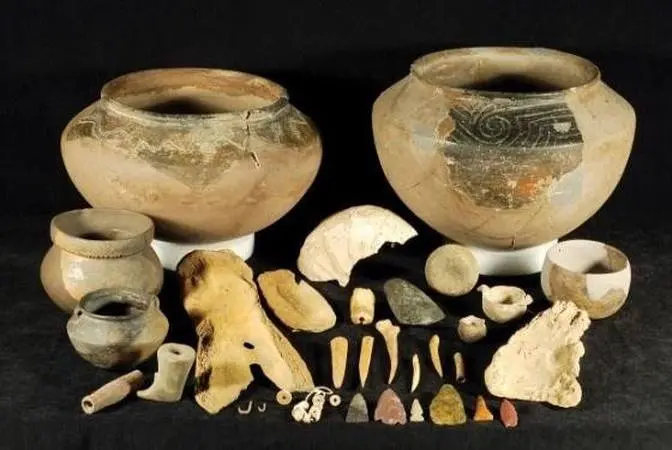
#Archaeology#archaeological artifacts
So, everyone knows about Egypt's great pyramids. Their megalithic construction, precise alignments
to the cardinal directions, hidden chambers, and secret passageways. It's incredibly enticing,
and often Egypt is actually called the land of pyramids. But what you may not have known
is that there are far, far more pyramids to be found in ancient Mexico. Egypt has around 130
different pyramids to be found, but in Mexico, there are so many pyramids that nobody has ever
attempted to count them all. It must be well into the thousands. And if you watch this video,
I think you'll learn that the pyramids of ancient Mexico may well be holding many
more secrets than the pyramids in Egypt. So, before we lived in this weird modern dystopia,
ancient people had natural remedies for everything that were actually healthy, which helped to calm
the mind and restore the body. And one of the most prized remedies was the use of saffron.
Dating back well beyond 3000 BC, it was used by the Greeks and the Egyptians to relax,
as well as to treat melancholy and restlessness. This has easily been the busiest, most stressful
month of my life. And today's sponsor, Verso, could not have come at a better time. Taking
their product, Evening Being, actually gives my brain the permission to rest. And when I lay down,
I'm actually able to fall asleep easily, sleep deeply, and the next day when I wake up,
I don't have that fog over my brain that plagues so many of us. Experience what the ancients
probably knew better than we know today. Click the link in the description below and head on
over to verso.com and use the code CAVERNS, that's all caps C-A-V-E-R-N-S, to get up to 15%
off your first purchase. Now, back to the show. So, in 1841, explorers Stevens and Catherwood
set out on their second expedition exploring the dense jungles of the Maya world, documenting for
the world to see this lost civilization, their huge, dense cities and countless enormous pyramids.
These first explorers didn't realize just how ancient the Maya civilization was and how their
civilization spanned over more than 3,000 years. As they traveled from site to site, they recognized
the difference in architectural and art styles, but they had no idea what exactly these differences
meant. But after nearly 170 years of archaeological work being done in some of the areas of the Maya
world, we have a much better idea of the different eras of Maya civilization. It begins with the
pre-classic era, sometime before 2000 BC. Then, sometime around 200 AD, we transition into a new
era where divine kingship begins to overrule the worship of the Maya gods. This next 600 to 700
year period is known as the classic period. This era begins to collapse sometime around 800 AD,
thus beginning the post-classic era that continued until the arrival of the Spanish
in the Maya world in the early 1500s. So, the Maya pyramids evolve throughout this era and
change over time. And it might not be surprising that the oldest pyramids are also the least
studied, hidden in the deepest jungles in the worst state of preservation. I've even explored
a pre-classic Maya city that must have existed and been booming sometime around 500 to 200 BC.
It was hidden deep in the jungles of Campeche, and I could tell that these were pre-classic
structures from the triadic architecture which is iconic of the earliest periods,
as well as the total destruction that the jungle had wrecked on the pyramids.
The roots of the trees grow deep into the pyramids between the blocks, ripping them apart
and turning what was once a huge, well-defined pyramid into just a slump of rubble buried
beneath a layer of jungle foliage. However, when Stephens and Catherwood were taken by the local
Maya people to see Chichen Itza, they noticed that it was much more well-preserved as compared
to pyramids they'd seen on their first expedition. However, the steps were so worn that it was almost
impossible to climb up the pyramid. They also found two colossal stone serpent heads lying at
the bottom of the pyramid staircase. And while Chichen Itza looks like a large, sprawling,
ancient complex today, at the time, it was all covered in thick bush, and when they stood atop
the pyramid, the foliage extended all the way off into the horizon. So Stephens and Catherwood
were well aware that they were exploring a dense, mysterious land, and 200 years later, we still have
so many more questions about ancient Mexico and Mesoamerica that have still been unanswered.
But we're starting to see some of the secrets of these pyramids being revealed,
and little by little, understanding more about these ancient people.
So, where do pyramids in ancient Mexico come from, why were they built, and what were they
symbolic of or what were they used for? Well, one of the unique aspects of the Native American
worldview is the basically universal reverence for mountains. From North America down to South
America, Native people held mountains in a very high symbolic, spiritual, and cosmological
significance. Much of the meaning and understanding behind this, though, is entirely lost to time
and colonization, where disease leaped ahead of the Spanish army and wiped out
millions of native civilizations before Europeans ever had a chance to meet these people,
let alone understand them. Most native archaeological sites are found in strategic
locations near freshwater streams, rivers, or other bodies of water, while up on top of mountains and
around their base, we find offerings and other valuable artifacts. Again, this is extremely
common from all the way up here out in North Carolina to down through Central America into
South America and well into the Andes. Perhaps this tells us that native people viewed mountains
as a sacred stairway into the next realm, or a way to possibly reconnect with their ancestors,
and sometimes we do find evidence for pantheons of gods and these mythological deities,
but the worship and veneration of their ancestors is almost universally present.
In the early 1900s, when the Olmec site of La Venta was first being explored,
the first archaeologists felt that La Venta's pyramid represented a volcano, which are common
throughout the Olmec realm, especially the volcanic belt where they quarried the basalt
for their colossal heads, and it may be possible that pyramids themselves are intended to be
man-made mountains, a way for the living to connect with the divine or to connect with
their ancestors. In Tenochtitlan, the Aztec capital, the Aztecs told the Spaniards that
their main pyramid, the Templo Mayor, was a recreation of their holy mountain where the
god Huitzilopochtli emerged from, and once the Maya hieroglyphs were deciphered, we discovered
that thousands of their pyramids were explicitly created to be holy mountains, with stucco masks
representing what we call the wheat monster, or the mountain monster in other words. He can
sometimes be seen flanking the staircases of Maya pyramids. At the top of the staircase would almost
always be a temple with an entrance to go inside, and perhaps this was made to represent a cave
that may be found in a mountainside, which was also considered a portal into a sacred space.
Building pyramids and cities on top of large cave networks was something that was done
pretty widely throughout all of the pre-Columbian Americas, including at Teotihuacan, where a
clovis-shaped cave can be found beneath the Pyramid of the Sun. From early Spanish chroniclers,
we know that ancient Mesoamericans perceived caves as sacred entrances or portals into the
underworld, and many other pyramids throughout Mexico have been found to be built over natural
caverns as well, and sometimes even man-made tunnels like the labyrinths that have recently
been detected beneath the Temple of Mitla. It was said that when the first Portuguese
explorers stumbled down into these tunnels, the smell was so strong and the cold winds blew so
harshly that they extinguished the lanterns and turned the Spaniards back from exploring the
tunnels. Fearing that they must have been portals to hell, they closed the tunnel entrances and
built a church over the site, but soon the Leova project plans to locate, reopen, and explore these
tunnels. So next let's talk about sacred alignments and holy numbers. All over ancient Mexico,
pyramids seem to follow a design that's based on the four cardinal directions. From analyzing Maya
hieroglyphs and stories told to the Spanish, it seems that the north face of the pyramids
were associated with the celestial realm or the heavens, although heavens to an ancient
Mesoamerican probably was and is far different than we would perceive something like heaven to
be today. And the southern face of the pyramid was associated with the underworld or Xibalba
like we talked about earlier. The east represented regeneration and rebirth with the rising sun,
while the west with the setting sun represented the descent into darkness or even death. This is
likely why we often see a staircase on each side of many pyramids. Every time a priest or astronomer
ascended or descended a particular staircase, it probably had a specific purpose and meaning.
However, this brings up an interesting question. Clearly not all pyramids were built with the same
function, as not all pyramids have four or even two staircases. Many only have a single staircase.
Also, these pyramids are not aligned exactly to true north like you see with the pyramids in Egypt.
These pyramids are also astronomical clocks, and stick with me because this is kind of a
complicated subject. The pyramids indicated to these ancient astronomers the sacred time for
giving offerings and the time to plant their crops. Therefore, all across Mesoamerica and
actually all across all of the Americas, most important structures and pyramids are aligned
slightly to the northeast depending on their latitude and where the sun rises on their horizon.
Every year around the end of April, the beginning of May, the sun would rise perfectly aligned to
the pyramids shining into a temple on top and an astronomer would recognize that this specific
light beam being created inside the temple gives the indication that the rain is coming and it is
time to plant their crops. As it would happen, the rainy season in Mesoamerica or ancient Mexico
runs from May 1st down into October, meaning that this alignment and the timing of it is incredibly
precise. Now, to give you an idea of how incredibly complex this ancient society was and how incomplete
our understanding of them is, here is a possible scenario that shows the sophistication of these
pyramid builders and the sacred knowledge that they may have been aware of. When the helical
rising of the Pleiades occurs, it's about 15 degrees east of true north and a helical rising
is when a certain constellation brings the sun into the daytime sky or it's just ahead of the sun
on the horizon if that makes sense. It's the last constellation to appear in the night sky
just before the sun rises and these constellations change throughout the year. But by aligning the
north face of their pyramids to the rising Pleiades, they automatically aligned the north
eastern edge of the pyramid to the sunrise which marks the beginning of the rainy season indicating
that it was time to plant their crops. The Pleiades constellation is also linked in the
Mesoamerican world to rejuvenation and rebirth as its rising marks the beginning of growth.
Then we have groupings of pyramids. I've personally seen hundreds of these different groupings and
truth be told, there are probably hundreds of different kinds of combinations for these
groupings that we just have a complete lack of understanding or context for. But in a general
sense, if we have a quadratic pyramid complex, usually meaning a huge raised area that sits upon
a pyramidal platform, there will be four pyramids, one for each of the cardinal directions. The west
pyramid symbolizes that descent into darkness or death that we talked about. The east symbolizes
rebirth or rejuvenation. The south with its nine doorways represents the nine levels of the
underworld and the north pyramid would be uncovered with no roof on top which gives access to the
or the heavenly realm where the gods or the ancestors lived. And upon this pyramid there
would be an altar or a throne where the dynastic king would sit and be divinely connected to his
ancestors who were also god kings, connecting him to the spirit realm. And sitting from this throne,
the god king would have dominion over the rising and setting sun as well as the underworld.
But what we're looking at here, the worshiping of divine kings is only present during the
period between around 200-800 AD. Prior to this, the Maya only revered the gods and the priests
carried out sacred processions to keep the cosmic wheels turning. Somewhere in these early days,
the priests became wealthy rulers, ultimately culminating in divine kingship. However,
roughly after a thousand years of this dynastic period, the Maya would turn on these kings,
the great collapse began, and the Maya returned to building cities that honored the gods.
And if you guys are interested, I can make a video on the different theories behind why
Maya civilization collapsed and somewhat disappeared. There's a lot of different
theories that go from volcanic eruptions to war, famine, water pollution, it goes on and on and on.
It's a fascinating subject. Now, studying sacred numbers, sacred geometry, and astronomy in the
ancient Mesoamerican world is extremely difficult because the context for all of these things was
destroyed in the late 1500s at the hands of Diego de Landa. He collected all of the Maya codexes,
thousands and thousands of them. It was said that there were multiple piers of these codexes
compiled together and he burned them all up into ash. Now, to just give you an idea of
just how much knowledge there must have been, imagine how many books that contain the
essentials to our modern-day society that you could fit in multiple rooms full of books. And
if you burn them all, how much could be completely lost? Now, the Aztecs, who are not the Maya,
were producing around 250,000 pieces of Mesoamerican paper a year when the Spaniards
arrived. And the Maya had already been writing for 2,000 years prior to this. So just imagine
the amount of knowledge that we don't even know exists, things that we can't even conceive of.
This was an attempt to erase the Maya identity, destroy everything that they had achieved,
and force them to forget what their ancestors had done. And in many ways, this worked. We have
almost no context for any of the architecture and esoteric meanings behind the Maya city layouts,
and that's not even mentioning the hundreds of other concepts of Maya life that we can't even
conceive of, things that we can't even detect in the archaeological record. But by gleaning from
what was written in stone and studying the numerical patterns in the archaeology, we can find
more hidden secrets throughout the Mesoamerican world. Just as the southern pyramid or temple in
these quadratic groups would have nine doors representing the nine levels of the underworld,
so too would some pyramids have nine levels, like the Pyramid of Kukulkan at Chichen Itza. These
nine levels leading up into the temple sitting atop the pyramid probably give some kind of
indication as to what the sacred purpose of the pyramid was. Furthermore, if we count the steps,
there are 91 steps on each staircase. You add all those up and what does it equal? 364. But you add
the additional top platform which connects each staircase and we have 365, the complete solar
calendar. Again, this pyramid, like so many others, are astronomical clocks. It sits cocked
slightly to the northeast, potentially towards the Pleiades in the night sky, and as its corners align
with the setting and rising sun in the beginning and end of the rainy season, when the crops are to
be planted and harvested, you can see the creation of a huge serpent shadow that undulates down the
pyramid steps through the nine levels of the underworld. And inside the serpent's mouth is its
own rattle, indicating that the snake is cyclically eating itself. This is a cycle of life, death,
and rebirth. In this specific iconography, the snake eating its own tail is seen in countless
ancient cultures around the world. I've always been a big proponent of the fact that there are
concepts like this that are deeply embedded into our consciousness that we are only just now
beginning to understand in modern times. Another pyramid that blew my mind learning about it was
the Pyramid of the Sun at Palenque. This building is a rare example of an annual clock built into a
single structure. In fact, as far as I know, there are no other buildings quite like it found anywhere
in Mesoamerica. By using the doorways and columns to create razor-thin beams of light that align
perfectly with the back corners of the pyramid's temple as the sun rises, the temple acts as a
able to precisely indicate what time of year it is with alignments for the summer solstice,
the spring and fall equinox, zenith passage, which is the sun's highest passage through the sky,
and even the day of nadir, which is the opposite of zenith passage, the sun's lowest path through
the sky, which happens in the dead of winter. And we know without a doubt that these alignments were
intentional because you can see where the temple's northeast corner was adjusted just after the
completed. A corner wall was pushed back by a few centimeters, allowing a knife of light from
the summer solstice to perfectly cut diagonally through the temple to the opposite back corner.
And this is the only example of asymmetry found in the entire temple, which is a dead giveaway
as to what the temple's true purpose was. Next, let's talk about something that doesn't get
discussed enough, the concepts in the inclusion of color and sound in the ancient Mexican world.
In modern times, as we explore the temples and pyramids found around ancient Mexico,
we're confronted with huge imposing structures of endlessly drab gray stones. But in ancient
times, the colors on these structures were carefully considered and painted in bright,
vibrant colors. The gigantic temple of Quetzalcoatl at Teotihuacan would have been
painted a bright red, sitting in contrast with the blue sky and green grass in its large courtyard.
At the Museum of Anthropology in Mexico City, you can find a recreation of the facade of the
temple of Quetzalcoatl. And this is the best representation I've ever seen of what it must
have looked and felt like to stand at the foot of one of these temples. In the Maya realm,
at the top of their pyramids and temples would have set vibrantly painted green, blue, yellow,
and white masks. And it's likely that each of these colors possessed a deeper symbolic significance,
but the direct evidence is lost to time. Now, something you may have heard before,
and it's a pretty popular idea, is the idea that ancient Mesoamerican complexes and pyramids were
designed with acoustics in mind. The most common example being the sound that the temple of Kukulkan
makes when you clap at its base. Now, before I play a clip of what this sounds like, which you
may have heard before, we need to understand a little bit of the philology here. Kukulkan
is the Toltec Maya name for the Teotihuacano god known as Quetzalcoatl. The Toltecs, who lived in
closer proximity to Teotihuacan than the Maya did, brought this god with them when they integrated
into the Maya world. Prior to this, we don't know the extent to which the Maya acknowledged or
worshipped Quetzalcoatl. Now, Quetzalcoatl is a god that is a fusion between a rattlesnake and
sacred Quetzal bird, and its existence probably goes back even further than the time of the Olmecs
where it's first officially acknowledged. Which, by the way, is about 3,000 years before the
building of the Kukulkan pyramid at Chichen Itza. So, we're talking about really deep history here.
Now, at some point within the last century, people realized that if you clap at the foot
of Chichen Itza's pyramid, it produces a sound that sounds like the iconic caw of the Quetzal
bird. Now, there are a lot of archaeologists and other experts who chalk this up to being
merely a coincidence as if you do this at any other stone or concrete staircase, it produces
a very similar sound. On the other hand, there are archaeologists who state that just because
you can find this phenomenon recreated in modern structures doesn't mean that it wasn't intentionally
created in the ancient structure. I'm inclined to give ancient people as much credit as I can
wherever I can. So, I would say that I find it very likely that the ancient Maya were at least
aware that the pyramid produced this effect after it was built. However, something that I do think
has quite a bit more weight to it is the concept of ancient cities being built with large open
spaces that provided a significant amount of reverb for the sound to travel. One of the stories I'm
reminded of is something that I was told by Dr. Ed Barnhart when he and I were standing at the
Temple of the Count at Palenque. He was talking to me about how in the early 2000s, he was exploring
the ruins sitting upon the cliffs overlooking the city and while he was having a conversation,
people in his team all the way at the far end of the city could hear every single word he was
saying. Since then, there are actually PhD students who have been working on studying and understanding
more about these acoustic properties and maybe in the future we will find some kind of definitive
proof of acoustics being purposely considered in the city planning and architecture. One of the
ways we're able to give at the very least a minimal date as to the age of the pyramids
is the fact that there are thousands of bodies buried in the pyramids throughout Mesoamerica.
Sometimes these are kings or nobles who chose to be buried within their pyramids or they lived on
top of the pyramid and when they died they were buried within their home that was encased and
built over and turned into an even larger pyramid which their descendants would live on top of. There
seems to be an infinite number of combinations here, but tombs seem to be one of the least
important aspects of these pyramids purposes. That is, other than one pyramid. In the early 1950s,
Alberto Ruiz was exploring the Pyramid of Inscriptions at Palenque and we call it this
because of the inscriptions lining the walls of the top of the pyramid which tell the history of
Palenque as well as the lineage and achievements of a ruler named Pacal. Alberto knew that the
pyramid was built for him, but he couldn't believe that the only thing to the pyramid was this
temple on top. Now, one of these days in the early 1950s, he was feeling discouraged about the fact
that he couldn't figure out this pyramid of inscriptions. He just couldn't believe that this
entire pyramid was dedicated to Pacal, but it was only this temple on top when they had found
other pyramids with more structures within them at Palenque. As he's kind of discouraged and he's
studying the top of this temple, he's looking at the walls and he follows the wall from the top
all the way down and he realizes that the wall is not sitting on the floor,
the floor is butting up against the wall and the wall goes down past the floor which isn't usual
in Maya structures. Usually, you have the floor and the walls sit on top of it like people build
buildings most of the time. So, as he clears the debris and jungle foliage away from the temple
floor, he notices that there are these two holes, they're plug holes and he shines a flashlight
down in them and he realizes that just beneath these limestone floor slabs, there's an empty
cavity beneath the floor. So, they run something beneath the plug holes and they lift the blocks
up and sure enough, they find the opening to a large staircase and they didn't realize just how
large the staircase was going deep down into the pyramid. So, for the next three archaeological
seasons, they go through a back-breaking amount of work lifting out all of the rubble that was
stuffed down the staircase. So, it goes down one direction, it stops and hits this room where they
found these bodies and offerings and it goes down into another direction. So, after three seasons,
they finally emptied out the entire pyramid in this huge long staircase. Now, they're standing
at the bottom chamber and there's a giant triangular limestone stone that's plugged
into the wall and at this point, Alberto Ruiz, he knows what's on the other side of this wall. It is
the tomb of probably the most powerful Maya king who ever existed, Kenesha not Bacal. And so, he
tells everybody to turn all the lights off and just sit for a few moments in this darkness and
take in this moment because what they're about to see is something that nobody has seen in well
over a thousand years and it's going to be one of the most important archaeological discoveries
ever made and they all knew it before they went in. So, they pull the triangular plug back and
Alberto shines the light in and it's a gigantic megalithic limestone sarcophagus.
By far, I think the biggest megalith found anywhere in ancient Mesoamerica. Lining the
walls are these Maya gods and ancestors who are overlooking Bacal and around his sarcophagus
are these inscriptions and hieroglyphs that depict the story of Bacal's rule and on top of the
sarcophagus, the lid shows Bacal falling down into the underworld in front of the tree of life. It's
amazing. There's nothing else like it found anywhere in ancient America really going well
beyond Mesoamerica. And so, they take this five ton lid and they jack it up on all of these kind
of sketchy jacks and wooden wedges and Alberto Ruiz goes underneath the lid and he finds that
there's another lid with two plug blocks. And so, he crawls underneath there and it's essentially a
plug that in a way insulates or seals Bacal inside of his sarcophagus. And so, he climbs underneath
and he shines his flashlight through one of these little plug blocks and through he's shining it
through one plug block, he's looking through the other and right in front of him face to face
is the, sort of will look like this, is the jade funeral mask of Kenesha na Bacal,
one of the most powerful kings in ancient Mesoamerica looking directly back at him.
It's just a, it's a simply amazing story. Now, this is the only example that we know of,
as far as I'm aware of, of an entire large pyramid like this being built for the tomb of a king and
no other purpose whatsoever. A lot of times, an acropolis, which means a living city,
would be turned into a necropolis, which means a dead city. Basically, what I'm saying is that
ancient kings would live on top of these pyramid structures. They would have their homes up there
and when they died, they and maybe their wife as well as their servants or whoever would be entombed
inside of their home. The home would be encased and built over and then the next generation would
live on top of them and then it would get bigger and bigger and bigger and bigger.
This is one of the only examples we know of, of an entire pyramid being built like this
solely to serve as the tomb of a king. It's something really, really special and in the
1950s, when this discovery was made, in fact, there were a lot of newspaper headlines that
came out that said, Egyptian style pyramid found in ancient Mexico because it was just something
that was so peculiar for Mesoamerica. So, I just love that story. Ancient Mexico is one of the most
complex, dense and colorful realms of the ancient world. These people achieved far more than we
understand or give them credit for and the full purpose of their pyramids is only recently being
fully understood. There is still so much more to be revealed from this world and there are certainly
astronomical, calendrical and geometric aspects of these pyramids that we have not even conceived
of yet. Not to mention that hundreds of other ancient cities scattered throughout the jungles
of Mexico and Central America are just waiting to be discovered and understood. This was never more
clear to me than when Mexican rangers in Campeche brought us to a site in the jungles north of
Calakmul where 16 huge pyramids laid completely unexcavated and not even the stone containing
the city's name had been found yet. Ancient Mexico is the true land of pyramids and nobody knows
exactly what they're symbolic of, everything that they were used for or what secrets they've held
for thousands of years. I'm Luke Caverns. If you'd like more videos on history and
mystery all around the world, well please like and subscribe for more.