
Predynastic Egypt – The Civilization Before the Pharaohs | Ancient Egypt’s Untold Origins
17 Video Views·Dec 6, 2025
# Culture#Ancient Egyptian
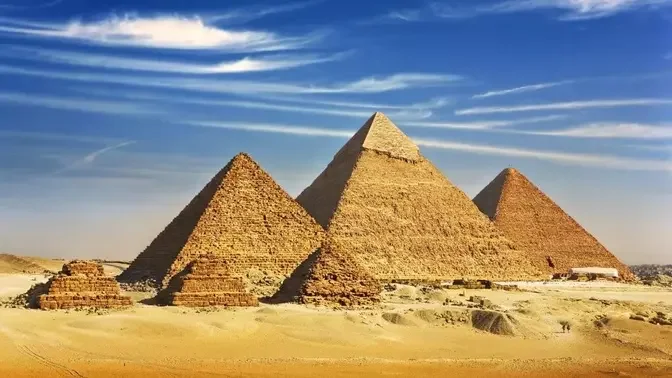
Before the mighty pyramids touched the sky,
before the legendary pharaohs ruled the desert sands,
and long before ancient Egypt became the world's greatest civilization,
there existed a mysterious people,
a forgotten civilization,
a culture so old,
so advanced,
and so unknown,
that most history books barely mention their name.
This is the story of pre-dynastic Egypt,
a civilization that existed thousands of years before the first pharaoh,
a world filled with strange gods,
lost cities,
unknown kings,
and mysteries that still puzzle archaeologists today.
Welcome to Lost Civilization.
Setting the Stage
When we think about Egypt,
we imagine pyramids,
golden masks,
the rule of the pharaohs,
and the mighty Nile.
But what if I told you
that Egypt's greatness did not begin with the pyramids?
What if the civilization we know was actually built
on the foundations of an even older society,
a culture that began 7,000 years ago,
long before written history?
This pre-dynastic world existed around 5,000 BCE
to 3,100 BCE.
And during this period,
something extraordinary was happening.
People were forming communities along the Nile,
developing agriculture,
building pottery,
and inventing the earliest writing symbols.
But more importantly,
they were shaping the identity,
religion,
technology,
and power structures
that made Egypt the super civilization it later became.
This forgotten era is the true beginning of ancient Egypt.
The world of early Nile settlers,
5,000 to 4,500 BCE.
Imagine a time when the Sahara Desert was not a desert.
It was a green landscape
filled with lakes,
forests,
and animals.
Nomadic tribes roamed this lush land,
but as climate changed
and the Sahara dried up,
these tribes moved toward the river
that would eventually become the lifeline of Egypt,
the Nile.
Here, the earliest communities formed.
They hunted,
fished,
and began farming wheat,
barley,
and flax.
They created the first mud brick houses
and small settlements.
These small groups laid the foundation
for the world's longest lasting civilization.
But the mystery begins when we look at their lifestyle,
their culture,
and especially their burial practices.
The mysterious Badarian culture,
4,500 to 4,000 BCE.
One of the earliest pre-dynastic cultures
is known as the Badarian civilization.
Archaeologists discovered their cemeteries
filled with surprisingly advanced items,
fine pottery,
stone tools,
jewelry made of precious stones,
ivory combs,
copper blades.
Even 4,000 BCE,
before copper was common.
But here's the strange part.
Even though they lived 6,500 years ago,
their craftsmanship was highly advanced,
far more sophisticated than expected for that period.
One of the greatest mysteries is their burial style.
They buried their dead facing west,
the direction of the setting sun,
which later became the sacred tradition
of the pharaohs.
This means the religious beliefs of ancient Egypt
were already forming in the Badarian era.
The rise of the Nakata culture,
4,000 to 3,100 BCE.
After the Badarians,
a new, powerful,
and more advanced civilization emerged,
the Nakata culture.
They are the true architects of Egypt's future empire.
This culture is divided into three phases.
Nakata-run villages grow larger.
Pottery becomes more complex.
Trade networks expand.
Nakata too.
Here the mystery deepens.
These people suddenly start building large-scale structures,
using new stone tools,
and creating figurines of strange gods with animal heads,
the early forms of deities like Horus, Set, and Hathor.
Their art shows, boats, rituals,
animal-headed figures, mythical creatures.
This proves that Egyptian religion
has roots thousands of years older than the pharaohs.
Nakata III.
This phase is the most important.
Why?
Because this is when the first kings appear,
kings who ruled before the first official pharaoh.
They wore crowns.
They led armies.
They had elite burial sites,
and they even used symbols that later became hieroglyphs.
One of these mysterious kings is known only by a symbol,
the Scorpion King,
the enigma of the Scorpion King.
Yes, the Scorpion King was real,
but not the Hollywood version.
The real king was even more mysterious.
He ruled southern Egypt before 3,100 BCE.
His name comes from a scorpion symbol
carved on artifacts found in Hierakonpolis.
Archaeologists discovered a ceremonial mace head
showing the king wearing the white crown scenes
of agriculture, war, and royal rituals,
an early form of writing used to record his rule.
This king lived before writing fully existed,
yet he used symbolic language
that eventually evolved into hieroglyphs.
Some historians believe he might be the first leader
to unite small Egyptian communities
and set the stage for the first dynasty,
but much of his life remains unknown.
His tomb is lost, his kingdom is debated,
and his identity is still a puzzle,
trading networks that should not exist.
Here's something that shocked archaeologists.
Pre-Dynastic Egyptians were trading across vast distances
long before the pharaoh.
Artifacts found in pre-Dynastic graves include
obsidian from Ethiopia,
copper from Sinai,
lapis lazuli from Afghanistan,
cedar wood from Lebanon,
shells from the Red Sea.
This proves that these early Egyptians
had long-distance trade networks
thousands of years earlier than believed.
How did they manage it?
No one knows, but it shows one thing.
This forgotten civilization was far more advanced
than anyone expected.
Birth of Egyptian religion.
Many of the gods we know from classical Egypt
actually began in the pre-Dynastic era.
Symbols of Horus, falcon god,
Min, fertility god,
Bat, Hathor, cow goddess,
Set, storm god,
have been found in pottery and carvings from 4000 BCE.
These early people invented ritual sacrifice,
shamanistic practices,
ceremonial burials,
totemic animals,
symbolic crowns,
and the concept of rulers as divine beings.
This is the spiritual DNA of Egypt.
Some researchers believe these religious ideas
came from even older Saharan or African traditions.
Others think migrants from the Near East influenced them.
The truth? Still a mystery.
The first writing in human history?
Most people believe Mesopotamia invented writing first,
but some pre-Dynastic carvings challenge this idea.
Symbols found in tomb UJ in Abydos show
numbers, animal symbols,
signs representing names,
possible administrative records.
These may date to 3300 BCE, possibly earlier.
If confirmed, Egypt might have invented writing independently,
maybe even before Sumer.
This is one of archaeology's biggest debates,
the unification of Egypt, 3100 BCE.
By the end of the pre-Dynastic period,
Egypt was divided into two regions,
Upper Egypt, south,
Lower Egypt, north.
Each had its own culture, crown, and rulers.
Then came a leader, possibly Narmer,
who united both lands into one kingdom.
This marks the official start of Dynastic Egypt.
But the real foundation,
the language, the symbols, the religion,
the art, the social structure,
all came from the pre-Dynastic era.
Without this mysterious civilization,
the Egypt we know would never have existed.
The pyramids before the pyramids?
Some recent archaeology suggests
that pre-Dynastic people may have built
communal tombs, ritual mounds,
early stone structures, and sacred enclosures.
These could be the prototypes for pyramids
and temples that came later.
For example, excavations in Abydos
show large ceremonial buildings made of wood and mud brick
from 3,400 to 3,200 BCE.
Some structures align with solar patterns,
suggesting early astronomical knowledge.
These discoveries hint that the pyramid builders
inherited ancient traditions far older than the Old Kingdom.
The mysteries that still remain.
Even today, archaeologists do not fully understand
where the pre-Dynastic Egyptians originally came from,
how they developed such advanced art and tools,
why their religious symbols appear fully formed,
how they established long-distance trade,
who the early kings were,
and how they built large structures
without organized states.
Many excavations are still incomplete.
Much of their heritage lies beneath the sands,
and new discoveries are rewriting history every year.
The deeper we dig,
the older Egypt becomes.
Conclusion.
The civilization time forgot.
Pre-Dynastic, Egypt is not just a forgotten chapter.
It is the beginning of everything.
Long before the pyramids,
long before the dynasties,
long before written history,
there lived a people whose knowledge, culture, and traditions
shaped one of the greatest civilizations the world has ever seen.
Yet their names are not known,
their cities are not mapped,
and their stories remain buried in silence.
But every artifact, every tomb, every symbol
whispers the same message.
Egypt did not begin with the pharaohs.
It began long before them,
with a lost civilization hidden in the sands of time.
This was the world before the pharaohs.