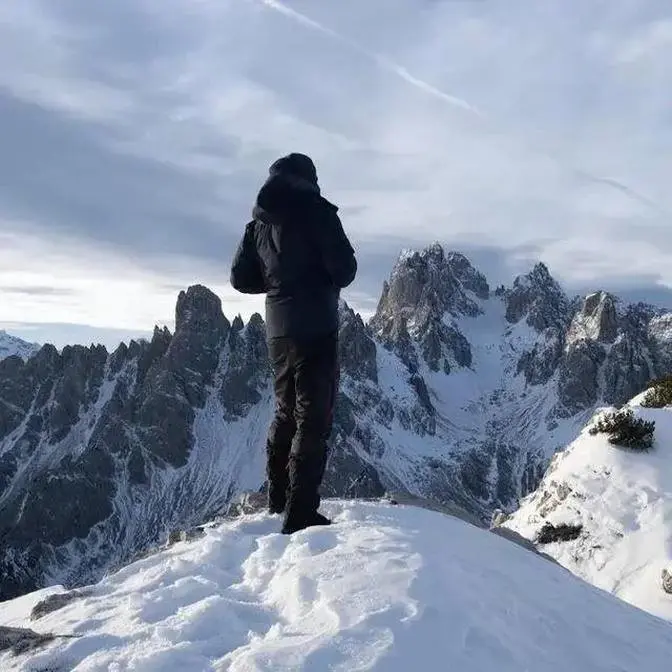
I took the new NiSi 16mm f2.8 for my GFX with me on a trip to Namibia to put it through its paces. Thanks to NiSi for letting me borrow it.
Chapters 0:00 Introduction 0:57 Using The Lens 3:13 Build Quality 5:13 Focus 6:15 Image Quality 16:40 Conclusion
If you’d like to join me for a landscape photography workshop, my 2027 and some 2028 trips are already open. Check my website for more information https://www.andymumford.com/workshops/
If you're interested in purchasing any of the gear I use in this video, and you enjoy my videos, please consider supporting my work by clicking on the affiliate links below.
I really enjoy using the GFX camera
but the lack of choices of lenses in some focal ranges
can be something that is a little bit limiting sometimes.
So when Nissi reached out to me about
their new 16mm f2.8 lens I was pretty curious about it.
I've used a few Nissi lenses before
and they are generally really sharp and well made
and like a lot of third-party lenses for
both Fuji systems they tend to fill in gaps
in the lens lineup that Fuji neglect. In this case
it's an ultra wide lens with a fast aperture
which Fuji don't really have anything similar to.
You've got the 20 to 35 millimeter
which is a fantastic lens sharp from corner to corner and
one I use a lot but it's an f4 lens.
This is 16 millimeter which accounts to around 12 or 13
millimeter on full frame so it's really wide.
It's also rectilinear so you avoid curved horizons
which makes it an interesting prospect as a landscape lens.
Now most of the time fast
apertures don't concern me at all in landscapes.
The vast majority of my work is shot in the middle
of the aperture range where I'll get a better depth of field
and better lens performance but
when it comes to shooting astro or aurora
then f4 lenses mean I have to increase the ISO
very high to get acceptably short shutter times where
the stars don't blur. Now as it happened
when Nissi contacted me about this lens I already had
an astro trip planned so I thought it would be
a good opportunity to use it
and when I did get to use it I was very impressed. I could get a really
clear shot of the core of the Milky Way
with a 20 second exposure at ISO 6400 being able to use
f2.8 aperture. Also I really like the ultra wide focal length
for Astro as it allowed me to fit a
subject on the ground as well as lots of sky
so I could include the whole of the arch the whole of
the core of the Milky Way and here
when we were photographing wild horses on the plains of Namibia
at sunrise a group walked up quite close to me
and I'd have struggled with those lenses to get a shot
like this where I could frame the whole of the group against the sky.
It really does give you
access to some interesting perspectives
but being this wide it does require a lot of thought when
you're using it. I took it for a walk around Kolmanskop
which is a deserted mining town I've shot
many times before. Here I actually found it was a little bit too wide.
It included parts of the
room like the ceilings and lots of the foreground
of the sand that I actually wanted to exclude
from the compositions. Now there are ways to work around this.
Shooting in a panoramic format works
really well with this lens removing the top and bottom from the frame.
It's something that I did
quite a lot and I really felt that the ultra wide focal length
of this lens lent itself to the kind
of widescreen panoramic feel having a rectilinear lens
also worked really well here where there are
so many verticals and horizontal lines that you need to keep straight
and parallel and need to be
level now it's worth bearing in mind that it is very wide
and a focal length like this can make
distant subjects like mountains appear quite small in the frame
so it does need to be used
with consideration it's a really solid all metal construction
and everything here is manual with
no electronics in the lens
so there's no pins on the lens ring to connect it to the camera.
This means you have to set up your camera to use it
by turning on shoot without lens on the menu.
It feels incredibly sturdy
and at 835 grams it's not a lightweight lens but with such
ultra wide coverage
and a maximum aperture of f2.8 it is going to have a fair bit of glass
to ensure coverage of a sensor the size of the GFX.
I did find it balances quite well with the
GFX100S when I was happy wandering around Comscot
with it for hours in my hand but yeah it's a heavy
lens. While I was using it it frequently got covered in sand
and dust but this never really
felt like an issue. Now Nissi classed this as weather sealed
and I really wouldn't have any
concerns using it in pretty much any
of the conditions I usually shoot in. It managed very
well in the desert. It has two rings a focus ring
which is nice and deep and rotates through around
180 degrees or around halfway around the lens.
The aperture ring is also decently wide and easier
to use with gloves on. It has
a nice click through each stop rotating around 90 degrees or about a
quarter of the lens from the widest aperture to the smallest aperture.
Both the rings have a really
nice level of resistance
and the focus ring in particular is pretty solid. It doesn't get
accidentally moved easily
so once you've found focus you don't need to be too delicate and worry
about nudging the ring.
One of the nice things about this lens is that despite its really wide
focal range it's actually not too wide when it comes to filters.
The filter ring is 82
millimeter diameter the same as the 20 to 35
but NiSi actually include an adapter for a 95
millimeter diameter lens filters.
Now with a lens this wide it does make sense to use a wider filter
than the diameter of the lens
to ensure you don't get vignetting where the filters are visible in
the corner of the frame.
So it's a manually focusing lens which may put some people off but
with focus peaking activated I actually found it relatively easy
to find focus. Using it at night
for an astro shot where typically focusing
to infinity can be a little bit tricky. I actually
found it relatively easy and because
of the stiff focus ring once I had focus it pretty much stayed
there without moving or being nudged at all.
Focus bracketing shots in common scope was relatively
quick and easy and when we came across some wild horses I didn't have
a lot of time. The camera
lens is on f2.8 so I just quickly grabbed focus of the closest horse
and again I was quite pleased
by how quickly I could focus how easy it was to do it.
Because the focus ring rotates so much
the focus isn't particularly fiddly where
a tiny nudge moves everything out of focus
so I found it relatively easy to use.
And finally it focuses just 25 centimeters in front of the
camera which is pretty close
and when it comes to landscape photography if you're focusing that
close it does mean you're going to have to focus stack.
Okay so how does the lens perform when it
comes to sharpness and image quality?
Now NISI provides lots of MTF charts on the literature
which tells me that the lens does appear to be really sharp
but the only thing that matters to
me is how the lens performs in the field and what my images look like.
So let's have a look. So we're
start with a few images that have actually been edited now
because there are no electronics in
the lens at all it doesn't record the aperture it says here f 1.0
but obviously that's not true
i shot most of the landscape images would have
been around f 13 f 16 on the gfx so let's just
zoom in and have a look at sharpness
and you can see this is plenty sharp here lots of detail
around the cracks in the buildings the grass here
the roof going down into the detail of the grass
here in the foreground but let's have a look over
in the edges now it does soften off you can see
here there's lots of detail in the background there
but as we move over to the borders we are
losing a little bit of resolution it's the same
with the grass down here it still results quite
well but if we compare that with the grass
in this area here in the center it's just not there's not
as much resolution there and again i think we can see here
on this hill in the background now part
of me wonders is that is that a focus issue
um but again with the fact that we can see so much
detail here in the background compared with here
so yeah the borders are not as sharp as the center
so this is another image that's been edited one
and a half second shot on a tripod at about f13
now you can see here there is a lot of detail down here
in the foreground it's resolving that
really nicely this broken glass here the detail
and texture in the sand now what surprises me a
little about this image is that because uh
with the GFX usually i have focus stacks so i dropped
a focus point on this window frame here
and that would normally mean that the further into the
the image the background is a little bit out of focus
and normally I would drop another focus
point on the further back into the image
and take a second image but this is actually not that
bad because the the lens is so wide the depth
of field does seem to be better and while I probably
would need a would use a second image here
to make sure it's sharp all the way through
it's actually resolving quite a lot of detail
in the background this image also does seem to be
performing better in the borders the detail here right down
into this corner i think the other
corner has more detail so yep there's more detail here
if we look at these paint chips it's not as
sharp as the center but it is still quite good there plenty
of detail let's go up here into the
top now let's have a look
at an astrophot image generally astrophot images don't really make for
good demonstrations of a lens sharpness
because it's very difficult to focus in the dark usually
have relatively long exposure of 10 to 15 seconds
but just because i know that quite a few people
will be interested in this lens from an astrophot perspective
that's one of the things that i
wanted to look at let's have a look
at this now again it has been edited um it is it's shot at
iso 6400 i believe yep so it little bit of noise
although i have cleaned some of the noise up just
a little bit and i think any softness here is more about the focus
but that isn't really that bad
and you can see that the stars are relatively good.
I think there's a little bit of coma.
Yeah, they blur a little bit in the corner there,
but that's to do with the length of the exposure.
20 seconds is a little bit long to be shooting stars this wide.
But you can see here it's pulling out quite
a lot of detail in the Milky Way,
and the focal length allows you to get really, really wide.
Now, this image did vignette quite heavily.
You can see that the corners are darker
and I've tried to brighten that up a little bit
but because it's quite a high ISO image you can see
that there's a little bit of discoloration
so it will need a little bit more work.
But what I did notice is shooting at f2.8
the lens is susceptible to vignetting
which I will touch on a little bit later.
Now this image is straight out of camera.
It's not been touched or edited at all.
It is at f11.
Again the lens isn't giving you the information there.
and let's just zoom in and have a look at the detail
and you can see it really is a sharp lens
it's resolving plenty of detail here in the middle down
in the paving stones it does drop off a little
bit in the corner you can see here just
a little bit of smearing around these paving stones
and in the edge here around these cables
but generally yeah again a little bit of smearing
there but generally it is really quite sharp very sharp in the center
and let's have a look
over on the right lots of detail here now we're zooming in to 100%
because the the focal length
is so wide you can see how much
of the scene it captures now what i'd like to do is to compare it
with the 20 to 35 okay over here on the right you can see
the 20 to 35 shot at the exact same
settings 1 over 100 f11 iso 100 now
a little bit different you can see here how different the
the actual focal length is this is 20
which is 16 millimeter equivalent this is 16 which is about
12 millimeter equivalent so this has does have
a considerably wider field of view but when we zoom
in let's see how if we can see much
of a detail difference first of all i shot these images right
after each other with the exact same settings it's interesting
that there is a difference in
the color rendition here that's a little bit more pink
this is a little bit more yellow
it's really hard to see a difference in detail
this looks like it has more detail but it's a
tiny bit more zoomed in but i really don't think there's
a great amount of difference in the detail
rendered now just for curiosity i've zoomed in to 200 percent
and then we do start to see a little bit
difference around the number here you
can see it's a little bit more clearly
defined here these numbers the detail around
the this fuse box here I think
the 20 to 35 is performing better now
if we look over in the corner we're back at
a hundred percent at a hundred percent
you don't really notice the difference I
think only really when you zoom in to 200 percent
but yeah here they look
quite similar there's not a huge amount
of difference again I think the the 20 to
35 is probably letting in a little bit more light they
do have as i said the exact same
exposure settings taken probably half a minute apart
and it's just a tiny little bit brighter
with the Fuji shot now this is both of the lenses at f/4
so this is wide open for the Fuji but one
stop closed down for the Nissi again you can see
the color difference here the the Fuji is a little
bit more yellowy the Nissi a little bit warmer
a little bit more orangey let's zoom in
200% and in the center again very little difference lots
of detail in the Nissi really really nice
here obviously the uh the Fuji is a little bit more zoomed
in because of the focal length but
you can see that they're both very sharp
when we look at the um at the fuse boxes let's just zoom
in a little bit more at 200%
then you start to notice the difference just a
little bit softer around the edge a little bit
so this is a sharper here but
that's at 200% at 100% you really it
becomes very unnoticeable and when we
zoom out almost impossible to see
but when we look down into the corners you
do see quite a bit of difference here
the Fuji is still performing quite
well in the corners but there's a fair bit
of smearing right in the bottom
corner here and up into the borders
the borders are better than the corners
let's have a look on the on the other side again there's
this fall off in both
lenses they both lose a little bit
of sharpness in the bottom left corner but
the the Nissi just losing a little bit more
and then finally this is the Nissi
wide open at f/2.8 very nice in the center very
very sharp going right across as well it only
really starts to fall off
when we get into into the corners you can see kind of this area here
this number is still quite nicely defined
by the time we get to to this area here so it's it really
is these corners where where there does seem to be a bit of a fall off
when it's wide open let's
look at the border over here yeah if we compare
the tiles with on this side of the image to this
side of the image you can see a little bit
of fall off there even more so when we get up into
the corners if we compare the tiles here with the tiles here
so yeah it's very sharp in the centers
comparable with the 20 to 35 but does fall off a little bit
when we get into the borders now
earlier i mentioned about the light fall off in the corners
and you can see that quite clearly
here this is just photographing a white wall at f 2.8
and you can see the vignetting the drop off
of light in the corners there's no filters on here
this is just the light fall off and the lens if we
go to f4 it does get quite a bit better
and i think by the time we get to f8 there is no vignette at
all but when the lens is wide open you do get
a little bit of vignetting and just for comparison
this is the 20 to 35 at f4 wide open
and you can see that there's a tiny bit of vignetting there
but even wide open the Fuji lens gets light right
the way across the frame now I did try shooting
some sun stars with the image
but I wasn't really crazy about the sun stars that it gave me it's
just give me an eight point sun star here I think it's probably
to do with a number of aperture
blades that it's got it's not particularly bad
but I don't think I would call this a sun star
lens you can see here me just playing around
with trying to get the sun stars to work
and this also gives you an idea of the level of flare on the lens.
Okay so I think there's a group
of people who shoot with the GFX
or with the Hasselblad for which this lens is also available
for whom this lens will fill a real gap
in the lineup something this wide is a niche lens its
uses are limited it lacks the flexibility of a lens like the 20 to 35
but it does do what that
lens can't do it is super wide and it's fast
so if you shoot aurora or astro on your gfx this really
is a great lens i found it really nice
for the architectural shooting i was doing in Cornwall
and found that with the camera setup to shoot
in a panoramic format it really felt really nice to
use and gives a really nice wide screen almost
anamorphic feel albeit without the lens that
you get with a specialist anamorphic lens.
I don't think it's a lens that replaces the 20-35mm
as I said I think this offers something different
to that and with a focal length this wide and a
faster aperture it does open up some really
interesting possibilities for people who really
like ultra wide shots and it does it really well.
It's really sharp in the center, it's built really
well and is really pleasant to use and easy to focus with.
There is light fall off in the corners
when it's wide open but for a lens this wide
the only way to avoid that would be to make it much
bigger with a more bulbous front element to get
the light in but that would make the lens
considerably more heavier and probably unable to take filters.
So for me that's a compromise
I'm happy to make.
So yeah I'll be keeping this and using it going forward and it's made
astrophotography with my gfx just a little bit better
and more accessible and that's it for this
video if you have any questions please just drop me
a line in the comments and if you've enjoyed
the video or found it useful please like
and subscribe it really helps the channel so much
and if you enjoy my photography i would like
to come with me on one of my photography trips i'd
love to have you join me on a workshop we've just opened
our trip to namibia in 2028 where we'll be
returning to some of the locations that you've seen in this video
and there are tours to incredible
places like utah alaska the drakensberg
galapagos next year plus we are going to be
launching new tours in northern spain
and also street photography in lisbon for 2028 you can
find full information on all these workshops on my website
so check that out and just drop me a
line if you have any questions and as ever thanks
so much for watching and good luck
with all your photography i'll see you next time take care