========================== Subscribe for the latest:
- Daily News and Analysis on China's political landscape. - Exposing Communism in China - Expertise in the geopolitics of US-China
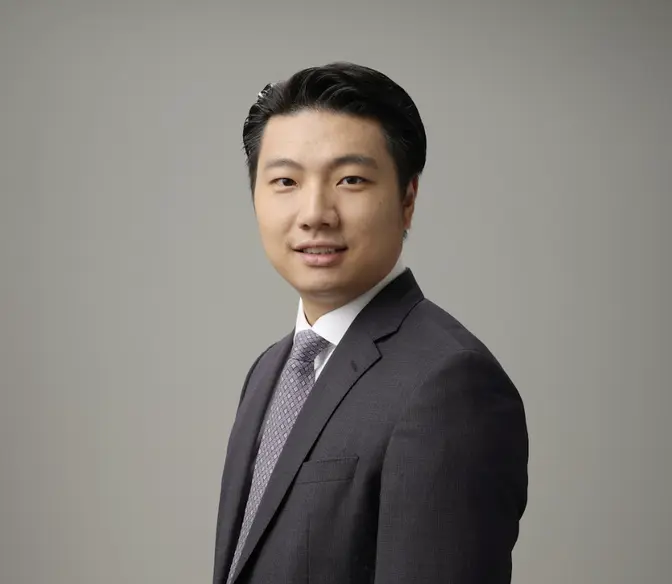
Lei Buten isn't just Intel's CEO.
He is a man whose investment portfolios run so deep into China's military-industrial
complex that it reads more like a shopping list for the CCP's next five-year plan.
And the core argument of this whole whether he's compromised, conflicted, the core argument
of Intel's CEO's conflict of interest is this.
Is it trustworthy of a man who kickstarted possibly launching China's semiconductor
sector, is now running one of the most important critical chip supplier for the United States.
Especially if that man's founded companies and those that he previously worked for had
heavy ties to the Chinese Communist Party.
And they still do.
Now, Intel has expressed that Mr. Tan will not step down or be fired.
And in fact, for anybody who is in this position, I'll give them the benefit of the doubt.
Maybe they had a change of heart.
Maybe they now decided that time has changed and they're ready to help the U.S. advance
its chip industry.
But still, the history and the optic isn't pretty here.
Tan's venture capital firm, Walden International, since its founding in 1983, has made over
140 investments into China's chip industry.
This includes the semiconductor manufacturing international corporation, SMIC, and advanced
microfabrication equipment, AMAC.
And these two companies are at the forefront of China's effort to create its own cutting-edge
chip technology.
And it's often names you hear when it comes to dealing with a ban list by the U.S. government
or for its ties to Chinese military.
Tan himself sat on the board of directors at SMIC for almost two decades and as the
board member of AMAC for 15 years.
And a Walden managing director, his investment firm, Tony Zhang Yu, continues to sit on AMAC's
board, suggesting that Walden may still hold a stake for the company.
And before we continue, please subscribe to the channel if you haven't already, as we
do the latest updates on all things related to China every single week.
Now, The Wire of China has done this extensive report, so I'm getting a lot of the information
from there as well.
And this chart here details all of the investments into different kinds of chips that Walden
has done or he, Mr. Tan himself, has done into China's chip industry.
Well, Intel cashes billions of taxpayer dollars through American plans for getting an edge
over the other countries in the chip space through like this chip and science act or
the fact that, you know, there's people spending decades bankrolling into the very ecosystem
that Washington is calling its top adversary.
And this isn't actually a conspiracy thing.
This is real.
This is investigations that have been done and reported on.
So it's very understandable why people like Trump, Tom Cotton, sitting in the Senate seat,
the Intel committee actually, is worried about this, as well as, you know, a bunch of other
national security experts, because technically chip and its advanced usage in AI and weaponry
is the future of competition between the US and China.
And this is a letter from the chairman of the Senate Intel Committee, Tom Cotton, issue
to, of course, Intel about the issues and concerns here.
And it's clear the CCP ties is what worries the US government and the elected representatives.
Although Tan has released a statement saying that he won't step down or that he's saying
he is on in the same boat in advancing US interest in the chip field, it's just that
the histories involved here and he personally has so many ties in the past.
It just doesn't have a convincing case.
Now, the numbers alone, it's staggering.
Walden International, his company, this isn't just exposure to China.
This is a literal entrenchment.
A Reuters investigation found that Tan controls more than 40 Chinese companies and funds,
and he holds minority stakes in over 600 additional Chinese tech firms.
This isn't a man that is occasionally invest in China.
This is a guy who essentially helped kickstart the industry in its very beginning.
He essentially has a financial stake, a significant portion of it, in many of these Chinese companies.
In some ways, you could say that he helped launch China's chip industry.
And these aren't just companies doing smartphones or, say, smart gadgets or apps.
There are companies that are doing semiconductor in weaponry applications, in military applications,
intelligence, AI, communications, etc.
And these are industries that the Chinese government openly identifies as key for their
You know, again, I say, perhaps Mr. Tan is a science tech guy at heart, a capitalist.
He only sees the potential to make money and not the ideology.
Perhaps, again, when you're talking about dealing with China,
the political side of things, the ideological side of things are attached and linked to the business sector.
So for anybody that wants to do business in China, you're not dealing with the business or the market in China.
You're dealing with the CCP.
So it's an unavoidable aspect.
So for him to say that I'm a pure moneymaker trying to make money in this field,
that's nearly impossible to do in a country like China.
And now, after which you have had an extensive history with the top adversary of the United States,
only to come back into an American company holding such an important position
to say that I'm now trying to advance U.S. interests, it just doesn't convince anybody.
Especially if you have ties in the top level of the CCP.
Here's the case. One of Walden International's earliest ventures in the 90s was the creation of Sina.
Sina is a very famous Chinese website, but it's a whole company.
And Tian at the time set the deal, which saw Walden become the largest shareholder in the new entity.
It would go down in the annals of venture capitalism.
And the merger set the stage for Walden to get access to the highest echelon of the Chinese regime,
including, for example, after the deal, one of Walden's vice president, his name is Daniel Mao,
married the daughter of Hu Jintao, the former leader.
Mao became Sina's chief executive in 2001, and two years later, that marriage happened.
And Tian's ties to the Shanghai clique is also very prominent.
The Shanghai clique refers to the Jiang Zemin faction.
One of his former stays as a board member of SMIC, which is a Chinese state-owned chipmaker.
The SMIC started in Shanghai.
And many of the CEOs for SMIC actually came from a company called Huahong, which is another chipmaker.
And Huahong is heavily tied to the son of Jiang Zemin.
So the Jiang faction ties is there.
And this, again, Walden International has been around since the 80s.
And so you're dealing with the Shanghai clique, you're dealing with the different iterations of the CCP leadership.
And you're bound to have to make those relationships if you want to go big in China.
At least eight of these companies have ties to the People's Liberation Army, which is the CCP's military.
And these, of course, have been on the US ban list since at least 2020.
Now, these aren't vague.
Maybe they sell to the military connections.
But these are documented links, reports, supply contracts, and things in the open that tell us, yeah, they are connected.
And the issue here is dual use.
It's what fuels the Chinese military-industrial complex.
The idea that civilian applications or civilian-made chips can be also used in a military way.
While still chair of Walden, Mr. Tan was also the CEO of Cadence Design Systems.
And the company pleaded guilty to unauthorized exports of semiconductor design software to China's National University of Defense Technology.
And that's a PLA institution.
It's a military research university dedicated to advancing China's defense capabilities.
So the US government accused Cadence of handing over sensitive design tools without the required license.
And the penalty was $95 million, which was the highest in that field of punishment.
And all that happened under Tan's leadership.
So you're telling me that as the CEO of Cadence, you didn't know about any of this that was going on?
Now, Cadence's technology helped SMIC achieve the shrinking of the transistor size from 65 nanometer to 28 nanometer.
And one of the top customers of SMIC is Huawei.
And we all know the story about Huawei, how they stole technology.
They're essentially the top favorite in the field of 5G.
Which again, military applications aside, it was the use of exports to dominate the field or the market of cell phones, 5G, 4G, etc.
See, this kind of information would ruin anyone's reputation.
And of course, unless you have a lot of ways to protect your identity or finding ways to avoid people from knowing this about you.
Which is why for anyone worried about identity security, I recommend TPOS VPN.
If you're from a country like China or similar where internet policing is real.
And you want to comment on a sensitive topic or watch your favorite TV shows without exposing your IP information to the world.
Then what you need is a good VPN.
Now, most VPNs aren't truly anonymous.
They use a single server.
Your data is encrypted, sent to that server, decrypted and then sent out.
Which means that the VPN server actually knows your identity and your IP information.
As well as the site that you're visiting.
So when that server gets compromised, so is your privacy.
What TPOS uses is a peer-to-peer connection.
Which means that it uses randomly two chosen servers in the P2P network.
And with end-to-end encryption, one server only knows where you're coming from.
And the other server only knows where you're going.
So no single point in the chain can reconstruct your path.
Not even TPOS itself.
It's like putting on an invisibility cloak for your online activity.
And privacy isn't the only perk.
With entertainment mode, you can seamlessly switch into streaming 4K,
playing video games without any lag.
Because TPOS is a US-based company with global servers and an automatic route optimization,
you're always connected to the fastest node and lowest latency no matter where you are.
And with one account, it covers your whole household and all your devices.
So you're not juggling multiple subscriptions.
It's affordable.
Grab a two-year plan right now for 35% off.
Plus an extra 10% discount with my exclusive code, DAVID.
And you're not happy with it in 30 days?
Refund.
So whether you're passing firewalls,
connecting to protect yourself in a public Wi-Fi network,
or simply enjoying a good moment serving the web,
you should check out this awesome VPN.
Check out the link in the description and get your TPAS VPN today.
And fast forward to today, TAN isn't just running any company.
It's running one of the top, most important,
one of the most important companies of the day, Intel.
While we know a lot about the downfall of Intel in the consumer market,
and potentially decisions have to be made,
which in some levels, I understand why they brought him on.
But again, this is a company that's going to
get and dip into the national security space.
It's going to get into the military space.
You don't want someone that's compromised.
So the man in charge of that company had a previous decades of experience
dealing with China's most strategically sensitive field as well.
Now, there's a great way to solve all of this, right?
Publicly divest all of the Chinese interest from Walden Internationals
and do so what safeguards are put into place to make sure that
those ties are not going to affect the current leadership position that you're in,
as well as ensure that Intel's R&D aren't being somehow flown into companies in China.
And this way ensures trust and accountability,
and maybe even solve a lot of the skepticisms.
Now, for the record, whether TAN himself is a CCP member or not,
it doesn't really matter because his objective or his role
is to play that financial guy on the surface,
even though it actually benefits the CCP linked companies.
Now, of course, the defenders of TAN will argue that venture capitalism,
it's global, it's where you see the money goes or the potential.
But the point here is that the landscape has changed.
Now, everything is tied to national security and geopolitics,
well, especially when it comes to China,
is no longer the same as it was back in the early 2000s.
And so in this case, when you accept the role of a CEO for Intel,
or any equivalent, you're not just stepping into the role of like,
you know, a regular generic corporation,
you're essentially one of the most important assets.
Of course, all your past and history is going to be under scrutiny.
And that's not where things are going to be bad for you.
It's bad when you've done so much for the other side,
and you're not trying to come back to do it for this side.
Thank you so much for watching this episode.
Hope you enjoy the content.
Let me know your thoughts about Intel's CEO in the comments,
as well as what do you think about the situation?
He's not going to resign.
So what happens next?
Let me know your thoughts.
Like this video and subscribe if you haven't already.