
How to plant and grow bluebonnets.
11 Video Views·Apr 23, 2023
Hey there, Larry Stein with Texas A&M AgriLife Extension Service with you again today,
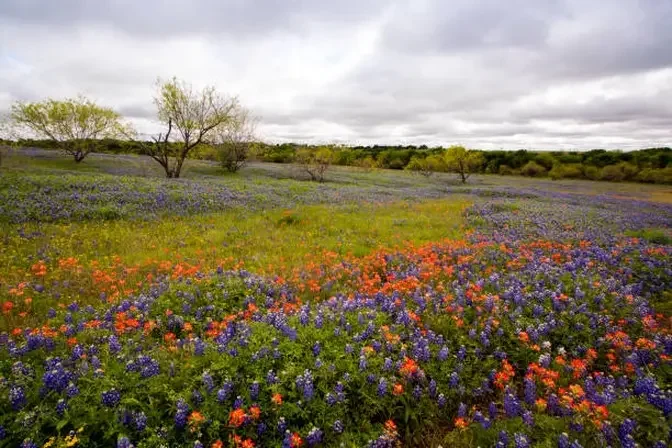
and today we're talking Texas bluebonnets, the state flower of Texas, and this is a sight to
behold in early spring many years in Texas. Thanks to Dr. Jerry Parsons, we are now able to grow
Texas bluebonnets as we would any nursery plant in our landscape. He was challenged many years ago
to create a Texas state flag with all bluebonnets. Blue, of course, was we already had, so no big
deal, and then there was white. Occasionally you will see white in nature, and also much rarer was
pink, and so what Dr. Parsons did way back when was he took pink bluebonnets and he isolated them
and naturally crossed. They naturally crossed within themselves, and you see there's variations
of pink color in the flower, and so slowly over time he was able to acquire first purple,
and then maroon, and later red, and so here is a planting of a pink planting, and you see the reds
coming out in the field, and so what you do is you take these reds and you isolate them,
save the seed, and over time he did this for various colors, and so over time he was indeed
able to create a flag that he grew at Wild Seed Farms that had blue, white, and of course red
bluebonnets, and so what I want to tell you today is a little bit about some of that journey,
but also a little bit about the processes involved in saving and planting bluebonnet seed.
So along the way Dr. Parsons developed a maroon. This is the maroon that he could stabilize.
A lot of people think that this is more purple than maroon. Most aggies would like this type
of maroon color. Notice the aggie ring right there, and so this is the maroon that we would
all like to have. A little bit more of a challenge to grow that particular one. He wasn't able to
stabilize that one initially, but the big challenge that you have when you have these
different colors, we have red, white, blue, all scattered around here, and if you have a
planting like this, eventually it all reverts back to blue. All bluebonnets eventually want to be
blue, but this gentleman right here, John Thomas, owner of Wild Seed Farms in Fredericksburg,
has been very instrumental in the bluebonnet project, because once you have a new color,
you have to have somebody grow that color, and you have to isolate the field, and we want to
talk more about that as we continue on with this story today. Isolating and growing out seeds so
that you have that seed for others to plant. I was fortunate to get involved in the bluebonnet
project, I don't know, I'm guessing 25, almost 30 years ago, and I was tasked with purifying
the red strain, and we feel really good about the red strain that we have today,
and interestingly enough, when we were growing the red strain, this really dark blue appeared in
these plantings. It's a shade darker blue than the typical blue, and it's a really
magnificent blue, and over time, we were able to isolate this, purify the stand,
and we actually named this Lady Bird Johnson Bluebonnet, and today, this bluebonnet is primarily
grown for seed, so if you buy seed from Wild Seed Farm, typically, this is the bluebonnet that
you're going to get, and the thing about it is, it has a darker color, and it produces more seed.
So, these are the seed pods that we're after in the spring, you know, bluebonnet is a legume,
it is a bean, and so this is the stage that we're after to get to save seed in the spring,
so see here, you see we have a lot of seed pods, here the seed pods have started to turn yellow,
here's some brown, and so the key is to be able to harvest these things before these pods actually
split, so when they split out there in nature, all the seeds are thrown out, you see how the
pod kind of rings itself, so the seed are scattered about, and so the big challenge we have is saving
these seed before that happens. So, over the years, we've had isolated fields of the different colors
that we've grown, and so then it comes time to save the seed, and so basically, what we've had
to do in the past is harvest these seed just before they pop. Typically, we've harvested them
into trailers, you see our workers here putting them into tubs, and then we reload them into the
trailer, realize we're getting them just at the peak, you see some of them are brown, some a bit
green here, putting them into a trailer, typically we haul them in to where we have a protected area
so that we can let them dry, we let them dry on this plastic, we let the pods pop onto the plastic,
and then we collect the seed. Now, realize if this was a commercial planting, a commercial planting,
they would harvest them with a combine at this stage, and so they have to pick a happy medium,
and some are green, and so you have juice and everything running out the back, and so it's a
real challenge to get really, really good quality seed unless you let the plants totally dry. When
you let the plants totally dry, you lose a lot of the seed in nature, and so that is a challenge that
we have is harvesting the plants so that we get maximum seed, but also that the seed is viable
and doesn't germinate too soon or doesn't germinate at all. So here you see the seed on the plastic,
and this past year, we got a little smarter with our technique. We actually were able to acquire a
large, large piece of shade cloth that covers a big greenhouse, and so what we did is when the
plants got close, you can see the brown and yellow, we just harvested them on this piece of shade cloth.
That way, a little bit of water wasn't going to hurt us, and that way, the pods could pop on the
shade cloth, and then we could take the trash off, harvest the seed that way, and you have to be
careful if you don't have a large piece. You have to kind of cover them up because these things will
pop, and it will scatter the seed, and so that can be an issue, and so that made our life a lot easier in
2019, but in the past, we've had them on the plastic. Here are our volunteers. We've actually
walked down the seed. You see here, we were COVID ready before COVID actually even happened.
Here's Helen Mock, one of our volunteers, and so she's all masked up. Realize it is a dusty process,
and that's why Helen had on the mask. You have all this chaff that you have to get off. A lot of times,
we save this chaff. We take it to the yard, mow it in, and you will get a nice stand of bluebonnets just
from that chaff, so a lot of chaff, a lot of plants when you harvest the entire plant, so that is a
challenge that we've had to deal with. Here we are getting that chaff off, getting our seed down to
the bottom when we get the chaff off, and we'll fold the plastic together and actually bring into
the seed, and so we load up our seed, so we have a little bit of chaff left, and so we still have to
blow that off either with a fan or whatever to get it down to just the seed. Notice you have all
types of seed here. You have fully developed seeds, some that aren't developed, and so that will
clean up in the cleanup process, so in the past, we've actually taken our seed and once we've had
it to these small cleaners. It has an air leg here, and the seed falls down, and the air blows out,
and so we're able to clean up our seed in that way, so here we are picking out some of the larger
chaff, and then we let it run through the machine, and a lot of times, it takes two or three runs
through the machine to get this stuff out. Let's see here, we've mainly got seed now, and so we're
able to do that. In the past, we've done that a little bit with wind or fans, and actually taken
it to wild seed farms to have it done. Realize you never get it totally clean. You always have a
little bit of dirt in here, a little bit of chaff, and so you have to clean that up. Now, if you were
just going to plant this seed, you could just take this seed and scatter it out in nature,
but realize Mother Nature has protected this seed. Mother Nature has given Texas bluebonnets a very,
very hard seed coat, and so that allows the seed coat to deteriorate over time, and so not
all the bluebonnet seed come up every year, and so in order to grow a nursery plant,
Dr. Parsons had to figure out how to uniformly germinate these seeds. You know, he couldn't
plant it in the nursery if you just had one or two seeds coming up at a time. It had to
be a uniform germination of the seed, and so what he learned how to do is he went first, soaked the
seed in water, washed the seed, and so you have all this chaff and light stuff floating on the top,
and so that's going to float to the top, and so your good seed is going to sink to the bottom,
so now the good seed has sunk to the bottom. We have the floating stuff up here,
and so we pour that out, and so we do that two or three times, wash the seed, stir it,
pour off the floating stuff so that we're left with just good seed, just good seed. You see that
heavy seed? It doesn't have any dirt or chaff in the bottom, so we pour that off and let it dry,
let it dry, and then what Dr. Parsons figured out is that he needed to soak the seed in sulfuric
acid, concentrated sulfuric acid, and so these are the seed. These are being soaked in concentrated
sulfuric acid, and what he did is he did a little science experiment when he first did it.
He soaked the seed for 10 minutes, for 30 minutes, for one hour, and for three hours, so 10 minutes
was not enough, 30 minutes not quite enough, one hour turned out to be just right, and three hours
was actually too long, and so concentrated sulfuric acid, you can imagine what that does to your hands
obviously, and so it is a it's amazing what this does. When you do this, the seed actually turns
black, and if you have a lot of stuff in there, it can see how it's turned black, and so you don't
want to have a lot of chaff and stuff in there because it will create heat. So once you've soaked
it for one hour, you add water to the bucket. Here we've added water to the bucket, and actually we're
going opposite of what you learned in science class. You remember that little slogan, it said
do what you oughta, add the acid to the water, but in this case, we have the acid here, so we're adding
the water to clean the seed, and so then we pour off that, and if it's a calcareous soil, you see the
kind of bubbling you get from the sulfuric acid neutralizing that calcium in the soil there, and
so that's what you're doing to the seed. Here we've poured it off. Here are our seed in the bottom.
We will then pour that on a little bit of screen and dry those seed, dry them out, and then they're
ready to plant. So the scarification cleans up the seed. It puts little holes in the seed coat,
and that's when you plant them, they come right up. Now luckily, when you buy seed from wild seed farms
or whatever, they've already scarified the seed, and so you just merely need to plant them out on the
soil. You need to clean out an area of soil or garden where you want to plant your
bluebonnet seed. Now is prime time to plant them. You're buying scarified seed from the nursery, so you
scatter them out here and lightly cover them up. Realize that bluebonnet seed looks just like,
bluebonnet seed looks just like little gravel. This is little gravel right here, and so this
actually could be bluebonnet seed. This could be a seed right there. It's natural to have these
seed come up in among gravel just like this. That's where these seed are actually at home.
Here you see a bluebonnet seed coming up. You see the cotyledons before you have true leave, and so
they will come up in really poor conditions, but the seed really need to be covered, and so
if you plant them right now, you want to lightly rake them in, water them in, and they will come up.
And realize when they come up, you also have weeds to come up, and so that can be a challenge, and so
you need to be aware of that. So here are seed that have germinated. Here are seed laying on the ground
that never got covered up. So it's key that when you plant these seed this time of the year that
you lightly cover them up. Now one of the things that's gonna come up for you after you plant
the bluebonnet seed is henbit. Henbit is a cool season crop, cool season weed, and it's gonna go
ahead and germinate, and so you're gonna have to deal with that. Here you have your bluebonnet plant.
Here you have your henbit. So when you grow bluebonnets, realize bluebonnet is a weed,
and so it lives among its friends, other weeds, and so if you want just bluebonnets, you are gonna
have to pull these other weeds because if you try to use a herbicide, you're gonna kill everything,
and we've worked with quite a few and never really have found one that works really, really well,
except dual. We use dual in our commercial plantings. Here's rescue grass coming up. You'll
also have clover coming up, and so when you grow bluebonnets and try to let them naturalize,
you're gonna have to deal with some of these other weeds and control them. So here is the situation
that Dr. Parsons was able to create by soaking the seed in sulfuric acid. He was able to give
them to nurseries. Here this is a bedding plant nursery. This is Peterson Brothers Hotel Nursery
in San Antonio, and so they sow these bluebonnet seed in a seedling flat. They cover those with
kitty litter, and you see the stand that they get. So once they're at the cotyledon stage,
they pull out the individual plants and put them into trays. They put them into trays, into flats.
You see they're putting them into flats, and that's when they transplant these into trays
so that they are able to grow transplants, so they're able to furnish the retail nurseries,
so that you're able to go and buy transplants on the market. And so thanks to Dr. Parsons figuring
out how to stratify that seed, scarify that seed, not stratify, scarify. It's a hard coat,
so you're scarifying that seed. He's able to get a uniform stand, and they were able to grow
uniform plants, and these are now available at Texas nurseries. And so if you're not able to
buy seed, about the only seed source we have today is Wild Seed Farms. They're sold out of
Maroon for this year, but they do have Texas Blue, and so you can buy bluebonnets. If you're in and
around the San Antonio area, there's several retail nurseries that carry bluebonnet plants,
and so you can buy those, and plant those, and get those going. So now is prime time to plant
these plants, and so I would encourage you to plant some if you never have grown some.
Peterson Brothers should have red, white, and blue this year, but regardless of what
color that you grow, and if you want to grow maroon, or you want to grow red, or you want to
grow blue, if you don't keep these isolated, if you don't keep the colors isolated, eventually
they're going to all go back to blue. They're all going to want to be blue, so you need to be aware
of that. Bees spread the pollen around, and so we need to isolate these plantings. You need to keep
them spread apart if you're trying to grow different colors. Here we have a field ladybird,
and we have these pinks in there, and even though it's a pretty sight, if you want to maintain blue,
you got to pull out the pink. If you want to maintain pink, you got to pull out the blue,
and so as we go through the harvest season, we will show you that. We'll show you our
our seed plantings. Currently what we do is we maintain stock seed of
three different colors, and so we maintain stock seed of white, and so we have a field that we will
plant in white starting next month. We'll plant it soon, and so we keep the white pure. We rug it really
hard to keep it white. We also have a planting of red. We maintain a red planting, and so we'll rug
it really hard, and the thing about red is a lot of times you will have some maroon color in there,
really, really pretty colors, but if you're going to red, you got to pull the maroons out,
and then we are trying to get a more maroon color, and so this is what we would be after there,
so we would rug that and get it down to this color as well. So red bluebonnets are out there.
We're trying to rug them to keep them pure, and so we maintain, like I said, stock plantings of
red, also white, plus Lady Bird Johnson blue, and so we maintain those plantings so that we have
a continuous supply of stock seed to supply wild seed farms and whoever. So if you've never grown
bluebonnets, I would encourage you to plant seed and or transplants. Now is the time to plant,
water them in, keep them clean, and enjoy the beauty of the state flower this coming spring.
You need to plant now so that you make a nice plant, and that way you'll have a really, really
beautiful bloom in the spring. So with that, that is what I wanted to tell you today about Texas
bluebonnets. Be sure to tune in during the coming year as we follow the planting of our
stock seed plantings and also the growth, and later on in the spring we'll show you
rugging the plants. So until next time, this has been Larry Stein with Texas A&M
AgriLife Extension Service wishing you a very happy and pleasant fall.