
Fall Blooming Flowers & Biennials Planted in Fall.
5 Video Views·Apr 23, 2023
Hello. Today I'm going to be talking about fall blooming plants and fall planted spring blooming
flowers. There are some plants that save all of their big debut show until the fall season. They
sit there all year, maybe they're pretty plants, but there's not many blooms of any at all, and
then in late summer and fall they burst forth with gorgeous blooms. We're going to talk about a number
of those that do really well in many parts of the state of Texas, and we're also going to talk about
some of those things that you plant in the fall for the spring bloom show. We have things like
biennials, for example. They complete their life cycle in more than one year. There's a number of
different things we can seed out in the fall that look absolutely awesome in the spring, and if you
wait till spring you're a little too late for the best results. Well, I'm going to get out of the
way now and let's go straight to the slides. In putting this talk together I thought about all the
different fall blooming plants and fall planted flowers that bloom in spring that I could include,
and it was difficult limiting it to just a few, but I think these are some of the ones that you
may be very familiar with as well as others you may not that do very well in many parts of the
state, and I'll try to make comments on that as we go along. And also I threw a few in that you may
not be that familiar with, so let's get going. Oxblood lily, Rhodophylla bifida, is one of my
favorite fall blooming plants because it's the one that heralds the end of summer best, I think.
Oxblood lily has been hiding underground all year, and as summer has turned landscapes and
pastures or wherever it happens to be growing into just a parched, fried, and dried remain,
the oxblood lily with the first flush of cooler fall rain pops out of the ground and really puts
on a show. Look at this old homestead where the house is long gone, not much at all left,
but because of where the oxblood lilies are you kind of can see where maybe an old flower bed was
or or a building or something that was they were planted around. That's kind of a cool scene and
it kind of reminds us of the feature that these plants have that helps them live in Texas. I like
to call them winter Texans, and the reason is like the winter Texans that come down from up north and
go down to the valley in the Winnebago or whatever, they get out of Texas in the summer by going
underground and having no above ground growth to speak of. Then when fall comes, they pop out of
the ground, do their bloom show for a little while, and then the leaves appear and the leaves go all
through the winter when it's easy to live in most parts of Texas and replenish the bulbs underground
and then as the weather warms up they go back, disappear again underground, kind of like a winter
Texan packing everything up when summer's on the way and heading back up north again. Oxblood lilies
are great survivors. I think that the little blooms look sort of like strappy amaryllis flowers
and they're really, I think, attractive. Although they don't last a long time, they're well worth
having because they'll pop up and surprise you and then disappear again. Spider lily, Lycoris radiana,
is another one of those harbingers of the fall season. I like to think of spider lilies as a
little fireworks display, going up into the air and exploding in all directions, announcing and
celebrating the fact that summer is over, or at least it soon will be. And I think hurricane lily
is another name for them because they occur during the fall time when we typically get a lot of
hurricanes through the Gulf Coast area. And the oxblood lily that I previously showed is also
sometimes called schoolhouse lily for the same reason. About the time kids go back to school is
when we start to get the kind of weather that allows these blooms to show up and go. Look at
the blooms up close. The narrow recurved petals, just long filaments and anthers coming out of the
flower, really attractive. A great cut flower too, by the way. Mexican mint marigold is a dual-purpose
plant. It does well in the herb garden. Here you can see it framed by some bay trees and
all through the season it has a mound of green foliage. The foliage smells like black jelly beans,
kind of that licorice smell, and I think it's really pleasant. We can't grow French tarragon here
but we can use something really close as a spice in the kitchen and that's Mexican mint marigold.
It truly is a marigold. The scientific name or proper name tagetes lucida. The tagetes is the
same as your common garden marigolds that you plant but this one is a perennial and again in
fall out pops these upright shoots with flowers on the end that are really beautiful. They look like
little single marigold flowers when you look at them up close. Copper canyon daisy. Copper canyon
daisy. Another plant through the year sprawling all over the place and then in fall here comes
all the blooms that just cover over it. Now this plant it has a strong citrus pine scent. I happen
to like it and some people do. Some people find it just too pungent and they don't care for it but
if you brush by it the air will be filled by that scent. It's got finely cut little marigold leaves
because it is also a tagetes. This one is tagetes limonii and I think that if there were if if this
were a variety we should call it flopsy because that's kind of how it grows. They need to develop
one that is compact. I guess they could call that tidy. That would sure give this plant a wider use
in landscapes but as you can see here and especially if you like kind of a cottage type
landscape where things are sprawling all over and popping up all over anyway this would be a great
plant for that but it's well worth growing and if you're in an area where deer just mow everything
down to the ground you might give it a try. I've never seen deer eating it. Now I've learned to not
call any plant deer proof because if deer get hungry enough they'll open your front door, jump
over you in the recliner, and go to the kitchen and start rummaging through the crisper. So I would
say this is as close to deer proof as you can get. It probably is but I think if deer get hungry
they'll eat just about anything. Philippine violet another wonderful plant. All through the year
dark green leaves and beautiful little plants. Then when fall comes oh my gosh it loads up with these
purplish lavender purplish flowers even toward the bluish range a little bit. There is a white
form also available. Very very pretty. Look at the blooms. Here's some close-up of the blooms and why
it blooms for such a long season. You can see here as you look at it that in the area where the
terminals are and where leaf buds or where leaf nodes appear on the stem you get all of these buds
and so it's got blooms every day but it's also producing blooms for tomorrow and the next day
and the next day and it stays in bloom for a long season. Mexican bush sage I think should
be the poster plant of fall blooming plants in Texas. Salvia lucantha this particular plant I
think is beautiful during the season. It forms a mound of silvery green foliage that is very
narrow kind of a lance shaped and has a dark purple flower or a purple and white flower.
The difference between the two forms the purple and white flower the calyx is purple right here
at the base and the flower itself is white. In the all purple form the flower is purple also.
Now there are a number of other varieties that are very hard to find but they are available out
there. One of them is called pink velour. In pink velour the calyx is white and the flower is pink
and in white velour it's all white. Very unusual looking for this plant. I have not tried those
off color I'll call them off color varieties here. Daniel's dream by the way is another one
that has the soft pink flowers with the white calyx and although I haven't tried them here I
think it'd be worth a try. I don't know that they'll be as strong as the original but they're
worth a try. If this plant gets a little large and it can look for a variety called Santa Barbara.
Santa Barbara is about three feet tall so it's kind of compact compared to the original and
it's well worth planting. Another technique would be to shear it a couple of times stop before
mid-season mid-summer to help form some branching and create more terminals in a compact plant
because salvias like a lot of plants bloom on the terminals. You get a shoot and you get a
on the end of that shoot and so if you if you shear back that shoot like looking here at the
base of the picture where the leaves come out there's two buds that are ready to form branches
so if you cut it off above that you get two shoots which means you get two flower spikes.
So if a plant is a little bit scraggly which sometimes they can be not as beautiful as the
one I showed you in the picture then just shear them back a little bit but stop that by about
mid-summer because you want to give it time to grow and set blooms for the fall show. Another
good choice mountain sage. Mountain sage is native to the Chisos Mountains in west Texas. If you've
ever been to Big Bend that's the Chisos Mountains and it also goes into a large area of Mexico.
It is a great plant because it produces these flowers in the fall season and the flowers are
very large tubular salvia type flowers. It looks very much like a typical salvia flower of many
of the species of salvia. Salvia regla is really a royal beautiful plant for the garden and another
thing about it that we like is salvia regla is favored by hummingbirds and you know if you're
a hummingbird making the long path of migration it sure is nice to stop off in the Chisos Mountains
and have something to energize you for the road ahead if you will. I think it's excellent. Again
a very upright plant in this case that if it is a little spindly don't be afraid to shear it. All
of the salvias almost do well if they get sheared a little bit to create more of a compact bushy
plant that looks good so you make your decision on that. I think you'll appreciate the results of
some shearing. Fall aster used to be called aster oblongifolium. Now it's symphyotrichum
oblongifolium. During the year it's kind of a oh I don't know not so noticeable plant. It's a little
shrub. It can be a little scraggly growing around. Shearing again makes it more compact. This is a
picture of some plants that were just about to start blooming. You see a few of the lavender
blooms starting to appear. As fall arrives here comes the blooms and they cover the plant up.
Very beautiful. Nice color. I love that violet purple color that they put out. A little bit
lavender perhaps. And the other thing I like about this plant is it is attractive to beneficials
like hoverflies. You can see if you look in the middle of the picture that hoverfly visiting
this plant. These flowers were growing in Fredericksburg, Texas. And the day I was there
it was just buzzing with hoverflies everywhere. Hoverflies have larvae that eat
aphids and some other pests. And so it's definitely one that we would want to plant. And there are
other beneficials that are attracted to fall aster as well. Confederate rose hibiscus mutabilis.
The reason we call it mutabilis is that the blooms change. You might remember the rose
mutabilis where the rose blooms come out kind of a buttery yellow and then they go into a pinkish
stage and kind of finish up a reddish burgundy. That is also true of this plant. That's a brand
new bloom coming out white rather than the buttery yellow like the true rose does. And
then it goes through pink and on into burgundy even toward the end of the day. But you can see
as you look at these plants up here at the top there's buds for tomorrow and the next day and
the next day waiting in the wings to come on. Now this plant gets kind of large. It'll get
in most of the places I see it growing in Texas it's going to be about a 12 foot plant if given
plenty of sunlight and some water to grow. It can get larger than that further south where
it doesn't freeze back. It's not completely hardy in terms of the above ground parts but if you
mulch the base even further north it should do okay with a good thick mulch over the base and
then just cutting the plant back to come back out again. It's not going to go too far north but
it should cover a good part of the state that way. Flowering senna is a beautiful plant also during
the year. It forms a shrub that has dark green leaves. Again another one like the ones I mentioned
before that have the dark green leaves through the course of the season and then in fall it just
explodes with flowers. This plant although it's a shrub can be trained into a miniature tree form
and I want to say miniature because it's not going to get big enough to sit in the shade really.
You can train it up to more what we'll call it a standard form with a single trunk but it's
not that cold hardy. I would take it up through zone 8b probably but one thing to know
about cold hardiness is it depends on the weather preceding the freeze. If it's 80 degrees going up
to 25 degrees you're going to get a lot of cold damage to a lot of plants that otherwise wouldn't
have had it but if it cools off slowly and kind of moves down more gradually it's
going to be like many plants a little more cold hardy. I would take it again up to about 8b but
the thing I just am amazed about this particular plant is look at the look at the clusters of
blooms and you can see all the buds that haven't opened yet. Just beautiful bright yellow. The
sulfur butterfly likes this plant as well and just another reason to plant flowering senna.
Chrysanthemums. It wouldn't be fall without chrysanthemums but most of the florist's
chrysanthemums just don't do well in most of Texas in the gardens. Perhaps some in east
Texas better than as you go west and that is even true of country girl. Country girl though is one
that I think does really well but this is another one that should have been named Flopsy also.
It wants to flop over everything in the garden as you can see in this picture and it's very hard to
keep it compact with pinching like some of the florist mums would stay compact with some pinching
but you can do some training through the year just stop all that by the time you definitely
by the time you get into midsummer if not a little before to to allow time to set the buds
for bloom. The bloom buds form these little three inch lavender pink flowers that are really
beautiful. Can you imagine something that would be a better cut flower than country girl
chrysanthemum? So pretty. Sweet autumn clematis. Clematis turnifolia. Billows of fragrant white
blooms in late summer to fall and then you have to keep one thing in mind though about sweet autumn
clematis. The plant is an exuberant grower. We can call it an aggressive grower. If you have a little
trellis for it it's just going to mound over the whole trellis and make it look like a bump in the
landscape. You do need to do some shearing on it. Again like our other fall bloomers stop before too
long in the summer on the shearing but you you want to contain it a little bit if you hope to
have any particular shape or direction to where you want the plant because it it is it is a vigorous
grower and it can do some reseeding also so that's I just throw that in as a little bit of a warning
that it can be a problem if you have an area where you don't want it to grow and reseed you
may be doing a little seeding as a result. But after the blooms come these spidery looking
little seeds with the long strands attached which are I think also kind of attractive.
Coral vines. Speaking of enthusiastic growers here's one on a chain link fence. The best thing
that could ever happen to a chain link fence is a coral vine. You can see it coming out of the ground
in the lower right side of the screen over here. Underground there is sweet potato like storage
structures that help this plant come back stronger and stronger year after year. Now the common form
is pink there is also a white form that is also pretty not as common to find it's a little harder
to find in the in the trade but it's worth looking for if you're looking for that. One of the things
I really like about this plant is the fact that pollinators really like it. I've been under
trellises or arbors rather of coral vine when it's blooming and the place is just buzzing
with bees. Now if you're afraid of bees I understand that concern but they're not going to
bother you if you don't bother them and so just just enjoy that. But think about the concern now
over pollinators and all of our native bee species and what a better thing than to give
them something to feed on as they prepare to go in to the winter season. Coral vine is also
called Rosa Montana. Montana it's a native of Mexico and you do want to plant it though where
it cannot get away. Here's one that was put on an iron fence and planted over by that building and
I think I measured one time it went out about 80 feet from that fence and you can see down at the
end there it's also now going to take over the building. It's crawling up on anything. Those
power line drops coming in is just an opportunity for it to head out and conquer the telephone pole
nearby and if you think I'm exaggerating here's my one picture that tells it all. That is a full
sized windmill and coral vine is absolutely taking over the place. Now it doesn't have to
be that way you can shear it off and stop it. I don't want to discourage people from ever planning
it but just I like to warn you so you don't come back later and say hey man you didn't tell me that
thing was going to take over the property and we're going to just just give it give it some
time. This plant runs like a kindergartner on the first day of school and so it'll anything it can
grab on to it'll do. In fact I think we might auto rename it coral kudzu. Here's one you may
not be familiar with. Desert trumpet vine also called pink trumpet vine. I generally go by the
name desert trumpet vine. When you say pink trumpet vine and desert trumpet vine you think
about the true trumpet vines. Pedrania ricosilliana is not the same genus and certainly species
as our true trumpet vines that you're probably familiar with. Although the name desert is in the
name sometimes it's it does best with dependable soil moisture but it's related to several of our
common plants that you see in Texas landscapes. Look at those flowers up close and think about
what does that remind you of? Catalpa maybe? Trumpet vine? Or how about Esperanza or yellow
bells? Can you see the resemblance in the blooms? It's related to those plants. One thing about
desert trumpet vine it doesn't know if it wants to be a vine or a shrub and so you get these long
gangly somewhat stiff vines going out that you can do it either way really. This particular person
decided they were going to go shrub root and so they tipped the vines as they grew and kind of
maintained a large mounding shrub in the landscape. That's something that you can you can certainly do
as well. This plant is not completely hardy. If you get up in oh about the mid part of Texas let's
call it zone 8b but I'd say somewhere around Austin north of College Station across the state
through there you're gonna or around College Station you're gonna find that this vine can
freeze to the ground any further north than that or even in a cold winter in those areas
and so you would want to mulch the base well to protect that base so it can come back out again.
Remember that some plants that bloom in the spring they're blooming on last year's growth
that set buds in late summer and fall so if you prune them like cut them to the ground in the
winter you have no blooms you get new growth but you have no blooms but these late summer and early
fall bloomers are blooming on new growth so you could mow them to the ground every year and they
would come back and still bloom like crazy for you later in the season. Something to think about.
One note about fall bloomers we sometimes refer to plants as short day plants.
Poinsettias for example are referred to as short day plants or holiday cactus like Christmas cactus,
Thanksgiving cactus things that bloom at that time of the year. Most of the plants I've been
talking about with the exception of the bulbs are what we would sometimes call short day plants.
I think it's better to call them long night plants and the reason is that they need a long
dark period to bloom. Now you would think short days and long nights go together as the day length
changes through the year the days get shorter and the nights longer or the nights get shorter and
the days longer but while that's true about our diurnal patterns out in nature it is not
necessarily true about our plants in the landscape and the reason is that the interruption of that
night time period with light means that there wasn't one long night because they're long night
plants but there were two short nights so even though the days are getting shorter if you've
got a security light that comes on that security light in the middle of the night is going to make
the plant get light if it's close enough to the light and it's going to fool the plant into thinking
that fall has not arrived yet because the plant is looking at how long is my night time and over
here by this door there was a security light that shone on this plant and look at what you see
on the plant the blooms that are appearing are all around the backside of the shrub this is
salvia regula by the way backside of the shrub where it was shaded from the security light and
it was experiencing long longer nights and this tree trunk cast a shadow and we get some blooms
in the shadow even of that tree trunk coming up into the plant and i learned a lot when we had
that planted at the extension office over in travis county and that that kind of reminded me
that i quit calling things short day plants and i started calling them long night plants as a result
now let's look at a few fall planted spring flowers there are some things that we best
plant in the fall so that they can really put on their bloom show in the spring and poppies are the
first one i want to talk about i love poppies so many good kinds of poppy the red ones here in the
picture are corn poppies also called flanders poppies as in the old poem from the early 1900s
world war one in flanders field the the poppy itself is a symbol of you see the little poppy
pins that are given out to remember our world war one and and sometimes it's used for other
other veterans as well the papava roas is a beautiful little flower poppies don't last a long
time but boy if you have a cottage garden you have to have them and i think they belong in any garden
they're just so beautiful but they planted in the fall grow through the winter like a a small
little rosette of plants not very big and then in the spring they pop up and bloom like all those
weeds in your yard that come up carpetweed and chickweed and henbed and clover those sprout in
the fall and go through winter and come up in the spring bluebonnets same kind of cycle and so uh
you want to plant these things in the fall the next one the the beautiful golden yellow here
in the bottom is california poppies and this particular one has that beautiful butter yellow
to golden color there are yellow forms of it not so golden and are almost not so orangey there's
also some white forms of this and i like the foliage look at that finely cut fern-like foliage
that it produces the next poppy that i want to mention is iceland papava nutacalli iceland poppy
is worth including because it brings in a lot of colors that some of these other poppies don't
offer and iceland in fact there this um corn poppy up here i didn't mention it but that
that is some there's also a shirley poppy that is a group of that papava roas genus and species
that does have some other colors in it somewhat like the iceland poppy look down here but they're
they're really beautiful the thing that's cool about poppy seeds in general they they come up
they come up and the heads are bent over like they're nodding nodding their head down and
before they bloom they straighten up and pop open the blooms i think it's kind of a cool movement
kind of adds a little grace to the picture now poppies do recede and they'll you're going to
have to deal with with poppies if you leave them to spread their seeds in the garden if not you
want to clip a lot of those heads so they don't just go where they want to go but they go where
you want to go and here's a good example why i think that johnny apple seed has a cousin called
johnny poppy seed and that's probably how they send it up here but it's at the base of a stop
sign so if the stop sign were gone the poppy blooms on corn poppy would say stop for this
car coming up to the up to the stop sign that might be a good way of guerrilla gardening you
know in fall take you some poppy seeds and drop them in sidewalk cracks here and there and just
kind of scatter them about kind of adds a little beauty some people might not find that beautiful
but i certainly will the poppy that you're probably more familiar with is bread poppies
bread poppy is also known as opium poppy because it's the same poppy that they get the white milky
sap from that opiates are made out of and the opium poppy is illegal to grow in the united states
that you see them everywhere i've never seen a granny cuffed and shoved into a police car
before for having some opium poppies out front i prefer to call them bread poppies because they
are also the poppy seeds that you would use in cooking or baking and so you can grow those
the opium poppy is like up here at the top right that single poppy is a very common form of it
and then there are a number of varieties in the lower left this one notice there's a bee in almost
every poppy photo they love these things the the one in the lower left is called lauren's grape
lauren like the girl's name great and it just shows that there are some other varieties that
you can plant out there the one in the top center is it goes by different names it can be
popover somniferum variety peoniflorum or it can just be sometimes popover
peoniflorum peoniflorum is a peony like flower that's what that means and if you've ever been
in a place that grows peonies or peonies however you want to say it you can see some resemblance
there and then these double is is an understatement multi-double blooms that it
but the plant also produces these seed heads that i think are pretty cool as they get ripe
they pull back see how this lip is pulled back and opened up the chambers at the top
and this young lady is turning them upside down and just dumping all the poppy seeds in her hand
time to go in and bake bake some muffins or something that if you don't want these things
everywhere harvest them keeping them upright and take them inside save your seeds and then
plant them where you want them but again i just want to remind you this is this is a plant that
officially on the books is an illegal plant to grow and for it's because of its connection to
opioids and if you want to read a really interesting story michael poland some of you
have read some of his books omnivores dilemma and other things he's a good writer he wrote a story
or an article about growing opium poppies and finding out they were illegal and then that sent
him on this long search to look into it's a very enjoyable article very fun to read you might want
to do that and by the way breeders in some places are working on developing the papaver somniferum
opium poppies that have none of the opiates in them i believe in india there's a variety
that produces none of that latex at all and so that may just be something in the future that we
have some if somebody would want to go ahead and change the laws to allow for certain ones i have
a feeling that that probably isn't going to happen another fall planted flower is larkspur now some
of these things like like larkspur you'll see people plant them in the spring and you can do
that but they're best planted in the fall consolida ambigua comes in all kinds of colors
of purple blue even a light sky blue and pink and white you'll find the blue forms to be dominant
and so if you let this patch you see in the picture go year after year receding it would
get bluer and bluer as time goes on there's double flowered forms and a lot of these in the picture
are double flowered there's also uh very common is the single flowered form and the thing i like
about the single flower is if you look in the center of the flower you see this little bunny
rabbit you point that out to kids grandkids or your kids that little bunny rabbit in the center
of the flower another good cut flower from our fall flower plants fall flowering plants or excuse
me this is a fall planted spring flowering plant but larkspur is a good a good choice for your cut
flower gardens uh you know you need to get kids involved in gardening and showing them little
things like this i think is cool showing them squeezing the cheeks of a snapdragon and showing
them how they open up is kind of an interesting thing they'll they'll find that kind of a cool
thing as well sweet peas another plant sometimes planted in spring does best if planted in the fall
latharus odorata odorata the fragrance of sweet peas is heavenly but a lot of the new varieties
have been bred for particular flower colors or plant growth forms that have left the fragrance
behind not all but some and but you can still go back and from some seed companies order the
fragrant old types those tendrils tell you that it wants to grab onto anything to grow and that's
the best thing to do i love cutting some of these and bringing them in as an arrangement indoors
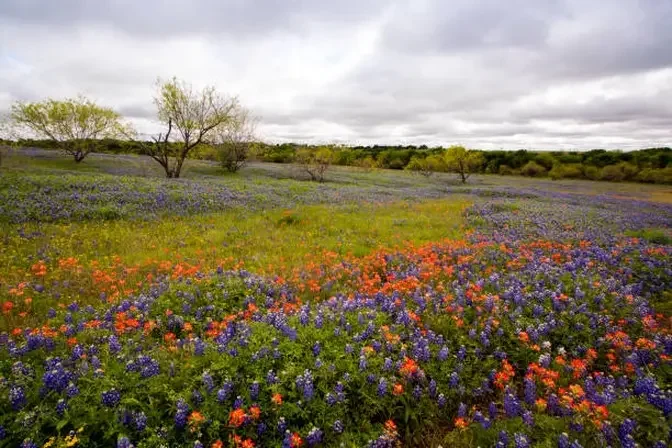
and finally texas wildflowers so many great texas wildflowers seed companies offer blends for your
area of the state you can plant them by broadcasting if you've got a little pasture
a little kind of a wild area that you want to mow down real close and broadcast the seed and then
kind of kind of scratch it in a little bit to the soil they're going to sprout in the fall a lot of
and then come up and sit there over over the winter just just so many i don't even you know
we could spend a whole nother talk on wildflowers but going across the top from left to right we
got wine cups and then we got mint one of the monardas this uh horse mint makes some great
honey if you've got if you're a beekeeper then there's a galardia or indian blanket basket flower
in texas i grew up calling these buttercups but they're really an evening primrose kind of flower
different kinds of tick seed or coreopsis drumming flocks along the roadways and then standing
cypress you don't see this all over the state but in central texas you'll see some of that
and my favorite believe it or not is the mexican hat so many beautiful forms of that and you talk
about a plant you can ignore in fact it would prefer you to ignore it mexican hat is that so
if you're interested in more information on blue bonnets dr larry stein will be giving a presentation
on blue bonnets for our next aggie hoard facebook live next friday at that's september 25th at 1
pm so you definitely want to tune back in you're going to learn more about blue bonnets than you
can imagine it uh they are our state flower a wonderful flower to have and uh if you want to
have a blue bonnet show next spring uh don't miss next friday with dr larry stein i had and some
others have been answering questions during this talk i want to thank the folks from aggie
horticulture specialists and county agents that help with that and if you have a few more questions
we'll stick around for just a little bit and answer those questions in the chat and thanks
for joining us today