Music (via Epidemic Sound): "Letting Go," Gavin Luke "Con Calma," Los Principes del Flamenco "Gone are the Day," Trevor Kowalski "Queen of the Night," Andres Cantu "Villanueva," Vendla "Azul," Andres Cantu "They Run," Jose Barrios
Mind Theater is a series of video essays on the arts, film, tv, and media, revealing what makes them so compelling.
Weak composition, slovenly and wretched, loud, coarse, slipshod, non-existent as an artist.
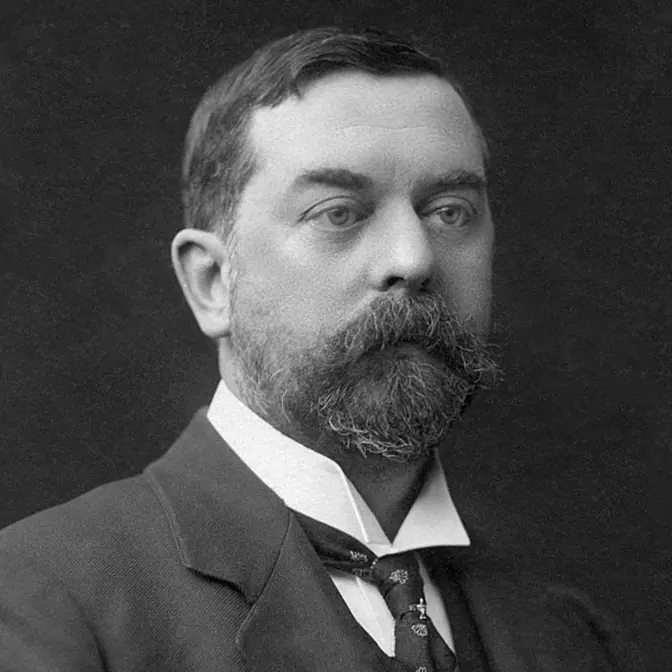
It's hard to imagine a painter as renowned as John Singer Sargent on the receiving end
of this level of criticism. A celebrated artist of the 19th century impressionist movement,
known for his grand portraits, ambitious manipulation of light, shadow, and composition,
as well as his meticulous attention to detail, he was no stranger to exercising a provocative
approach to painting and portraiture that drew as much praise from his critics as it did
condemnation. Like in Portrait of Madame X, his most infamous at the time,
and perhaps his most famous work today, it depicts the young socialite Virginie Amélie Gautreau,
portrayed by Sargent in full scandal, eccentricity, and erotica. Her neck is bare,
her side profile rendered strikingly, by the way, her dress described as falling off the figure.
It was a work too much for the sensibilities of the 1884 Paris Salon, his decadent reverence for
the upscale beauty in Edwardian society viewed as beastly and unrefined, analysis that in our
modern context can't help but ring prudish and detached from reality. To gain a greater
understanding of the perspectives those critics shared, we must look to a work far more shocking
and intense, a piece where Sargent's cosmopolitan sensibilities and upbringing met his impressionistic
style. In a violent clash of shadow, light, form, and movement, we must look to El Jalejo.
It is artistic passion put on full display, a piece that is the embodiment of expressive
musical commotion. The title roughly translates to The Ruckus, a definition that coincides with
the piece's overpowering full effect. The work's energy is almost too intense to take in all at once,
it begs to be read in fragments. The inky black shadows flood the painting from its dark interior
to the back cave walls, the contrasting light illuminates the wood floors, her bright satin
skirt, and the edges of the subject's faces, half-shrouded in darkness. The dancer is in motion,
players, singers, and onlookers belting, arms and head stretched out high. It's an artwork you can
feel and hear. This is flamenco, a folklorish dance tradition that hails from the Andalusia
region in southern Spain. It began as a largely improvisational form, closely associated with the
Romani people, performed in dimly lit caves and modest homes. In Sargent's piece, we bear witness
to the raw passion of that dance through his impressionism that works on capturing the energy
and activity of the dance in a scene that, while realistically rendered, speaks to something truer
than simple realism can capture, his multicultural appreciation for art and the subjects he depicted
in it. An American born in Italy who studied in France and Spain, Sargent was by all definitions
a cosmopolitan artist who wore many multicultural hats, often simultaneously. Growing up, he spent
winters in Nice and Florence and summers in the Alps. He's probably best known for his upscale
portraits of elegant ladies, the fashionable members of Edwardian-era polite society,
works that helped in establishing him as the leading European portrait painter of a generation.
His figures are representative of the upper-class ideal of luxury and excess, and he often portrayed
his women full-length, inviting us deeper into their characters and the interiority of their
lives. His portraits featured unusual composition and lighting, and he constantly challenged himself
to push the bounds of portraiture in an effort to express the full identity of his subjects.
For him, it wasn't enough to merely capture his sitters, he had to embody them. By the time he
moved to Paris to study under the French painter Carlos Duran, he began to experiment with more
impressionistic techniques, underpinned by an attitude that strove for representational accuracy,
painting things just how they looked. This perspective would further develop after five
months spent living in Madrid, studying the works of Diego Velazquez, who similarly ran the 17th
century courts of Philip IV as his lead portrait painter. One of the foundational painting
techniques he gleaned from studying Velazquez was the alla prima method, or loaded brush,
a painting approach where wet paint is placed on layers of still wet paint. This allows the
artist greater command over the whole picture composition, as the work is painted all in a
single session. It forces the artist to be more bold and decisive, and in works where movement
and vivancy are critical factors, it has the effect of producing an even more intentional work,
perfect for capturing fleeting moments in all their spontaneity and vitality. We see this effect
reproduced masterfully in El Gelejo, where Sargent takes sections of implied movement and uses the
contrast between soft and harder edges to promote dynamism and motion that in this work ushers forth
from every facet. The painterly canvas, loose brushstrokes that run into and clash against each
other, each containing immense energy, the asymmetry of the piece's composition, keeping the main dancer
off-kilter and encouraging our eyes to dance from her contorted arms in mid-spin down to her satin
dress and kitten heels, enthusiastically keeping rhythm and spirit. Across the back wall, we can
study the tense, emotional faces of performers and onlookers, as lost in the trance of the dancer as
we are, or witnessing the dance at its apex. In El Gelejo, we can clearly see Sargent's joy and
celebration for the art of flamenco, but it's also an historic document that radically went
against the growing state of flamenco in the eyes of consumers and patrons in Europe at the time.
Flamenco owes its beginnings to the south of Spain, with the arrival of the Gitanos and Romani people.
The earliest forms of this dance were performed historically solo, featuring a lone dancer,
often female, a lone musician, often male, and a singer staged in candlelit caves in the evenings.
Largely improvisational, its movements and forms were learned within Romani families and passed
down generations. El Gelejo came into being at a time in the middle of flamenco's golden age,
where the ruling entrepreneurial class recognized its money-making potential.
With this recognition, flamenco became more theatrical, prioritizing attractive female
dancers and colorful, showy costumes, graduating from the low caves and homes of the Romani
into cafe cantantes, night bars where spectators drank, laughed, and enjoyed the music and exotic
theatrical productions, with audiences often composed of tourists looking for their foreign
fixes in the shape of these passionate and sensual shows, rooms of lust-filled men exoticized
by flamenco. Like this 1890 New York dinner party that Sargent himself attended, featuring one of
the most famous flamenco dancers, Carmen Sita, who had toured across Spain, France, and Portugal.
Her performance was ridiculed heavily by the New York paper Town Topics. On stage,
the torso shivers and upheavals indulged in by Carmen Sita might be allowed to pass for art,
but in the privacy of a richly furnished room, with innocent eyes to view her,
nothing but the fatal earthiness of the woman's performance could make any impression.
It's attitudes like this that underpin the racism that the Romani people experience
in Europe and abroad. While patrons of the arts indulged in their exotic fantasies,
they still viewed the Romani and foreigners as unwelcome in these upper-echelon private spaces.
El Jalejo flat-out rejects this representation and characterization. It is flamenco stripped
bare. Rather than the prim and proper showy outfits of flamenco's golden age, the canvas
celebrates the dance's full, immense grandeur through emphasis of the dance itself, and the
subject's movements. In its high contrast and harsh lighting, it refuses to be tailored to
French and British sensibilities. It is raw, emotional, uninhibited energy. We see this on
dramatic faces, expressions, and movements of the flamenco players and onlookers. They reflect
profound emotion and connection to the performance. Sargent refuses to beautify these reactions.
Instead, we must find beauty in the form itself, like the twisted, contorted poses the dancers
would make, drawing attention to their skillful movements, wrist and finger circling, to the
emphasis on her skirt and garb, lit up by unseen candles that floodlight the bottom part of the
scene, the way the clothes drape over this body in motion, and Sargent's rendering she's bisected
by the light, at risk at once of disappearing into the shadows or brightly etching herself
into our consciousness forever. One can't help but feel like we're back in those caves the form
originated in. You take this depiction to even further extremes in another flamenco piece,
The Spanish Dancer, an even darker, far more brooding canvas. The three central figures are
nearly unrecognizable. A mark stands in for a hand, an impression of loose paint for an arm.
We're trapped in the dark, hypnotic dance, lost in the soul of flamenco. This subdued,
grimacing color palette that owes even more to the likes of Velazquez or even Goya.
We've entered a space further removed from the fanciful exoticism of France and Britain,
where hatred and racist tropes surrounding Romani people turned to fetishization. Operas of the time
like Carmen featured love triangles that led to understandings of the Romani as exotic,
promiscuous, and creatures of lust. The artists and thinkers of the time equally fetishized them
as paragons of the free spirit, which led to the term Bohemian, a title these groups would go on
to lift as descriptors for themselves. Sargent's work serves as a rejection to both kinds of
fetishization and racism concerning the Romani people. Four years after El Jalejo and his
portrait of Carmencita, a portrait that also drew the ire of critics, she is depicted as
dignified and regal as the ladies in his Edwardian portraits. Her head tilted high,
depicted in a remarkable stunning canary yellow dress, here he elevates her from the lowly status
of common musical performer to performer worth remembering, worthy of being treated with elegance
and grace, and worthy of existing in those very same artistic spaces, an exaltation that didn't
come in perverting the truth, but revealing the truth that was already there. But we don't get
here without this. Both exist as staunch rebellions against the European consciousness and status quo,
both exist as a testament to Sargent's appreciation for the craft and his desire to capture his
subjects in their full liveliness and personhood. If Carmencita is the finished product, the years
of struggling and pain, to not only have your art form, but your people viewed in high regard,
El Jalejo is the soul. The years of history and storied culture only begin to etch out a full
celebratory depiction of the people who stunned the world through it, from dimly lit caves to
the halls of the most famed in Europe. El Jalejo asks us not only to understand the Romani culture,
but to experience it firsthand, producing a visceral reaction to a work whose art form is
rendered just as beautiful and moving as the subject matter it depicts, from an artist who
needs no embellishment, an artist who even in a stark shadow of an impression, reveals the core
truth to what's already blatantly there. The dark dance of Andulja, its silhouettes echoing,
flickering, shadows on the wall. 200 years later, we can bear witness to the soul those
practitioners and their artistry drew from, its Sargent's painstaking handiwork that revives them,
phantoms whose brilliance shines brightest in the dark.
Mind Theater is a solo effort produced and written by me, AwakingBadEye. For only $3 a
month, you can support the show on Patreon, it really helps a lot. The link is in the description
below. Thanks for watching, I'll catch you next time.