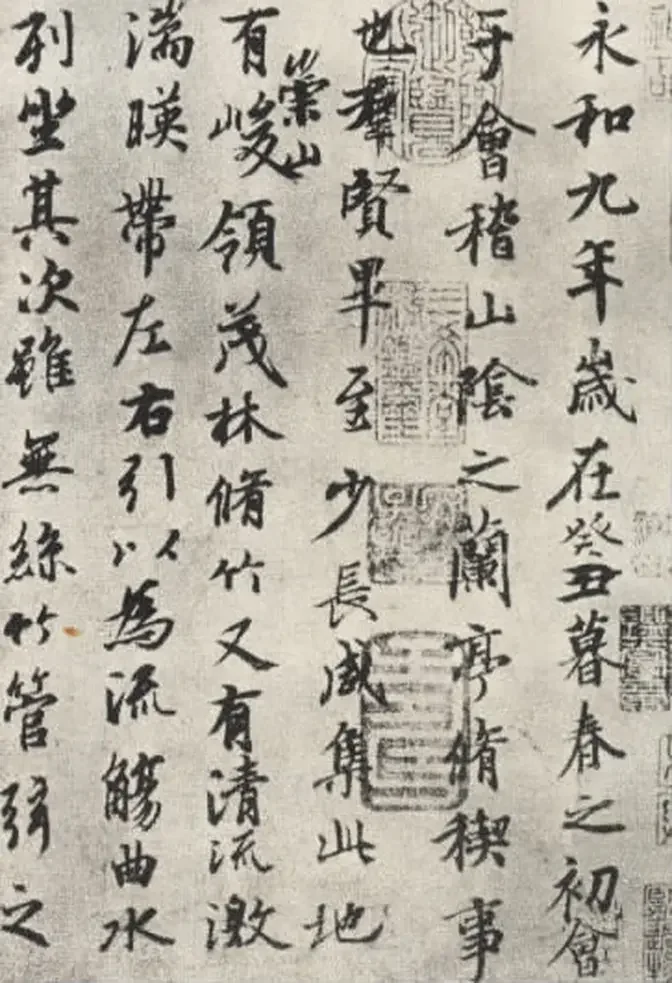
An art-name (simplified Chinese: 号; traditional Chinese: 號; pinyin: hào; Japanese gō; Korean: ho; Vietnamese: hiệu) is a pseudonym, or penname used by an artist. Chinese artists adopted different art-names at different stages of their career, usually to mark significant changes in their life. That is why many Asian master painters or calligraphers have multiple art names.
For artist name seals, you may use either square or oval shaped stones, positive or negative carving styles, ancient or modern scripts depending on your personal artistic tastes. Deferent size of seal maybe used depending on the size of signature calligraphy and also on the size of painting or the style of painting. A small seal can be used on large size paintings but large size of seal may not fit in small size painting. #calligraphy
Hi, I'm Henry of Blueheronarts.com.
Today I'm going to work on a special seal for a YouTube viewer, Michael Kennedy in Texas.
I'm using a detailed water brush pen, ink brush pen.
It's number A10, the new water brush pen we have in Blue Heron Art brand on our website.
It's a detailed brush, you can see, very convenient.
I use the outside when I paint the Rose Parade float, you see, that's the same brush.
It's a very pointed tip, so I can trace the details exactly.
It's not like the print itself, but every step is a recreation.
It makes me understand more of my design, so when I carve, I have a better idea.
Every step is a recreation process in the design of the seal.
Computer, starting from collecting data on the computer, then carve on the stone.
Every step is a recreation.
I normally do not paint the negative image, but since this is an antique style, I try to follow the design exactly.
This part is too detailed, so I will have to leave some.
So this is basically the layout.
I'm going to transfer.
Let me first turn it over.
Now the ink side is facing the stone.
The design matches the size of the stone exactly.
Just wrap it.
Now I use a cotton swab to get wet and dry it with a tissue.
We need only a little moisture to dampen the paper.
Now I use the dry part of the tissue.
Press to absorb the excess moisture.
Then you can use a fingernail or a pebble stone to rub it a little bit.
Then open the tape.
You can see the traces left on the stone.
I'm going to trace with a marker pen to enhance the design.
Now I have a rough design of the seal.
The more important is you have a complete image in your mind through the process of design.
When we carve, we have a pretty good idea of what I'm doing.
I use this mirror image as a reference when I carve.
So I have a good idea of what's going on.
This first character is Kan.
It's translated from the last name Kennedy.
The well-known foreign name translated into Chinese is President Kennedy, or JFK.
You might wonder what's the meaning of this word.
It doesn't matter. As you have an English name, the last name doesn't really matter.
Although the character has the meaning of sweet taste or good taste in the past,
you can still use it as an adverb that way.
But in the name context, the last name is just a last name.
You could translate it in other ways, like Kong as Confucius, or Gen as other different characters.
There are only 100 surnames in Chinese.
Relatively small compared with the English last names.
We have all the possibilities of the entire Chinese language for first names,
but some characters are used more than others.
So you need to choose the meaning with the first name translation,
and better with the help of a native speaker.
The Kan is like the mouth with tongue.
Good taste.
The next one is Mai, Ke.
The first name translated into two characters.
First one is Mai.
The one we chose is a verb, stride, stride forward.
The next one is Ke, conquer, subdue, overcome.
It's a male name.
This character Mai has two parts.
First is the walking radical, the foot, and the street.
You often see this in the world.
Now the left side, actually on the print, the right side is the character Wan,
means the silent, the walk silent.
Actually this represents the sound of the word, stride, the Chinese Mai.
I guess the original word for this is some kind of, like a frog or something.
It's a pictograph that remnants.
Now I use this sound symbol in the character Mai.
Other strokes, some are merged on purpose.
It gives the design an antique feel.
Now I'm working on the third character, Ke.
To conquer, to subdue, to restrain oneself.
Now the last character is a common character used in name sales, called Seal.
It's a traditional character to use in name sales.
I make the margin more like rusted or used look.
Some part even is felt or broken.
Actually this character, Mai, has most strokes, but I carve it a little smaller.
I need to do something to make it more bonus.
Now let's make a first imprint, see what it looks like.
Compare with the computer design.
I use the ink paste.
The Shilin brand ink paste is the best in China.
It has several hundred years of history.
This is the email image.
Let me put this one as reference.
Now this is the first imprint.
I want to make some adjustments.
I have made some adjustments in polishing.
It's better, it's more balanced compared with the first imprint.
I think it's almost, I just make this character a little more...
This Kan cannot be the same as the other character Dei, the Ru.
So I want to make this part more longer.
Yeah, it's good.
Just one more touch.
Make this side a little heavier to balance the composition.
Now the final test imprint and then I'll do the official stamp in my collection book.
Now I'm going to do the signature on the side of the seal.
So you will mark the orientation.
Normally we do it on the front side or the left side.
Usually I carve the signature on the left side.
And leave this for some other inscription if we have special ones.
I just carve my name.
It's just like I signed a painting, you know.
Signature style.
But this is not a mirror image.
You're supposed to read on the stone.
You can use the rubbing to see it in books and publications.
Normally they do that.
I usually sign near the bottom.
That way to make sure this is my work.
If you erase it to make something else, you will erase my signature.
You hold the seal this way to make a stamp.
This will be the correct orientation.
The upside and downside will be determined.
Thank you very much Michael for your commission for this name seal.
And also others for watching.
Happy painting and learning Chinese art.
Thank you. Bye bye.
Hi Mike. I'm going to show you how to sign your name in Chinese.
Grass style or raining style.
As people do in signature.
You can omit 干 when you sign, but it's fine.
The simplified Chinese is this.
You can also do that.
This is how you would sign your name.
You can find different styles of Chinese characters online.
You can see the standard script, raining script.
That's good.