
Churchill at Chartwell
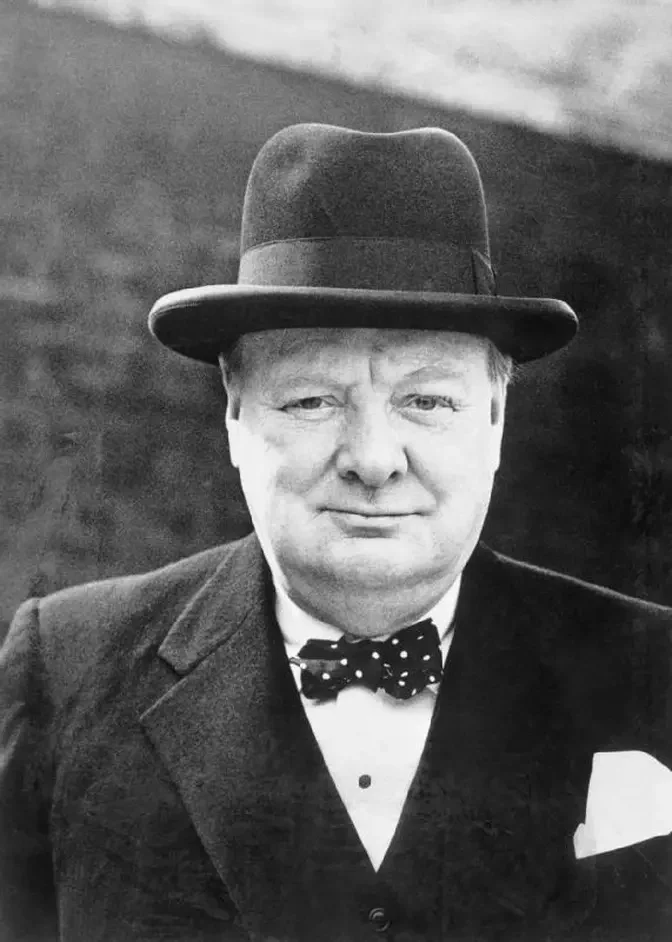
So before I hand it over to Catherine, who's going to begin with a short presentation,
I personally, as the Executive Director of the International Churchill Society,
wanted to share how I feel about Chartwell. I've been there twice, been lucky enough to go there
twice, and its role in preserving and promoting Winston Churchill's legacy cannot be overstated.
So when you're at Chartwell, if you have had the pleasure of going,
you walk into history, you really do. The house is set with all the furniture, items, paintings,
books, rugs, everything that was present during the time that the Churchill family used it.
And it's not only, of course, a national treasure for the United Kingdom, but it's an international
treasure. Chartwell and its wonderful staff, and especially wonderful volunteers, dedicate their
lives to preserving the home and promoting the legacy and continued learning of Winston
Churchill and his family. So I really just want to thank you, Catherine, and everyone who works
at Chartwell for the work that you do. And the society, its members, and those who are interested
in Churchill are incredibly grateful to have Chartwell. And we would not be able to understand
Churchill fully without his home. So thank you very much, Catherine, for all the work that you do.
Thank you very much, Justin, for that very warm introduction. And yes, as Justin said,
my name is Catherine Carter, and I am property curator at Chartwell. I'm employed by the
National Trust, who are the largest conservation charity in Europe, and have over 500 properties
in its portfolio. So just before I start, I'd like to make a couple of thank yous. Firstly,
thank you to all of you who have joined us today. It is brilliant to get to share the stories of
Chartwell with such a widespread audience. I've seen the messages coming up saying
countries all over the world. So great to have you with us this evening. And in addition to that,
I'd like to thank a company called Top Photo, who are an amazing independent photo archive.
And as I go through my talk, all of the historic archive images of Churchill and Chartwell and his
family are from them. So a big thank you to Top Photo. So let's get on to Chartwell itself.
Of course. So I'm going to share my screen to begin her presentation. And I would just like
to remind everyone, please do use the question and answer function for questions, not the chat.
That would be preferred. Thank you. Brilliant. So what is Chartwell? Chartwell was the family home
of Winston Churchill, where he lived with his family, which included his wife Clementine
and their four children, Diana, Randolph, Sarah and Mary. As much as it was their family home,
it was also Winston Churchill's factory. And it was the source of millions of words across
his political and literary output. And Chartwell saw the extremes of Churchill's political career
from high political office, holding the office of Chancellor of the Exchequer in the late 20s,
and then Prime Minister twice later in life. It also represents his wilderness years, as he called
it, which was the decades that he spent out of high political office on the back benches.
And during those years, he mounted a number of campaigns in British politics, one of which
was to desperately try and convince the establishment that Germany was preparing
for war. And at that point, Chartwell plays such an important role. It is arguably as
important a weapon of Churchill's in that campaign as his rhetoric and his oratory,
because that is the place where he mounted his campaign through people bringing information
to Chartwell about German armament and German preparing for war. So arguably, it's those years
and events that happened behind those open doors of Chartwell that positioned Churchill
as the figure of authority and knowledge to ultimately be appointed Prime Minister in May
1940. But why did Chartwell become the Churchill's home? So this is the house that the Churchills
first saw in 1921. Now there had been a house on this site from as early as the 1360s,
but none of that original structure survived when the Churchills first saw it. And the oldest
components of this building date from Tudor times, so from the 16th century. Now this house
had sadly quite a few failings with it. It suffered from a number of elements, including
water ingress. And the family who lived here immediately before the Churchills, the Cahoon
family, Mrs Cahoon was said to need to have an umbrella up in bed because of the amount of water
coming in through the roof. In addition to that, it is a real hodgepodge of architectural styles
from the Tudor core of the building. It then had Georgian and Victorian add-ons. And it was said
that the layout of the house just really wasn't intuitive or user-friendly. And lastly, it was
said that it faced the wrong way. So the front facade is actually immediately opposite a very
high hillside. And so the rooms weren't lit. And keeping in mind that Churchill, by this point,
has been painting for almost a decade, has developed an artist's eye, and light is therefore
very, very important to him. So if not for the house itself, what was the reason that Churchill
fell in love with Chartwell? So it should be said, it is what you see from the house. And I should
say, I always struggle to find photographs to give this view justice. It is absolutely breathtaking.
It is completely panoramic, looking out across the Weald of Kent. And one of the wonderful things
about visiting Chartwell today is that view is entirely unchanged from Churchill's own time.
So even though it is in proximity to the M25, one of the busiest motorways here in Britain,
and also within community distance of London, there hasn't been any development in that vista.
So you see it just as Churchill did. And it should be said, that whilst there were a number
of problems at the house, it did tick a few of Churchill's boxes. First of all, Churchill was
very keen to buy a country house in the county of Kent, in the southeast of England. And the
reason for that was that his childhood nanny, Mrs. Everest, was from Kent, and had planted a seed
very early on that it was a wonderful county to live in. In addition to that, it was relatively
close to Westminster. And at that point, you could get from Chartwell to the House of Commons
within an hour. So whilst there are these technical and practical elements to it as well,
the view is what captured his heart. And it should be said that his wife Clementine,
though she soured on the idea of Chartwell later, initially was very keen. And looking out upon this
view that we see on this slide, she said, I can think of nothing but that heavenly tree crowned
hill. It is like a view from an aeroplane. And you can see why in the early days of aviation,
it really would have felt like you'd taken off looking out across that amazing view.
But the stars weren't quite aligned right when the family first saw this house to buy it. And
unfortunately, they would have to endure a year of considerable loss before they would buy the
home they would grow to love. So having seen the house in 1921, this sadly coincided with a number
of tragic deaths of members of the family. The photograph on the left is Clementine's
grandmother, who was largely responsible for Clementine being brought into London society.
And the reason she met Winston Churchill, she sadly died in the January of that year.
The next photo along Bill Hozier is Clementine's younger brother, who sadly took his own life
in a hotel room in Paris in April of that same year. The next photo along we have the beautiful
Jenny Jerome in her latter years there with Winston's nephew, Peregrine. And she sadly
passed away in the summer of that year. And the young girl on the right is Marigold Churchill,
who at the age of just two and a half, passed away from septicemia. And hers was a particularly
cruel loss, because she had gone away to the seaside with a nanny and Winston and Clementine
weren't with her at the time. And she started to develop symptoms of illness. But the rather
inexperienced nanny they had at the time, didn't realise the seriousness of it. And sadly, by the
time Winston and Clementine got to her side, she had very little time left and passed away
in August. So it's worth keeping in mind, yes, the Churchills wanted a country house. Yes,
they want a new chapter for their family life. But 1921 really was the worst year,
arguably, for the family. So given this, what circumstances changed?
So firstly, they inherited a considerable inheritance, which boosted their finances.
A distant relative of Winston's passed away in a train crash. And as a result of that,
he had a boost to his finances, which is what had prevented them from having a country house sooner.
But it was a house that needed remodelling. It was the house that they couldn't afford.
What then changed? So in 1922, the following year, circumstances having changed and their finances
being better, they were able to buy the house that they loved so much. Although Clementine,
slightly less cool on the idea by that point. She was a very practical woman and saw that the
house would ultimately be a money pit. And indeed it was. Having spent £5,000 buying the house,
Churchill then spent another £18,000 on remodelling it to completely overhaul both the
design and the layout of the building. But after two years of waiting to get into this house,
they finally get in in 1924. So this is the house that the Churchills moved into. And as you can see,
completely transformed from those black and white, very Victorian Gothic revival style of
architecture to what we see here. And this is what you see when you visit Chartwell today.
So it was this house that became the Churchill's primary residence. They had a number of other
houses, of course, and during Churchill's time in high political office, those roles often came
with official residences. But it was Chartwell that was dearer to his heart than any other.
But what was life like beyond those doors? So Chartwell played many different roles in
Churchill's lives, and often these were being played concurrently. First of all, we have the
fact that it was the place where the Churchills entertained. But it should be said, it wasn't
where they entertained on a grand scale. It was much smaller, more intimate gatherings,
and you were definitely someone very special if you got an invitation to Chartwell. And the
photograph on the left, we can see Charlie Chaplin visiting the Churchill family in the early 1930s.
Now the who's who of people who came to Chartwell really is extraordinary. And the Churchill's
visitors book has over 750 signatories across the decades that they were there. And this includes
royalty, heads of government, military figures, writers, artists, Hollywood movie stars, to name
but a few. So in addition to entertaining, it was also, as I alluded to earlier, the place where
Churchill gathered information to support his campaigns, including his campaign against
Germany. And a number of those individuals signed the book, but not all because a number
were wanting to conceal the fact that they were bringing this information to Churchill.
As well as being where he had guests and spent time with his family, it was of course his factory,
as I said earlier. And the photograph in the middle at the top is him working away in his study.
So Churchill was a writer as well as a politician, and it was his pen that was largely the source of
his income. And millions of words written towards not only his books, but also articles,
correspondences, and speeches took place in that study. But as well as work, it was his
escape from work. And the next photograph along shows him in his painting studio at Chartwell.
The painting studio I will show you a picture of as it is today in a minute or so's time,
but it should be said really was his escape. Painting, he referenced as the muse of painting,
having come to his rescue. And you can tell just how much he needed that hobby by the sheer scale
of his output as an artist, with well over 500 paintings completed during his lifetime.
And lastly, it was, as I said, his family home. It was the backdrop against which family life
played out. And I love that with the Chartwell Vistas book, as well as royalty and heads of
government, you've also got, for example, the children bringing back their friends and their
suitors as well. So it was the heart of Churchill's family life. But what are these rooms like today?
So I thought I would show you just a couple of rooms, just to give you a taster. My hope being
that lots of you can come to Chartwell in due course. But just as a first one to show you,
I'm going to show you my favourite room, which is the study. So the study is a very, very impressive
room when you are in it. You can, for example, see these exposed themes along the top, which
are part of the original Tudor building. So we have had those themes assessed,
and we know that the wood from them dates from the early 16th century.
Now, this room really came into its own later in the day. So whilst Churchill would work
throughout the day, his working pattern involved working from bed in the morning,
and then he would wake up later and spend time in and around the house in the gardens.
An afternoon nap was a famous part of his routine as well. But it was usually in the late afternoon,
and then later after dinner, where he would spend time in the study. So whilst this room is
brightly lit in this photograph, actually, the study that Churchill knew, it would have been
much darker, there would have been plumes of cigar smoke, and he would have been striding
up and down those wooden floorboards dictating to one of his army of secretaries that he had
on hand at any point. So this room is not only where he worked, but as I said earlier, it was
the inspiration which led to what we would now say are some of the most quoted phrases in the
English language, and they have their origins in this very room. It was his inspiration for his
writing as much as his speeches, so I think we all owe a debt of gratitude to events that took
place in that room. Now the next slide is, in my mind, the culmination of Churchill's writings,
and so I wanted to include it as well. And it is one of the most important objects in Chartwell's
collection today, and it is Churchill's Nobel Prize in Literature. And as you can see, it was
awarded to Winston Churchill for his mastery of historical and biographical description,
as well as for brilliant oratory in defending exalted human values. So the Nobel Prize was
given in 1953. It was originally intended to be given slightly earlier, in the late 40s,
but then the Nobel Committee decided that they wanted to wait until he had finished
six-volume history of the Second World War, so that that could be included in the list of works
associated with the prize. By the time he had finished it, he was once again holding the office
of Prime Minister, and it would be very unusual for the Nobel Committee to award a Nobel Prize
to someone holding the political office. But the Committee decided to make the exception
and awarded it to Churchill. And what I love about this object being at Chartwell is, in part,
it is in immediate proximity to where the words were created. So it is just two rooms away,
and it's displayed here. And also, I'd like to draw your attention to the two-panel illustration.
And if you look at the right-hand one, on the left-hand side of the right panel, you can see
Chartwell is included. The other elements of the design are things that inspired Winston Churchill.
So the Musa painting, the Houses of Parliament, you've got his ancestor, the Duke of Marlborough,
in there as well. So these are things known to inspire Churchill the most. And Chartwell is
right there in the middle. To show the other side of the coin of Chartwell life, I'm going to go
into the studio. So the studio we have recently undertaken a major project on to turn the clock
back to the look and feel of it in Churchill's own time. So over the decades of the National
Trust having looked after Chartwell, it first opened with far fewer paintings on the wall.
And as we were fortunate enough to have more paintings come to us, the change had been adapted
as it went, but it had never had an overall comprehensive rethink. And also the shell of
which is exposed wood creates an almost frame effect for the paintings which had been lost
over the years, so we were able to turn that back as well. Now we are very fortunate at Chartwell
to have the largest collection in the world of Churchill paintings, with over 180, of which 141
are on display in the studio. And the way I like to look at Churchill paintings are, they are
essentially a visual diary. Whilst Churchill didn't write a diary, he did paint one. So they're
the people he's spending time with and the places that inspire his brush. And just to point out a
couple of really key ones we can see in this painting, sorry this photograph, the one on the
second row up on the far right, that is a painting called Hoe Farm, and it is the first ever painting
that Winston Churchill did in 1915. Next to that one, the next one along, is the only self-portrait
that Churchill ever did. Very interesting in its composition because it is so, so dark.
He is shrouded in darkness and yet very brightly lit in the centre, and we can tell that he's doing
the style because he's been influenced by the artist Sir John Lavery at this time. So like I said,
you can extrapolate so much from his paintings and we really are so lucky to have such a sizable
collection in the very place in which they were displayed by Churchill himself.
So I'd like to finish with a final thought, if I may. What is Chartwell? Chartwell, quite simply,
is Churchill. It was everything from the place where the most heartfelt private family moments
played out, to an extension of the world state in which Churchill lived his life. It was his
immersion in work as much as his escape from it. And my favourite summary of what Chartwell is,
I heard from Churchill's granddaughter Celia Sands when she once said that Chartwell was
the safe harbour to which Churchill always returned. And what is Chartwell today? It is
one of the most popular houses in the National Trust and one of the most visited political houses
in the world. It is the home of his beloved possessions, filling every room from floor to
ceiling, with the team of staff and volunteers that I am fortunate enough to lead, caring tirelessly
in terms of conservation and sharing the stories of his home. Perhaps most importantly in my mind,
it is arguably the most tangible connection to Winston Churchill that exists and plays a vital
role in the telling of the stories of the importance of his life and legacy, not just
for our visitors today, but for generations to come as well. Thank you very much. Well Catherine,
that was incredible as always, and you really gave the viewers here just a taste of what can
be expected at Chartwell. You know, the knowledgeable staff and volunteers, the welcoming,
I should say knowledgeable and welcoming, staff and volunteers. It's truly a great place. I do
hope those who are able to travel post this pandemic will put Chartwell at the top of their
list. So we've gotten quite a few questions. I appreciate everyone who has submitted
those and we'll get to those in a moment. But Catherine, I really wanted to ask you,
you know, there are so many stories I'm sure that you've had, you've been there for many years now,
but can you tell us how you ended up at Chartwell? What was your career that led you
to this wonderful place? Oh, good question. So I am a very, very long-standing history geek.
That's my passion and I studied history at university and followed that by a Master's
in Museum and Artifact Studies, which is how to lead a cultural organisation, how to manage
collections and how to conserve and curate them. And from that I worked in international art and
antique exhibitions for a time. But public history is very much where my heart is. And so
I joined the National Trust, initially working at the Tudor House. But then, alas, the Chartwell
role came up and I just couldn't resist it. And I've now been there since 2013.
Wow. Well, your knowledge certainly comes through, of course. So you talked about
the guest book and I want to ask you a question about that a little bit later, about a fun,
very interesting project that you undertook recently. But let's get into the people that
you have interacted with at Chartwell. Can you tell us what your favourite guest
that you've greeted at Chartwell was? That's a really, really tough one because we get
a lot of fascinating people coming through our doors. Some of the big names that I've
been able to show around include Boris Johnson, when he was researching his book The Churchill
Factor. Gary Oldman, when he was researching his role in Jaws. And I also have the privilege
of showing Prince of Wales around Churchill's home as well. So that was very, very special.
But I should say, actually, some of my favourites are when we have people come back to Chartwell
who knew the Churchills, who perhaps worked with them at Chartwell. I think that those visitors
offer such extraordinarily unique insights into what life was like at Chartwell. And so,
for example, I recently led a piece of work to reopen the secretary's office at Chartwell. And
as part of that, I had the privilege of interviewing a number of the Churchill's
former secretaries. And so the occasions when they came to Chartwell was so incredibly special.
And I should add, we have two volunteers in our team who worked with the Churchills as well. So
if you come to Chartwell, you might very well get told about life by people who worked with
the family there. That's incredible. And I think that's, you know, that is one of the unique,
of many unique parts of restoring a lived-in home, of the ability to engage with somebody
who knew the Churchills, who had worked with the Churchills. So that's incredible.
Another question. So what's your favourite thing about working at Chartwell? I mean,
it seems like we all would agree that there's probably a lot. Tell us your favourite aspect
of being an employee there. Well, I should say, firstly, the team I work with are absolutely
incredible. So the conservation technical expertise of my colleagues is phenomenal.
And also the team we have who actually meet and greet our visitors and share the stories
are all such wonderful ambassadors for the property. So it's a sheer pleasure to get to
work with the team that I'm fortunate enough to lead. I think that perhaps the most extraordinary
thing is being able to work with the collection at Chartwell. And I do sometimes have to pinch
myself if I'm curating an exhibition or the like and preparing the objects for display.
I sometimes can't quite believe that I'm getting to hold Churchill's gas mask or his passport
or one of his paintings. And for someone who has a lifelong love of history, getting to be
hands-on with those objects and getting to care for them is incredibly special. So I think
that close-up relationship with objects that bore witness to history is, for me, the most special.
So returning to what I mentioned a few minutes ago, tell us about the project that you and
the staff and the volunteers undertook regarding the visitors book. I don't think many people know of that.
Yes, so we have, as I mentioned earlier, the Chartwell visitors book, which for the entire
time of opening, since the mid-60s, has been under glass as a very, very fragile historic
document. Even more so because actually, interestingly, the outer boards of the book
are converted from an early 17th century book. So not only is it fragile because it's 20th century,
the components of it are hundreds of years older. And one thing we wanted to do was to
bring this object to life. So I was fortunate enough to recruit a brilliant team of volunteer
researchers, some of whom I believe are watching this evening, and they painstakingly combed through
the pages of the book. And between us, we've been deciphering signatures and creating a database
of those visitors who comprise, across 750 people, two and a half thousand individual signatures.
And what we've done is not only created this database, we've also got a virtual visitors book
that you can engage with on site. So you can sort of flick through the pages, you can click on a
signature, you can read a bio about the person, you can search by date, you can search by name.
So it's gone from being a remarkable object in the glass to something you can actually
engage with and really get into the skin of life at Chartwell. Yeah, wonderful. Do you have any
plans for any other sort of projects like that where you're taking new technology with older
objects? So we've done a few other things recently with digital technology. For example,
in the studio, what we've done is we've created a digital paintings guide. So you can not only be
looking at paintings, but you can have a tablet and click on it and learn about painting as well.
That's something that has happened in the last couple of years. We also have an interactive
touch wall where you can click on a theme related to Churchill's painting and maybe see footage of
him painting or learn about how many paintings he did in a certain country. So there's already
quite a few digital components which our visitors love, which is great to see. Yeah, incredible.
So we have so many questions and what I have learned with hosting these events is that
our presenters and our guests always enjoy responding to questions live. So we have about
25 minutes left. So if you're okay with it, I'd like to start going through them. So I'm going
to begin. So this is from Evelyn. You may not know this, but it's an interesting question because
you brought it up. Where did Churchill's nanny, Mrs. Everest, do you know where in Kent she was from?
I don't. I think she was from the coast, but yes, not necessarily the part of Kent where
Churchill bought Chartwell. Got it. So Tish asks, do you know, can you identify the large
painting in the study, which is, it looks like it's just above the fireplace, and do you know,
can you connect any info on that piece? Yes, so that is a very large painting of Lenin Palace.
It came to Chartwell after the Second World War. So if you look at early photographic studies,
it's not in there because it arrived later. Unfortunately, it's an unknown artist, remarkably enough.
But it is contemporary to the construction of Lenin Palace and it being lived in by the Duke
and Duchess of Marlborough, but it remains a mystery. English school is the attributum for it.
That's pretty broad. So Clive asks, are different rooms at Chartwell restored to different dates
and eras of when they lived there? That is a really, really good question.
So when the Churchills knew that their home would one day become a National Trust property,
I should probably say that that was immediately after the Second World War,
where a group of the Churchill's friends decided to buy Chartwell for them so that they could live
out the rest of their lives there, but then it would be open to the National Trust one day.
The Churchill's had 20 years of living there, knowing that the house would one day become
a National Trust property. So a lot of thought went into how it would be shown to the general
public. And the decision was made to show it in what the Churchill's called the heyday of Chartwell.
So the 1930s, so when there was still a comparatively young family and that was the
era that the family wanted to represent. And there's a couple of exceptions. There's a couple
of museum style rooms that aren't domestic style, so they don't have that. And also the
secretary's office that I reopened recently actually is 50s in style, because that is the
period we were able to recreate through the oral history testimonies of former secretaries.
Yeah, and I will say your point about the museum style, I distinctly remember the room
with all of his selected wardrobes that he wore, and then the occasions of which
he wore them, which was a cool exhibit. Yes, the uniform room, that's a favourite.
Because I think clothing is something by which you can really connect to individuals from the
past. And they are in fact his original clothes, they're not recreations. And his suit remains a
firm favourite with us. Of course. So, and I'm fortunately, I'm sorry, I'm not going to get to
every question because there's quite a few, but we're going to try to get to as many as possible.
A few people have asked, and this is very interesting. Do you know if Germans ever
targeted Chartwell during the Blitz? And if bombs had ever, was it ever damaged during that time?
So, it was widely believed that Chartwell was a bomb target by the Luftwaffe, and it's for that
reason that the Churchills didn't remain in Chartwell during the Second World War itself.
So, one thing that might not be obvious from that photograph behind Justin,
is that Chartwell has a rather distinct T-shape footprint.
And in addition to its very distinct shape, it had two lakes within the ground. So,
it was thought highly likely that the Luftwaffe were looking for a T-shaped house with two lakes.
And what Churchill did next was incredibly clever, because he had the lakes drained
and covered in leaves. So, suddenly it looks like it can't possibly be Winston Churchill's house.
His house had these two ginormous lakes. So, that is the reason it wasn't bombed.
But by sheer chance, there is a bomb crater within a mile of Chartwell. And the reason for that being
that Chartwell is actually on the direct flight path. If you imagine going from Germany, across
the Channel, towards London via Biggin Hill, which was an RAF station very nearby. And sometimes on
the way back, just for the purpose of fuel efficiency, they would drop the bombs. And for
that reason, there is a bomb within a mile of Chartwell, but they had no idea it was so close
to Winston Churchill's home. Wow. An interesting question from Neil. They asked, why did Lady
Churchill never live in Chartwell after Winston's death? So, when Winston Churchill died, the
arrangement made between those who bought Chartwell for them and the National Trust was
that she could have carried on living there if she had wanted for the rest of her life.
But I think she saw it as a natural change in Chartwell. And if you imagine, that is a very large
house to be living in as a widow. And actually, Clementine really, really loved London life. She
loved the theatre, she loved society life. So, for her, it made more sense for her to relocate to
their London home, and that allowed the National Trust to open Chartwell to the public in 1966.
Speaking of Clementine, Judy asks, she loves the dining room. Does this room personify Lady
Churchill and show us her taste? I would say it does, because her taste is quite unusual, actually,
in that it is completely timeless. If you go to a lot of houses that are dressed as they were in the
1930s, they will feel very, very dated. They'll be very heavily laced, for example, and have, you know,
chintz wallpaper and all that sort of thing. But Clementine had exquisite style. She would often
anchor a room on a pastel colour on the wall, duck egg blue being her favourite shade, that comes
with several rooms at Chartwell, and then have quite a bold textile accompanying it, but in a way
where it feels really clean and really fresh, and that is a constant thread throughout the rooms
at Chartwell. So, yes, you can definitely see her style there. I would say the exceptions that rule
at Chartwell are the Winston rooms, so the library and the study being very much his decor and his
choice. Susan asks, and this is a very interesting question, so she said Churchill loved, since
Churchill loved Chartwell so much, excuse me, why is he buried at Blaydon, rather than nearer
Chartwell? And I know the answer, but I'll let you answer. So, the reason is that he, firstly,
he had a lifelong connection to Blaydon Palace and to that part of Oxfordshire, having been born there
and having proposed to his beloved wife Clementine there, and there, interestingly, there is a record
of some discussion about him potentially being laid to rest at Chartwell, and that discussion
tends to happen in the late 40s, early 50s, but the decision was made in part following a visit
to Blaydon, where he reportedly saw his father's grave and tapped it with his gravestone and said
this is where I shall be, because if you imagine Blaydon Churchyard is the place of his ancestors,
and if he saw himself as someone very much following in the footsteps of his father,
you could completely understand why he'd want to be laid to rest here.
Yeah, that's, I'm glad you brought that up. For those who don't know, Winston Churchill
himself identified many parallels of his life with his father's life. That could be a whole
other topic, and one very, very interesting one was that he viewed his father died quite
young, and Winston Churchill himself thought he would die quite young as well, and actually
he died not, I forget how many years, but in the same month as his father did.
It was the same day.
Same day.
Same day, that's right, that's right. Okay, so question, so who owns Chartwell now? I'll answer
that, it's property of the National Trust, and a question from Catherine, very interesting about
the outdoor landscape. She said, is the landscape indicative of native trees and shrubs and flowers
of the area, and how has this landscaping changed or not changed over the years?
So in terms of the outdoors, it's really interesting when you look out across Chartwell,
because there are some components there that have been there for hundreds of years. So for example,
there's an avenue of trees at one point, which were a sort of late medieval marking of, you know,
adjoining plots of land. So some elements are very, very historic. There are some that were brought in
by the Cahoon family, who lived there for Churchill. So for example, there is a cryptomeria japonica
that dates from the 1850s, so that's a wonderful thing to have there. A very, very unique looking
tree, do look it up if you go to Chartwell. And there have unfortunately been some elements where,
for example, there's something in the UK called Great Storm, which happened in the 1980s, which
hit this part of Kent quite severely. And actually, if you look at photographs of Chartwell after the
Great Storm, a lot of the wider woodland was just completely decimated by it. So there had to be a
lot of replanting by the National Trust. But what I would say as well about the wider landscape is,
when you're looking out across the gardens, one of the brilliant things is the influence of the
Churchills themselves. So for example, Lady Churchill always wanted a rose garden, so Lady
Churchill's rose garden is in immediate proximity to the house, just beyond the wing behind Justin.
The lakes were expanded and constructed by Winston himself, and there's wonderful
photos of tractors and things trying to sort of create that part of the gardens. And the
water features that connect, so the ponds and the swing pool and the lakes themselves,
you know, that's part of an engineering system brought in by the Churchills.
So what you see is the influence of the Churchills, but against a backdrop of some
much more historic elements. We had a few questions of the house, of course, behind me.
And there is, so this grid, if I'm pointing correctly, this grid, was that, a couple of
people asked, was this a trellis? Was this used as a trellis, or was this decorative? Do you know?
So it's quite a complicated answer, so bear with me.
So if you imagine that, if you were in that room right behind Justin,
looking out across the Weald of Kent, the landscape completely falls away from you,
which creates this amazing view, but it also means the house is completely unprotected
from the elements. So during heavy storms, the house would get absolutely lashed,
and as I've said, you know, water ingress was a problem way before the Churchills time there.
And when the works were finished on the house, there were still problems with water coming in,
and there's a really interesting series of letters where Churchill is writing to Philip Tilden,
the architect who oversaw the work, saying that the nursery wing, so that wing of the house with
what looks like trellis, that water is flooding into the rooms, and that's where his children are
sleeping, so obviously you don't want that. So what is put on in front of the brick is
something called mathematical tiles, which look like brick, you wouldn't guess it wasn't brick,
but it's not. It is a desperate attempt to try and stop water coming in that part of the building,
and what looks like trellis, and served the purpose of trellis at one point,
actually is a mechanism by which to affix those tiles on. And in fact, the staircase that leads
up that wing is covered in linoleum, again as a measure to try and prevent the water coming in,
so it was a problem the Churchills had to deal with much of their time there. So yes,
trying to keep that part of the building watertight.
Question about, do you know the square footage? So the question is from Nancy,
how big is the house? How many rooms? How many bedrooms? How many staff? So you don't have to
answer all those, but how many rooms, and do you know the square footage? So it's at one point
listed on the market as having 18 bedrooms, but in fact a lot of them didn't serve the function
of bedrooms. If you look at plans of the house, you have for example the linen room, and the
pantry, and the valets room, and some of the rooms were for staff, you know, either for secretaries
working late, or you know, nurses and Churchills later on. So that gives you an indication of the
size of the house. What else was in there? How many staff? Again, changed considerably depending
on what point in Chartwell's history you're looking at. If it was a point when the Churchills finances
were slightly tighter, then they would sometimes scale back their domestic staff,
whereas if you're looking at, say, his second premiership in the 1950s, you need a huge number
of staff because you have so many more visitors coming to see the Prime Minister at his home,
but also you need more secretaries, you need more researchers, so how long is a piece of string?
Those are some great questions. I'd like to thank everybody. I mean,
really, truly, very specific questions. So there's been a few questions about this,
about his painting. Was he self-taught, or did he receive lessons?
This is Churchill himself? Yeah. So Churchill, he never had formal lessons, but he was very
fortunate to have a number of artist friends within his social circle. So I mentioned Sir
John Lavery earlier. He and his wife, Beanie, were very present at Churchill starting to paint.
So you can spot an early Churchill painting, interestingly, because they tended to be much
darker, and that's the influence of the Laverys. Whereas as time passes, he begins to explore
Impressionism, his colour palette becomes much brighter, but there's some interesting techniques
he developed from other friends. So, for example, Walter Sickert, he recommended a technique by
which you put a photograph negative into something called a magic lantern, and it projects the image
onto the canvas, and you then recreate it, and that's meant to be an exercise to improve how you
depict three dimension in oil paints. So there was all these informal lessons, you could say,
but actually the wonderful thing about Churchill's paintings is you can tell his sheer enthusiasm
for the subject, and there's a brilliant quote of his where he says,
when I get to heaven, I intend to spend a considerable portion of my first million years
in painting. So he never thought of himself as the finished article in terms of an artist, he always
wanted to grow and develop and improve. This is a funny question from Miriam. Miriam asks,
are there secret passages at Chartwell, which I guess would be a secret?
Within the building itself, I would take that as meaning not, no, nothing where you would say,
you know, touch a bookcase and it opens and there's something behind it. There wasn't anything like
that. There were naturally parts of the building which were intended for staff, which tended to be
narrower and smaller, and the family probably wouldn't have engaged with those spaces as much.
But no, sadly, nothing by way of secret passages. Sorry to disappoint.
It looks like Mark asked from his son, Harry, who's 10 years old. Hi, Harry, if you are watching.
Did any of Churchill's children paint that you know of?
Yes, so Sarah Churchill, she very much picked up the hobby from her father and we have a number of
pictures around. Among my favourite objects in Chartwell actually are two sketches that she's
done that Winston had framed and put on the wall of a study underneath that big picture of Lenin
that we saw earlier. So I'd like to think that's comparative to where if your children draw a
picture and maybe stick it on your fridge, he's done the same thing and got these two pictures
by Sarah framed on the wall. So I think that's very sweet. Wonderful. Jan asked, did Churchill's
bodyguards have a room of their own? And she specifically asked about Walter Thompson,
of course, one of Churchill's bodyguards. Did they have their own room during the war?
So during the war, the family weren't at Chartwell. That's right. Of course.
A bombing. There is a room that is off the Vista route. That was where the security team
at Chartwell were based out of. In terms of if they were doing night duty and staying over,
they didn't have a dedicated bedroom. There were a number of rooms that were for general staff.
You touched on this in your presentation about the money problems that the Churchills
had when they first bought Chartwell. John asks, how did owning Chartwell add to
his money problems? So Chartwell just was a forever source of expenditure. It was
arguably larger than they needed. So the basic upkeep costs were considerable. But also, as I
said, there were problems with the building itself for years after the Churchills bought it.
So not only did it cost almost four times the purchase price to completely remodel the house,
but once they're in, for example, there's a really interesting letter from Churchill
writing to children, I think three years after they've moved in, saying that some of the cornice
work around one of the wings has collapsed. And adding to dramatic effect, Churchill points out
it's in a part of the room where his children would normally play, and there's cornice falling
off from the ceiling. So there were problems with the building for quite a long time after they
moved in. But also just general upkeep and running costs, the number of staff you need,
the number of gardeners you need. And Churchill was always wanting to change and improve things.
This is a very interesting question from a man named Tim. Tim says, does Chartwell have much
memorabilia associated with his time in the military? Tim says, he charged with my regiment
at Omdurman in 1898. I believe Tim was in the same regiment, obviously not at the time.
And so is there much personal military memorabilia on display?
So in terms of thinking about his early military career, so thinking about before he was an MP
rather than his time in the First World War, there are fewer items from that time, but we
do have some. So for example, a few years ago, I curated an exhibition called Into the Trenches,
which charted his military career up to that point. And thinking about the Battle of Omdurman
in particular, we have a flag that was flown at the battle itself that was then given to Churchill
years later. And unfortunately, that is an incredibly fragile textile. So it's not something
you can safely get out very, very often. But we are able to sometimes for special exhibitions,
bring it out. So we do have some items in our collection that show that story.
So we have time. I'm going to ask three more questions. And again, thank you, everyone. We
have 87 questions. It's incredible. And over 550 attendees live. So thank you very much
for taking time out of your day this Saturday. So the first question is from Tom. Are there
any aspects of Chartwell that are particularly mysterious or unexplained?
Do you know what? There's one that actually predates the Churchills by several hundred
years, I find really interesting. So we recently had in the lower ground floor of the building,
some of the floorboards taken up, just typical works on the building. And as I mentioned earlier,
there has been a house on that site since the 1360s. So it has a very, very long history.
And in the 17th century, its occupants would appear to have been quite superstitious and quite
fearful of witchcraft, because as in many historic houses in England,
there is evidence of that superstition. So when we lifted the floorboards,
we found piles of animal bones, which was a practice by which sort of spiritual middens
is the phrasing, which is to ward off evil spirits. So this predates the Churchills,
like I said, by hundreds of years. But it is something they almost certainly weren't at all
aware of, that one of the occupants decades, centuries before then, clearly had concerns.
So I think that's an interesting part of that story.
Slightly creepy. So a great question from Charles Price. Churchill introduced black swans,
the famous black swans to Chartwell in the 20s. Are there any descendants still there?
So not the original descendants of the originals, I should say. We do keep that tradition alive
at Chartwell. We still have black swans, which is a lovely part of the ongoing legacy to show
Churchill's love of animals. Similarly, we still have gold north in the ponds outside,
and we do actually have one of Churchill's original fish tanks in the study with fish in it,
although again, not descendants of the original. So this is in response to a question,
and then I'm going to ask you a final question. A few people have asked,
and I appreciate the mess, what are some good biographies of Churchill, if you don't mind me,
I'll answer this for general readers. And then actually, I'll get your opinion too,
because I've been commenting on your lovely bookshelf. I would say, so Andrew Roberts,
his book came out a couple years ago. It's incredible. It's very long. So just as a warning,
but it's a page turner. A smaller book, which I actually have really enjoyed,
is by Ashley Jackson, which came out about five or six years ago. It was really well done.
It's concise, but he really gives you a lot of context. And then Roy Jenkins wrote one,
I think about 20 years ago, which is still recommended. And these are all single volume
biographies. Catherine, what's your choice? You know, it's funny, I think all three of those
appear somewhere on my shelves behind me. I actually really like Churchill's works about
his own life. I'd really recommend going to those. So for example, one of my favourites written by
Churchill is My Early Life, which is obviously his own account. And even his sixth volume,
History of the Second World War, is of course from his perspective in large part. So I would
recommend going to those, but also I would echo the suggestions that Justin made as well.
So here's the last question. Oh, and sorry, Mark Perry, he says Martin Gilbert's one volume is
terrific. I agree. Martin Gilbert's single volume of Winston Churchill. Martin Gilbert,
obviously, Sir Martin Gilbert, obviously being Winston Churchill's official biographer.
So this question is from Dave Wynn. If it's the right Dave Wynn, he's a good friend of ours.
He's the chapter president of the new chapter in North Florida. Dave says, Catherine, can you
recommend how to make the most of a visit to Chartwell? I think this is a great question to
end on. Is there a certain order that you suggest seeing the various features of the house and the
grounds? So first of all, the route to the house is a particular route, as advised by Clementine
herself, where you go through a particular order. So that part is taken care of. You don't need to
worry about that bit. I would recommend at least half a day, because if you're doing the house,
probably at least an hour. You want to spend a good chunk of time in Churchill's painting studio
as well. But actually, the gardens are so important to the story of Churchill's life at
Chartwell. And that extends not just to the formal gardens, but right up to the woodland as well. So
I'm trying to think what else I'd recommend. I love May at Chartwell. I think that the gardens,
for me personally, are the most beautiful. You've got the roses in bloom, which is lovely. Time to
see it. But it is beautiful year round, I should say. And we do hope we can open our doors again
soon. As you may be aware, the United Kingdom is currently in lockdown, owing to the COVID-19
crisis. And that does mean that we temporarily have closed the doors to Chartwell. Although
the gardens, I should add, are still open. But we look forward to welcoming visitors again to the
very soon. Yes, that'd be great. Brandon says, can I live there for a month? Brandon, I don't
think so. I hate to break it to you. But you can visit every day for a month for sure. So before
we say bye to Catherine, I want to thank everybody for attending and all of your wonderful questions.
If you're not yet a member of the International Churchill Society, I do encourage you to join.
Members are what allow us to do things like this. So please do consider joining.
You can simply go to winstonchurchill.org. We have a great, great web domain. And if you
are free next Sunday at 2pm, this is Sunday the 21st, I'll be having a leadership conversation
with Lord Boateng, who is the High Commissioner of South Africa, and the first black cabinet
minister in the UK. So please look for that on Eventbrite. Catherine, thank you does not do it
justice. You were incredibly, incredibly knowledgeable, of course, a wonderful presentation.
Thank you for joining us today. Thank you for having me. It's been a real pleasure. And as
you said, brilliant questions as well. Thank you so much. All right, everyone, this is being recorded.
So you'll see it on YouTube in a couple hours. And I wish you a wonderful weekend. Stay healthy.
Thank you. Bye, everyone.