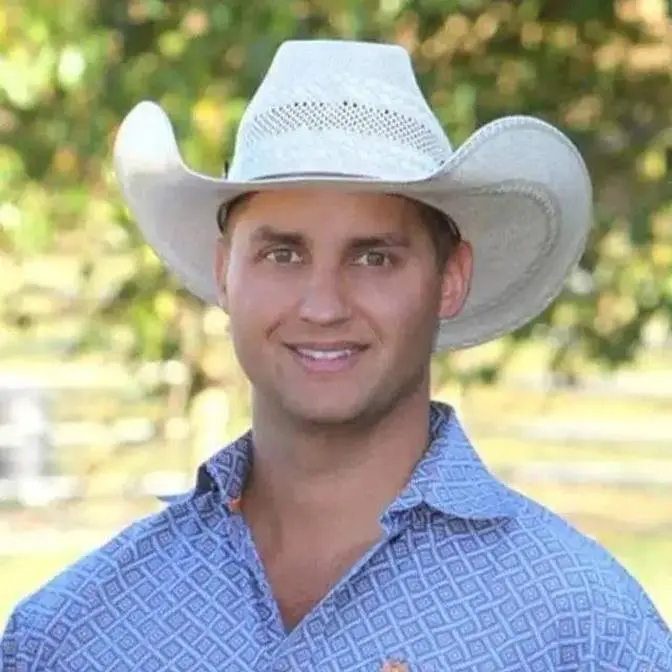
After spending weeks recovering from a virus, Casper the mustang has a green light from our veterinarians to come back into work! In this video, we are working on training this horse to understand steering, impulsion, and fixing an issue where he wants to be by the gate.
Check out Jake's Youtube channel @GelinasHorsemanship
💼 Learn the business side of horses they never taught you in the arena. Join our Skool community to learn marketing, business systems, and proven strategies to help you grow in the horse industry. 👉 https://www.skool.com/horsemanshomepage/about
🤠 Take your horsemanship to the next level by joining our Patreon! Get exclusive training content, behind-the-scenes videos, and monthly giveaways! 👉 https://www.patreon.com/ryanrosehorsemanship/
Jake works with his Mustang to restore forward motion and responsiveness following a virus. Under Ryan's guidance, they use strategic pressure, release, and side-passing to overcome directional resistance and \"stickiness,\" focusing on creating a light, responsive animal rather than engaging in a power struggle.
He can be a little bit argumentative about turning right or left.
Yeah, I think that's where he's just really drawn to that gate over there.
When you have a really good minded horse like him, it doesn't mean that
they're never going to test things.
And I think this actually worked a little better than the rollbacks.
I don't think he likes this as much as the rollbacks.
Yeah, this definitely feels more pressure.
All right, guys.
So we got a big day today.
Jake is going to try to ride his Mustang in the outdoor arena.
Yeah.
So we're kind of fresh off of him recovering from his virus.
And so he's feeling better now.
And Jake's got a couple of rides that we didn't film in the round pen,
kind of bringing him back in.
I don't know what ride we're on now, but he's got a few rides in the round pen,
but we're kind of ready to ride him properly.
That was kind of a review of what you guys already seen in his first couple of rides.
A little bit of stickiness that we're having trouble with.
He needs to get moving forward a little bit better.
So we've got to get him forward.
And so it's going to be bringing a life up and then adding a spank and then
we're kind of resetting and kind of getting where we're not having to
pedal the whole time to keep him going.
Which hopefully the outdoor arena will help with that.
Yeah.
Hopefully just being out here helps with that.
And then also he can be a little bit argumentative about turning right or left.
So he's just a little more left brain.
And now that he's not as feral, that comes out a little bit more and that's a
little bit more of him kind of having some resistance versus fear.
And so one of the things I'd like to see you do while you're riding him is if he
really is committed to going right or left or going towards the gate or
something, over agree with him at first and kind of go, Oh, let me help you go
that way versus trying to just make him go the way you want to go.
It's like, that's kind of part of the warmup.
And then just kind of see if you can sort of just shape it to where he'll be
more willing to go where you want to go, um, throughout as the ride progresses.
So, all right.
Good luck.
Thank you.
Sounds like a good plan.
I'm just so happy to be back riding him.
And I believe Jake did, you did ride him one time out here, just kind of
slowly, maybe before he got sick.
Yeah, I did one ride out here, but it was just kind of meandering around.
Just kind of meandered around.
So it's not his very first time out here, but.
And of course I've warmed him up and did ground work in here.
Yeah, you've been out here a bunch.
Try to get him settled.
What's pretty cool too, is it didn't take very long to warm him up.
We were kind of waiting for Jake here to get him warmed up and it was really
only about 10 or 15 minutes, uh, which is pretty nice that it doesn't
take hours to get him ready to ride.
It used to take me a good 45 minutes to an hour to get Marley ready to ride.
So it's really nice how good a minded this horse is, but again, he's still
very green, so you don't want to, even though he's good minded, you don't
want to take any unnecessary risks, risks with anything, something you might
want to do with that, where he kind of gets a little fidgety when you
think about stepping on him.
Yeah.
You could kind of pick him up and kind of hold him there, or you could go,
Oh, you want to move your feet?
Let me help you move your feet a little bit.
Cause that is part of the, one of the things that the competition is you
got to dismount and get back on.
I believe that was maybe in the trail class.
Yeah, I think so.
Well, I've started to pepper in a lot of relaxed rain with this horse, but I
think, Ryan, and I was kind of wondering your opinion on it too, usually I kind
of, in the ramp and we're starting with relaxed rain and starting to get, put
a little bed, but I think that makes them a little more sticky, but is it still
important to kind of, if he feels pretty relaxed to you, I wouldn't worry too
much about it because right there, he was like, you're trying to go left
and he's taking you to the right.
So, yeah.
So I don't feel like it's really benefiting me out here.
Yeah.
Right now I'd focus on just kind of getting some forward and then don't, you
don't tell him where to turn or take whatever he's wanting to go and say,
let's turn that way a little more.
Okay.
So more like a shoulder kind of yield.
Yeah.
The relaxed rain is more what it sounds like helping them relax,
but he looks pretty relaxed.
Yeah.
I have a feeling he's going to want to be all by this gate today.
Cause that's where we've taken him in and out several times, but if he'll
follow the rail and go around the whole arena, I'll take him up on that.
This is kind of a warmup.
And Ryan, when you over agree with him here, do I try to release
him in the way I want him to go?
Definitely.
But then just keep letting them make the decision to come back here.
Yeah, exactly.
Cause it's about him changing his mind there.
Yeah.
But if it is committed to the gate, you know, you can do some
rollbacks into the gate there.
Okay.
Yeah.
I think that's where he's just really drawn to that gate over there.
Yeah.
So yeah, just give his life up.
Let him go back to that gate and make the gate uncomfortable.
Yeah.
And just kind of work that pattern until he chooses to
kind of ride away from it.
Yeah.
That was a little better.
I just kind of pet on him there.
Let that feel good.
Yeah.
I felt at that time he wasn't thinking all the way back.
There's a blowout.
Yeah.
That was really nice.
There we go.
If you would like to see my whole training program, you can check that
out on my Patreon page, as well as ask me specific questions about your horse.
So if you'd like to start your free seven day trial, you can do that by
clicking the link in the description below, and we'll see you guys there.
So when you have a really good minded horse like him, it doesn't mean that
they're never going to test things.
It just means that they kind of work through it pretty, pretty smoothly.
Usually.
Yeah.
And then, you know, I'd be inclined to kind of work your way back to the
gate again and set that up again.
Yeah.
He's kind of thinking of going back that way anyways.
Yep.
So now it'd be a good time to, and you guys will see Jake does have spurs on
to help him with stepping off the leg.
Otherwise this horse would be just way too heavy on the leg, but
he's not using them for forward.
You can see if he asks them nicely to go forward and he doesn't take them up,
then he reaches down and uses the spanker.
So that is one misconception about spurs is that they're for going forward, but
really they're for identifying which cue you're trying to give the horse
on their side for a yield like that.
Honestly, he felt him kind of wanting to drift off this way.
Yeah.
He's starting to kind of choose to go off this way, which is kind of interesting
that he's choosing, that's just tells you how intricate is when you make the
right thing, you know, easy and the hard thing difficult, because he does, this
is a scary corner, but he's still choosing to come over here, which is
pretty cool, psychology wise.
Something else for fun, Jake, is if you come back this way again, instead of
doing rollbacks, just kind of gently tip his nose into the fence and ask, see if
you can get a little side pass going down the fence each way.
Okay.
That's another way that you can kind of make the fence line over here a little
bit of pressure and release them over there.
Yeah.
So rollbacks is one option, but a side passing could be another one.
And he can kill two birds with one stone.
Yeah.
So go ahead and trot him back here again.
Now that he's kind of headed this way.
So we're just, instead of kind of taking lemons and making lemonade here, instead
of just trying to like, how can we make this horse go over here?
It's like, how can we make where he wants to be the pressure and where we want him
to be the relief and get it, create balance in the arena.
Nice.
That looks like you might've started that in the round pen, huh?
Yeah, I think I did.
That didn't look like his first time doing that.
Yep.
No, sit there too long though.
Go ahead and take him back the other way.
Trot down the fence and turn him into it and do some more side passing.
And then I, because he came off the rail nice to the right over here,
I'd take him off to the left again.
Okay.
But so the idea is the horse is facing where he wants to be and pressures on.
He's using his reins.
He's using his leg.
So there's a little pressure there.
A lot of times we describe it as, Oh, work them over here where they want to be by
the gate and let them rest over here.
But really it's pressure and relief.
It's like Jake is adding more pressure.
He's doing more while he's on them on this fence fence line.
And we're doing less on the other side of the arena.
So that's actually a more accurate way to describe it.
Some more, a lot of horses are not motivated by how much
physical work they actually did.
It's more about the mental pressure of it.
Now, see that time he didn't get very far before the horse
stopped and wanted to come back.
So Jake's just like, great, let's go back here.
I want to do some more side passing anyways.
And so then you can just take a negative and turn it into a positive because
it's something we need to work on anyways.
And I think this is actually working a little better than the rollbacks.
I don't think he likes this as much as the rollbacks.
Yeah, this definitely feels more pressure.
Good.
I'll bring him back to the left.
See if he'll kind of make it off that fence line again.
Life up a little pressure there.
So the art with this horse, the challenge will not be like, can we stay on them
and not get bucked off and all that.
The art is going to be, can we create a light responsive horse versus
one that has a lot of druthers by just, you know, doing too much all the time.
It'd be easy to kind of override him and just constantly be pressuring
him trying to do so much.
Cause we have a big ambition.
We're getting ready for the Mustang Magic.
And it would just be very easy for Jake to just be
pressuring him all the time.
And so we got to make sure that we're also giving him the relief where he
needs to be in being very strategic about how we use our legs to not
teach them to wear the pressure.
Nice.
Now we're getting some more relaxation coming through.
See if you can do life up and squeeze and then spank and then reset.
If you have to spank and only accept it when he moves off of the squeeze.
So squeeze and then spank and then reset.
So squeeze reset has come back to the speed you were at before you asked.
Good.
Now that was a spank.
So reset to a walk again.
So it'd be easy to kind of take that, but I want to show
you guys the technique here.
Squeeze, spank, reset, squeeze there.
He kind of almost beat you to it.
Didn't he?
Yeah.
A little bit.
So try to be disciplined about not accepting what he gives
you after you spank him.
Now, like here again, reset back to a walk.
It's about him saying yes to the light squeeze and these transitions
will also help tighten up the spring.
Go ahead and squeeze again.
Good.
Talk him back into a walk and squeeze.
There it is.
But you can see, I'd be easy to just go.
It's like, oh, I finally got him going and just go with that.
But that way, that version was a little more about him building
understanding to Jake, bringing his life up and squeezing.
And, and, um, when I'm first riding a green horse, you know, I start,
I kind of wave my legs at them.
I want them to make sure they're understanding legs and
not going to react to them.
But to me where he is at this stage, we could start adding in the squeeze
versus the, the waving our legs and bumping him.
That was really nice, Jake.
That was a good one.
But I would get it to where you could go from a walk straight into a trot
out of a squeeze before you think about trying to canter him.
Okay.
Cause otherwise if he's dogging on you, just trotting, then the
canter is going to be too much pressure to get him into a canter.
And honestly, what usually tends to happen is we go from this, getting
the squeeze into the trot to extended trot.
And that's when you can start thinking about cantering them.
And since we're not trying to work him too much as we're bringing him back
in, you just tell me when you feel like he's kind of in a good spot to
call it a ride out here.
Cause that's looking quite a bit better than what you had to when you started.
Much better.
Yeah.
I'm just going to see if he'll take me down this fence line and see if I
can get off him over on the other side.
Perfect.
And then maybe we'll finish with a couple of backup steps.
Yeah.
Ah, really nice.
See if you can talk him into a stop.
Nice.
Off your seat too.
And he's already thinking back up.
Awesome.
Really nice job, Jake.
Thanks for the help, Ryan.
Yeah.
I would say that went about as smooth as it could go.
Yeah, I'd say so.
Really good.
All right.
Well, we got a lot more to work on with this horse.
We got to teach him trailer loading.
We got to start hauling him to some new places.
Eventually we got to get him cantering out here and we'll be in good shape.
So thank you guys for tuning in and we'll see you all in the next one.