
ATF2019 08 Food, glorious food porn
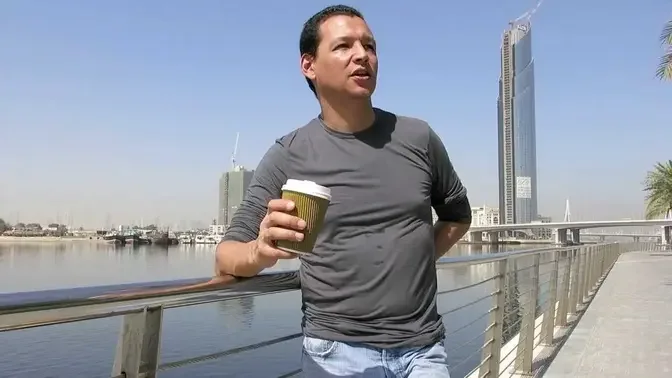
10 Video Views·Feb 22, 2023
Chris, tell us a little bit about your journey and Gusto.
For those of you who don't know, Gusto or Gusto, depending on where you live in the world, is the world's best food channel.
We launched in Canada six years ago as a European television channel.
Now we're seen throughout the United States and Latin America.
Here, for those of you who live in Singapore, we're on Starhub 424, Philippines, some other deals that we hope to announce here at the market in Europe as well.
100% of the content that you see on Gusto is produced by Gusto.
We shoot everything in 4K, we do everything from recipe development to bobblehead dolls, cookbooks, and we're about to launch our e-commerce service as well, which we've been working on for about two years.
Jim, tell us a little bit about your role in television and what you're doing.
Hello, my name is Jina Wong from CJ E&M.
CJ E&M is a content marketing and creative company in Korea.
What I'm trying to introduce is one of our pay TV channel called Olive.
Olive is a 19 years old channel, which will be turning to 20 years old next year.
It was one of the very first food channels in Korea.
Basically, what Olive channel is trying to focus on is five strategies.
One is they try their best to promote Korean food.
Two, they try to discover new culinary talents.
Three, using the food channel, food content into a digital space.
And four is focusing on the new lifestyles generated from food.
If cook shows are personality driven, how do you find these personalities that can do these shows?
We've seen celebrity chefs, we've seen personalities that have seen celebrity cook shows.
How do you go about finding the talent?
We're constantly looking. We have full time people who do nothing but casting.
Up until two years ago, our casting was focused on North America.
Now it's also here in Asia. We expect to begin producing programming over here in 2020.
We've established a foothold here and growing an audience here as well.
Gusto is all about, we say there's one true global language and that's food.
We speak all dialects in Gusto.
Finding people who are passionate about the cultures, about the food.
Equally important, it doesn't matter how great your chef skills are.
What's important is that you find people who have the ability to make emotional connections.
Emotional connections through television, whether it's on a little screen or a 56 inch or 8K in your home.
The ability for someone to be sucked in through that camera lens, digitized, chopped up into little pieces.
And either bounced off of a satellite in outer space or sent across the internet into your home.
And you say, wow, I like that person.
And making that emotional connection is very, very difficult.
We've been doing this for 22 years.
We have a boot camp that we put our hosts through.
But it has to start with something that is innate inside of you that we can teach.
That's what we're always on the lookout for.
People who are, who can love and who are as passionate about the cultures as we are.
Fair enough.
I've got a question about content.
Because there seems to be a lot of dietary concerns when we're making food pornography.
When I watch a culinary show.
50% of China is now pre-diabetic.
7 out of 10 leading causes of death are diet related.
Are we digging our grave with our teeth?
Where can food go in the health and wellness space with all of this that's happening globally?
Actually, that's a very tricky question.
Of course, it's always important to focus on dietary and nutrition when you're dealing with food as a genre.
Because people believe what they see, what they hear in the screens.
Obviously, a lot of audiences and people try to test.
So what we also have to focus on is if we provide something that you eat a lot.
At the same time, you have to provide something that you have to approach into a healthy program.
So that's the reason why one of the key creative ideas for Olive Channel from this year was to have a diet healthy program.
We launched a new show. It's a regular show called This is My First Day.
Basically, we keep focusing on how to start your dietary program on the basis of the first day.
The reason why we do that in a food channel is because that's kind of a lifestyle content that we really want to focus.
Sticking to that, because I was talking about food pornography.
This is interesting because I'm a vegetarian and you just showed me a video.
What's the exact words, description?
I have to apologize that I always forget how to pronounce it.
It's called ASMR and it's an acronym for Autonomous Sensory Meridian Response.
Basically, it's a mixture of sounds and the visuals of cooking food or eating food.
Nowadays, maybe some of you have heard there's a word called Mukbang in Korea.
It's actually an eating show.
All you do is you have a two to five minute video clip and you see celebrities or people or YouTubers eating.
Now, what's going around in Korea and not just only Korea, it's been expanding.
You're beginning to focus more on the sound of cooking like sizzling sounds, boiling sounds.
You're actually trying to focus on these visuals of cooking, boiling or even crunching, chewing.
A lot of these sounds or visuals, maybe some people say it's a food porn, but now it's taking a position as a content.
I guess these internet content styles are now actually moving into a long form content.
Speaking of long form content, some Korean shows are beginning to focus more on eating shows with using these ASMR techniques.
ASMR is very interesting, but the power of food television and where we're trying to bring the nexus of technology with gusto
is something more profound and more elemental than that.
If we do our job properly, which we do, our programming can reach you at a physiological level.
I can make your pupils dilate, I can make your mouth water, and I can make your stomach grow.
That is a very powerful emotional connection that you can make with your viewer.
I've traveled all over the world this year, too many places, too many countries.
Everywhere I go, every forum and market like this, we talk about what?
VX, viewer experience, fragmentation in market, how do we get people to come back, how do we get people to engage.
When I overlay our digital metrics on top of our EPG, I see real-time engagement.
Somebody's watching one of our shows, they pick up a second screen tablet, they go to gustotv.tv,
they click on the recipe icon while they're actually watching the show, and they download that recipe.
Then you go to the store, you buy those ingredients, you make it for your family, and if your family loves it,
we've just become part of your life.
You come back, you come back, you come back, which is why we're now launching our e-commerce business,
because we've been part of creating the deed, and now we want to be part of filling it as well.
So you can really reach powerfully, at a very instinctual level, reach people with a food program in a way that you can't do with other stuff.
I'm always a bit confused, because I've been watching food shows since I was a kid, when it was black and white.
When you went from the Dublin stir-stir show in the studio, to the travel show, to the competition show, to the eat-as-much-as-you-can show,
does it really get to cartoons? Where is it all going, do you think?
There are some cartoons out there.
Cartoon food shows?
Yeah, there are some cartoons out there.
The genre is evolving and changing, just as people's consumption, pardon the pun, habits are as well.
The trick is trying to find new ways to tell stories, right guys?
It's trying to find ways where it's not just the host du jour standing in front of the location du jour doing the same thing that you've seen a thousand different times.
People have so many choices that they deserve better entertainment.
In fact, we remind ourselves of that every day at Gusto.
We remind ourselves that when people go home and they watch television,
whatever your delivery method is, at the end of the day, you crack a beer, you get the last one, and you watch television.
You do this for one reason only, and that is to be entertained.
For a significant percentage of the population, we choose to be entertained by food programming.
We're in the entertaining business.
Then, when you go, holy crap, that looks good, you go to our website, now we're in the inspiration business.
Then, when you download the recipe, only then are we in the teaching business.
For us, it's all about entertainment and finding new ways to tell stories.
We did a show recently called DNA Dinners, which is kind of a travelogue through your DNA,
where we find people who are unsure of their backgrounds, we swab them, we take them on an adventure,
we show them who they are through their cultures, and how they celebrate the food, because we all celebrate the food.
Jen, what's happening on your side?
It's actually very similar to what Chris just said, like the DNA food.
In old days, basically, the cooking show only focused on cooking or just eating.
But now, nowadays, we have a show called Wednesday Domain, which is actually running for two years.
Basically, Wednesday Domain, no one goes to the restaurant, no one goes to eat, no one's eating.
All they do is they just, six celebrities, they just gather in one studio, and they just talk about, they chat about a one dish.
Basically, they bring out all the history of the food, the history of the ingredient, the background stories, the traditions of how to eat, how to cook it.
And basically, it's more kind of like a cultural informative show.
And surprisingly, it was the highest rating show in a weekday primetime for the last three years.
And people are beginning to get more used to and enjoy more knowledge of actually seeing screens,
and even becoming more emotional of how actually they share experiences through food.
What's written for you, Chris? What's written for you on your platform?
So, we don't take a tentpole approach to our programming. We sort of look at it in terms of our programming schedule.
So, I'd like to say all of our shows do incredibly well.
But there is a sense of nostalgia now, so we have a show called Flower Power that does really well.
DNA Dinners does really well.
It really also varies from market to market we're in, because now we're on from Canada all the way down to Venezuela, and multiple Asian markets.
So, it changes from market to market.
So, for instance, our hosts include... So, here's an interesting thing.
So, depending on the market we're in, but on average, about 66% of our audience is female.
But what we found also is that almost 40% of our audience is under the age of 40.
Almost 40% of our audience is under the age of 40.
So, if you're wondering where millennials are, they're watching Gusto.
So, we went and we did a little bit of a deep dive.
So, here's the thing.
For millennials, the upper end of that cohort, ooh, the most sought after cohort.
When they go home tonight, you know what they're going to do?
They're going to put on their 40th birthdays.
They have mortgages and babies.
Some of them even have cars.
And what we found through our research was that millennials, and again, in the upper end of the quadrant, are interested in entertaining again.
They're interested in food and they're interested in cooking.
They don't eat out as often.
I see a lot of people nodding their heads in the audience.
But when you do eat out, you want a better dining experience.
You are willing to pay more for your groceries if there is a cost attached.
Farm to table, organic, sustainable fisheries.
And these are all values that are reflected in the Gusto program.
Our hosts are from Thailand, Japan, Philippines, India, China, Italy, Spain, France.
We even found out a way to make British food.
Canadian, American, Mexican, Argentinian, Venezuelan.
And I'm missing a whole bunch.
So it's bringing a world of culture to Gusto.
Jim, cooking shows.
Are they changing the lifestyles in Korea as consumers eating out more or cooking less or shopping more?
Mostly these foods, like olive, they focus on 15 to 39 age groups, mostly females.
And the reason why we try to focus that is because almost every once or twice in every week, people are beginning to enjoy fine dining.
And people try to enjoy their fine dining by trying to have a very similar experience to what they saw on screens.
And not just only fine dining, the lifestyles of these females are beginning to expand into shopping.
So a lot of people, especially female consumers, they start to search for better utensils, better cookwares, ovens with electronic devices.
And speaking of cookware, because I really want to have a PlayStation 4 VR for my Christmas present two years ago.
So I had to ask my wife, what do you really want for Christmas?
So I was thinking about visiting Celine or Louis Vuitton on Christmas before, while I was busy in ATF.
And then she passed me, she showed me a footage of a copper baking whole set, baking set.
Is that really what you want to have?
And she told me, this is the it item. This is the it class, classy it item.
And basically, it's a copper made bakeware.
And I was very surprised, and it actually provides something special to these American consumers.
Well, they're very difficult to clean, so good luck with that.
On your side, the economics, because I don't understand the economics of television, I'm just a TV presenter.
So is there like the back end of books and culinary equipment and ingredients that customers are involved in?
And what is that in the business model?
Sure. So there was an earlier panel here where somebody was up here and said, you know, content is really expensive to make.
And it is, right? It's how do you monetize the content and how do you make it?
Food programming is, we have a built in audience.
We have highly motivated people who are watching our programming, who are very interested in the products that we're making.
We have done multiple cookbooks based on the shows themselves.
And interestingly enough, hard copy cookbooks is probably the only area of publishing that has not been diminished by the advent of the internet.
The recipe of employment is available on the internet.
Cookbooks remain strong.
People want to hold them in their hands.
So we are now moving into e-commerce, because as I said, we've been working on it for two years.
And there are three legs to our e-commerce strategy.
One is home delivery meal kits based on recipes that you've seen in shows.
Second is white label ingredients that you can only get through our kitchens.
And the third is advertising and marketing strategies with bricks and mortars, advertisers, grocers, grocery stores.
So it's very, very symbiotic.
The nexus of technology is there.
And that's, for me, the exciting part of the food show is really having an opportunity to immerse ourselves into our viewers' lives beyond just getting their attention for an hour or so every night.
I just really want to add what Chris said.
One of the biggest revenue drivers, even for Oli Channel, is the meal kits.
It's a very similar or simplified kind of technique to how to cook the show that you saw on screen.
And that's a great way to make more revenues out of e-commerce.
And actually that's one of the most important parts that everyone's trying to focus on right now.
Interesting.
Two of the question and answers are running out of time.
I have one question here from the audience.
I'm of the age where I have to wear glasses so I'm not going to fake it. Sorry.
This is for Jane.
A food show about actually eating sounds intriguing.
But how do you ensure that there's not too much talking heads?
Too many people are just chatting.
Yeah.
I don't know.
I'm an old school producer.
And first, when I saw these eating shows, mukbang shows, I just couldn't understand.
I even talked to my colleagues.
Why do we watch this?
Why do we want so many people to eat?
And then, if you keep watching the show, it's like what we've been kept up with.
It's emotion.
If you see someone eating a fried chicken or you see someone eating a beef stew with a lot of sounds, noises,
and like gulking,
and then the first thing that you might decide is,
I'll have a beef stew for dinner.
And that's how it goes.
Actually, I saw this video and it's not normal.
It's like the sound effects in a movie
where when they rip the chicken and it's crispy and they bite it and the juice is coming down their face.
It's a new form of like eating porn.
Quick question here.
Upcoming trips for food content.
What formats are in demand?
What formats?
Well, you know, I can get in a lot of trouble for how I answer this.
So, depending on who you talk to,
the contest format, I think, will continue to be strong in big budget shiny floor shows.
But in smaller budget programming, I think the competition shows are running out of space.
One of my competitors managed to get the words baking and wars in the title of the Christmas show.
And so when it gets down to that, it becomes a little bit derivative.
You know, people are always interested in traveling and exploring the world.
So traveling shows will continue to be big.
It's all about the talent going a new way into the question.
Plug for our show for D&A dinners, we've got a tremendous amount of format.
Because it's a new and original way of telling a story.
But travel shows are really expensive.
I mean, there's a lot of risk if you don't break.
How do you go about making that decision?
Yeah, I mean, you know, co-productions work.
In our case, because we're over here, we want to shoot here.
As we grow in Latin America, we want to shoot there as well.
As well as in the United States and in Canada.
For us, the travel part of it is, localization is more than subtitling and dubbing a show.
So we're here, we're here for the long haul.
We want to be in nature, so we should be shooting over here.
Well, my career started because of MDA.
So without doubt, I would be sitting here with you gentlemen.
You have a travel show too, right?
Tell us a little bit about those.
Well, speaking of travel shows, one of the best things that we should do is go to tourism more.
We just love it.
They're always open for a great sponsorship, especially Connected Food.
And I think food itself is becoming one of the major factors of travel.
Because if you see in the one-minute rating of these ratings research,
the highest point of each of these travel shows is sometimes just eating or focusing on food.
So good traveling is also connected with a good eating.
And somehow it's always connected and combined together.
And I think it will keep going on and on.
Ladies and gentlemen, I think we're out of time now.
Thank you so much. Chris, thank you so much for being here.
And Jim, thank you.
A global food CEO expert and a regional force.
Thank you very much.
Thank you.