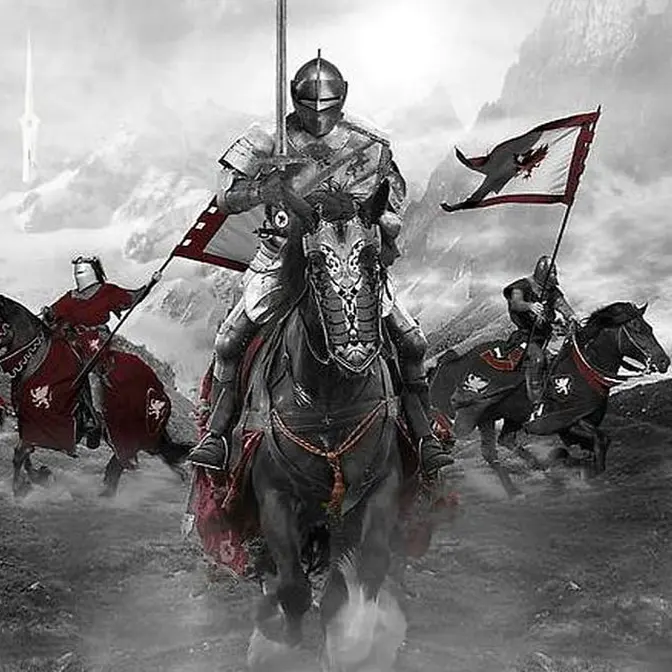
How did a 20-year-old Macedonian king set out to conquer the largest empire in the world?
In 334 BC, following the assassination of his father Philip II, young Alexander launched a daring invasion of Asia. Experience the epic first half of his campaign: crossing the Hellespont, charging the Persian cavalry at the Granicus River, cutting the mythical Gordian Knot, defeating King Darius III at Issus, and executing the impossible 7-month amphibious Siege of Tyre.
Discover how a young commander transformed into a living god after his fateful pilgrimage to the Oracle of Siwa in Egypt.
AI Generated·May contain errors
Video Summary
AI Generated
Following the assassination of King Philip II, Alexander the Great launched an ambitious campaign to dismantle the Persian Empire. Through tactical brilliance at the battles of Granicus and Issus, the engineering marvel of the Siege of Tyre, and a spiritual pilgrimage to the Siwa Oasis, Alexander combined military genius with strategic public relations to establish his divine right to rule Asia.
The year is 334 BC.
King Philip II of Macedon is dead,
assassinated by his own bodyguard.
Conspiracy theories suggest that his wife Olympias
and son Alexander may have been involved,
but no one can say for certain.
Alexander, at age 20, becomes king
and wastes no time asserting his authority.
He chooses to continue a massive offensive his father had begun,
the conquest of Asia,
and the defeat of the most powerful ruler on earth,
Persian king Darius.
He rarely had no choice but either to withdraw that force
or reinforce it and have a full-scale war of annexation,
which was, of course, the alternative that he chose.
I don't think he ever thought of anything else.
And I don't think, even from the beginning,
that there was any limit on his ambition of conquest.
Alexander's invasion starts with a daunting logistical maneuver,
transporting his army of 40,000
across the body of water separating Europe and Asia,
the Hellespont.
Today, the Hellespont is known as the Dardanelles.
Ferry boats travel back and forth across the strait.
Here, Alexander's troops cross into Asia,
transported on an assortment of man-powered rowing vessels.
Moving such a massive force is fraught with peril
due to the possibility of foul weather
and the fact that the navy of Persian king Darius
is three times as large.
This is the Asian shore of the Hellespont.
The current here is strong, and the winds can be brutal.
Alexander's ships could be very vulnerable to naval attack
as they ferry the army across.
But Alexander has two strokes of luck.
The weather is fine, and the huge Persian fleet is far away,
quelling a revolt in Egypt.
Alexander doesn't hesitate.
He's been dreaming of this moment, leading his troops into Asia
to begin the conquest of the Persian empire.
He sets sail, halfway across,
sacrificing a bull to the sea god Poseidon.
He's first to set foot on the Asian shore,
hurling a spear into the sand,
claiming to receive Asia from the gods.
He's not aware that nearby the forces of Darius are gathering,
determined that this should be
Alexander's first and last trial of strength.
Persian king Darius considers young Alexander an upstart,
to be quickly vanquished.
The Persian ruler chooses not to waste his time
commanding the troops himself.
Instead, he sends his most trusted general Memnon,
a Greek mercenary, who chooses a battleground
where the terrain will work in his favor,
the Granicus River.
This is the Granicus today.
In Alexander's time, it is three times as wide and deep.
Alexander is accompanied by his own trusted advisors,
military commander Parmenion,
his close friend Hephaestion,
and Callisthenes, a nephew of Aristotle,
who serves as Alexander's personal historian.
On the high opposite bank of the Granicus River,
the Persian army waits.
With 20,000 cavalry and 20,000 infantry,
many of them Greek mercenaries.
Greek author and general Arian
wrote about Alexander's first test of will.
Parmenion came to Alexander and argued,
we cannot take the army across the river on a broad front.
A failure in our first action
will at once have serious consequences
and will put at risk the result of the whole war.
Alexander replied, I know that, Parmenion,
but I would be ashamed if I could cross the Hellespont easily
and then found that this little stream
could prevent us from crossing.
It does not fit in with the way I react when I meet danger.
Alexander proceeds to organize his army for a bold attack,
one that many military leaders might consider foolhardy.
Alexander plays a key role in the offensive,
raisingly wearing a white-plumed helmet,
marking him as the prime target of every enemy soldier.
Alexander's battle strategy at the river Granicus
utilizes tactics he learned from his father.
Thousands of highly trained soldiers on foot and horseback
would boldly cross the river and meet the Persians head-on.
Alexander would cross the river upstream,
leading his companion cavalry to attack the enemy from the right flank.
There was a profound hush
as both armies stood for a while motionless on the brink of the river,
as if in awe of what was to come.
Then Alexander himself, at the head of the right wing of the army,
with trumpets blaring and a shout going up to the god of battle,
moved forward into the river.
It seemed the act of a desperate madman rather than a cooling commander
to charge into a swiftly flowing river,
which swept men off their feet and surged about them,
and then to advance through a hail of missiles toward a steep bank,
which was strongly defended by infantry and cavalry.
But in spite of this, Alexander pressed forward.
He was foolhardy, but there was a method in his madness.
One of the things about leading from the front rather than the rear
is that it really makes people follow you.
You're not asking them to do anything that you're not doing yourself.
There are many historical accounts about what happened here at the Granicus.
Suspiciously, none of them agree,
except that it was an extremely hard-fought battle.
It may be that Alexander's first assault against the Persian bank was beaten back,
and he was forced to change his tactics.
In propaganda terms, this initial defeat would be disastrous,
so perhaps it was hushed up.
From a military point of view,
it would seem suicidal to send men against determined opposition
across this river and up that bank.
But it seems that that is exactly what Alexander did,
and it may be that the hard-fighting Macedonians,
with the advantage of their long pikes,
did manage to get a foothold up there.
When Alexander reaches the opposite riverbank,
he leads a cavalry charge.
Alexander is struck on the helmet.
He loses his spear and is handed another.
He is in the act of killing one Persian noble,
when another one raises his sword to strike down at Alexander.
Just in time, his arm is severed by a Macedonian sword stroke.
The Persians, by pulling their forces away from the riverbank,
have weakened their centre,
and now the Macedonians can cross the river in strength.
Squeezed between the pikes of the phalanx
and Alexander's cavalry, the Persians break and run.
Against all odds, Alexander defeats the Persian army at Granicus.
This was perhaps the greatest stroke that Alexander could have hoped for,
because when the enemy withdrew from the field,
he had achieved everything that he wanted to achieve,
which was to say, basically,
you've totally underestimated me, and I'm going to whip your butt.
Alexander's victory at Granicus
allows his army to continue its invasion of Persia.
General Memnon survives the battle
and reports to Persian King Darius,
who determines that the next time the two forces meet,
he personally will command the Persian troops.
334 BC.
Having defeated Persian forces at the Granicus River
and gained control over key Aegean seaports,
Alexander moves his army to the city of Gordium,
which offers no resistance to the powerful Macedonian army.
Since 1950, Gordium has been excavated by archaeologists
from the University of Pennsylvania.
Walls of the city, remnants of houses,
even the entrance through which Alexander once passed,
have all been preserved.
In Alexander's time, this great walled citadel of Gordium
is a vital link on the royal road
that leads deep into the heart of the Persian Empire.
When the all-conquering Alexander arrives at the gates,
they are thrown open to him,
and he decides to wait here for reinforcements.
400 years earlier, Gordium had been the city of King Midas.
Now, Alexander had been educated in the gardens of Midas,
so he must have known the local legend.
Gordius, Midas's father,
had also come here from Macedonia,
but he had arrived in an ox cart.
When Gordius became king,
he dedicated the ox cart here, in the shrine of Zeus.
Now, the shaft of the cart was connected to the yoke by a great knot,
the ends of which were invisible.
It was said that whoever could untie this knot
would be the ruler of Asia.
This is a time in which people absolutely believe
in gods, in legends, and in symbols,
and this is a great symbol.
Once Alexander has publicly accepted this challenge,
he has to succeed.
He looks at the knot, but like everyone else,
he can't see how to untie it.
Then, as usual, Alexander thinks out of the box.
He says, it doesn't matter how the knot is loosened.
He draws his sword and cuts the Gordian knot.
He hacks away at the knot until he opens it up,
and then he finds the ends and unties it.
Now, some people say this is cheating,
but that night a great thunderstorm breaks over Gordium.
Alexander believes that Zeus approves.
Some modern-day historians believe
Alexander's experience at Gordium
reflects his mastery of the art of public relations
as much as his religious fervor.
Alexander was a master at the photo op.
When there was a time when he could use it
for propaganda purposes or for PR purposes, he did it,
and he used it primarily to impress his army,
but also to impress the people over whom he was to rule.
For Alexander's troops,
there has never been a time of higher troop morale,
but the most difficult tests are yet to come.
Upon leaving Gordium, Alexander heads south
when he learns that Persian king Darius
is personally leading a massive army towards Issus
to halt Alexander's conquest.
Darius's troops have been estimated to number 600,000,
but most historians agree that 60,000 to 100,000
is far more likely.
Nevertheless, Alexander's troops,
30,000 to 40,000 strong, are severely outnumbered.
Despite the advantage the size of his army provides him,
Darius seeks counsel from one of his most trusted generals.
Roman historian Cursius Rufus described the encounter.
Persian king Darius turned to Karadimus,
who was an experienced soldier,
and proceeded to ask whether he was well enough equipped
to crush his enemy.
Karadimus answered,
Your magnificent army can strike terror into your neighbors.
It gleams with purple and gold.
The Macedonian line is certainly coarse and inelegant,
but protects behind its shield tough, densely packed soldiers.
When they are tired, the earth is their bed,
and their sleeping time is of shorter duration
than the darkness.
What you need is strength like theirs.
Send off your gold and silver and hire soldiers.
Darius, unable to take the truth,
had Karadimus dragged off to execution.
Darius is confident that the Persian army,
under his personal command, will defeat Alexander.
But to give himself even greater advantage,
Darius makes a strategic move
that takes Alexander by surprise.
The Macedonians anticipate Darius attacking from the south.
Alexander moves his forces south from his Issus base camp
to await the Persian army.
But then, Alexander receives startling news.
Undetected, Darius moves his army north
through a mountain pass and captures Issus,
severing Alexander's supply lines.
Darius is now preparing to attack from the north.
Alexander has no choice but to reverse his direction.
It is November 333 B.C.
when Alexander finds his enemy waiting
on the opposite bank of the river Pinerus,
where it meets the Mediterranean Sea.
This is the location today,
the shoreline to the west and the hills to the east.
Alexander halts his army several hundred yards
before the river.
Though Darius gave his army a great advantage
by cutting off the Macedonians from their supplies,
geography is in Alexander's favor.
With the sea limiting one flank and the hills the other,
there is less chance that the smaller Macedonian army
can be completely surrounded by Persian forces.
Alexander surveys the situation.
A huge body of men were sighted in the distance.
Alexander ordered his men to pitch camp
just where they were.
He was delighted that the issue would be decided there,
in the pass.
However, his confidence gave way to worry.
Only a single night now separated him
from a critical event.
While his victory might be in doubt,
one thing was quite certain,
that he would die an honorable death,
which would bring him great praise.
When we consider Alexander in all his battles,
one of the things obviously we have to take into account
is how did he feel about it?
Was he afraid?
And to be honest, in just about every case,
I see no evidence of any fear whatsoever.
Did he have any fears?
He may have had fears.
Does he act like he had any fears?
No.
He is one of the few people that I can say,
in history, that I have examined,
who acts with supreme confidence.
The lines are drawn for what will be known
as the Battle at Issus.
Like the Granicus River,
the Pinarus now becomes the Persian army's primary defense.
Darius aligns infantry and cavalry along the river bank
and in a flanking position at the foothills.
Riding in his chariot,
Darius takes a central position
from where he can observe the action and dispatch orders.
Alexander prepares to do what he does best,
anticipate, react, and adapt.
Darius believes that his huge force of cavalry
will win the battle,
so sensibly he places them here,
on the flat ground by the Mediterranean seashore.
This is Alexander's left wing,
where his Macedonian infantry are led
by his trusted general, Parmenion.
But at the last minute,
Alexander sees where the Persian blow will fall,
so he reinforces this area with his allied cavalry.
As Alexander's army advances,
hordes of Persian cavalry strike hard.
The Macedonian left wing holds, but just barely.
An even more serious situation is developing further inland,
at the center of the battle.
The troops sent forward into the midst of the Persians
were now totally surrounded.
Obliged to fight hand-to-hand, they swiftly drew their swords.
Then the blood really flowed.
The two lines were so closely interlocked
that they were striking each other's weapons with their own
and driving their blades into their opponents' faces.
Only by bringing down his opponent could each man advance.
Exhausted as they were,
they were continually being met by a fresh adversary.
And the wounded could not retire from the battle
on so many occasions because the enemy
were bearing down on them in front
while their own men were pushing them from behind.
Even Alexander's powerful phalanx is in peril at Issus.
Now the phalanx has one great weakness.
This rough ground.
In this kind of terrain,
it's impossible to keep the ranks level
and the files tightly packed.
And as the Macedonians stumble across the riverbed,
gaps open up in their phalanx.
Darius' Greeks tear into the disordered Macedonians
who desperately try and keep their formations together.
Here in the center, the Macedonian phalanx is stopped.
They're in serious trouble.
Battle of Issus in November of 333 B.C.
is critical to Alexander's conquest of Asia.
But his army is outnumbered by the forces of Persian King Darius.
Rough ground hinders the progress
of the legendary Macedonian phalanx and infantry
which find themselves engaged in the bloodiest
of hand-to-hand combat.
The only chance for Macedonian victory lies with the cavalry
led by Alexander himself.
Alexander was as much a soldier as a commander.
Riding high in his chariot,
Darius cut a conspicuous figure.
His brother, Oxathres, saw Alexander bearing down on Darius
and moved the cavalry under his command
right in front of the king's chariot.
Then the carnage truly took on cataclysmic proportions.
Around Darius' chariot lay his most famous generals
who had succumbed to a glorious death
before the eyes of their king
and who now all lay where they had been fighting.
Persian King Darius begins to panic,
but the battle is far from over.
Alexander turns his attention
to his bloodied and beaten phalanx and infantry
still bravely trying to hold their ground.
At this point, Alexander alone holds the key to victory or defeat.
The usual problem with cavalry is that once you let it go,
it's gone.
That infantry running away there is a perfect target for cavalry
and just beyond them is the Persian camp with all its loot.
But Alexander has sufficient command to stop his cavalry charge
and the control to regroup them, turn them left
and smash into the Persian centre.
Here, Darius himself is directly attacked by Alexander.
Too late, Darius discovers
that the Macedonian's strongest force is their cavalry.
In the savage fighting that follows,
Alexander himself is wounded in the thigh.
Darius, as he sees his royal bodyguard being cut to pieces,
turns his chariot round and runs for his life.
The Persian line folds up,
and as evening falls, their retreat becomes a rout.
Following this battle in late 333 BC,
Alexander receives word that Darius' mother, wife
and two unmarried daughters are among those taken prisoner
and that they wrongly believe that Darius has been killed.
When he heard this, Alexander sent word to them
that Darius was not dead
and that they need have no fear of Alexander.
He was fighting Darius for the empire of Asia,
but they should be provided with everything
they had been accustomed to when Darius was king.
Alexander allowed them to keep the same attendance
and privileges they had previously enjoyed
and even increased their revenues.
And what he's doing is presenting himself
as the next Persian king.
He is the legitimate Persian king,
and it is his duty to take care of the womenfolk.
And by doing that, he's sending out a huge message
to the rest of the world that I have the Persian women,
I am the Persian king,
the Persian nobles are coming over to me.
For Alexander the Great,
the victory at Issus in 333 BC is a dramatic turning point.
He has defeated the most powerful army in the world,
led by the most powerful ruler.
Alexander continues his conquest of the Asiatic seaports.
Cyprus and Phoenicia come easily under his control.
During this time, Alexander receives a letter
from Persian king Darius.
Darius appealed to Alexander
to accept ransom for his Persian prisoners.
He further offered him all the territory west of the Euphrates
and the hand of one of his daughters in marriage,
and on these terms proposed
that they should become friends and allies.
Alexander told his companions of this offer,
whereupon Parmenios said,
I would accept these terms if I were Alexander.
So would I, by Zeus, retorted Alexander,
if I were Parmenios.
Alexander wrote his reply to Darius.
First I defeated your generals.
Now I have defeated yourself and the army you led.
In the future, let any communication you wish to make with me
be addressed to the king of all Asia.
Do not write to me as an equal.
Everything you possess is now mine.
If you wish to dispute your throne,
stand and fight for it and do not run away.
Wherever you may hide yourself,
be sure I shall seek you out.
Alexander, his communications with Darius
only fueling his desire for conquest,
leads his army toward the naval center of Tyre.
Alexander wishes to control Tyre
because of its strategic location.
The older part of the city is on the mainland,
but a half a mile offshore
is a heavily walled, impregnable island,
also considered part of Tyre.
I'm standing on the southern edge of the island of Tyre.
Later earthquakes caused this area to slip into the sea,
but this line of rocks marks
where the ancient walls of the city once stood.
Behind me was the southern harbor,
one of two harbors in which the Tyrians kept their navy.
If Alexander had his own ships,
he could have mounted an amphibious assault from the sea.
But more than a year earlier at Miletus,
he'd taken the bold decision to disband his own ships
and defeat the Persian fleet from the land
by destroying its harbors and its bases of supply.
Among the most important of those was Tyre itself.
Controlling the island of Tyre
means controlling the vast naval harbor.
When Alexander arrives in January of 332 B.C.,
the king of Tyre is away, serving with the Persian fleet.
Tyrian envoys are sent to determine Alexander's desires.
At first, Alexander tries diplomacy.
This later Roman arch is close to where the old shoreline was.
Here, the Tyrians come to greet Alexander.
He tells them he wishes to visit their island
to sacrifice at the Temple of Heracles.
The Tyrians know that to allow Alexander in
means a surrender of the city to him.
So they politely point out that there is a perfectly good Temple of Heracles
here on the mainland.
Alexander is reported to have become furious and to say,
I will show you that your island is part of the mainland.
He must have known then there was only one way to conquer Tyre.
To the amazement of the Tyrians, and even his own army,
Alexander threatens to conquer the walled city
in a manner unimaginable even today
by building a mole or causeway one half mile long
to connect the island to the mainland.
Alexander himself has no idea
how difficult it will be to accomplish such a bold endeavor.
When Alexander the Great encounters unexpected resistance
to his desire to conquer the walled island of Tyre,
his plan of action to build a mole or causeway
allowing him to lay siege to the city
bewilders even his own men.
The sight of the Fathomless Deep filled the soldiers with despair
for it could scarcely be filled even if they had divine aid.
How could rocks big enough be found or trees tall enough
to make a mound to fill such a void they would have to denude whole regions?
The strait was perpetually stormy
and the more constricted the area of its movement
between the island and the mainland, the more fierce it became.
The Tyrians view Alexander's plan as absurd
and consider the threat an idle one.
How did the people of Tyre have the confidence to resist Alexander?
Well, Tyre was a mighty city.
These Roman remains are from the 1st and 3rd centuries A.D.,
but down here are some of the original fortifications of the city from Alexander's time.
These stone blocks are around 2,500 years old.
They formed part of the massive walls and towers which then surrounded the city.
300 years before Alexander's time,
King Nebuchadnezzar of Babylon laid siege to this place for 13 years in succession.
He failed to conquer it.
So this is the outside wall.
Ali Badoui is chief archaeologist at the ruins of Tyre.
He explains that during Alexander's time,
two walls separated by approximately six feet of space protected the island.
The foundation for the outer wall was below sea level.
They took in consideration if somebody is going to invade the island,
he will try to look for a small piece of land
to land the army and to start the attack on the wall.
So for this reason, when they built the walls of the city,
they built it just in the edge of the rock at that time.
So next to it you have just the sea.
As his troops prepare to construct the mole,
Alexander hopes the mere sight of his army's determination will influence the leaders of Tyre.
He tries one more effort at conquest by diplomacy.
Alexander sent heralds to urge the Tyrians to accept peace terms.
But the latter, violating international conventions,
killed them and threw their bodies into the sea.
Outraged by the disgraceful murder of his men,
Alexander resolved to lay siege to the city.
The massive task of building the mole begins in January 332 BC.
With large quantities of rock being transported from old mainland Tyre
and timber from a nearby mountain.
Little by little, the mole began to rise above the surface
and the mound's width increased as it approached the city.
But as the mole proceeded further from the shore,
the materials piled on it were increasingly sucked into the sea's depths.
With their light skiffs, the Tyrians began to encircle the structure,
attacking with missiles the men standing by the work.
Alexander had hides and sheets of canvas stretched before the workmen
to screen them from the missiles.
And he erected two turrets on top of the mole
from which weapons could be directed at approaching boats.
As the structure of the mole finally reaches close to the walled island,
the Tyrians make their boldest move.
The Tyrians fill a ship with combustible material.
From the bows they hang pots of what was probably naphtha,
a sort of napalm of ancient times.
They tow the ship towards the mole and set fire to it.
The pots of naphtha burst and the siege towers and wooden palisades catch fire.
Simultaneously, they attack with small boats from both sides,
killing Alexander's workers and defenders.
The attack is a complete success.
Alexander's mole is a pile of smoking rubble.
Undaunted, Alexander sets his soldiers to work building a new mole.
But he also comes to realize that Tyre can only be taken by siege,
waged simultaneously from land and sea.
In July 332 BC, the second mole is finally ready.
So are warships obtained from nearby Cyprus.
As the Macedonian infantry attacks the walls of Tyre from the mole,
Alexander leads forces across gangways from the ships.
A Macedonian commander named Admetos leads the assault and pays for it with his life.
Alexander himself takes his place and after bitter fighting,
his men break through and gain a small part of the wall.
It is all they need.
I am standing on the inner defensive walls of Tyre,
and here, sure enough, the archaeologists have found a small breach in the wall.
They believe that it is in this place that the Macedonians poured through the defenses.
They cut down the exhausted Tyrians, drove them north into the main part of the city.
Attacked from the land and the sea, Tyre could not hold.
The siege of Tyre by Alexander's troops takes seven months.
Truth of the matter is that in the end, he went through with it
because he was damn well not going to be beaten,
because they had really irritated him past belief,
because he was going to sacrifice in that damn temple
if he had to kill 10,000 people to do it.
Some Tyrians made a hopeless last stand at their citadel, the Agonorium.
Others fled for their lives here, to the Temple of Heracles.
Like most ancient sites, this one has been built over.
A medieval cathedral was constructed on top of it,
but down here was the old temple.
Here, Alexander comes to finally make his sacrifice to Heracles after seven bloody months.
Those found in here are spared,
but outside these walls, a terrible massacre takes place.
8,000 Tyrians are slaughtered, 30,000 more sold into slavery.
Today, this roadway is built literally on top of the mole constructed by order of Alexander.
His unrelenting, successful siege of Tyre
sent a message to every other city in the path of his future conquests.
What Alexander proves is that if he believes something is strategically necessary,
he will stay at it and fight for as long as it takes in order to attain that goal.
Conquering the walled island city of Tyre
has gone down in history as one of the most incredible achievements of any army.
Alexander, more confident than ever in the abilities of his troops and himself,
continues toward the goal of defeating King Darius and conquering Persia.
But first, he sets out to discover something even more personally significant,
proof that he is not only a man, but a god.
332 BC, following a seven-month siege,
Alexander has achieved what most would consider impossible,
the conquest of the walled island city of Tyre
by building not one, but two half-mile long causeways.
With the Aegean seaport under his control,
Alexander confidently leads his army into Egypt.
There, he is given the title of pharaoh,
by tradition making him both a king and a son of Ra, or god.
After traveling through Heliopolis and Memphis,
Alexander comes upon a shoreline so magnificent, he envisions a grand seaport.
Alexandria is the first of more than 30 cities founded by Alexander in his own name.
But why here?
Well, it's an excellent location between Lake Mariotis and the Mediterranean Sea.
It has a mild, healthy climate and an excellent natural harbor,
deep and well-sheltered,
further improved when Alexander commands the offshore island of Pharos
to be connected to the mainland by a mole.
Alexandria would be the new emporium for the world's trade,
a cornerstone for Alexander's empire and a crossroads of the ancient world.
Today, the population of Alexandria is approximately 4 million.
80% of Egypt's imports and exports move through its harbors.
To many, building such a city would be an achievement of a lifetime.
But for Alexander the Great, it is merely a brief distraction from greater priorities.
One of those is a visit to the temple of the god Amon at the desert oasis of Siwa.
While Alexander was in Egypt,
the entire resources of the greatest empire on earth were mobilizing to fight him.
He had to get back to war to defeat the Persians
before their vast armies cut him off from Macedonia.
But at this crucial moment,
he chose to spend six weeks traveling through the Sahara Desert.
The journey was a spiritual preparation
for what was perhaps the greatest religious experience of Alexander's life,
and it was a journey that nearly killed him.
When Alexander came to the desert,
he began to cross a country covered with an infinite expanse of sand.
In four days, their water had given out,
and they suffered from fearful thirst.
All fell into despair.
And suddenly, a great storm of rain burst from the heavens,
ending their shortage of water in a way that had not been foreseen.
At one point, when the road could not be traced because of the sand dunes,
the guide pointed out to the king that the crows cawing on the right
were calling their attention to the route which led to the temple.
Alexander took this as an omen,
and thinking that the god was pleased by his visit, pushed on with speed.
To the Egyptians, Amon was the equivalent of the Greek god Zeus,
the king of all gods.
Frequently, the deity would be addressed using both names,
Zeus Amon.
Alexander has a burning desire
to find out from the oracle at Siwa if he is a son of god.
Today, the remains of the temple still stand at Siwa Oasis.
Alexander and his companions climbed up into the temple,
and it was here, on these steps,
that the high priest greeted Alexander with a slip of the tongue.
He meant to say,
Opaidion, O my son.
But his Greek wasn't up to much,
and what the Macedonians heard him say was,
Opaidios, O son of Zeus.
Now, for Alexander, that was quite a good start.
The sayings of the oracle were usually delivered in this courtyard,
but Alexander was too important a guest for a public show.
Besides, he had some very private questions.
So he alone was allowed to question the god directly
and enter the inner chamber.
This is the holy shrine
where the bejeweled statue of the ram-headed god Amon was kept.
Alexander stood here alone on this very spot
to ask his questions.
He never revealed what they were,
but in later years they were said...
Would he conquer the world?
Had all his father's murderers been punished?
And was he indeed the son of Zeus?
Alexander received his answers from the priests,
who, supposedly, had not heard the questions.
But in fact, beside this chamber
is a narrow passageway.
Here, the priests could listen in
and then appear to give the gods answers.
Now, it's easy for us to mock this as a fraud,
but remember, oracles don't last for 2,000 years
unless they're pretty accurate.
The answers that Alexander received were these.
Yes, he would conquer the world.
Yes, all his father's murderers had been punished,
which may have been a relief to Alexander
if he was in fact guilty of involvement in his father's death.
He needed to know if divine retribution was on the way.
The answer to the final question was clear.
The priests told him that Philip was not his father anyway
and that he was indeed the son of Zeus Amon,
the son of God.
No one is with Alexander
when the priests at Siwa supposedly acknowledge him
as the son of God.
There are no witnesses,
only the word of Alexander himself.
But as Alexander heads back through the desert
to rejoin his army,
his belief in his own invincibility is heightened.
He would need every bit of this confidence
in the months and years ahead.
Alexander still faces a decisive battle
with perhaps the only other mortal
who might have considered himself a deity,
Darius.
And the Persian king is preparing a secret weapon
for their next encounter,
designed to render Alexander's most powerful war machine,
the phalanx,
useless.