
Marc-Antoine Désaugiers (1742-1793) - Messe Des Morts (1786)
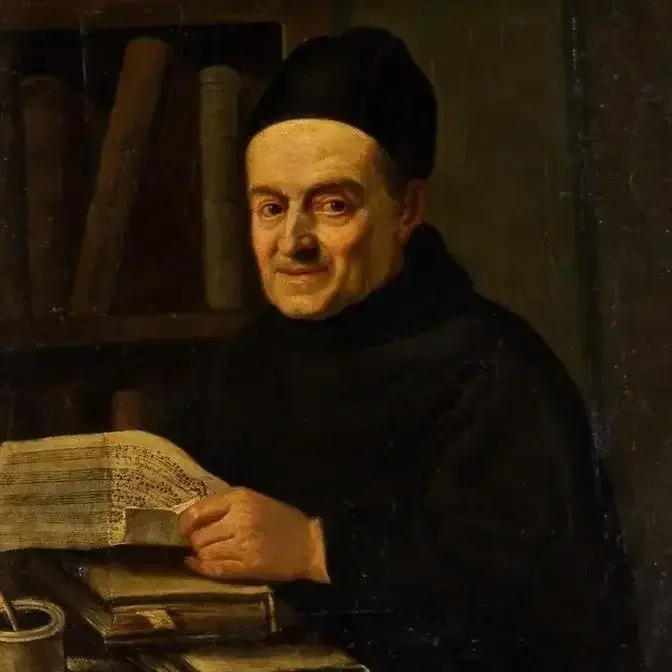
Joyeux anniversaire Marc-Antoine Désaugiers! 🙏🏼🎭
Composer: Marc-Antoine Désaugiers (1742-1793)
Work: Messe Des Morts ... à la mémoire d'Antonio Sacchini (1786)
Performers: Sabine Rеvault d'Allοnnе (soprano); https://tinyurl.com/yjjx7s58
Jacques Chardοn (alto); https://tinyurl.com/43f2hnuv
Patrick Gаrаyt (tenor); https://tinyurl.com/nyrdkvaz
Jean-Louis Sеrrе (bass); https://tinyurl.com/2hhwzetd
Ensemble Vocal du Chesnаy; https://tinyurl.com/3xu5jknn
Ensemble Vocal Lοré; Orchestre Français D'Oratorio; Jean-Pierre Lοré (conductor)
Messe Des Morts (1786)
1. Requiem aeternam 0:00
2. Te decet hymnus 5:22
3. Kyrie 7:37
4. Si ambulem 8:49
5. Virga tua 11:21
6. Dies Irae 14:14
7. Domine Jesu Christe 46:07
8. Sed signifer 53:53
9. Sanctus 56:44
10. Agnus Dei 58:28
11. Lux aeterna 1:01:58
12. Requiem aeternam 1:03:37
Painting: Domenico Corvi (1721-1803) - Compianto sul corpo di Ettore
HD image: https://flic.kr/p/2sKoagw
Further info: https://www.amazon.com/dp/B001LQRBE0
Listen free: No available
---
Marc-Antoine Désaugiers
(Fréjus, 16 November 1739 - Paris, 10 September 1793)
French composer. After some musical studies he settled in Paris in 1774 and first attracted attention by his translation of Giovanni Battista Mancini's 'Pensieri e riflessioni pratiche sopra il canto figurato' (1774) under the title 'L'art du chant figuré' de J.B. Mancini (1776) and by his 'Lettres sur la musique des grecs'. The first of his works to be performed in Paris was a motet presented at the Concert Spirituel in 1777. He then wrote several stage works which were performed at the Comédie-Italienne and the Opéra; among these 'Les deux sylphes' (1781) and, above all, 'Les deux jumeaux de Bergame' (1782) became popular. He was a friend of Christoph Willibald Gluck and Antonio Sacchini and in memory of the latter wrote a Requiem (1786) which was well received. He was quick to support the ideas of the Revolution and, at the request of the National Assembly, wrote a cantata for choir and orchestra, 'La prise de la Bastille, hiérodrame tiré des livres saints', in which he arranged fragments of verses from the Scriptures in a sequence depicting the events surrounding the fall of the Bastille. The work was enthusiastically received at Notre Dame on 13 July 1790; it was later performed several times and revised slightly in 1794. As a composer, he left many comic operas, a symphony, airs, romances and the opera 'Bélisaire', with a libretto by his elder son Auguste Félix Désaugiers (1772-1827), who also revised Antonio Salieri's 'Danaïdes' (1817) and 'Tarare' (1819). Marc-Antoine Désaugiers suffered from the inadequacy of his musical technique but his charming style and sense of drama, as well as his generous nature, account for the reputation he enjoyed in his day.