
The First Man to Walk Around the World (28 Year Walk)
#trevel #longwalk #adventure #backpacking #bikepacking
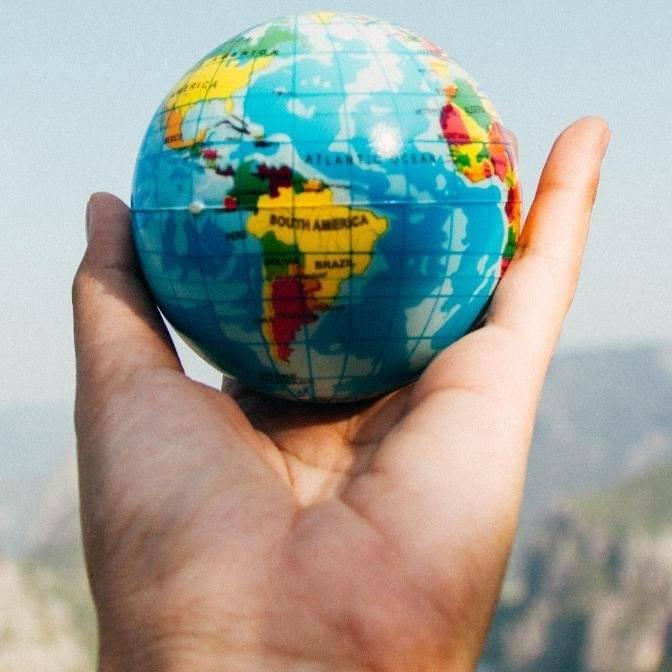
There will inevitably be details missing in this video. One for certain is the lines I drew on the globe were not 100% accurate. Please see more detail here: https://karlbushby.world/
AI GeneratedMay contain errors
Video Summary
AI GeneratedCarl Buschby is an endurance adventurer on a 28-year quest to become the first person to complete a continuous loop around the world on foot. Starting in South America in 1998, he has traversed diverse terrains, survived extreme Arctic conditions, and overcome immense geopolitical hurdles, driven by a desire to live without regret and a belief in the inherent kindness of humanity.
This is Carl Buschby, and when he reaches the end of this road,
he will become the first human in history
to complete one continuous loop around the world.
It's taken him 28 years.
He's done some of the most crazy things to achieve this,
including becoming the first person in history
to walk the frozen sea between America and Russia.
He also got arrested.
In Russia he spent a month going through
the deadliest jungle in the entire world
and along with Angela behind became
the first person to swim the Caspian Sea.
This is one of the greatest feats of human endurance ever
and the following is a three-day
journey with Carl earlier in his adventure
in Belgium where I tell the story of this adventure
and learn what it's like living on the road.
It's 10 times crazier than you would ever believe.
Morning Cole. How you doing? Good morning. I'm great. How are you?
I'm so ready to spend the next three days with you.
Today we're going to be walking around 30,
25, 30 kilometers. We're going to be here for about 30k's.
30k's and then we're going to try
and do that for the next three days.
Is it true though that you did this as a as a bet is or is
that like an internet rumor?
I think that it first came to light during a discussion
where the media and I said about how it
was kind of like a bad bet in the bar.
Because it was me when I brought it up with the guys back in the army.
So it got, you know, there was a lot
of back and forth, a lot of banter.
And the more they pushed, the harder I pushed back.
So it kind of felt like it was a bad bet in the back.
That's how I kind of feel.
I'll show you.
You can come to the end.
And here we are.
It's not actually a bet in the bar
but something very much along those lines.
Wow.
We're making great progress.
I cannot believe just how fast we're actually walking here.
In the first hour and ten minutes we did over seven kilometers.
That's sub one hour five k's.
You don't realize as well just how hard it
is carrying all your own weight and being
self-sufficient.
Obviously Karl has got everything he needs in the beast.
So that's the trolley that he carries.
He's got everything there.
During this journey I sat Karl down to talk me through his route.
Specifically, the most challenging parts where anyone
Anyone in their right mind would have given up and gone home.
This journey starts on the 1st of November 1998
at the bottom of South America.
In those early days, Central America into North America,
Asia and Europe, but there
are these gaps that kind of dominated the map.
For example, coming from the southern tip of South America,
the first gap is the little
known Darien Gap.
Which is the border region between Panama, Colombia.
And you got a couple of hundred kilometers
of swath of jungle and swamp.
It was basically a war zone back in 2000 when I crossed it.
2000 into 2001 that winter.
At the time the jungle was controlled
by the Revolutionary Armed Forces of Colombia.
Better known as FARC.
And they were locked in a brutal war against government forces.
Using roadless jungles to hide their military camps,
run cocaine labs and smuggle weapons.
At the time they were actively hunting,
Kidnapping and executing foreigners who strayed into the jungle.
Making any attempt to walk through it borderline suicidal.
What were some of the scariest moments in there
and what did you use to get through?
Because I've heard you tell me about people
that went through just before or even after that didn't come out alive.
What did you do that was different and how did you prepare?
yourself to get through there well i think
for this time it was just me and my father with
news over this fun little experiment
and it was for us it's very much you know been ex-soldiers
this was an escape and evasion exercise
when you get outside of Medellin Colombia
you've got about 300 kilometers of road that's heavily contested
so far take those villages
and we take some back we take some it's
a mess anything goes down that road
You've got to know there's going to be eyes on you.
We approached that, we disguised me as a homeless vagrant,
dyed my hair, my skin, hid my equipment in sacks and stuff.
So we look pretty much homeless.
Homeless locals as well, because the important thing
was not looking like a foreigner.
Well, it's very hard to look anything other than a foreigner,
because you don't look classy enough.
Yeah, yeah, yeah.
Approaching six foot, I mean,
but you can definitely render yourself down.
So that you're clearly not worth kidnapping.
You're not going to get anything from me other than ticks and fleas.
At the end of the day, that's the idea.
And it kind of worked to a degree,
but I still found myself regularly...
Rubbing up against the, luckily for us,
the right-wing paramilitary groups that owned
dominated most of that route
and the part where FARC had the route then I would have to detour
through the jungle till you get past those towns.
Some pretty tense stand-ups
especially with the the right-wing paramilitaries at first because they
didn't know who I was and I didn't know who they were and then you get
beyond that you drop down out of the mountains
because now you're in the tail end of the Andes and then you
really kind of facing that jungle
so you ditch the disguise and you go into jungle mode for
want of a better word
which is like a layered system clothing a combat vest and a backpack
and that clothing we had all everything
that we needed for escaping an evasion or a
survival in that clothing so your maps compass
and and and survival tools and medicine like
fishing kit wiresaw money all was sewn
into the layers of clothing and and seams
So that if you just took everything off me
and left me standing in my last layer of clothing,
you patted me down, you don't find any of that stuff.
Right.
So if I had a chance to run for it, then...
We had what we need in in the clothing
and in the backpack with things like sleeping bag and hammock in it.
No food though. So you had a little bit of food
to start with but by the time we'd managed to get
into the jungle we'd got to a place called Rio Sucio
which is under siege
so one of the hairiest parts was getting to that.
It was a two-day trek where FARC owned this
pretty much overgrown track into the jungle
and they actually passed me the 20 man patrol passed
me on the edge of that track one night
the next day we got up got to Rio Sucio kind of dug in with
the troops there hung out with the soldiers
in Rio Sucio for a little bit the next section was
to get in the river disguise myself
as floating debris mixed with the debris in these jungle
rivers the Atrato river was an enormous river it's
a kilometer wide in parts it's a big thing
Yeah, yeah.
And you get in that and you mix with the debris and then you're,
basically for me, it was the easiest part
because I just went with the flow for four days
until there's firm enough ground
to then get into the actual Darien Gap.
And now you're kind of punching through that jungle,
which is a really badass jungle.
And it took 10 days for me to cut
my way through to the border with Panama
when you're going up into the mountains as well.
Then you're coming down.
On the other side into Panama
and then before you know you're back in the rivers again using the
rivers to get out of that is the easiest way to get out of that jungle
so you're very much amphibious.
Just floating along the river then going through the the forest
and then back in the jungles and
eventually end up back in the rivers until eventually you reach
a place called Boca de Cupa
which is like the first kind
of substantial village where you'll find Latinos.
Right. And for me I found the Panamanian police.
Which is acting as their army.
Then I walked into one of their positions.
They were defending because they also fight the guerrillas.
Ended up at gunpoint, pretty tense standoff.
Because green uniform, combat vest.
Yeah.
And I wanted to know who I was.
And you're crossing a border that's closed because of the war.
I ended up getting picked up and held for like 18 days.
Kept in jails.
Interviews without coffee.
18 days.
Without coffee.
It was all very interesting time.
I ended up having some really interesting conversations
with the head of intelligence for Panama,
for the south and for the Darien.
And I was able to make good friends out of him
because I'd seen and gathered a lot of information
and it was the kind of stuff that he wanted to know.
So me and him got on very well.
And then eventually, once all the paperwork had been sorted out,
I was allowed to continue.
Yeah, it was pretty brutal.
It was one of the toughest things I've ever done.
How are you feeling, Carl?
Because I don't think the people know you've just got back.
Into Europe, haven't you? Continuing your walk from today
because you had your visa ran out, so your visa's back renewed,
you're back walking. How are you feeling?
Well after that lunch I am definitely satiated.
We're totally full-bellied right now.
We're good. No, we're great, you know.
I can almost, I can feel the aches and pains right now.
Yeah. Because we're on kilometer 20 plus.
This first week back after a little while,
I'm gonna get a little twingy. Okay.
Okay, it's probably good for me if you're,
you know, not fully back at it.
Oh no, I'll be back at it for about a week
and then I'll feel acclimatised, pushing this thing up and down hills.
I'm getting chills.
That's good news for me.
So what do you eat when you're on the road mostly?
What's your go-to meal?
Well, it's really going to depend
on where you are, what environment you're in.
It changes quite a lot. Like right now, where we are in Europe.
It's never been quite so easy. You know, you've got your gas stations
and your supermarkets every ten, five kilometers or something.
It's ridiculous. But when you're in other parts of the world,
in the deserts, in the Arctic, it's a whole different ballgame.
So, in the Arctic you're packing.
Specialised food, you know, rehydrated foods and stuff like that.
And you're moving all of that in bulk.
Massive logistical train to get that out
to waypoints and remote places,
say, in far northeast Russia, something like that.
I mean, that's a whole different ballgame.
And in different parts of the world,
different countries, different cultures,
you'll find something that's cheap and simple and that you like.
And you'll stick to it and eat it to death.
Like you are now with salmon.
Like right now in Europe,
I've taken a fancy to packets of salmon,
which I literally boil in a packet.
I like it.
Meals ready to eat kind of thing almost.
But it's good food.
It's good food.
I mean, that's probably the best protein intake.
How are you navigating as well?
Maps, man.
Maps then?
Paper, lots of paper.
Paper maps.
And for the scales and distances that I'm doing,
I had two sets of maps.
I had these...
pilot charts which are very high altitude charts there's
not a lot of detail on them they're not really
set up for land navigation right
but you can cover a wide area in one small piece of paper
yeah and then road maps from each country that you
were in because road maps used to be a very
popular thing before iPhone
so you had a lot of paper maps before we all went digital right so
i would use those and i had a gps so there were like a e-trex
Tracker, you know, some of the first commercial GPS units
that were commonly used, so we had one of those, so I would just follow
the maps, roads, and then log where I stopped every night with the GPS,
and that's how we kept track.
Got it. Yeah, because you were travelling by road mostly.
And now, of course, totally different, because now you write down
on your app, on your iPhone, you know, generated routes,
generated by the AI, so now you can ask, you know, I need bike tracks,
no hills, you know, from this point to that point, it will just...
Give you a route, then you follow a magenta line on a map
and now you're following a line
and you zoomed right in so I mean back
in the days a city on a map would be like a
A dot with a name, and that would be it, right?
Oh yeah.
In the actual jungle itself, because it's so close, so claustrophobic,
so if you bend over or turn around and stand up,
you have no idea what direction you're just walking or moving.
Ah, yeah, yeah.
So you are constantly on a compass.
Yeah, yeah, got it.
In that jungle, you need that compass, then you need that map.
With those two, you can do pretty good.
How many languages do you think you've got a basic grasp of?
Good bit of Spanish. Yeah. I picked up a little bit of Russian.
Yeah, that was a long stretch.
Those two kind of covered a lot of the journey.
How have you funded your trip, if you don't mind me
asking? Yeah, you could think of it as a series
of sections around the globe. It starts off with a
little bit of good time where you got $500 in your pocket.
That was the beginning. Okay. With full
knowledge that that wasn't going to last that long.
Yeah. But it really didn't last that long at all.
Because at the time Argentina was quite expensive.
I ran out of money in Argentina and then I said,
okay, we're going into survival mode.
So then I crossed the Andes to get out of the desert
where you can't really survive that well
into Chile where it's green, fertile
and you're along the coast.
And that is where you want to survive
when you're in survival mode.
Yeah.
And it worked absolute charm.
And then we started living off the land
for a number of years.
Now eating trash, what we could find.
And then that lasted until, you know,
we were back into Central America
and the family started
Having people, you know, with browns
and people putting pennies in a hat kind of thing.
Okay, so you didn't have any big sponsors or anything at that point?
This is all, like, from you working?
Not for Latin America, no.
Right.
You know, I mean, certainly in South America, things got pretty...
Pretty intense, there were a lot of hungry days.
Literally as I arrived in Nogales in Mexico,
people actually reached out to us.
I suppose.
They've been following you,
and now you're stepping into a target audience
in the north, where there's more business than there is down south.
So suddenly people, they've been watching you,
they've developed the confidence in you.
Oh clearly you're...
You mean business you've got a story behind you
so now you've got they've got some you've got
something that they can use. We got a couple
of handshake deals for a couple of hundred bucks a
month absolutely amazing yeah as far as we were concerned
so with those people behind us we
managed to start eating pretty well one might say too well
because the thing is you step into the
United States every gas station is a supermarket there
are burger bars on every junction and you
You got money.
You got money.
And you're in heaven, so you're eating.
The next big step, I guess, was on the way,
while I'm making my way up the Alaskan Highway,
looking into the, you know, in the winter, looking at the north,
we managed to get a book deal with Time Warner.
The two books, they paid in advance,
and that basically would pay for the most expensive part of this,
which is going to be the Alaska,
the Bering Strait crossing and into Siberia,
where now you're talking tens of thousands of dollars in logistics.
A whole different volume, special equipment, special foods.
Yeah and logistics was just insane.
So that came at just the right time and it was after I'd
crossed the Bering Strait, we're in Russia,
then we get whacked by the financial crisis 2008. I lose
all the sponsorship deals that we were working
with and the potential ones that we were working
on end up stuck in Mexico unable to get back to Russia
and it was there for a couple of years
until eventually someone found us.
Again Bo Willimon, Western Productions and those guys.
Ever since 2010 are the guys that have been behind me.
Yeah.
So we've had like a real sponsorship.
So that's the documentary.
The documentary that's come in.
And the product of that will be the documentary that's coming here.
Got it. Yeah, so watch this space.
Do you ever get bored on this walk?
Like, are you scrolling TikTok as you're walking?
What are you doing to keep yourself entertained?
Or does the scenery entertain yourself?
Again, it depends where you are and what you're doing.
You know, places like the Arctic or Mongolia,
where the landscape doesn't change ever, forever,
You ready to go over there?
Okay.
will drive you up the wall.
Sometimes on the roads it can get pretty, yeah.
You struggle when the scenery doesn't
change day in, day out, week in, week out.
When you're in more populated areas like
Central America or even like Europe,
there's a lot going on.
Places, you're meeting places, people all the time.
Yeah, it's different.
Karl's off doing an interview.
We've had some lunch.
Managed to get it from a vending machine.
It was nice.
There wasn't any actual restaurants open.
That's fine.
I've just popped off as well to a boulangerie
and got a pastry.
Need the calories, you know?
Anyway, something I just can't get my head around
and I'm genuinely worried about
is the data roaming fees Karl could have incurred.
During this 27 year journey,
I'm worrying about data roaming fees
is the exact reason I use Holofly.
They offer unlimited data
in over 200 different destinations.
There's no messing around with physical SIM cards as well.
You just get sent an eSIM within less than a minute.
Plus, you get to keep your normal WhatsApp number.
That's sick.
And even better, they've got a new benefit
called Always On, which gives you one gigabyte
of backup data every single month, renewing monthly,
for 12 months and that's there just running
in the background quietly for when you need
it the most.
Plus they have a 24/7 support team
of real human beings if you have a change of plans
and need to talk to someone.
So to make your travels completely stress-free,
check the link in the description or in the
pinned comment.
Use code HOWARD at checkout to get 5% off eSIMs
and 10% off Holofly plans for your first
12 months.
Thank you Holofly for making this video possible and happy travelling.
All right, so we're almost at the end of day one,
which means we're looking for a place
to stay tonight.
On this journey Carl's been camping the whole way
and that's what we'll be doing tonight. We're
going to be stealth camping technically
because there's not campsites at all the stop points that
we're going to so we've got to look for a place to stay.
We've done 30k today and 40 000 steps.
I'll tell you what this is lovely isn't it?
We might find a campsite as well just not sure if
it's open yet. I'm gonna go and check maybe we don't need
to stealth camp tonight. There's fines
for stealth camping if you get caught.
I've reassured Carl that I've got a big CV of stealth
I don't camp in, so.
I'm the man to be with.
No way! Oh, it's open!
Yes!
Sleeping good tonight?
A little
bit.
Ugh!
I'm lying down, I'm making a moaning noise.
Yeah, Karl's camping skills really showed up here
when he assembled his full tent in approximately 30 seconds.
It must have felt bad for me at that point
because he then started to help me assemble mine.
The help was appreciated.
If you hear me stop blowing in a big thud,
I've passed out, just letting you know.
We're all set up, let me give you a tent tour.
I might add, this is Carl Buschbe approved.
So you come in to the entrance area
and this is actually the storage area for my bag.
And then let me take you to the fun stuff.
Okay, here we go.
Oh yes.
It's cozy, sleek, it's everything you want
when you're potentially stealth camping
or just generally camping.
So on the menu tonight,
we've got some pasta parcels.
So I'm gonna boil some water now,
cook these in three minutes
and this is gonna fuel me through tomorrow.
Guys, bad news. A scrandemic has broken out
on this campsite. Carb loading.
All right, good morning, Cole. How are you feeling?
Top of the morning.
Top of the morning. How's the legs after yesterday?
First day back on the road.
33k in the bank.
You're feeling it.
Feeling it?
Yeah, always the same. My first week will be a little sore.
Got a slightly shorter day today.
I say shorter. Still going to be a good 20, 25 kilometers.
Far from, far from a cruise.
So we had some really nice neighbors on the campsite,
makers of coffee this morning.
I said to Carl, I was like,
I love people from the Netherlands.
They're always so friendly.
In response to that, Carl just said, I love all people.
99.999% of the very best of humanity on this trip, so.
Yeah.
Every country, every culture.
Yeah, wow.
There you go, that's something to remember.
Really feel like I should be helping you here.
No, I'm sure you've faced worse than this, I guess.
The start to day two was really brutal.
We had a series of very steep hills with bad terrain
but as much as this was hard going
it didn't faze Karl at all.
He has a mission at hand and absolutely nothing's going to stop him.
Nice one mate.
There we go.
On the trail now.
On the cycle path.
Yeah.
For the three days that I ended up walking with Carl,
we spoke for the entire thing.
Other than when we were going up hills of course.
He had so many interesting life stories to tell,
even beyond the 27 year walk he was on.
We were passing through the town of Spa in Belgium,
home of the famous racetrack,
and this made for some really interesting scenery for the walk.
It was a lovely corner of the world.
Anyway, back to the route.
Having left Panama behind in 2001,
Carl spent the next four years traversing through Central America.
Going up through Mexico, the United States,
Canada and finally into Alaska.
And then eventually you get to Fairbanks,
Alaska, which is the end of the road.
And then we had to wait until winter.
Using the frozen rivers to get through Alaska
was the best, most direct route.
And we could use the villages along that river to resupply
and forward, you know.
food and fuel which you need heaps of during these winters
but it was the still the easiest
way to do it, punching through the centre
of Alaska midwinter it was a bit of an ass whooping to be
honest an absolute ass whooping i lost 40 kilograms
in that one, 40 pounds, 40 pounds in
weight and then eventually hit the coast
and along the coast and i think things really kind of got
patchy, when we hit the coast and
started traveling the coast of Alaska,
and then there was this couple of,
oh, my God, I'm going to die moments.
You know, we almost got taken out in a couple of the storms,
walking off cliffs in a whiteout,
falling through the ice in the middle
of the night on open bays and things.
All the good old-fashioned Alaskan stories of struggle and survival.
So there were a couple of close calls there, and it's hard.
I mean, it's just...
Savage. You're talking about minus 40 to minus 50.
I think with the windchill factor, our coldest days,
I think it was like down to minus 90
degrees Celsius with the windchill factor.
And you were out there?
Yeah, yeah.
Walking?
We were out there. That was one particular gnarly day.
And I teamed up with the guy in Nome, Alaska.
So we were, again, travelling on the coast when that happened.
And he took his glove off for a couple of seconds to do something
and lost the tips of three fingers on that one.
In a few seconds?
Yeah.
Jeez.
So what and then after you made it through all of that you
then had the Bering Strait. Then you
arrived in Wales Alaska on the tip of the Stewart Peninsula
and you're then about 57 I think it's
kilometers or miles maybe I can't remember
which one it is as the crow flies from Russia on the on
Stewart Peninsula on the beach
in Wales you can actually just make out the mountains in the peaks
of the mountains in Russia
so you technically can see Russia from America wow it's just very
Very tough and I think an important thing
to mention here is that no human until you did
had crossed the complete Bering Strait.
Right, I mean it's a little controversial. There was a
Russian team claim that they made it back in 98.
There's some mixed information there. People who
worked with them told us that they got picked up three kilometers off
the coast by the coast guard
and brought to Nome at that point.
That's why no one has done the route you've done though.
Yeah, I mean, lots of people have tried to cross the Bering Strait.
A team tried it the year before us and didn't make it.
I was hunkered in for the long haul.
I thought, you know, it was going to take many attempts.
We got really lucky.
The weather set us up really well.
We had a good, hard winter,
which meant there was a lot of good sea ice.
So come the optimal time, that golden window.
It's the end of March. When the ice is at its maximum extent,
you've got more daylight hours.
The weather is generally better, so that's your window to try this.
We got on the strait. That first day was difficult
because the temperatures at that point were like zero degrees Celsius,
which is incredibly warm, which means everything's wet
and mushy and slushy and there's no hard surfaces.
So we struggled. We got out there
and the currents are just completely random.
And they dragged us north for about 50 kilometers.
We've made no progress west.
we were stuck in a lot of open water
and we thought okay this is this kind of what we expected
right yeah you know we bounced off this thing like
a brick wall lick our wounds reorganize
replan yeah and then have another go
but as we watched the the the gps ticking over one sitting
in the tent pondering on what to do next slowed down turned around
and instead of bringing us
back into the actual strait
then the temperatures kind of plummeted down to like minus 35 that
I started to put a surface on sea ice which doesn't freeze until
You know, you're down in the 40s, minus 40s,
which then suddenly allowed us to make some progress.
So we actually managed to start pushing for the data line north
of the Diomeds and then managed to actually cross into Russian waters.
And at that point, I was already way out of my depth.
Way to go.
Even though we were equipped, we were trained for it,
we were willing to give it our best go, we didn't quite expect
To be making such amazing progress.
The weather was just absolutely amazing.
Like I said, it brought us back.
Then everything kind of stopped.
The wind stops, you know.
The currents kind of slowed down.
Temperature dropped, which put a surface.
And it was literally, I'd give.
For me, I talk about it being like Moses watching the Red Sea part.
It was an absolute miracle.
So everything lined up which allowed us to make that initial progress,
get into Russian waters.
Now we can see the Russian shore,
so we're trying to aim for that, but unfortunately now that the
ice is moving again north,
so we're on what you call negative drift, so we're trying to
head south while the ice is moving north
and we find ourselves just marking time.
While edging west
and at that point the weather system starts to kind of close in.
So we're starting to get worried about whether
or not we're going to actually, we're going to lose it.
We're getting tired because we're all day long.
We lost one sled down to one sled between the two
which weighed like 400 pounds.
That's like two big fat guys in a bathtub.
We're trying to haul that over just piles of ice all day long.
So yeah, we're getting tired.
That's right, so at this point,
We're getting really concerned
and we're making it like about two maybe two three kilometers a day.
So really slow going slow process and then we we got lucky
and had one day we managed to find our
way through the ice and got 11 kilometers in one day
which is absolutely phenomenal and that
changed everything
because that put us within striking distance of the Russian the Russian
shore. Quickly after that we hit what you call fast ice
which is the ice that's anchored to the
the shore, stuck to the shore for a couple of kilometers and then you
you're golden because you're
not going anywhere you're not being dragged out
you know you're not fighting
this negative drift thing so once we hit that
we pretty much had it and then it was like
the next day we came in and i got
to make that phone call
to say we've you've made it first people ever to walk
from america to russia wow it's a day yeah yeah yeah
so it's totally unexpected you know
no one expected to pull it off first time
least of all us yeah and because of that we really didn't
We didn't have all the paperwork sorted out.
for arriving in Russia because we couldn't figure
out what we needed there wasn't a lot because we
needed something called a propusk
which is special permission to be in that part of Russia we'd
done this visa thing and all the rest of it
but that one piece of paper was missing but then we
then we learned that the visa company that we'd
been working with had lied to us and hadn't told
the Russians that we were coming across the Bering Strait
so they told the Russians we were flying
through Vladivostok or something like that give us back
the visas that didn't tell us they'd change the plan
So we thought the Russians had seen
the Bering Strait planning give us the visas.
Yeah, yeah.
None of that.
So we arrived in Russia with fake visas, no propusks.
And so now the Russians were like, well, obviously spies.
Yeah, obviously.
Obviously haven't walked across the Bering Strait,
which had never happened before.
So they call bullshit.
So now we're grabbed. Ex-soldier,
special forces, kind of like family background.
Yeah, red flag.
It all just started getting very, very, very gnarly.
So we end up spending like 57 days in detention.
We were put on trial. We were found guilty,
given the option for a retrial.
By now the politics and the media are getting involved.
It's become an international, you know.
Incident, and it kind of really snowballs.
But the politicians take care of it,
so come the retrial, we managed to get away with it.
Even though the border guards and the FSB wanted us
to go to jail for five years, at least five years.
What? Five years?
At least.
Really?
To make an example of us.
So, yeah, things got...
Pretty close, yeah, miracle number three
or something but we managed to get away with that.
We were equipped specifically to be basically human marine sea mammals,
being able to operate
both in and out. You're going to be swimming a lot
and then you're going to be climbing around on
ice so we had to be prepared and equipped
and able to cope with those types of temperatures and do
Both of those things equally efficiently,
which actually take quite a lot of research,
very expensive equipment.
And yeah, it's a lot of hard work to get that right.
Would you say that you're quite good in your own company
or have you struggled on the trip with loneliness at all?
I mean, I think I'm pretty good.
Yeah.
Every now and then you kind of feel it
but you don't I don't know sometimes you know you can
crave company it would be really nice so I would stop
and talk for five minutes especially when
you're out in the middle of nowhere in foreign countries
and I do gravitate to being alone to
the point where it's actually hard to be with other people.
Those times that I have teamed up
it's actually been a real challenge to be around other people
because you spend so much time on
your own that you have a very tight system
and a tight routine and as soon as someone comes into
It's like a tornado just ripping your world apart,
like it's just chaos.
And when you have like met people or form relationships with people,
do you find it very hard to say goodbye?
It gets easier. Again, it depends on who it
is you're dealing with, right? I mean,
some people are going to mean more to you than others,
but there is a lot of places and faces,
and you feel you owe everyone because everyone helps.
So in some regards, everyone's part of
the story. You feel like you wish you'd give more,
but you just keep rolling and they come and go.
Part of the journey.
This is part of it, I guess.
What, as like, you know, if you look back at the entire journey,
what was the hardest moment for you?
Women.
I mean...
We'll just leave it at that.
Those things, those things will destroy your life.
Yeah.
Those are the hardest.
It's the emotional stuff.
It's the mental stuff.
Right.
The physical stuff almost pales
in comparison compared to the emotional stuff.
Really?
Like when you're in love, you lose it.
Because you're on the road, and you're not willing to quit,
and that will just tear your world apart, and that's happened twice.
You know, the only time I can ever remember
not actually being able to get out of a tent
was just because of a woman.
Like, physically just utterly destroyed, mentally a wreck,
deep in the bowels of depression, and unable to function.
It takes a woman to do that.
Yeah, it takes family, it's the emotional stuff man,
you never get away from that, it doesn't matter what, you run
to the farthest corners of the world, that thing's going to get you.
Pain is easy, suffering that is.
What has been the most dangerous moment physically,
the most dangerous situation you've found yourself
in and how did you feel in that situation?
Could you remain calm?
Was it something you sort of always saw happening?
The major ones, of course,
would be the Darien Gap where you are pretty nearly placed.
And there were some very tense moments there.
You'll end up at gunpoint a few times.
Remaining calm is cool.
I mean, that's...
Just part and parcel of it. It's tactics and strategy.
Being calm and smiling in a very precarious dangerous situation
might just make the difference depending on who's holding the gun.
Gun.
Being calm is definitely something you want to practice.
On the other side of that there's like Alaska
was notably one of the most
oh my god we're gonna die moments.
There's a handful of those in Alaska. It just felt...
Yeah because you know midwinter
in Alaska where it permanently feels like it's trying to kill you
and that was a lot more stressful
because you're fighting yourself and the environment.
Yeah, you know, numerous stories there becoming exhausted
and almost falling asleep in a
storm and walking off a cliff in a whiteout
and falling through the ice at night into
you know into water minus 30 minus 40 all of these good stuff.
From Alaska.
When I'm imagining this journey,
I'm imagining, you know, the most dangerous moments,
not necessarily just being the terrain,
also like animals as well that you might run into.
Has there been any of that?
Has there been any sketchy moments there?
No, they're normally the least of your concerns.
The only time you ever really give it any thought
are birds.
I mean, birds, you just have to be aware of when you're
in the North, North America, Canada, Alaska,
again, on the Russian side.
and in between those two you've got the arctic sub-arctic
and then you're really concerned about
polar bears you know polar bears that's
when you're carrying a gun in our case guns you know
we have a handgun for the tent
and a shotgun pimped out a shotgun with a red dot scope so
we could use it at night and in poor light
with special munitions you know because you're you're
dealing with polar bears
and polar bears being the only active land carnivore
the only major land carnivore that will actively hunt a human,
and they do, and there's horror stories.
Did you ever speak to a polar bear person?
We met him twice, and neither...
We got lucky on both,
I mean the bears took a good look at us but just decided not to
there and moved on in the other direction.
But those moments were a little nerve-wracking.
But at night was the worst in a tent out on the Bering Strait
and on the coast of Russia.
We used to talk about bear threat anxiety,
you're just exhausted because all night long
you're listening.
For birds in the arctic and especially on the ice it
is one of the noisiest places you'll exist so
there's just noises all the time you know breaking ice grinding ice
on these ice pans out there and
the wind you're always listening for those birds
because they will try and take you out in that
tent so you're becoming very tired
because you get very little sleep and you're always on the edge
especially at night knowing that those bears are out there.
Did you say you had a moment where one
One morning you woke up and it was...
Bear footprints.
There were bear footprints, yeah, in the snow,
not far from the tent, you know, things much
bigger than your hand, you know,
great big paw prints, which are very impressive.
You know, and there's plenty of stories of tents being taken out.
I've got photographs of people that have...
been eaten mauled in their tent. What?
And survived and half eaten bodies. People have been
jumped in a town by a polar bear
and then two polar bears have eaten them. And what would you
say is the hardest thing about living on the road?
Well again personally we've talked about
you know it's those personal relationships the emotional side
yeah and if you step back and look at the journey
and what has caused us the most grief
It's been politics, visa bans, it's been the unexpected,
the financial crises, pandemic,
but dealing with a lot of these borders
and the visas restrictions, limitations,
bouncing in and out of various countries, cost us,
well, half this journey has been dealing with that.
People, you know, can't really get
their heads around why it's taking so long.
And that's mostly because we're not willing to compromise on the route.
That's always been the goal, is if we stop somewhere,
then we have to restart there.
Pick it up from where we stopped. It's incredibly difficult.
Right, Carl, so this is, in terms of logistics,
this is how you carry everything, isn't it?
This is the beast and all your belongings from this journey.
Are on here. For my life. For your life.
This is what I own. Yeah. Kind of. Yeah, this is it really.
And you started off by pulling this, didn't you?
Your first version of the beast. You were pulling
it. This one, this is beast two, beast one.
The idea was to pull it to have your hands free to do stuff.
We did that for most of South America up until the north of Peru.
Then we had to climb into the Andes Mountains
and the beast by that point was pretty much a wreck.
It was hard to keep it going, beast one.
It was basically a golf trolley that we bastardized.
I carry like a hundred pounds of gear but it really suffered.
We ditched it, used pack animals into the Andes, across the Andes
until eventually ended up just backpacking it all
the way into Central America.
And then in Nicaragua, in Leon, Nicaragua,
we found a workshop at a technical school and I
I designed this on paperwork based on all the mistakes,
you know, from the last version.
I said, could you build me that?
Yeah.
And they were like, sure.
It took about a month, but they've built the beast too.
And this thing's been with me ever since.
Really?
And it's been to hell and back.
This thing's a tank.
Wow.
This has been with me since 2001.
And it's done the deserts, the mountains, the Arctic.
We took it into, you know.
Once we got onto the ice roads,
we brought it back into Russia quite early, too early.
It took a real kicking.
Did you get it stolen at one point?
It got stolen at one point.
He was kidnapped by someone on the US-Canadian border.
Who could do that?
And then we found it a month later.
The police found it ditched in a quarry.
So we got Buddy back, and he was a bit bent up,
a bit worse for wear, but again, you know, a little bit of loving,
caring attention, and he's back on the road.
Oh, nice. Just adds to the story.
So you've got your medical stuff on the back here,
easy to access in case of an emergency.
Got a couple of cameras dotted on it
when you start your YouTube channel, yeah?
No, that's your tent or your clothing in the middle.
You've got first aid kit hanging there,
tools to replace tires when they come off,
a couple of spare tires or wheels.
You don't have as much freedom as you would do backpacking
because you're pretty much stuck on the roads.
You can't get this thing into that forest right now, for example.
You're not taking it up there.
You've got a backpack so you can get in there and sleep at night.
I've got to find somewhere very more, something a little more like this
where I can get this thing.
There are some restraints when you're living on the road.
When you got the visa ban, one of the things you did
to almost raise awareness and get
this visa ban lifted was you went back to America,
walked from west to east.
So we walked from my sponsor's base in Los Angeles
to the Russian embassy in Washington
DC.
To gain attention.
While we put together a rolling media campaign to try somehow,
we were just reaching at this point
For anything. Grasping at straws.
Yeah.
So we said, like, the only thing we could
do at this point is just do this rolling campaign
to prove our determination or whatever.
Yeah.
And as we were arriving on the East Coast,
the Washington Post picked up on it, ran a big story.
Someone in the Russian Embassy saw that and decided to help us out
and overturn that visa ban.
That's miracle number five.
Because I really did not expect that to happen.
So we managed to get that visa and then, you know,
get back into Russia and continue again.
Yeah.
A bureaucratic hurdle.
You did make it through Russia, it took you 10 years?
I think altogether it works out at about 10 years.
10 years, so you got out in 2017 and you're thinking
surely after this there is no big hurdles I'm gonna face.
Well, a little early to say that at that point.
Yeah, so now it's down through Mongolia.
It was a lot of fun there.
You know, we bought camels and did all kinds of crazy stuff.
And then eventually we end up in China.
And China almost kicked me out as well.
It got really close to ending in China.
Right down to the wire.
And in the last minute,
we managed to convince the Chinese to let me continue.
Hanging on by our fingernails again.
Got out of China into Kazakhstan.
Down through Kazakhstan, Uzbekistan.
Got through Turkmenistan, which is...
Pretty lucky to get a 30-day visa to Turkmenistan,
anybody knows about that.
Hit the border with Iran,
and then things were going pretty pear-shaped.
Trying to get through Iran on a UK visa is...
Tough to say the least, especially to walk through that country.
We expected a fight, we dug in for a fight,
and we made the right contacts, we were working
on all those angles, and how are we going to fund it,
because my sponsors couldn't touch
it because of the sanctions,
they were a US company and US sanctions, all that kind of
stuff.
Got it.
And then they went and killed Suriname,
things went from bad to worse, over that winter we'd
lost.
All contact with everything that we built up in Iran.
They wouldn't talk to us anymore.
Remade contact into the spring. Again, just patience.
Now we had to wait for this whole
geopolitical situation to cool down.
Eventually got them back on side just in time for the pandemic.
To come creaming in from left and just knocked Iran sideways
and everything then just went to
rat. So I backtracked to Mexico
and I'm stuck in Mexico as the world just ended for a while.
So that cost us another couple of years
and by the time we were able to get back into that part
of the world we couldn't get back even into Turkmenistan.
Iran was out of the question
at this point. We were hoping maybe to try and get back through Russia.
Just as we were going to try that in 2022,
they did the stupid in Ukraine.
With my history with them
and I already knew I was flagged as a security risk,
so we weren't going to do that.
The only option to us now was that 300 kilometer swim
across the water obstacle that was the Caspian Sea.
The only way out was through Azerbaijan.
We were basically all the way down
through Asia and through the Middle East.
Into the Middle East was just red.
No go zone. Couldn't go north of the Caspian, couldn't go south,
so across that Caspian stretch of water was the only way.
And again, that's something that no one has ever done in history.
It turns out, no one had ever swam across the Caspian Sea,
which was a shocker to us
I mean people have swam just about everything
so we assumed that they'd done that but no no one had
so it was a 300 kilometer swim that took
a lot of organizing eventually we got the
Azerbaijanis on board they they supported it
so a couple of Azerbaijani swimmers joined us
it was me Angela Maxwell two Azerbaijani swimmers
and we had the Azerbaijani Coast Guard
running support as a support ship and then it took us 30 days
So we were doing between 10 to 15 kilometer days,
missing a few days because of weather.
Basically, we had planned for 30 days
and we arrived 31 days on the shore.
Wow, absolutely mental.
So, world first, number two on the route.
All right, sports fans, back at you with an update.
We are motoring, aren't we, Carl?
Pretty good.
Yeah.
I know, because my body's telling me this is stupid.
Whee!
It's too calm now, the hell down, man.
It was going to be a very short day today,
but we've done a lot of that progress already
at 15 kilometres complete
and now we're just looking for somewhere for lunch.
It's almost a case of like, you see a shop
and it's like, right, I've got to get some
stuff even if I, you know, I think there's another one further on.
It's like you want to be sure that you've
definitely got stuff for that night, don't
you?
You don't want to be caught short at all.
But that's what we're doing right now.
Hopefully we can find somewhere nice for some lunch.
Again, this doesn't really resemble the trip
that Karl's been on for the last 27 years
And for most of this journey, Carl's literally...
been walking along motorways and main roads
because that's the only way to get
around with his big car. Plus it's
the most direct route as well. He was just
looking at this motorway in fact like
fantasizing about the fact that there
was a big gaps on the side of the road
but he actually got fined for for walking
on a highway in Europe so he's had to resort to the cycle paths.
It's the first time I've started seeing these things,
automated gardening machines.
Get a video of that.
I've got a beast!
That's what we're going to do with yours.
It's going to look like that 100 years from now.
Okay, we've almost
finished today's hike.
It's starting
to cloud over.
Looking like we're going to get some rain tonight.
This is the first night of stealth camping though.
Karl's already scoping out the spots.
We found one potential but are heading deeper into the forest.
No! It's raining. I've jinxed it. Look at this.
This is a potential but there's a barking dog
just over there. So it's a dead giveaway
for making noise. On to the next one.
This is it. This is the road going along.
Bopping off now for a stealth camp.
A man on a mission.
Nice big open woodland off a very quiet track.
Shouldn't be any people coming around here but even if they are,
pretty well covered.
Just gotta find a flat spot now that's good for camping.
I didn't realise just how serious Karl takes his stealth camping.
Right here, where he takes off his bright blue coat
and hides his high-vis jacket as he activates camo mode.
It is the small details like this and this kind of mindset
though as to why he has been able to complete this journey.
Right, we're set up on camp and Karl's given me a camo sheet
to put over the top so I'm actually camouflaged.
There is just a road up there so I'm trying to lay low.
Let's jump in the tent, make some food and then just lay low
and get some rest ready for the big day tomorrow.
It's also about to rain so I want to get in the tent.
Morning campers. Day three. Here we go. Come on.
Carl's already up there. I'm late. Morning, Carl.
Here we go. Day three. Well I'm in luck
It's a bumpy start to day three. Yesterday
we had hills at the start of the day,
which was was crazy and now we're on a bumpy path.
I don't know where the maps is taking us.
This however is is nothing the beast can't handle.
Do you find that the downhills
harder than the uphills with all
the weight of of the beast?
Probably so. Really? Yeah.
There's pain here. There's a level of pain.
Yeah, yeah. That is quite distinct.
Yeah, very uncomfortable going downhill like this.
Knees, ankles is it? Yeah.
It's knees, yeah, knees and ankles, chins.
Right, we're about 5Ks into day three.
And honestly, I'm finding this pretty damn hard.
This is why I wanted to come for a few days
to really feel like what Carl's going through
and putting his body through.
I feel like you don't really get that
with just coming along for a day.
I don't know whether it's like the lack of sleep
from being cramped up in the tent
or probably just the amount of walking that we're doing
that is making this so hard.
It's just stuff like even my shoulders
from carrying all the weight.
This is just like...
It's a graft. A coffee stop is beckoning.
I think as well the start for today has been really hard.
It's been really up and down and up and down.
It's not been a jolly old flat cycle route.
I made it to the cafe. Turns out the cafe
was actually just a gas station, which is fine.
We also went to Lidl. Carl got some salmon, which is good news for him.
He's going to be a happy man today. But it's funny,
we parked up here on these pallets earlier
and just had a chill, had a coffee.
Relaxed and I wanted to film a segment for the video.
I was like, oh, I can't, I can't
because this is air conditioning unit behind us
and it's making loads of noise, which it is.
And he was like, look, buddy, you wanted the reality of what it's like
living on the road for the last 27 years.
And he's right.
This is it.
Like a big portion of his life has just been spent at gas stations.
This, you know, it's whatever he can find on the road.
You know, he's taking the most direct route.
Like he's not stopping in towns and villages
because he's seen a certain restaurant there or anything like that.
He's just trying to get from A to B.
Having completed his momentous swim across the Caspian Sea,
Carl then walked across Turkey and finally into Europe.
The walk through Europe being easy compared to the rest of the journey,
but there would be one final hurdle standing
in the way of Carl completing his journey.
What became was now the fourth obstacle
or gap as we refer to them is the English Channel.
We'd hoped to do the English...
the tunnel using that maintenance shaft
which is basically just a road in the
center of the rail tunnels
but we're denied permission so okay we've got to
swim again now we've got a couple
of days probably to get across the English
Channel and we're working on that now I'll
be on the coast in a couple of
weeks. No time to prepare for it
though it's just sort of get there and go for
it. Yeah you will get there make sure the equipment fits
and the wetsuit fits.
Get in the water. I guess. Yeah, go for it.
And then just haul ass. Yeah. Mate, you got this.
Compared to some of the stuff you've done.
Well, we say that. Never underestimate these things though.
I mean the English Channel is seen as one
of the toughest swims because of the conditions.
We've managed to seemingly get the French on board
to do this so we can swim from the French coast to
to the United Kingdom and that will be me arriving home. I mean...
Brilliant. And then just a short old walk up England
into Hull to the finish line.
And then we got about 400k victory lap
to my mother's house where we left really, you know, way back when.
And I'm hoping we can make it for the 1st of November,
which is the actual anniversary of the journey.
So when I actually stepped off in Punta Arenas, Chile.
Well, they're asking...
Why are you doing this?
And I think I said, yeah, I mean, I don't want to grow old
and live with regret having never done the things that you dream of.
This journey was your dream.
It was a life, a lifetime. It was a lifetime, you know,
the one big thing you're going to do in your life.
But at that point, we had, you know,
we had no idea how long it was actually going to take.
Yeah. I mean, the math was 12 years, but there was a big plus sign.
Yeah, that big plus was the unknown.
That was like things like the Bering Strait,
Darien Gap and all that.
28 years was not probably on our radar at the time.
Having known how long this has taken now,
if you were back in, you could tell yourself
something in 1998, would you still tell yourself to go on this journey?
Well, I wouldn't tell myself anything because that's the whole point.
The whole point is to go and find out.
My last years in the army, I was based at Connaught Barracks,
just behind Dover Castle, on the White Cliffs.
And I would walk out into those cliffs and I could see France.
And I would spend a lot of time on those cliffs, just trying
to imagine what it would be like arriving on the other side.
And if I squinted really hard, you could almost imagine a disheveled
figure arriving on those French cliffs and the journey he had lived.
It was really just this thing that I couldn't let go of,
trying to imagine what he had seen and been through.
You know, I knew who he was, but I didn't know who that guy is now.
And that was the driving force.
And what I need to be is standing on the cliffs of France,
looking back at that young little paratrooper
about to make one of the most controversial decisions
of his life on the French coast.
What a moment that's going to be.
So that for me, yeah, arriving on the French coast
is probably going to be really for me is what it's about.
Like for me, that is the journey.
Yeah.
And then we've got to get across
the channel and get home to wrap it up.
I've been so inspired by just spending the last three,
three or four days with you.
But the journey that you've been on,
I think I'm saying this not on just behalf of me,
but everyone watching is a massive inspiration.
So.
Congratulations and thank you. Thank you.
I mean, you know, it's just an amazing thing that people
get something from it. Absolutely.
You know, I'd be happy that that is the case. Yeah, let's go and
let's go and finish this walk.
Today has been the hardest of all three days by an absolute mile.
It's just been relentless.
The hills have been crazy, just up, down, up, down. Adjusted for
For inflation, I reckon we've done...
30 kilometers it's getting towards the end
of my short stint here with Carl but it's just crazy
to think now having done three days how far
and how much effort and resilience this journey will
have taken for Carl and how much more is still left for him.
Still got over two months left.
The man
is an
absolute
machine.
Given everything you've seen on this journey,
how has it changed your perspective
on humanity and people as a whole?
I think it's been quite a big shift. This journey has
definitely reinforced,
rekindled my faith in humanity shall we say. It's really, you know,
the kindness of strangers throughout this trip
and as I keep telling people I've met you know 99.99999%
The very best of humanity and it's a much much better world out there
than you might imagine so people need
to be reminded of that repeatedly.
Walk on!
Okay right here we go we've just found somewhere
to stay tonight let's go and scope it out.
Chris, where the hell are you? I can't tell you.
That's the point. I'm stealth camping. I've been
sworn into secrecy with Carl. You can see the tent is here.
We're behind a tree which has fallen
with some shrubbery on it and even if, you know,
spin around quick the tent blends in with the
floor. What's even crazier is I'm going to show you where Carl is.
Try and find him in this frame.
Can you see him? No? There. This is some of Bushby's finest work.
Anyway, let's jump in the tent.
Good night, team.
Here we go, Carl. Back on the road. Yeah.
Yeah.
After 27 years on the road,
are you looking forward to completing this journey
and returning to what is a normal-ish life?
Tricky one. Not really sure. Obviously,
I think anyone who has a journey
on these types of scales, large journeys,
there's a lot of apprehension.
Because my purpose for living is about to abruptly end.
Yeah. Huge change. It's hard
to imagine life without having to get up and actually
Make some distance or striving to get back
on the ground, overcome an issue,
get your teeth into something else that'll keep you occupied.
Yeah.
That's the solution in this case.
What is your message to the world?
A message to the world?
Yeah.
Having a little more faith in ourselves is always a good thing.
We're a much nicer kind of species than we generally tend to think.
That much has stood out on this, on a journey like this.
And that people should travel more.
You should definitely not be, you know, afraid of travel.
And not these package trips but, you know, get out to...
far-flung corners and see these other cultures and learn something
about the rest of the world because
then things at home might not seem quite so bad.
Oh my god.
Hey that's that's a brilliant message.
I guess I'll now see you at the the finish line. Yeah
not not too far away right now.
Yeah go go enjoy that last stretch.
Off he goes. Good luck mate.