
Darius Milhaud - String Quartet No. 14, Op. 291, No. 1 (1949)
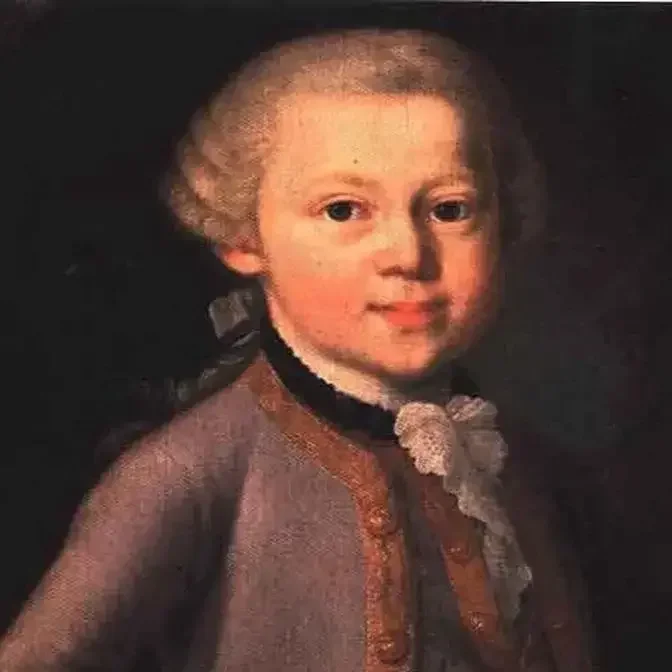
Darius Milhaud (4 September 1892 – 22 June 1974) was a French composer, conductor, and teacher. He was a member of Les Six—also known as The Group of Six—and one of the most prolific composers of the 20th century. His compositions are influenced by jazz and Brazilian music and make extensive use of polytonality. Milhaud is considered one of the key modernist composers.
Please support my channel:
https://ko-fi.com/bartjebartmans
String Quartet No. 14, Op. 291, No. 1 (1948-1949)
Dedication: À Paul Collaer avec trente ans d'amitié
1. Animé (0:00)
2. Modéré (4:21)
3. Vif (12:27)
Quatuor Parisii
Thierry Brodard & Jean-Michel Berrette, violin
Dominique Lobet, viola
Jean-Philippe Marignoni, cello
Description by Joseph Stevenson
Milhaud returned to France after his wartime exile in America for the presentation of his Symphony No. 4 in connection with the celebration of the centennial of the French Revolution of 1848. That evening a friend gave him an ornate nineteenth-century musical notebook, with eight staves per page. In this book Milhaud notated a unique set of string chamber music pieces: two distinct string quartets which could be played separately, or simultaneously as an octet.
One of the most intriguing aspects of the combined work is that the corresponding movements of the two quartets do not always have the same mood and style. For instance, the opening movement of the fourteenth quartet is smooth and legato, with a relaxed quality, even when the instruments break into sixteenth notes. Meanwhile, the fifteenth quartet is staccato, brisk, and nervous. When the two quartets are combined, as Alfred Frankenstein wrote in the San Francisco Chronicle, they "produce an effect of immense depth ... of tonal and contrapuntal involvement compared to which the effect of the average symphony is childishly simple." The fourteenth quartet's second movement, for example, contains a fugue, which when added to a thickly polyphonic development section of the fifteenth quartet creates a texture of extreme density. The octet, therefore, is difficult to play and requires attention and some experience with strongly contrapuntal music on the part of the listener.