
Philipp Fahrbach Sr. - Harmonie-Ball-Tänze, Op. 125 (c. 1860)
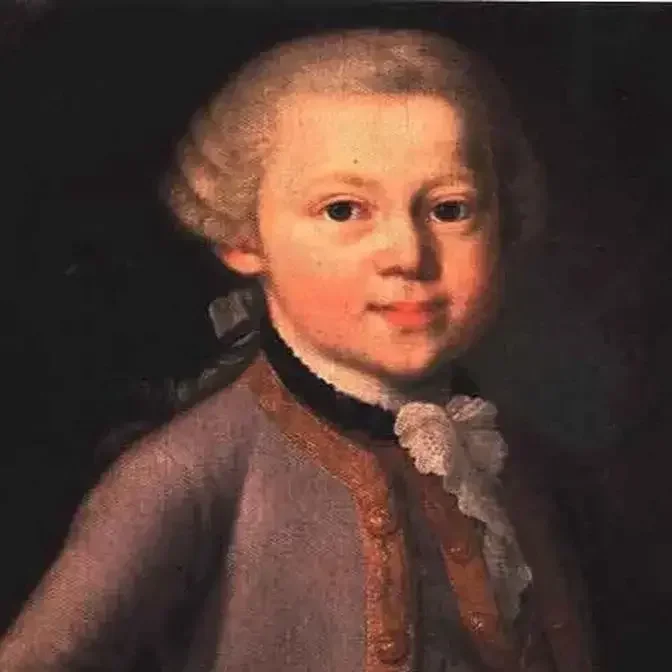
Philipp Fahrbach Sr. (25 October 1815 – 31 March 1885) was an Austrian musician. He was in the orchestra of Johann Strauss I in Vienna and later led his own ensemble which followed the tradition of the Strauss orchestra; he composed dance music and marches. He was also director of a military band.
Please support my channel:
https://ko-fi.com/bartjebartmans
Harmonie-Ball-Tänze, Op. 125 (Armonia Walzer) (c. 1860)
Introduction. Allegro
Waltz 1 (0:11)
Waltz 2 (1:31)
Waltz 3 (2:44)
Waltz 4 (3:42)
Waltz 5 (4:46)
Wiener Johann Strauss Orchester, conducted by Alfred Eschwé
The Armonia Walzer were written for the Harmonie Ball in Vienna, which during the 1860s was held at the Wiener Harmonie — a large, purpose‑built music hall and social venue in the city’s Leopoldstadt district, near the Danube River.
The Wiener Harmonie opened in 1860 as one of Vienna’s most modern and popular entertainment spaces, designed for concerts, balls, and public gatherings. It was located at Kärntner Straße 10 (today’s Kärntner Straße 10, 1040 Vienna), close to the current Kärntner Straße 10/12 area, just a short walk from the Danube and near the Hofburg Palace.
Fahrbach was born in 1815 in Vienna, son of Georg Leonhardt Fahrbach and his wife Karoline née Koberger. His brothers Joseph (1804–1883) and Friedrich (1809–1867) were musicians, and they gave Philipp early musical training. Aged about 14, he joined the orchestra of Johann Strauss I, playing flute; Strauss sometimes consulted him about the instrumentation of his works.
In 1835, he formed his own orchestra. In 1838, when Johann Strauss I was away from Vienna during Fasching, Fahrbach's orchestra benefited from his absence and became popular. From that year, his orchestra often played at royal court balls. From 1841 to 1846, he was conductor with an infantry regiment; on leaving, he formed again his own ensemble. From 1852, after the death of the elder Johann Strauss, his orchestra alternated with the Strauss orchestra at court balls.
In 1856, he returned to conducting the band of an infantry regiment, leaving in 1865. He then formed an ensemble, which became the resident orchestra at Café Sperl. Fahrbach died in Vienna in 1885.
His son Philipp Fahrbach Jr. (1843–1894) was a musician; he conducted his father's orchestra and was a military bandmaster. He composed popular dance music and marches.