
Charles-Marie Widor - (1) Symphonie antique, Op. 83 (1911)
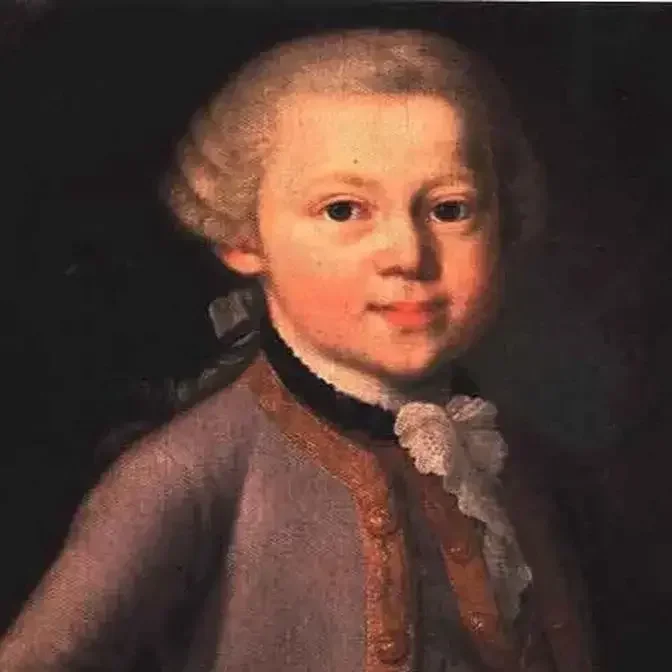
Charles-Marie Jean Albert Widor (21 February 1844 – 12 March 1937) was a French organist, composer and teacher, most notable for his ten organ symphonies.
Please support my channel:
https://ko-fi.com/bartjebartmans
Symphonie antique, Op. 83 for solo voices, chorus, organ and Orchestra (1911)
Part I
I. Allegro moderato (0:00)
II. Adagio (11:11)
III. Moderato (18:12)
Radio Sinfonie-Orchester Pilsen & Domkantorei Altenberg,
Gürzenich Chor Köln, Deutsch-Französischer Chor Köln conducted by Volker Hempfling
Charles‑Marie Widor’s Symphonie Antique (Op. 83) was written for solo voices, mixed chorus, orchestra, and organ. The work is a four‑movement choral symphony in Latin, drawing on the liturgical themes of Te Deum and Lauda Sion.
The instrumentation reflects Widor’s dual identity as both a master organist and a symphonic composer. The orchestra handles the first three movements, while the choir enters in the final movement to sing the Te Deum Laudamus. The organ appears only in the grand finale, leading the choir and orchestra to a majestic close.
The Symphonie follows entirely in the tradition of late-romantic gigantism: in addition to a large orchestra (triple woodwind, quadruple brass, large percussion section, harp, organ, and strings) it calls for a soprano, contralto, and four-voice chorus. With a duration of some fifty minutes, it is much longer than Widor’s other symphonies. The Symphonie antique is a sort of summa summarum, a final culmination of the compositional devices he had acquired over a lifetime.
Given its liturgical basis and the prominence of the organ, the work was likely intended for sacred or ceremonial performance, possibly in a church or concert setting with a choral ensemble. Its premiere on March 22, 1911, was conducted by Widor himself in the hall of the Comtesse de Bearn, suggesting it was also composed for a refined, possibly private or semi‑public audience.
Charles-Marie-Jean-Albert Widor was born on 21 February 1844 in Lyons to a musically renowned family and received his earliest organ lessons from his father. His extraordinary talent soon became evident, and in 1863, at the recommendation of the famous organ builder Aristide Cavaillé-Coll, he was sent to Brussels to study with the celebrated organist Jacques-Nicolas Lemmens and to learn counterpoint, fugue, and composition from François-Joseph Fétis. In 1870 he was appointed titular organist at the Church of Saint-Sulpice in Paris – a position he would hold for a total of sixty-four years. By the turn of the century Widor had written a large number of compositions in almost every musical genre: orchestral works, chamber music, organ works, piano pieces, operas, ballets, incidental music, and sacred works. Around 1880 he took up a secondary career as a music critic and essayist, thereby leaving behind a large number of his thoughts on music. He took over the organ class at the Paris Conservatoire in 1890 and the composition class in 1896. His prowess as an orchestrator is amply demonstrated not only by his own works but by his revised version of Berlioz’s Traité d’instrumentation, entitled Technique de l’Orchestre moderne (1904). It became the standard manual for French composers.
For the whole of his life Widor’s musical language remained beholden to the nineteenth-century tradition of late romanticism. As a result, after the turn of the century, he was increasingly regarded as conservative and a grand seigneur of French music, a living legend and the recipient of a long list of awards and distinctions. He died on 12 March 1937 at the age of ninety-three.