
James Webb Keeps Finding Things That Shouldn’t Exist — And It’s Getting Harder to Explain
The James Webb Space Telescope keeps finding things astronomers did not expect.
A galaxy called MoM-z14 has been spectroscopically confirmed at redshift 14.44, showing us the universe only about 280 million years after the Big Bang. It is brighter, more compact, and more chemically enriched than astronomers expected for such an early cosmic era. NASA says Webb is finding a growing population of surprisingly bright early galaxies, creating an increasing gap between some pre-Webb theoretical predictions and observations.
Does that mean modern physics is wrong?
Not necessarily.
This documentary examines one of the most important distinctions in modern astronomy: the difference between a physical law failing and a model built on that law making the wrong prediction. Webb measures infrared photons. Scientists then use those photons to infer distance, stellar mass, chemistry, atmospheric composition, black-hole mass and cosmic history. Each additional step introduces assumptions that can be tested and revised.
We investigate why early galaxies appear so luminous, how unusual nitrogen enrichment could have developed so quickly, and why some of the first black holes may have begun as heavy seeds rather than ordinary stellar remnants. New Webb observations of Abell2744-QSO1 have strengthened evidence that at least some early supermassive black holes were enormous relative to their host galaxies from very early times.
But Webb’s mysteries do not stop with the early universe.
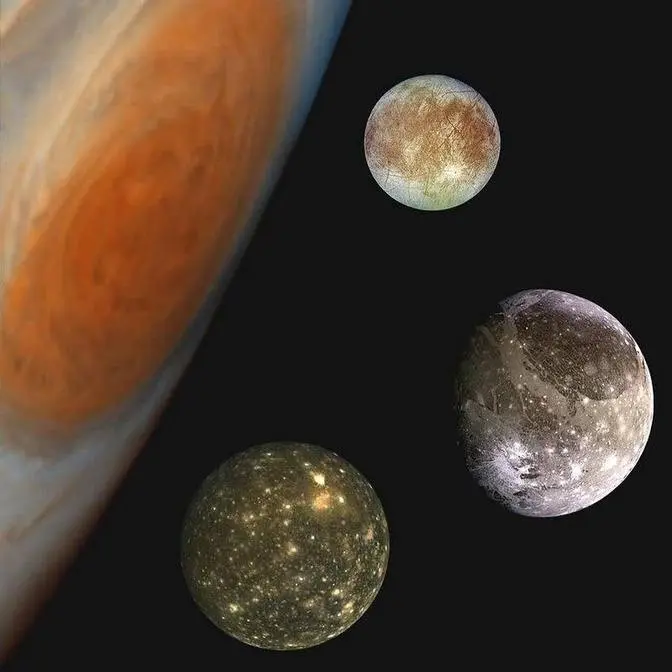
We explore the Hubble tension, the atmospheres of the TRAPPIST-1 planets, the giant-planet candidate around Alpha Centauri A, carbon chemistry on Europa, and the controversial search for DMS or DMDS on K2-18 b. Independent analyses currently find insufficient evidence to call those sulfur molecules a confirmed biosignature.
#JamesWebb #JWST #Cosmology #Universe #Physics #Astronomy #Space