
Josef Strauss - Kakadu-Quadrille, Op. 276 (c. 1870)
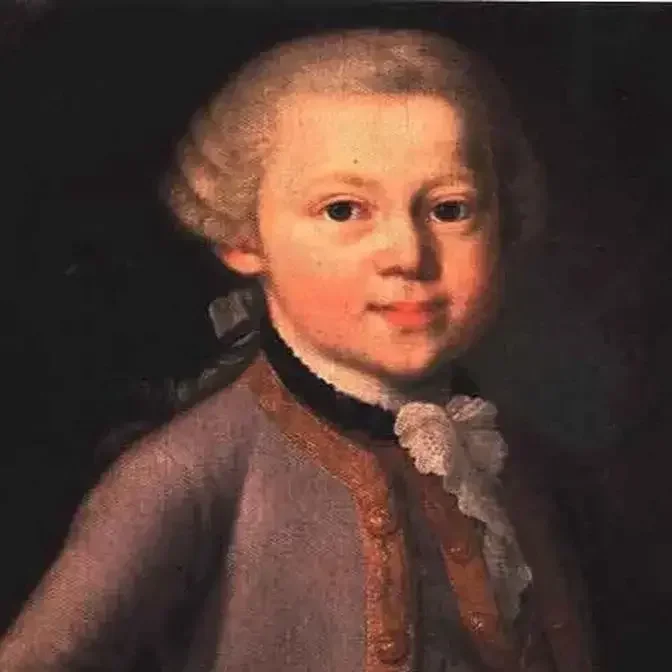
Josef Luckhardt Strauss (20 August 1827 – 22 July 1870) was an Austrian composer. He was the brother of Johann Strauss II and Eduard Strauss. His father wanted him to choose a career in the Austrian Habsburg military. He studied music with Franz Dolleschal and learned to play the violin with Franz Anton Ries.
Please support my channel:
https://ko-fi.com/bartjebartmans
Kakadu-Quadrille, Op. 276 (c. 1870)
Dedication: Johann, Josef, and Eduard Strauss
1. Le Pantalon ("Trousers") (0:00)
2. L'été ("Summer") (0:58)
3. La Poule (The Hen") (1:38)
4. La Trénis (4:02)
5. La Pastourelle ("The Shepherd Girl") (4:41)
6. Finale (6:08)
Budapest Strauss Symphony Orchestra conducted by Alfred Walter
Josef Strauss composed his Kakadu-Quadrille, Op. 276 as a dance arrangement based on themes from Jacques Offenbach’s operetta "Vert-Vert" (1869). The French libretto was by Henri Meilhac and Charles Nuitter. It is situated in an important sequence of fifteen opera works and revivals by Offenbach between 1867 and 1869.
First performed on 10 March 1869 at the Paris Opéra-Comique. Based on the 1734 poem « Vert-Vert ou les voyages du perroquet de la visitation de Nevers » by Jean-Baptiste Gresset, the opera found little success, still ran for 58 nights though, and has only been occasionally revived, although a complete studio recording was released in 2010.
A German production conducted by the composer had some success at the Carltheater, Vienna in February 1870, entitled Kakadu, adapted by Julius Hopp. A Paris revival on 16 May 1870, with Girard in the title role lasted only three nights.
Although an 1874 production which bastardized the score was mounted in London, causing a scandal owing to scanty costumes for the dancers, the first full United Kingdom production of the opera as Offenbach, Meilhac, and Nuitter had intended was at Garsington in 2014.
All the parts of the Quadrille were popular dances and songs from that time (19th century): Le Pantalon was a popular song, the second and third part were popular dances, La Pastourelle was a well-known ballad by the cornet player Collinet. The finale was very lively.
Sometimes La Pastourelle was replaced by another figure; La Trénis. This was a figure made by the dance master Trenitz. In the Viennese version of the quadrille both figures were used: La Trénis became the fourth part, and La Pastourelle the fifth, making a total of six parts
The quadrille was a very intricate dance. The standard form contained five different parts, and the Viennese lengthened it to six different parts. The following table shows what the different parts look like, musically speaking:
part 1: Pantalon (written in 2/4 or 6/8)
theme A – theme B – theme A – theme C – theme A
part 2: Été (always written in 2/4)
theme A – theme B – theme B – theme A
part 3: Poule (always written in 6/8)
theme A – theme B – theme A – theme C – theme A – theme B – theme A
Part 3 always begins with a two-measure introduction
part 4: Trénis (always written in 2/4)
theme A – theme B – theme B – theme A
part 5: Pastourelle (always written in 2/4)
theme A – theme B – theme C – theme B – theme A
part 6: Finale (always written in 2/4)
theme A – theme A – theme B – theme B – theme A – theme A
Part 6 always begins with a two-measure introduction
All the themes are 8 measures long.