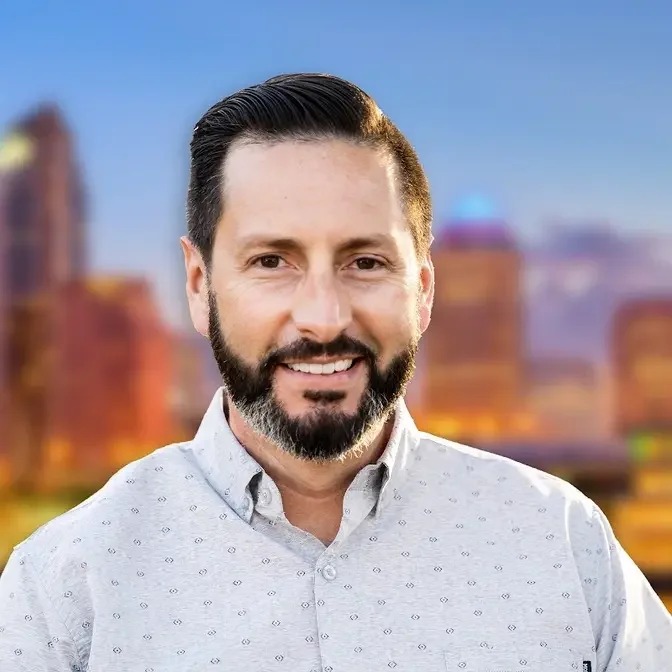
Planning a move to the Tampa Bay area in 2026? Contact Juan Alcala and the Tru Living Group at Real Broker, LLC to make sure you are buying into the future map—not an outdated snapshot.
In this video, Juan Alcala breaks down 5 massive regional developments across St. Petersburg, Pasco County, Pinellas County beaches, Ybor City, and the East Tampa corridor. Discover what stage each project is actually in, how they impact surrounding property values, and how to apply "The Groundbreaking Rule" so you never overpay for unbuilt promises.
If you're considering buying, selling, or investing in the Tampa Bay area, we'd love to be your real estate team of choice!
Juan Alcalá | Tampa Bay REALTOR® | Tru Living Group at Real Broker, LLC 283 families served • $129M sold • 108 five-star reviews on Google, Zillow & realtor.com.
00:00 MASSIVE Projects Shaping Tampa Florida’s Future 02:10 The 86 Acres Nobody Can Agree On 04:47 The Biggest Thing Being Built Here Isn't in a City 07:45 The Beach is Coming Back Bigger 12:55 Tampa's East Side is Quietly Becoming Walkable 15:20 The Groundbreaking Rule 17:19 Your Next Step
If you're moving to the Tampa Bay area,
you've probably got a short list by now.
Three or four communities saved on your phone.
And some of you have an actual spreadsheet.
But here's the thing about those lists.
You probably built it off the map that exists today
and left out the map that is going to be in the future.
Because right now there's north of $10 billion
of construction and committed developments
moving through the Tampa Bay area.
And some of it changes which of those communities
is the right fit for you.
So here's what we're gonna be covering today.
Five projects.
And for each one, what it is, what stage it's really in,
and what it does to the home prices
in the neighborhoods around it.
And that last part is the one that nobody ever really covers
and it's the only part that changes what you should do.
One of the five of these projects is already open
and most of you have probably never heard of it.
And one of them I'm gonna tell you
not to pay an extra dollar for.
Now over the past five years,
I've been able to help over 200 families
relocate here to Tampa Bay.
And the ones who struggle almost never picked a bad house.
They picked a community that fit the version of this area
that existed when they started looking.
Which for most people is anywhere from one year to three
to as many as five years out.
But by the time they closed on their home,
the community had changed.
And that's the real problem.
Houses are easy.
You can find them on Zillow, Realtor, Redfin.
We get paid to make them look beautiful.
But those communities,
the place where you actually have to coexist
with other people, that's what really has an impact
on whether something feels like home or not.
And the reality is a community isn't a fixed thing, right?
And as we're gonna go through today,
these projects are under construction
and constantly evolving.
And if we've never met before, my name is Juan Alcala.
And a little over seven years ago,
my wife Kate and I packed up our family of five,
sold almost everything we owned,
moved 1200 miles south here to the Tampa Bay area,
and we have been loving it ever since.
So I've done the exact thing you're doing right now.
Picked a spot on a map from thousands of miles away
and hoped we'd made the right decision.
So I know exactly what this feels like.
And as far as the projects we're covering today,
one of them I'm genuinely torn about,
and I'll tell you which one it is when we get there.
And I'm also gonna share my perspective
and how they're going to impact you
on the other four as well.
So let's start where people are arguing
because that's usually where the real information is.
And if you know a Tropicana field,
that's where the Tampa Bay Rays play.
What you might not know is what the city
just decided to do with the 86 acres underneath it
when the Rays leave for Tampa.
July 2nd of this year,
the mayor picked a team called the Byrd bid, $8.1 billion.
It was the highest of nine bids the city had to choose from.
Now here's the plan.
Plan is to build approximately
3,600 affordable workforce housing units
over about 15 years.
It's a pretty long time period.
And make sure you read that one carefully
because it's about half the land on this site.
The other 1,800 goes elsewhere in St. Pete,
plus a 13 acre park and a walking corridor
called the Legacy Link running over to the deuces.
And here's a quick breakdown
of what workforce housing means
because I know this can be one of those polarizing terms.
But what it really means is it's price
for people earning around the median salary.
We're talking about teachers, nurses,
the guy who fixes your AC.
Not subsidized, not luxury, it's in the middle.
Now here's the part that no one is saying out loud.
Nothing is approved yet.
What started in July is roughly a year of negotiations.
A term sheet, then community benefits agreement,
the bidding contracts back to the city council.
And the trough doesn't even come down
until in the mayor's words,
some point in the near future after 2030 or so.
And those renderings we see are beautiful,
but they're also a project that hasn't broke ground
or been approved yet.
But the reason I led with this one isn't the $8 billion.
It's the fight for the land beneath it.
See, in the 1980s,
this was a predominantly African-American neighborhood.
And when the land was cleared for the stadium,
there were promises made
about what the community would get back in return.
And as you probably guessed, most of them didn't happen.
And that's ultimately why this project
has the shape it does.
And why the city council split with the mayor in February
over slowing down to talk to the community first.
Now I'm not here to tell you who's right.
I'll just tell you what it means to me.
And as someone who helps people pick where they live,
this is a city that argues in public
about who the neighborhood belongs to.
And honestly, I love that.
It's not dysfunction.
Because the communities that don't have arguments
are the ones where things just happen to you, not for you.
And at the end of the day, let's be honest, y'all.
Most people understand that it's usually about the money.
And if you look at the communities
that already touched this project,
the Deuces, Campbell Park, Methodist Town, and The Edge,
those are the areas that typically
see the greatest impact first.
Because downtown St. Pete is already priced.
But those communities next to the project
is where the move actually happens.
Which brings me to the next project
that proves that point.
Except it's not downtown and it's already open.
And right about now, some of you are thinking,
I'm not moving downtown, I'm headed to the suburbs.
So let's talk about the biggest project
actually open and under construction in the region.
It's a cancer research campus
and a treatment center in Lando Lakes.
Right now, Moffitt is building
a second campus called Sparrows.
775 acres, $1.1 billion committed.
The long range plan is around 140 total buildings,
16 million square feet.
And it's already open.
The outpatient center started treating patients
January 20th of this year.
18 exam rooms, a 22 bay infusion center,
four CTs, and two linear accelerators.
That's all fancy term, if you're in medical,
you know exactly what's going on out there.
And as of this spring, another 600 million or so
was under active construction.
And this sits inside of a brand new community
called Angeline.
6,200 acres in total, roughly 35,000 people
once it's all built out.
And it's on pace to bring anywhere from 4,000 to 11,000 jobs
depending on who's counting and by when.
And we've already helped several families
relocate to that area because of employment at Sparrows.
They were researchers and in medical, of course.
Now, if you're wondering how much it costs
to live in the area, let's do some quick math
because I think it'll surprise you.
And here's why.
If I told you one county just landed a billion dollar campus
with thousands of jobs attached
and asked which county is the hardest to buy a home in,
you'd probably say it's obvious,
it's gonna be Pasco County.
But here's the thing, it's the exact opposite.
And if we take a look at July's numbers,
Pasco County is the only county in the Tampa Bay area
where homes are taking longer to sell
and there's more to choose from than there was a year ago.
It typically takes about 43 days
for a home to go under contract.
There's about four and a half months of inventory
to choose from, and the median home price there
is only $390,000.
That's almost $60,000.
Meanwhile, in Pinellas County,
where Clearwater and St. Pete Beach are,
our marquee project hasn't even signed a term sheet yet.
The median home price here is $469,000,
up almost 8% from a year ago.
Homes are going under contract in about 34 days
and inventory is down almost 27%
from the same time last year.
We're talking about one region where home prices
are headed in opposite directions in the same month.
So in real dollars, the county with the biggest
brand new job engine in Tampa Bay
is also the county where you have the most room
to negotiate, which ultimately means
you have more houses to pick from,
more time to think about it,
and sellers are competing with brand new home construction
and builders right down the street.
And what all that translates to is real leverage for you
if you're considering moving to that area.
But if you're moving here to be within 30 minutes
of the grandkids and the grandkids don't live up that way,
then you can ignore everything I just said
because proximity to friends, family, and to work
usually beats out almost every other number.
And here's where things start to get really interesting
because there's a part of the Tampa Bay area
where the map isn't being redrawn by what is being built,
it's being redrawn by what is being rebuilt.
Now, if the beach is on your list,
and for a lot of you, it's the whole reason
you're looking here to begin with,
two things changed this year
that you're gonna wanna know about.
First, the sand.
Yes, I'm talking about the white, sugary sand beaches
that we have here.
For 11 years, Pinellas County and the Army Corps
of Engineers were deadlocked.
And this is because the Corps wanted permanent legal access
across beachfront property.
And a lot of homeowners said, absolutely not.
So federal money for rebuilding the beaches just stopped.
And on May 29th of this year, that finally ended.
The Corps agreed to take temporary access instead.
And they've reinitiated that federal cost share
back for Sand Key, Treasure Island, and St. Pete Beach.
Now, this is a ways off.
The next federally funded sand goes down in 2030.
And then it's scheduled every five to six years following.
And for those of you who are like,
what are you talking about, Juan?
Yes, our beaches aren't natural.
Yes, there are beaches out there
and they've been out there for eons, no doubt about it.
But the way that they look today, that is done by man.
And we've got to keep them up.
It's called re-nourishment.
It's a whole thing you can dig into it.
But if you love our white, sandy beaches,
that's how they get that way.
And as a matter of fact,
Pinellas County just wrapped up $125 million
emergency re-nourishment this past February.
And that was necessary due to the damage
that we faced from Hurricane Helene and Hurricane Milton.
But here's what still has to happen.
The Army Corps of Engineers still needs a sign-off
from 100% of the beachfront owners.
And as of May this year, about 70% of Sankey had signed,
but three out of 10 still haven't and are holding out.
Now, one of these towns already cleared
its own version of this hurdle.
And in March, Treasure Island voters
amended the city charters
so the commission can grant a long-term beach easement
on city-owned land by a single majority.
Before that, it took four fifths of a vote
and a trip to the ballot box.
A lot of complication, of course,
getting just sand poured back on your beach.
But what it doesn't touch is a single private owner.
And the Sankey holdouts are homeowners, not the city hall.
So if you read that for what it is,
the town is clearing friction that it actually owns,
which tells you something about
whether the beach keeps its sand or not.
And if the beach is important to you,
you're gonna wanna look this up.
It's public record.
Now, the second thing is the rule that costs people money.
If a home in a flood zone gets damaged
and the repair runs 50% or more
of what the structure was worth before,
you can't just fix it.
You have to bring it up to the current flood code,
which usually means raising the home 13 feet in the air.
And this isn't something that you can get around
by doing the work in pieces.
The total repair costs all gets added in.
But there is good news for people who are rebuilding.
There's a state program called Elevate Florida,
which covers between 75 and 100% of eligible cost
of that work that you're going to do.
And when it comes to hurricanes and storm damage,
I often share our story
because our home was damaged
during Hurricane Milton as well.
And we did a lot of the right things.
We're a mile and a quarter away from the Gulf.
My home is in a non-flood zone, a non-evacuation zone.
The elevation is 43 feet above sea level,
which in Florida is essentially a small mountain.
And that elevation is the entire reason
that my insurance bill looks the way it does.
Our home is a four-bedroom, two-and-a-half bath
with a pool, like I said,
a mile and a quarter away from the Gulf beaches.
And our insurance rates are very reasonable.
When we first purchased the home, they were about $2,800.
We're sitting at about 2,900 today.
And we weren't required to have a flood policy in place.
Now, we do have a flood policy in place
because our home was damaged from the hurricane.
It wasn't damaged from the wind necessarily.
It wasn't damaged from storm surge.
Because again, we're 43 feet above sea level.
But what happened was,
is we got 12 inches of rain in about six hours.
And my home is the lowest lot in our neighborhood.
And if you've ever heard the old adage
that water always wins, well, we were the house in the path.
So we had to renovate.
So I know exactly what this feels like.
But if you honestly think about that,
$2,800 a year to live less than a mile
and a quarter away from the Gulf, right?
I live on a peninsula, on a peninsula in the ocean.
That's a very reasonable cost
for the lifestyle that we get in return.
But if you take that exact same house
and put it on the beach,
I assure you that our insurance rates
will look entirely different.
So when it comes to coastal living,
you want to make sure you're doing your diligence.
And if you put all that together,
here's what's been happening on our beaches
over the last two years.
Those small homes are being replaced
by very large luxury properties.
And it's not just the houses.
The Palm Pavilion in Clearwater Beach,
which was 30 rooms, sold for $23 million.
It is now becoming a nine-story, 144-room resort.
Now, is that a good thing or a bad thing?
Honestly, I'm torn.
I know a lot of locals are.
But here's the thing.
A rebuilt, elevated, insurable beach condo
does beat what was there.
But that can also take away
from that casual flip-flop beach town
that some of you fell in love with on vacation years ago.
And the reality is, in specific places,
that version is going away and it's not coming back.
So if that casual feel is the actual reason
you want the beach,
you've really got to do your homework with that map,
not just about where it is today,
but where it's going as well.
So that's three projects down so far.
The next one has actual steel
and actual people already living in it.
Now, this one's for everybody who tells me,
and this is a lot of you who tell me this,
I don't want to live somewhere
where I have to drive to the strip mall for everything.
And I hear this constantly from our clients
relocating from the Northeast.
There are three really cool projects happening right now
between Ybor City and the Channel District,
and they all connect.
Now, Gasworks is the furthest along.
It's 50 acres, and it built out roughly 5,000 homes
plus a half million square foot of office space.
The first residents started moving in last year.
Right now, you've got Olivia, which is 376 units.
This thing's going to top out and finish
somewhere around the summer of 2027.
You've got the Louisa, which is 140 units,
finishing the spring of 2027
with the Duckweed Grocery downstairs, which is pretty cool,
and an office building that already topped out
with Grow Financial as the anchor tenant.
Now, Ybor Harbor is the waterfront piece.
It's 33 separate acres.
And in May of this year,
the Tampa CRA approved $35 million in infrastructure money.
The Tampa Bay Sun Football Club unveiled
a 15,000-seat waterfront stadium designed for it
with no cost, no funding plan, and no start date.
So take that for what you will,
but the group that has proposed it
has done an incredible job in developing Tampa
over the last decade,
and I think that the odds are in their favor.
And what about Water Street?
Well, it just started its second phase,
nearly a billion more dollars pouring into the area.
The infrastructure work is going on today,
and the towers are planned to go vertical in 2027.
But here's a part that I actually care about as a local,
and it isn't the towers.
This July, the city closed agreements with CSX
for a rail crossing on East 4th Avenue.
Came in at $921,000, and the developers reimbursed the city.
So what's really cool is this isn't even a public cost,
and if you stack that up next to a billion-dollar tower,
it really becomes nothing more
than a rounding error to the developers.
And that one crossing is gonna unlock
almost two miles of new public streets,
two more rail crossings, and a public park.
And to be honest, that's really the whole thing.
Towers get announced,
streets are what make a place walkable.
So when you're sizing up a community to live in,
don't just count the cranes in the air.
You're gonna wanna count
whether you can get across it on foot,
whether you're gonna need a car,
what does your travel plans and your daily life look like?
And if walkability is what you want,
but downtown Tampa or St. Pete is out of your price range,
those streets are the closest thing
to a ground floor version of it in this region.
And that brings me to the last project,
and this is the one I want you to be very careful with.
In the comments of my videos,
someone says a version of this just about every single week.
And it sounds like this.
I'm looking to move near
where the train's going to come in.
And by train, they mean the Bright Line,
Miami to Orlando as it currently stands,
with the Tampa extension
that's been talked about for years.
And here are the three things that I wanna cover on it.
What it is, a proposed extension, what stage it's in,
it's proposed only, no construction is taking place,
and no station has actually been picked.
No state or federal money has been committed to build it.
And as of the last confirmed reporting I have
from early August of this year,
Fitch says there's a very high probability
the company cannot fund its debt payments
even before January of next year.
So if your plan was to use the Bright Line out of Tampa
to maybe commute to Orlando
or to travel around the state of Florida,
you really wanna do your homework
before you make a commitment to this area.
Listen, I'm not rooting against it.
I'd love to ride the Bright Line.
I'd love for my kids to ride it too.
And if you've ever driven the I-4 corridor
anywhere near rush hour, you know exactly why.
But here's what I really want you
to take away from this video,
and I call it the groundbreaking rule.
Never, and I mean never pay today's premium
for a project that hasn't broken ground.
Not a rendering, not an announcement,
not an approved plan,
ground broken, steel up, workers on site.
And if you run the five projects
we discussed through that lens,
Moffitt is open, treating patients, real, price it in.
And if you look at gas works over in Ybor,
the steel is up, people are living there, that's real.
If we look at the beach, the emergency sand is down,
but the federally funded work is in 2030,
so call that half.
The gas plant district, $8 billion
and one year of negotiations still ahead of it.
Do not pay for that today.
The bright line, it's not close.
As it stands today, there's gonna need
to be some sort of miracle to pull that off.
And the groundbreaking rule is a great way
to approach this.
It gives you five completely different answers
and perspectives on how to approach your move.
All right, so let's tie all this back to your short list.
Now what I'm not saying is any
of what you've already done is wrong.
I'm saying it's a snapshot,
and this region is moving very fast.
Most likely it's moving faster than you probably know about.
And here are the facts.
The county with the biggest job engine
is the easiest one to buy in right now.
The beaches are coming back taller and more expensive
than the one you remember.
And the walkable neighborhood that some of you want
is being one rail crossing at a time.
And none of that shows up on Zillow or Realtor.com, right?
So here are your next steps.
Take your actual short list and run each community
through the groundbreaking rule.
Take into account what's being built near it
and ask yourself, has it broken ground yet?
And if you can't answer that in 10 minutes
on the county website,
that's your sign to book a call with me and my team.
We offer a free buyer strategy session.
You can find the link in the description below.
And on that call, what we'll do is jump on Zoom,
open Google Maps, and go through your list together.
What's coming, what's real,
and which of these communities fits
how you actually want to live here in Tampa Bay.
That strategy session is your step-by-step roadmap
on how to make the right move the very first time.
And I've got two questions
that I would love to hear your answers to in the comments.
Which of the five projects surprised you the most?
And the bigger question is,
is Tampa Bay becoming a better version of itself
or losing some of what made people
want to move here to begin with?
And I think I'm just like any other local.
I go back and forth on this all the time,
but I'd love to know what your thoughts are.
And if you've gotten any value out of today's video,
don't hesitate to hit that like button
and make sure you subscribe
because we put videos out like this every single week
that help you make a qualified decision
about moving here to Tampa Bay.
As a matter of fact, I'm gonna put two more up here.
As always, my name is Juan Alcala
here with The True Living Group.
Appreciate you watching, and we'll see you in the next one.