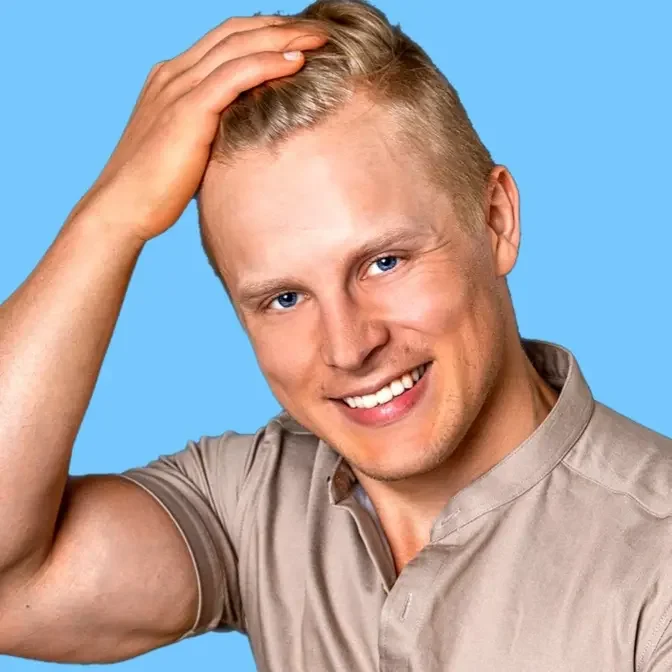
Dr. Steven Austad is a biologist and leading expert on the evolution of aging, known for studying why different animal species age at dramatically different rates. Before entering science, he worked as a lion trainer in Hollywood.
Timestamps: 00:00 Intro 00:25 How Dr Austad went from a lion tamer to aging research 03:20 Why animals life so different lifespans 07:25 Why natural selection selects for shorter lifespans 08:40 What limits human lifespan 12:10 Bon Charge sponsorship 13:00 Is the first person to live to 150 is already alive 17:40 How can we make humans live to 150 21:40 mTOR pathway and lifespan 25:45 Rapamycin 29:15 Is protein restriction a viable longevity strategy 33:10 Is calorie restriction a viable longevity strategy 36:08 Metformin 38:20 SGLT2 inhibitors 40:30 Are billionnaires taking extending their own lifespan seriously 43:30 Gene editing 45:15 Can common supplements extend lifespan 48:20 How to know if aging research is working 49:20 Biomarkers of aging 52:20 How AI will transform aging research 53:30 What should people prioritize to extend their lifespan 57:30 Stay up to date with Steve’s research
P.S. This is not professional medical advice and should not be taken as such. The creator of this video is not held accountable for your health. Consult your doctor first.
AI Generated·May contain errors
Video Summary
AI Generated
Dr. Ouster explores the evolutionary and biological drivers of aging, arguing that lifespan is shaped by environmental risks and reproductive strategies. He discusses the potential to extend human life to 150 years through a combination of pharmaceutical interventions, AI-driven biomarkers, and optimized lifestyles, while emphasizing the critical distinction between extending lifespan and maintaining healthspan.
It's so counterintuitive how evolution could have produced animals that age,
and then how they could age at such different rates. The thought is that not that longer life
or shorter life is selected for, it's the reproductive pattern that is selected for,
but a consequence of becoming an adult rapidly and breeding very rapidly is that you age rapidly as
well. Dr. Ouster, welcome to the show. Thank you. It's nice to be here. Yeah, I'm excited to have
you on the podcast. You've, you know, been in the field of longevity and aging research for decades,
and we're going to go into all the details of that in our talk today. But, you know,
it's very interesting to always hear where people get into the field of aging research,
and you have a very interesting background that you were initially like a lion tamer in Hollywood,
which is completely like a different field. But how did you go from being a lion tamer
into, you know, starting to research biology of aging? Yeah, it was a very complex journey,
let me say that. So when I was training lions, I got very interested in the science of animal behavior
because of self-preservation. And when I decided I didn't want to spend the rest of my life in
Hollywood, I decided that I would like to study animal behavior more formally in an academic
situation. So I went to graduate school, got a PhD, and behavior still was, you had no thoughts
about aging research. But as part of a postdoc, I was working in South America, and I got involved
in a project studying opossums, which are small marsupials about the size of a house cat.
And I discovered quite by accident, even though the project was not involved with aging,
that they aged really fast, that these things that were the size of a house cat
aged as fast as a mouse. And that was such a shock to me because I just assumed they would,
you know, live 10 or 15 years like a house cat, that it captured my interest immediately.
And I decided, and in fact, the project I was working on did very, very well. I ended up
publishing it in Nature, but by the time it got published, I had completely lost interest
in that topic and had shifted my interest to aging. And it was mainly an evolutionary
issue. I thought it's so counterintuitive how evolution could have produced animals that age,
and then how they could age at such different rates. That's a question that still
attracts and intrigues me. So that's been a long, long time. I used to get,
as soon as I thought I'd figured out a topic, I lost interest in it. So after these many decades
that I've been in the field, I still don't feel like I've really figured out everything about
aging. So it keeps my interest. It's endlessly fascinating.
Yeah. I mean, as you said, there's so many different lifespans in animal species. You
know, there's bowhead whales that live over 200 years, shark, Greenland sharks, up to 500 years.
And then there's mice who live only a few years or less than that. So there's a huge,
I guess, inequality or imbalance in how long some animals live. So maybe, yeah,
we can start with that. Why do opossums then live a bit shorter?
Well, there's a couple of ways to answer that. There's a couple of levels at which to answer
that. One is at an evolutionary level. What we know from a lot of comparative research is that
animals that live in particularly hazardous environments, environments where they're
quite likely to get killed by a predator or a climatic catastrophe, those animals age quickly.
And conversely, animals that live in safe environments where they're unlikely to be
killed by random forces tend to age slowly. And opossums are vulnerable to an enormous amount
of predation. In the natural world, about 80% of them die from predators. And so I think that
that is a pretty complete explanation about why they're so short-lived. They just don't have
the weaponry, they don't have the escape capability of a lot of other animals that are
about the same size. Now, on the level of mechanistically, what goes wrong,
that we don't really know about. We just know that it happens fast and it happens early.
They actually do seem to have a fairly robust immune system, which is surprising to me.
For instance, opossums are resistant to the bites of venomous snakes,
so rattlesnakes and all, they can get bitten by them and they're just fine. So we're not really
sure why they get cataracts and cancer and arthritis and all the other things that happen
to aging mammals so quickly. And there really isn't so much interest in finding out why
animals that age fast age fast. What we're really interested in these days is animals that age
slowly and how to make them age even more slowly, right? So I never was really motivated to dig into
that. Now, the first study that I did that was specifically on aging in the opossums,
I compared the lives and the aging of animals in a mainland population with animals in an island
population. The idea being on the island, there was a lack of predators of the opossums,
and the opossums have been there for about 5,000 years. And so if this idea about the
safety of the environment leading to longer life, then the hypothesis was that the opossums on the
island should age more slowly. And in fact, that's what I found. They did age more slowly.
Now, that is a question that I would really like to know the answer to. Unfortunately,
it became very difficult to study those animals. And since I did that study, they've actually
they've been animals introduced from the mainland into the island. And so now the
mainland animals that are short-lived and the long-lived, they're breeding with one another.
So the kind of unique genetic configuration that allowed the animals to be 25% longer alive than
that has been diluted out by the interbreeding. So it's really too late to study it. Now that
we have modern tools, there's lots of things I could have done at that time. But at that time,
I mean, we didn't have an opossum genome. We didn't have many of the tools we have these days.
Right. Yeah. I mean, it makes intuitive sense that even in humans, like in the past history,
the average lifespans were shorter because there was a greater likelihood of getting killed in
warfare or some plague or something like that, famine, et cetera. So there's an outside force
that is shortening the lifespan. But even in captivity, the opossums would live quite short
still. So it's something that natural selection has selected for them to be slightly shorter-lived
because of the historical pressures they had in their environment that forced them to breed more
rapidly and pass on their genes earlier in life, which then meant that they didn't need to live
that long, if I'm correct. Right. Yeah. I mean, that's exactly the thought. And the thought is
that not that longer life or shorter life is selected for, it's the reproductive pattern
that is selected for. But a consequence of becoming an adult rapidly and breeding very
rapidly is that you age rapidly as well. Yeah. Yeah. What about humans then? So we do have quite
long lifespans compared to many animals. And we are also in a situation where we've pretty much
minimized predation risk in a literal sense. We're not getting preyed upon from big cats,
etc. But what is the human, what limits our lifespan? So the scientists think that,
okay, it's like 120, 110, 150, something like that. Yeah, that's a good question. So it's very true.
Humans are the longest live mammal that lives on land, right? So we are really exceptional,
exceptionally successful at aging already. I think a lot of that has to do with the fact that
even in older times, we were protected from a lot of random danger by our sociality.
We lived in large groups. We cooperatively hunted. We protected one another. And so I think that's
why we live as long as we do. I think we had a propensity to do it. And so far as we know,
even a long time ago, there were some people that lived, let's say, into their 80s or maybe even
as late as 90. But now we've combined that with modern hygiene, modern medicine,
all the things. And so now we live even longer. Now, why we don't live 150 or 200 years rather
than 100, that is a very good question. And certainly part of it probably has to do with
the fact that we don't reproduce beyond about the age of 50. And that seems to have been fairly
consistent over time. Now, again, this doesn't mean that we can't develop means to live longer.
It just means that nature has not provided us with those means. But we have improved
on nature in many aspects of our lives. And so there's no reason I think we can't
improve on the pattern of aging that nature has given us.
It's sometimes seen that people who are able to have children a bit later, so like women in their
mid-40s or something, that if they are able to have children, then they also are more likely to
reach the age of 100. So there's probably that healthier or women who age slower maintain the
reproductive capacity for a bit longer than the average woman. So that does mean that having
children directly makes you live longer, but it's that you age slower or you have better health,
which also carries over to greater longevity. Yeah, which raises an interesting question.
That reproduction stops, will the age of menopause lengthen over the next number of generations?
Because now people don't die very much before that age, and there's certainly evolutionary
advantages to having more children, but it's all complicated, of course, by contraception. So now
we're no longer trying to have as many children as possible.
I want to take a quick break to let you know about my favorite wellness devices,
which are the Boncharge red light therapy devices. You've probably seen many of your
favorite longevity influencers using these red light therapy devices, but do they actually work?
Yes, they do. Red light therapy has been shown to have many benefits on skin anti-aging,
hormone optimization, pain management, and even exercise performance. I use my device every day
for 15 minutes, especially during the winter months when there's not much sunlight. It
increases my energy in the morning and makes my skin glow. Just check out the testimonials on the
website for the before and after pictures of other people. Most red light therapy devices
don't have the right wavelengths of light, which might mean you're not getting the claimed benefits.
Boncharge uses the exact wavelengths of light used in research, and they also have near-infrared light
that's beneficial to the joints. Head over to boncharge.com and use the code SIM for a 15%
discount. You also made a bet that a person who's going to live to the age of 150 is
already alive today. Do you still believe in that?
Yes, that's interesting. I made that bet about 25 years ago. At that time, the oldest person
with a good birth and death record was Jeanne Calment, 122 years and 165 days. Now, 25 years
later, she's still the oldest person that ever lived. In fact, no one has approached that age
again. The person that I have the wager with, Jay Olshansky, takes this as wonderful evidence that
I'm going to lose the bet that no one will live to be 150. I'm still confident that I'll win.
The reason is that, first of all, only one person has to live to be 150 years old. It's not like
every life expectancy has to reach that. That's only about 20% longer than Jeanne Calment lived.
We have lots and lots of ways in the laboratory to make animals live 20% longer. I think a lot
of what we find in the laboratory will turn out not to be relevant to people because we're already
so long-lived, but I think some things will turn out to be relevant. It seems to me that
an extra 20% in longevity of the longest-lived people is not that big a stretch.
The other thing that makes me still confident that I'm going to win is a lot of the work that
we've done with laboratory mice has shown that even if some therapies are started relatively
late in life, they can still have a big impact on longevity. Rapamycin, in the best case, has been
shown to extend the life of mice that were the human equivalent of 70 years old or older.
That means that people aren't going to have to start taking whatever might be when they're 20
or 25. In fact, probably people wouldn't do it anyway because when you're 20 or 25,
you think you're never going to age anyway.
But if people start taking these things in their 40s and the people that were alive in
2000 are not to their 40s yet, they could still have a big impact. So I'm still convinced
that I'm going to win this bet. Is there a deadline?
Yeah, 2150 is the deadline. The year 2150, there has to be at least one 150-year-old person,
and that person has to be cognitively intact. That person has to be
cognitively intact enough to carry on a conversation. They can't be a vegetable
or in some sort of hibernation phase. So it has to be a person that you could have a conversation with.
I think the current longest-living person is a woman from the UK. She's 117. So that's not that
far away. I call this the most dangerous job in the world, being the oldest person,
because nobody keeps the job for very long and nobody gets out alive. So we've had an increasing
number of people live to 116, 117, a few 118, but there seems to be something that happens around
118, 119. So no one except Jeanne Calment has lived even 120 years, which is kind of shocking.
Yeah, the second longest was a Japanese woman. She was 119, so almost.
Exactly. In fact, I think of the top 10 oldest people ever, I think four of them are Japanese.
So sometimes people ask me, well, who's going to be your winner? Who's going to win the bet for you?
And I said, well, it's going to be a woman for sure, because women always live longer than men,
and most likely a Japanese woman, since they live the longest now.
Yeah. So how can we achieve that? What are you working on to make that happen?
So I think the most promising things right now, and I emphasize right now because I think
that scientists are very bad at predicting the future. Anytime somebody wants to look foolish,
just make a prediction about where science will be 30 years from now. But I think right now,
the most promising things are probably drugs combined with lifestyle. It's something that
we don't do well in animals. So I've spent my career working mainly on animals,
sometimes animals in the wild, sometimes animals in the lab. One of the things that we don't do
well in the lab is we don't allow animals to live the healthy lifestyle that they would
live in. They have limited opportunities for exercise. They have limited mental stimulation.
But I think one of the things that we're going to find in people is that some of the drugs,
if they work to extend health in people as they did in animals, if we combine that
with optimizing lifestyle, then I think that's where the big advances are going to come.
I also think that GLP-1s look very promising at this stage, and my thought is they're going to
be developing better and better GLP-1s that have fewer side effects. And these things just strike
me as showing the promise that aging research has. And if it's not these, we'll find new drugs.
I mean, I think AI is going to be very, very helpful in finding new drugs. And I also think
that the things that are going to cause us to stay healthy the longest are probably going to be a
because all drugs have side effects. We may take one drug for this. It may be great for the brain,
but bad for the kidneys. But we'll take another drug that will protect the kidneys from whatever
damage that is. So no kind of sidestepping lifestyle, that there's not going to be any
magic pill that replaces exercise, for example? To a certain extent, perhaps.
But I still think that exercise has so many benefits that it's unlikely that all of those
benefits will be replaced by a pill. Right. So right now there is no pill,
so the best thing to do is the lifestyle and exercise until we make a pill.
And we may come up with better and better dietary regimes. Right now, to me, there's
a lot of interest in the various sort of fasting regimes, time-restricted eating,
those sorts of things. I don't think we have yet figured out the best pattern for, let's say,
eating or the best nutrition. And again, my thought is that's probably going to differ
from person to person anyway. So this is something else that we're doing is because of
all of the omics that we have now, we'll probably be able to design the best drugs and the best
lifestyle for you versus for me or for somebody else. And again, that's something that we don't
really do in experimental animals, but it's something that we could do in people. And I
think we will do in people. Right. What are some then major targets with pharmaceuticals?
Molecular targets? Yeah. Well, I mean, you know, mTOR is clearly one of them.
It's going to be really interesting to me to see whether the mTOR results also work for people.
They seem to be very robust in animals. And I mean, we're an animal, and so maybe,
but we're a different animal. And this is one of the things that I think
aging research where they've sort of taken a wrong turn, which is that we use mostly
worms and flies and mice for experimental animals. All of those are very, very short-lived
in rapid aging. For a nematode, C. elegans is very short-lived. For insects, flies are very
short-lived. And for mammals, mice are as unsuccessful a species at resisting aging damage
as you could imagine. So I've always thought it kind of strange that we've used animals to study
aging that do the worst job at doing it. And so just because we're capable of making a mouse that
lives two years live three years, that doesn't necessarily mean that we're going to be able to
use the same approach to make people who live 80 years live, let's say, 120 years. It may require
something different. And that's something that we're not going to learn if we confine our
research to mice and worms and flies. And so I think we really need to expand the number of
animals that we work with and particularly focus on some of the animals that are more successful
than people are at aging. And you mentioned some of them earlier, bowhead whale, a Greenland shark.
There are a number of others that probably will give us insights that we won't get from studying
mice. Yeah. It's always one of the arguments in discussions about longevity is that they did it
in mice, but it's probably not going to happen in humans. I agree to a certain extent, but at the
same time, all these different pathways of aging that we know affect longevity, they are quite
conserved and common across different species, such as the mTOR pathway and IGF-1, et cetera.
And I think that this is what the model organisms are good for. I think they're good for
identifying the targets that we need to address. I don't think they're so good at telling us how to
better address those targets, but I do think, yeah, you're right. I mean, mTOR works in pretty
much everything, although we never have really looked at long-lived organisms to see how it's
worked. But yeah, I think that these things, but the other thing, there are going to be trade-offs,
you know, trade-offs to everything. If we make people live longer, there are going to be things
that, you know, it might compromise reproduction, it might compromise immune. I mean, we already
know that most of the things that extend life in experimental animals are not good for muscle,
right? So we're going to have to figure that out. You know, rapamycin is not good for muscle.
Metformin is not good for muscle. So again, this is one of the reasons I think we'll probably have
these combination therapies, you know, something to stimulate muscle building at the same time
we're inhibiting mTOR, but we'll see. Yeah. So what do you think about rapamycin then?
There's a lot of, you know, talk about that being... Yeah, I mean, I think it's a very
interesting drug and it's certainly got the most robust effects in our experimental animals. But
I have to say, but their paper just came out a few days ago showing that in flies,
if you fed them one diet, rapamycin extended their life. If you fed them a different diet,
rapamycin actually shortened their life. And that just points out the fact that we're studying all
our animals under one condition. You know, all of our mice are eating the same food.
All of our flies are pretty much eating the same food, and same for worms. So we're going to have
to, I think, change the way we test these things. If we want to not waste a lot of time doing
clinical trials in people for things that aren't going to work, I think we have to come up with
better ways to test the drugs in experimental animals. We don't want to know if they make
some live longer and stay healthier only under one condition, but doesn't do it when they eat
a good diet, when they eat a poor diet, when they're stressed, when they're not stressed,
under a whole variety of things. Because people, you know, we're all different.
Yeah. Yeah. I mean, the live animals, they're in this cage pretty much, you know, in a
isolated environment, but in the real world, we might need more like muscle protection from
falls and that kind of thing. Right, exactly. And I mean, the animals, so I've studied
mice, but wild mice, as opposed to laboratory mice. And the comparison, like a wolf to a chihuahua,
that's how different they are. And so we're studying a very feeble animal. I'm not trying
to make it a little less feeble, but if you compared it to a wild, so I'll give you an
example. So one of the tests that people do for muscle strength in mice is that they will
hang the front legs, have them grasp a wire and see how long they can hang before they drop off,
you know. And it's used as part of a health examination. I tried this on wild mice,
and what they did is they pulled themselves up on top of the wire and then they ran off the wire.
So, you know, it was no challenge at all for them. And so, yeah, this is one of the things.
We already know, for instance, that animals, the laboratory mice, have a compromised immune system.
You know, they have an immune system like a newborn because we've protected them from all
of these microbes for years and years. We know that if we enrich their environment such that
they're getting more mental stimulation, that has enormous effects on their brains.
In fact, it has such an enormous effect on their brains when I ask neuroscientists,
why don't you do your studies in an enriched environment? They say, well, because the
environment completely overwhelms, you know, the process that we're trying to study. And I said,
well, but we live in an enriched environment, you know, if we're wanting to find something that
helps us, maybe we should try to mimic that at least to some degree in our lab animals.
Yeah. Yeah. You know, with mTOR in the real world human context,
people say, okay, protein, if you eat too much protein, it's going to increase mTOR.
If you overeat calories or you're obese, it's going to overexpress mTOR and shorten lifespan.
What I like in the human real world scenario, things that might contribute to or shorten
someone's longevity via this kind of mTOR pathway or these growth pathways.
Yeah. Question is, do you think that protein restriction would be actually
viable in humans or not? Well, I don't know. Certainly as people get older, maintaining
muscle is important. And so-called protein restriction, which I prefer to call a low
protein diet because, you know, restriction implies that there's something you're restricting
from. But the feed we feed our laboratory animals is kind of arbitrary. But yeah,
low protein diet is going to be tough to maintain muscle, which, you know, for young people,
they have enough excess muscle that it's not going to matter, particularly if people are
working out a lot. If people get older and they haven't had a history of working out,
then mTOR is going to inhibit them from putting on muscle. And that's not a good thing in older
people, right? Leads to falls. It leads to frailty. It leads to mobility problems of all sorts. So,
yeah, it's- Depends on the age.
Yeah. Yeah. It's the same problem with calorie restriction. I mean,
you know, calorie restriction, at least in experimental animals we've done for a long time,
keeps them healthy longer. But it's not good for their muscles and it's not good for their bone.
But in a cage, that doesn't matter. But in the real world, it could very much matter. You know,
you don't want to have weak muscles and you don't want to have weak bones when you get to be older,
if you're a human living in the real world. Yeah. Yeah. The way I'm kind of almost thinking
about it is that, yeah, I mean, it is good to, you know, build up muscle when you're younger,
so that you've like built this physical reserve when you're old.
Yeah. Same with your bones, right? Same with your bones.
Yeah. Yeah. But at the same time, I'm thinking like maybe it is better to, you know, obviously,
you don't maybe necessarily want to become a bodybuilder when you're young,
or you want to like leave something to when you're older as well. So not trying to like fully,
because it's, you know, for people, if you tell them that muscle is good, then they're going to
just go to the gym and they'll eat six meals a day for the next 20, 30, 40 years. And that might
not necessarily also be the most optimal. So I'm thinking like, yeah, you should exercise when
you're younger, but you should especially exercise and like prioritize it, especially
when you're like in your 50s, 60s, 70s and 80s and above. Yeah. And that's one of the things we
don't yet know, right? Is what's exactly the best thing to do when you're younger? How does that
change as you age? Certainly, if you look at centenarians, you don't see a lot of bodybuilders,
you don't see a lot of marathon runners, you don't see those sorts of things. Now,
maybe that's just because, you know, the people that are a hundred today, when they were younger,
people just didn't do that stuff. But it also may be that there are downsides to sort of
overdeveloping muscles and downsides to, you know, to running 25 marathons a year.
Yeah. I mean, it's the calorie restriction component that if you exercise a lot and you
build a lot of muscle, then that also increases your calorie requirements. Right. And in fact,
so there's this organization called the Calorie Restriction Society, and I've twice given talks
at their national or international meetings. And one of the things I've noticed is that every time
they're telling one another, we have to work out more because, you know, their muscles are
pretty much non-existent. But they don't, for exactly the reason that you pointed out. They
work out, they get hungry, and then they want to eat more. The thing is, I think that that paradigm,
that calorie restriction paradigm, I think is dying. And it's dying because it's been replaced
by these short-term fasting approaches, which people can do. You know, the people that could
do long-term calorie restriction were a very small percentage of all people. You just couldn't
do it. But if you tell people you can eat all you want, as long as you do it between 10 in the
morning and six at night, almost everybody could do that if they're motivated to maintain their
health. Yeah. Yeah. That's for sure like one way of helping with that. What do you think about then
this fasting mimicking diet by Walter Longo? Do you think it's... Yeah, we'll see. I'm not
totally convinced that they're the same thing, but there's some promising data. What I'd really
like to see is some confirmation of some of this by independent labs that are not associated with
the company, right, or people with the company. It's a problem that people always, you know,
people are very good at finding things to support their own hypotheses. And, you know,
Richard Feynman, a famous physicist, used to say, the important thing is not to be fooled,
and the easiest person to fool is yourself, right? So my thought is you really want to have somebody
that's really trying very hard to disprove your hypothesis, and if they can't do it,
then you can be pretty confident that this is something real. And this is something that I think
we need more of in the longevity field, is having skeptics testing our things as well as the people
that are the true believers in them. Yeah, absolutely. And also changing the
opinion or the way when the new information comes. Yeah, exactly. I mean, that's the way science is
supposed to work, right? You have what you think is the right idea, but new information comes along,
and you modify that idea or change it, right? Yeah. Yeah. What about metformin? So that's
the second most popular longevity drug? Yeah, the data on metformin are all over the place,
right? The thing I always liked about metformin is that the data that look good are all from people,
the animals work on metformin doesn't look at all promising. But there's a lot of
very interesting observational data in people, and I would like to see it rigorously tested.
The trouble with most of the observational data is it comes from people that were diabetic
or pre-diabetic. Would metformin have all these beneficial effects on people that were healthy
already? You know, we don't know because healthy people typically don't take metformin. And so
this is why you do the research, right? This is why you do the clinical trial, because you want
to find out the real answer. I still think it's worth, I mean, I do think it's worth doing the
TAME trial, and hopefully that will happen soon. But, you know, at the time the TAME trial was
first conceived, which was about 10 years ago, metformin was probably the most promising of all
the available drugs. Now I think it's one of, you know, a handful, at least, of drugs that
I would probably like to see the GLP-1s tested before metformin. But again, the thing that
metformin has going for it that I really like is that it's off patent, it's inexpensive,
and if it turned out that it really prolonged health, almost everybody could afford to be
taking it, right? That would be fabulous. That's not going to be the case with GLP-1s. It's not
going to be the case with rapamycin. Yeah, and I mean, most average people do, you know,
need some metabolic support, so they probably don't have the most optimal blood sugar and
insulin sensitivity. Right, right. And there's another diabetes drug, SGLT-2 inhibitors,
so what do you think about those? Yeah, those are also quite promising, and I think, again,
deserve to be, deserve a clinical trial, you know, a well-done clinical trial.
Hopefully these things, I mean, one of the things that's changed since I entered the field,
actually, it's changed just in the last five years. You know, we knew about calorie restriction
for 90 years, and it was not until the calorie study in, you know, the night in the early 2000s
that we tried to move this to humans, and so we knew a lot about aging in animals,
there was just this reluctance to move it to humans. That's changed. You know, now these
things are getting into clinical trials much faster than they were in the past, and I think that,
I think the attention that's come to longevity recently has been extremely beneficial,
not so much because of the money it brought to the field, although I think that's a good thing,
but because it's really encouraged people to say, look, we want to know if this stuff works
in humans. It's very good that you can make a mouse live, you know, 25% longer,
but what we really want to know, is this going to help human health? Yeah, yeah, that's quite
interesting. I think in comparison of SGLT2 inhibitors and metformin, then metformin has a
bit more side effects that, you know, could potentially, you know, be harmful for someone's
exercise performance and those kind of things, but the SGLT2 inhibitors, they're a lot more
expensive, so there's a few trade-offs and everything. And, you know, I do think that we
really would like to develop things that are widely available, not just available to Jeff Bezos
or Larry Ellison. Yeah, I mean, you know, I always think about, you know, people like Jeff Bezos,
he has already invested a lot of money into his Altos labs, but it doesn't seem like the
billionaires are doing almost anything for extending their own life. So, if you think
someone who would like to extend their life, then it would be perhaps, you know, the richest men
and people in the world. So, what do you think that, are they taking it actually any seriously
or not? Well, I think they are, I think, but I think, and that's why they're putting all this
money into it, but I think they're waiting to see results before they jump into taking it. So,
I'd be curious to know what Jeff Bezos does, if anything. I mean, I'm sure he has a healthy
lifestyle. He probably has a private dietician, you know, and a personal trainer and all that
stuff, but I could see why he wouldn't jump into trying rapamycin. You know, I wouldn't try
rapamycin at this stage. I think it's great that people want to do that, but I want to wait until
there's evidence, and when there's evidence, then I'd be happy, you know, to take rapamycin or GLP-1s
or anything else that showed real benefits. Yeah, yeah, I think he's on TRT probably,
which is why he built a lot of muscle, but yeah, I mean, you know, there's the risk of waiting
too long and that it's too late. So, I think it needs to be kind of aggressively pushed into the
research, that we do the research faster and get the results as well, if it works or not.
Right, yeah, but although, like I said, the data have come in recently have shown
that starting later than we used to think was possible is still beneficial. So, you're right,
we want this to happen as quickly as possible, and this is why it's so important for us to
develop good biomarkers. We don't want to have a trial that takes, you know, 25 years
to show results. We don't want to have, and we also don't want a trial that takes 25 years to
show things don't work, right? That's why the biomarker projects are so important. If we could
tell in two years that this thing is really helping and it's not having bad side effects,
that would be tremendous. That would speed everything up tremendously, and that's where
I think that research is heading, and that research, now that it's involving, you know,
artificial intelligence so much, I think we'll really come up with some things. I think we'll
be doing, in the next 10 years, I think we'll be doing clinical trials of pro-longevity drugs in
two years, and that will allow us to test lots and lots of things and identify the things that
work. Well, even if we do, let's say, solve diabetes and heart disease and cancer and those
things, is it going to be enough for us to reach 150, or do we need to do something more related
to gene editing? This is one of the reasons that 150, I think, was a good target, and that's
because I don't think traditional medicine will get us there. Traditional medicine, by which I
mean getting earlier diagnoses and better treatments for all the existing diseases,
that's not going to get us to 150. What we need to do, we need to intervene and really find a way
to slow aging, and that's what we want to do. We know from all our animal studies that it's
possible. It's not an impossible task, but that's the only way we're going to get to 150.
I mean, we'll see how that develops. That's in a much more rudimentary state at this point than
the other drugs, but it certainly looks interesting. But again, there's the concern
about unintended side effects, and we'll just see how that goes.
Yeah, I mean, if you talk about risk, then that's even riskier than taking rapamycin.
Yes, it is. At this stage, it's much riskier.
Yeah, riskier for both your health and the wallet, because it's a magnitude more expensive.
But what about some common supplements that you hear about all the time, like Resveratrol,
Omega-3s, Berberine, NADs, those kind of things?
Yeah, I'm very much a skeptic about most supplements. Resveratrol has already been
shown to not be effective. The NAD enhancers haven't shown much. Yeah, I'm skeptical. It's
not that supplements couldn't be. I mean, supplements are just drugs that don't need
FDA approval, after all. I'm skeptical about any of the ones that are making claims now.
That's because there are a lot of them that are making claims now, and I don't see any evidence
to back those claims. Most of the evidence are from personal testimonials, and that's the weakest
kind of evidence one can imagine. And so, yeah, it's quite possible that we'll come up with a
supplement. But my thought is, if it were really effective, they would want to get it approved by
official agencies so they could charge more for it. The reason that people develop these things
as supplements and not as drugs for certain things, they don't have to provide the same level
of evidence. They're effective and safe. But in most cases, the supplements would
at best improve certain aspects of health span, so maybe a little bit better blood sugar.
Again, if somebody shows me evidence that this is the case, then I'm happy to take it. But so far,
I don't see anything. I think the most overhyped thing recently, now that resveratrol is kind of
dead, is the NAD enhancers, which latest research suggests that NAD doesn't even decline with age.
Our cells have so much NAD, it could decline quite a lot without compromising our energy.
So again, maybe I'm going to be wrong about this. Maybe these things are going to turn out to be
very beneficial. But the evidence to date does not support that. Yeah, I guess some people might need
it more than others. Yeah, that's the other thing. What aging does is it makes people different.
To a physician, all 20-year-olds are pretty much the same. But all 80-year-olds are certainly not.
And we have to take that into account as we're developing these things.
So if scientists are working on these different pharmaceuticals and interventions,
how do they know that it's working? So obviously it's going to be long for us to wait until
someone reaches 150 or something. We would probably see that it's working in some way
before that. Yeah, I think we'll be able to do that. I think we'll be able to do that. Like I
said, I think we'll be able to figure this out in a couple of years, once we get very good,
solid biomarkers. And that's what we need, because I predict there's going to be hundreds of
potential drugs that are going to be developed with artificial intelligence. And the thing is
going to be sorting through those to figure out which ones are beneficial, which ones are harmful,
and which ones are somewhere in between. What kind of biomarkers are there then?
Well, there's epigenetic biomarkers, there's proteomic biomarkers, there's metabolomic
biomarkers. I mean, these things are going to have to be confirmed with a lot more evidence.
But it's quite possible that we would identify, and people are already doing this in people,
proteomic biomarkers that say, well, your heart is 30 years old, your liver is 80 years old,
and we have to do something about your liver. And this is something that, again,
you couldn't have been done 20 years ago because we didn't have the technology. But now we do.
And so that's why, you know, science progresses as fast as its tools will allow it to progress.
So now we have a lot of fancy new tools that we didn't have, you know, even 10 years ago.
So I do think that this bodes very well for medical progress as long as we have the motivation
to pursue it. And I think with the global population aging as fast as it has, that's
going to provide the motivation. Otherwise, people your age are going to be spending all
your money to support people my age, which, you know, I thank you very much, but you're
probably going to resent that at some point. Yeah, yeah, that's true. There's, you know,
it can be a good sign of progress in terms of medical advancements, but yeah,
it has another cost. There's no free lunches in nature. No, and the problem is that
with the way we currently do medicine, sort of one disease at a time, let's do cancer,
heart disease. What we're doing is just keeping people alive who would have died previously,
but in worse health, you know, so the studies of healthy longevity indicate that it hasn't
really changed, at least in the US, which is where I've looked at the data since the year 2000.
You know, it's remained basically the same, but we're living somewhat longer, which means we're
living longer and we're not living in such good health longer. That's not a good trend. We need
to reverse that trend. Yeah, there's a lot of things to learn from Japan. So they have the
highest life expectancy of like a nation state. They have the most centenarians per 100,000 people,
and they also have the least healthcare burden in the older people. So they spend the least on
healthcare for elderly people. So that's, you know, a lot to learn from. That's right. That's
a good model, you know, for the rest of the world to look at.
Yeah. And you mentioned tools, you know, AI is going to be the biggest tool probably that
scientists will use. What I've always thought about is that, yeah, it takes a long time to
do research, even in animals, you know, a few years, et cetera. The one way to kind of overcome
that is to do like simulations inside some AI universe or AI model that you run endless
simulations of, okay, we give this drug in this animal and in this human, how is it going to turn
out? You like speed run centuries all the time, different tests, et cetera. But obviously it's
limited by, you know, how does the AI know how it's going to turn out? Like how does it predict
what is going to determine someone's lifespan? So, but if we figured it out, then it would,
yeah, you just run endless simulations in some sort of AI. Yeah, you could run the simulations
on hundreds of thousands of drugs at the same time, right? And so that's the promise. That's
the great promise. We'll just hope that there aren't catastrophes along the way where people
think they have the simulations working precisely right. And it turns out they overlooked something,
right? Yeah. Yeah. So, you also alluded to it earlier that lifestyle is an important part of
the goal of reaching 150. So obviously people can't do research themselves in their own, like,
everyday life. So it just comes down to mostly some of these fundamentals that we've discussed
about. But what do you think are some of the biggest priorities? Is it metabolic health? Is
it sleep? Is it, you know, relationships even? Yeah. Well, I don't, I don't think you can isolate
one of those and say it's, those are all important. But there are the ones that you have
control of and the ones that you have less control of. Like, you have control of your exercise. You
have control of your, to a certain extent, of your social, you know, life. You have control of,
one thing you don't have control of though is sleep. And, you know, sleep is something that
we all know is very beneficial. But particularly as people get older, it's not so easy. And
it's not clear that drug-induced sleep is beneficial like natural sleep is, right?
But all those, all those things, I mean, I think we, I think we can, I think we know a lot,
you know, we know a lot from, well, from things like the blue zones where people,
even though they might have not the greatest, you know, not 21st century medical care, but despite
that, they live healthily into their nineties, you know, and maybe even into their hundreds.
And so social aspects, keeping mentally active, I think that's another thing. So, yeah, we know
the recipe for healthy, longer life at this point. It's just a question of getting people to do it.
I mean, how many people do you know that do things that they very well know are not healthy?
Because it's enjoyable, right? You don't want to, I mean, one of the things that I got in going to
the calorie restriction society meetings is I was around people who I felt spent so much time
worrying about how long they were going to live that they forgot to live at the same time. And I
think that's something we want to also be aware of. I mean, life is to be enjoyed, right? If life
isn't enjoyable, then what's the point? Yeah. So I have like this idea that, you know, it depends on
whether you believe we're going to reach, you know, the longevity escape velocity or something
like that within our lifetime. So if you believe that it's going to happen like in the next 10,
20, 30 years, then yeah, you would, you know, potentially sacrifice your life living as a monk
because then you have this huge upside that, okay, you sacrificed 30 years, but then you're
going to gain a hundred years. So it's like an ultimate marshmallow test. But obviously we don't
know if it's going to happen, you know, ever. So it depends on how certain you are. Is it going to
be 1% or a hundred percent? Yeah. And I'm like 0.0001% certain that we'll reach anything like,
you know, longevity escape velocity. Right. Yeah. So that, you know, that depends on
what your certainty is and that determines your life. That's true. That's a good point. Yeah.
Yeah. If you believe that it's zero or 1%, then yeah, I mean, you would not say no to
enjoying the life that much. But if you think it's even 90% or even 50%, then you might
sacrifice a lot more. Yeah. Assuming that you could then overturn your habits
that you developed earlier and learn how to enjoy life later on.
Yeah. Right. But we'll develop some pill for that then.
Yeah, you could do that. Yeah. Is there anything else we should cover before we wrap up?
No, we covered a wide range of things. It's been fun talking to you.
Yeah. I think it's been great. Before I ask my last question, where can people learn more about
you and your work? They can go to my website, which is, I don't really know, go to my university,
University of Alabama, Birmingham, go to my website there, read my books, read Methuselah's
Zoo that has a lot of what we talked about in it. And then follow me on Facebook and LinkedIn
and those things. Also, I may as well make a plug for this. So I put out a
monthly e-newsletter called Aging Biology Update that basically compiles the latest and best
research on aging from the scientific literature. And you can subscribe to it. It just lands in your
mailbox every two weeks. And so that can be found by just going to UAB, which is my university,
Aging Biology Update. Sounds good. We'll put the link in the show notes.
And my last question is, what's this one piece of advice or habit that you wish you adopted sooner?
That's a good question. I guess I wish I had focused more on my diet.
It used to be one of these things. I didn't have time. I didn't have time to eat healthfully,
or to eat fast. And I would eat fast food. I would eat a lot of stuff that I wish I had.
Right. Yeah. I mean, metabolic health and body composition, they're still super
crucial, central to longevity. But yeah, that's a good point, a good reminder.
Yeah. So that was great to talk with you.
Nice to talk with you as well. All right. Goodbye.
I'll see you around.
All right. Thanks for watching. If you want to discover your health percentage
and get your roadmap to top 1% of health,
then join the community using the link in the description. I'll see you there.