Welcome to Voyageurs National Park! Located in Northern Minnesota, Voyageurs National Park commemorates the voyageurs, French-Canadian fur traders who traveled through the area in the 18th and 19th centuries, as well as preserves logging and resort history across its lakes and islands. And to experience the park’s waterways ourselves, we rented a HOUSEBOAT!
Over 6 days our home on the water took us to some of the park's top sights, like Kettle Falls, Grassy Bay Cliffs, I.W. Stevens Resort, and Hoist Bay. Plus gave us the chance to have the ultimate Minnesota summer getaway full of swimming, grilling, hot tubbin', reading, crafting, and fishing. It was a unique and memorable national park adventure that we will never forget!
A BIG thank you to Ebel’s Voyageurs Houseboats for hosting us on this adventure! 🎉 They offer a wide range of houseboats for different group sizes and budgets. Check out all of their options here: https://links.adventuresofaplusk.com/s/ebels (Ours was the Vista 51 3-bedroom)
📆 This video was filmed from July 5-10, 2026 ⌚Timestamps 00:00 Introduction 00:58 And we’re off! 01:52 Our plan for the day 02:30 How houseboat camping works at Voyageurs National Park 03:20 Tour of our Ebel’s houseboat! 08:38 We have a big day ahead! 09:13 History of Voyageurs National Park 10:44 Visiting I.W. Stevens Resort & Hoist Bay 13:50 Our first rock landing campsite 15:45 Exploring Kettle Falls 17:20 Racing a storm back to camp 18:31 The crew’s different tasks 19:10 Other ways to explore Voyageurs National Park 20:11 Kathryn’s first time captaining! 21:11 Cruising through the Namakan Narrows 22:50 Seeing the Grassy Bay Cliffs 23:32 Our first undeveloped houseboat campsite 24:37 The best campsite of the trip 25:15 Summer camp day! 26:46 Fishing tour with Travis Carlson 29:23 A very early cruise to return our houseboat 31:20 Photo montage 💕
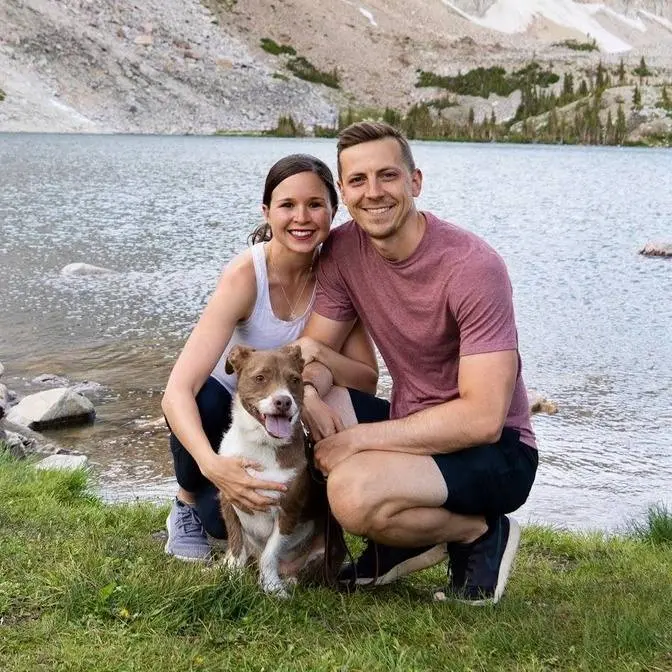
👋🏼 About us Hi y’all! We’re Adam, Kathryn, and Kona, an adventurous married couple (+ pup!) living on the road in our self-converted sprinter van! You can often find us driving all around the US and Canada, scoping out the best coffee shops, eating tacos and ice cream (we're a 5+ taco and 2+ scoop household), and enjoying nature.
We help travelers spend less time (and stress!) planning their trip and more time enjoying it! Our detailed travel guides, YouTube videos, and travel resources share the must-visit local eats, popular and off the beaten path sights, and tons of tips to make planning your next adventure a whole lot easier.
Note: We’ve linked a handful of items so you can see exactly which products we take with us. Full disclosure--if you click on these links and make a purchase, we get a small commission at no extra cost to you. We will only ever recommend products we truly love, actually use during our adventures, and think you can benefit from too!
AI Generated·May contain errors
Video Summary
AI Generated
A group of friends explores Voyageurs National Park in northern Minnesota aboard a luxury houseboat. The journey blends outdoor adventure with historical discovery, covering the region's geography, the legacy of French-Canadian fur traders, the logging industry, and the unique experience of navigating the park's interconnected lakes.
This is the ultimate way to explore Voyagers National Park.
Located in northern Minnesota, Voyager spans 218,000 acres and is home to a network of islands,
lakes, and streams, with 40% of the park being water. So we couldn't think of a better way to
explore this park than by boat, but not just any boat, a houseboat. For the next five nights,
this houseboat will be taking us plus our friends Jen, Elliot, Katie, and Joey around many of the
park's lakes, visiting historic sites and beautiful natural spots along the way. All while providing
the comforts of a home, allowing us to cook delicious meals, and letting us enjoy a little
bit of summertime fun, relaxation, and luxury. Voyagers is the 55th U.S. National Park we have
visited, and it's safe to say it's going to be the most unique national park adventure yet.
This is gonna be so much fun. This is awesome.
Tommy from Epos gave us an orientation about how everything on the boat works, and he even hopped
aboard to help us navigate out of the river and into the open water, but he has departed the
vessel and we are officially on our own, and we're off to go find our first campsite.
Voyagers National Park is home to four major lakes, Rainy Lake, Cabotogama Lake, Namekin Lake,
and Sandpoint Lake, plus 26 interior lakes scattered throughout the Cabotogama Peninsula.
We're currently on Cabotogama Lake, and our plan for the afternoon is to head to the Blind
Indian Narrows campsite on Namekin Lake. We're pulling up to our campsite, and it's available,
so we're gonna get the lines ready. Voyagers National Park has 97 houseboat sites across
the main lakes. They are all first come first serve, but you do need to get a houseboat permit
to stay at them, which you can buy online at recreation.gov. Even though they are all first
come first serve, if they're full, you are allowed to stay along the undeveloped shoreline,
as long as it's at least 200 yards away from a developed campsite or structure. So thankfully,
we should always have a site. And to park the houseboat at the site, you moor, which is basically
tying up to something on shore. This one has metal rings that we tied up to, but if those aren't there
or you don't like where they're at, you can also tie up to a tree on shore. And the campsites
themselves are pretty simple. All there is is a metal fire ring, which we hope to use as many
nights as we can. But now that we're at our spot for the night, let's give you a tour of our home
on water. There are a handful of houseboat companies in the park, but we are super excited to be
partnering with Ebels Voyager Houseboats this week. They are a third generation family-owned
business that has been renting houseboats for over 50 years, which is longer than Voyagers, has even
been a national park. They have a bunch of different houseboats to choose from, and we are staying on
the Vista 51 three bedroom. Let's walk the plank to go inside. So when you first enter the houseboat,
you enter our living and dining area. We have a dining room table here with four chairs plus a
couch. My favorite part of this space is the wall and ceiling of windows. We just have windows that
take up about half of this space. And while it does get a little hot when it's sunny out, I just
love how much light it brings in. And I just love that no matter where you are in here, you can see
the view. And then tucked behind the dining area is one of two helm stations on this boat. We have
the one in here, and then we also have one on the top deck. As we make our way further back into
the houseboat, you reach the kitchen. And this kitchen has everything we need to cook some
delicious meals while on board. We have a fridge and a freezer, which is holding food for six people
for five days, which is a lot of food. We also have a sink, an oven, and a microwave. There are lots of
cabinets both in here and over kind of by the helm station that are storing a lot of our dry goods
and snacks. Plus it comes with all of the cookware. So we have pots and pans, plates, bowls, cups, and
utensils. And as you come down this hallway, you reach our bedrooms and our bathrooms. We have
three bedrooms on board, and in each room we have a queen bed. And then in two of them, there's an
additional smaller bunk bed on top. Not all the houseboats that Evils rents come with sheets,
but this one does come with sheets. We still have to bring our own pillows and blankets, anything
else we want for the bed. And then each room also comes with a vanity with a sink, which is super
nice. So if you need to brush your teeth and someone's in the bathroom, you don't have to wait
for them. And speaking of bathrooms, we have two bathrooms, which is really great when you have a
group our size. Each bathroom has a toilet as well as a shower. And coming into this trip, I thought
we would be taking sailor showers, where you just get a little water, scrub, scrub, scrub, turn it
off. Really, really quick showers. But the showers in this boat use lake water, which basically means
we have unlimited water for our showers. So I have a feeling we'll be taking lots of showers because
it's very hot out. But thankfully to help us with the heat, we do have three ACs on board. We can
only run them when the generator is on, which is one of our main sources of power. But let me tell
you, we had it running earlier and it helps tremendously in here. And then on the back of
the boat, we have our lower patio, which has a grill, which we are hoping to use pretty much
every single night to help keep some of the heat out of the kitchen. And then normally when we're
cruising, we have two dinghy boats that we tow behind us. That way we can park the houseboat
at campsites and then take the smaller boats to get to some areas that we either can't park the
houseboat or would be harder to get to in the houseboat. They each have a max limit of four
people, so we got two of them, which will save us from having to do a bunch of back and forth.
And then if you go up these stairs, you reach our upper patio. We are probably going to be spending
quite a bit of time up here because it has two fun features. And first is the hot tub. And the
second fun feature, there's a water slide. Feels amazing. Oh, it's not too cold. It feels really nice.
And that's the houseboat. It's going to be an awesome week. To our newest national park.
All right, it's time to try my first houseboat shower. I've been hearing rave reviews from the
other passengers. Okay, the shower started out scalding hot. This hot water definitely
gets very hot. But once I figured out how to get to the right temperature, it feels great.
Good water pressure. It's kind of honestly better than some showers I've taken off of a boat.
It's really good. I just keep hitting my head on this. Everyone else brought real pillows but
I feel like buying real pillows and then having to find something to do with them afterwards. So
backpacking pillows it is. But I will say this bed is much more comfortable.
Like a lot more. Yeah, actually pretty comfortable. But I am really tired. We had a great first night
here on the houseboat. It cooled off quite a bit overnight so everyone slept pretty well.
And today we have a big day of exploring the national park. And first we're taking our little
boats over to the I.W. Stevens Resort in Hoist Bay. Follow the main channel over and then we're going
down to the cabins which are right around here. Established in 1975, Voyagers National Park
commemorates the Voyagers, French-Canadian fur traders who traveled through the area in the 18th
and 19th centuries. They traveled in massive birch bark canoes often built by the Ojibwe
and navigated thousands of miles of interconnected rivers and lakes plus portage through inland
areas as they made their way west to Lake Athabasca. And along the way they'd transport goods
and trade for pelts, primarily beaver, with local indigenous tribes. Their journey was grueling but
they played a pivotal role in opening the northwestern United States. And despite our more
luxurious way of exploring the waters of the park, it's still a really cool feeling to get to cruise
through the same area as these Voyagers did many many years ago. And after watching the park's
amazing film on the Voyagers, we learned that they loved to sing as they paddled.
So we had a lot of fun coming up with some songs of our own.
15 hours of the day, dreaming of my soup. Make it thick, make my spoon stick into the bowl.
I row me canoe, 15 hours a day. I row me canoe, 50 strokes an hour. 50 strokes a minute.
Besides the Voyagers, this area also attracted Shackers, which were people looking to live off
the grid and homestead. And quite possibly the most famous is I.W. Stevens. While this island
was the original home of the Virginia and Rainy Lake Lumber Company, it was bought by I.W. Stevens
in 1932, who built cabins by hand and opened the Pine Cove Resort before eventually shutting it
down and just living off the land himself. In total, he lived on the island all alone for almost
50 years until he was 93 years old. I imagine it was a pretty tough lifestyle out here,
constantly chopping wood, getting your own water and hunting. And I would bet that that
rigorous active lifestyle contributed to him living until he was 104 years old.
And this environment really reminds me of our time that we spent in an off-grid cabin in Finland in
the winter. We had to chop a bunch of wood and get our own water and we just got a very small,
light taste of what life would have been like out here. Just a bit south of I.W. Stevens is Hoist Bay.
Back in 1905, Edward Hines and other investors created the Virginia and Rainy Lake Lumber Company.
After trees were cut, they were floated down rivers and lakes to the Hoist Bay area, where a hoist
would then lift the logs out of the water and load them onto a train car that would transport them to
the sawmill in Virginia, Minnesota. A railroad trestle and hoist were built over the water,
some of which the ruins can still be seen today. After the logging days ended around 1929,
the Hoist Bay area lay dormant for almost 10 years, changing ownership 50 times. Finally,
Ted and Fern Monson bought the property, built 14 buildings, and turned it into a resort area,
which was enjoyed by summer visitors until 1973. Something that has been really interesting about
this park so far is that unlike some parks which mostly focus on the nature, this park really
focuses on the people and the industry, both logging and all of the resorts. And not only can
you witness the history by seeing all these old buildings, but you can also kind of get a
first-hand experience of what it would have been like to visit this area years and years ago. You
can rent a canoe and go on a canoe camping trip and get a taste of the life of a voyager, or you
can stay at a resort that still line the lakes just outside the park, or you can do what we're doing
and kind of have your own little mini resort on the water with a houseboat. Recreation isn't just
a way to see this park, it's still really just ingrained into what this area is. Our plan for
the rest of the day is to head to Kettle Falls, which is a bit of a drive away, so on the way
we're going to find a spot to camp, and then we're going to take the little boats the rest of the way.
Big responsibility, driving this big old boat. It's driving great. It's fun. It's like very slow
to react when you are turning the wheel, so you turn it and then you wait a few seconds and then
you react off of that, but it's a lot of fun. It's very relaxing. We're doing a rock landing
right now as opposed to a sand landing, and there's a little bit of a wind here kind of
pushing us in different ways, and so it's a little a little tricky. Yeah, your back is swinging towards
the rock. Wow, that is dedication. A little bit of a tricky landing here. Didn't go quite as smoothly
as yesterday. I turned a little sideways, but we finally got it. We're finally parked. It's another
awesome spot. That was tough. The wind was messing with us. Yeah, the wind was just pushing the boat.
That was hard. There's nothing you can do because you can't come in fast because you hit the rock.
Kettle Falls is located where Namekin Lake flows into Rainy Lake right on the U.S. and Canada border.
For years, it has been an important destination for many different groups of people.
Native Americans hunted and fished at the falls, voyagers paddled and portaged through the area,
and prospectors traveled and camped here on their way to the Rainy Lake gold mines.
And in the early 1900s, a dam was built here by lumber baron E.W. Backus
to generate power for his paper mills. The water just below the dam is creating this crazy
whirlpool. It's more of a big rapid than a waterfall, and this is also one of the few
places that you can look south into Canada. For a little while today, we were actually cruising
right next to Canada. Canada on our right and the U.S. on our left. But besides the dam, this area is
most famous for the Kettle Falls Hotel. Opening in 1913, it is not only the only lodging within the
park, but it is only accessible by water. However, the hotel was built on clay soil, which caused it
to sink over time, leaving the floors a bit slanted, giving it the nickname the Tilton Hilton.
And despite being renovated in the 1970s, they kept the floor of the bar slanted, which you can
still see today. So this bar is known for their pink drinks, which is a vodka lemonade. Unfortunately,
they're only alcoholics, so we have a non-alcoholic. All right, let's head back before that cloud
does something mean to us. Sitting on a metal boat is definitely not where I wanted to be
while seeing all these dark storm clouds around, but we made it. So today we're going to come
out this way, following the line, so we can go into Canada. All the way down here, all the way down here
through all this. This is going to be kind of fun. And then a little bit more open water.
We are beginning our unmooring procedures, and each one of us has a task. Elliot is going to be
backing up the boat, Joey and Adam are taking the little boats, which we moor separately. We will
reconnect the small boats once we get out into the water, and then Katie and I are handling the lines,
getting everything unmoored, and then back on the boat, and then Jen's kind of overseeing everything
to make sure that nothing goes wrong. Very cute.
So if you're unable to rent a houseboat, there are other ways you can explore the park.
The park offers a handful of boat cruises on Rainy, Capitogama, and Namekin Lakes.
We did the Grand Tour on Rainy Lake the other day, since we aren't able to get to that lake
on this houseboat, and learned a lot about the history, geology, and wildlife. And if you have
your own boat, you are able to explore the park and rent different tent campsites around the lakes,
you can rent a canoe and canoe camp out here as well. There are also some trails on land,
like the Oberholzer Trail at Rainy Lake, and Beaver Pond Overlook at Ash River,
but it's definitely a water-based park, so we highly recommend exploring it on the water.
And while you can visit most of the places we've been to so far on a park boat tour,
this morning we're making a long cruise out to the Grassy Bay Cliffs, which is one area that
you can't get to on a park boat tour, so we're very thankful to have our own way to get there.
The time has come. I'm the captain now. Right now it's just driving itself, basically,
so I guess I'm just gonna sit here and make sure we don't hit any rocks. This is really
anti-climatic. We're in this wide open body of water, which is what I wanted. I wanted to try
when there weren't a lot of obstacles. We've had a couple spots where we've had to do some sharper
turns, and there's more rocks and islands in the way, so I wanted something like this so it's easy.
But perhaps it's too easy. I only captained the ship for probably 30 minutes, but we're about
to reach a part with more islands and obstacles, so I think I'm going to pass along my captain
duties to someone a bit more experienced, but that was a lot of fun and just really relaxing
just sitting here and just getting to see the scenery, going super slow. We're about to enter
the Namekan Narrows, which will take us to Sandpoint Lake, our fourth and final lake within
the National Park boundaries, and apparently shortly after we enter the Narrows, we should be
able to see some Ojibwe pictographs on the left wall. That is where we are going. Look how tight
it is. So we think we saw the pictographs, but they weren't super defined, and we were kind of
far away, so we're gonna go take the smaller boats to hopefully get closer to them. We are at the
island where we believe the pictographs are, and we're getting pretty close. I don't know. We're
not really seeing much of anything. We see other colors, but we don't see any shapes or symbols.
Yeah, we've squinted so much our eyes are starting to hurt. We're just gonna head back.
This is crazy. Wow, so narrow through here. And after a very long but incredible day of cruising,
we made it to the Grassy Bay Cliffs. This sheer granite cliff rises 125 feet above Sandpoint Lake
and dates back 2.6 billion years. It is one of the tallest points in the entire park,
and unlike anything we have seen so far. We were hoping to camp at that spot right there, which
overlooks the Grassy Bay Cliffs, but unfortunately someone is there, and this is actually the first
time that's happened to us on this trip, so we're gonna come up with a plan B. We are coming up to
Home for the Night, which is our first undeveloped site of the trip. What that means is it's not like
an official campsite for the park, so we're not going to have these nice rings to tie up to,
not going to have a fancy fire pit, and it's going to be a little bit of an adventure.
It looks like a sand landing site, which will make it easier to
get moored, but then we have to find trees that are big enough to actually tie the lines to.
That was our smoothest one yet, I think. Yeah. We spent the morning cruising, which I did in absolute
style, and we have made it to our final campsite of the trip, which we'll be at for two nights,
the Ebel's Campsite, which is named after Ebel's houseboats, and we had heard this was their
favorite campsite, and it is pretty spectacular. We have this nice long beach, these rocky islands in
the distance, a fire ring overlooking the water, and even though the water has kind of a brown hue
to it from the tannins, it is super clear, and for the rest of the day, we are doing what I'm calling
summer camp, which means we are fishing, we are swimming, we're going down the slide,
we're doing crafts, we're eating, we're just doing all the fun summer things.
We've been taking turns making meals, and they have all been delicious,
and tonight is our turn, and sticking with the summer camp theme, we're making baking cheeseburgers,
corn, and salad. Today I learned that they make rectangular marshmallows that are perfect for
s'mores. I don't know why this did not exist sooner. Today is our last day at Voyagers National Park,
and we're going on a fishing tour with Travis Carlson, a local guide here in the area.
We've been fishing most days from the houseboat, and some of us have had more luck than others.
Elliot has caught three, and I have been skunked, so hopefully we can catch some good ones today.
Fishing is one of the top things to do in Voyagers, with walleye, smallmouth bass,
and northern pike being some of the most common fish to catch,
and almost right off the bat, we were catching fish.
80! Yes girl!
Let's go!
Yay, we have Joey!
Let's go!
Wow, that's awesome!
Yes! Oh, it's a fighter!
It's a fighter!
Way to go! That's awesome!
That's the biggest fish I've ever caught!
Yes!
Cut it, cut it, cut it.
Nice!
We fished a few different spots, and most of us caught multiple fish, but there was one problem.
The actual fishermen of the group had yet to catch one, and with only one spot left to fish, his time was running out.
Nice!
Oh!
It's happening!
Woo!
About time!
He got another one!
Walleye!
You've been holding out on us all right!
First walleye!
Oh, we're down again.
Holy, look at this guy!
Wow!
Three fish, three species!
Well, it took a bit, but we all got on fish, and we all caught multiple fish.
A huge thank you to Travis for taking us out, he was a great patient guide.
And if you're coming to Voyagers and you're interested in fishing, we'll link his info below.
We got up very bright and early this morning because we have an over three hour cruise to return the houseboat,
but on the plus side, we're able to enjoy coffee with the sunrise as we cruise back, which is the perfect way to end the trip.
We absolutely loved exploring Voyagers National Park by houseboat, and we want to give another big thank you to Ebels for hosting us.
We have nothing but amazing things to say about Ebels.
Everyone we interacted with was so helpful and friendly, the boat was clean and we had zero issues,
and their location is perfect to explore some of the best sites in the park.
If you would like to rent a houseboat to explore Voyagers National Park, we'll put a link to their website in the description and the pinned comment below,
or you can scan the QR code on the screen.
But this afternoon, we're flying back home to Washington, and for the rest of the summer, our goal is to enjoy the glorious Pacific Northwest.
Base, Base, this is Voyager 51-1, we have just entered Sullivan Bay.
QR first in line, if you would bring it on up, we have a wide open queue now for you.
Sounds great, see you soon, thank you.
Bases are all in, who you share them with
And it's life, and the point is
Enjoying who you share it with
Joy is who you share it with
And the weeks and the weekends are keeping close
Who you spend them with
And in time, who you spend it with
Joy is