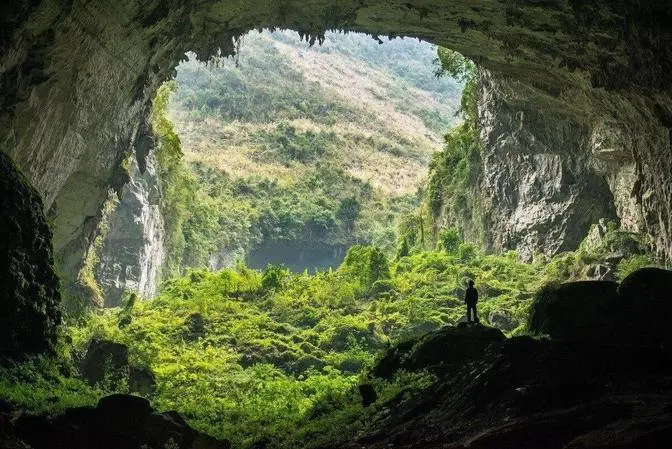
IRAN: The World’s Most Misunderstood Place You’ve Never Known | 4K Travel Documentary
Discover the Forgotten Persia | 4K Travel Documentary Step back in time and explore the hidden story of one of the greatest empires in history — Ancient Persia. In this breathtaking 4K travel documentary, journey beyond politics and modern headlines into the heart of Iran, once the land of the “Kings of Kings.” From the grand ruins of Persepolis to the whispers of a civilization that shaped the world, witness stunning landscapes, rich culture, and untold history in cinematic detail. This is not the Iran you think you know — this is the Iran the world forgot.
► See More: ISRAEL & PALESTINE: What the Holy Land Still Hides | 4K travel documentary • ISRAEL & PALESTINE: What the Holy Land Sti... ►Best Playlist: • Asia Travel Documentary ►Subscribe: / @trueglobe66
AI Generated·May contain errors
They say history is written by the victors,
but what if the greatest empire the world has ever known was simply forgotten by time?
Beyond headlines and politics lies a land of whispers in the dark Iran,
or as the ancients called it, Persia.
A kingdom so vast, so advanced, that its rulers were once hailed as the kings of kings.
This was once the center of the world, where maps didn't end at east or west,
but began in the heart in Persepolis.
And strangely, almost no one tells its story.
Perhaps it was too great to fit into the pages of history written by others.
This is not the Iran you think you know.
This is the Iran the world forgot.
Tehran, the modern capital.
To truly understand Iran today, we must begin in the city
where its pulse is strongest, the capital Tehran.
Nestled at the foot of the Alborz Mountains,
Tehran is a sprawling metropolis of over 9 million people,
where every corner is alive with contrast.
Snow-capped peaks tower to the north,
while arid plains stretch to the south.
Ancient traditions coexist with cutting-edge modernity,
creating a city that is constantly in motion, yet deeply connected to its roots.
What began as a quiet village centuries ago,
transformed into a capital in the late 18th century under the Qajar dynasty.
Since then, Tehran has evolved into Iran's political, cultural, and economic center.
Towering skyscrapers rise beside centuries-old architecture,
and each neighborhood tells a story from imperial grandeur to revolutionary spirit.
One of Tehran's most iconic symbols is the Azadi Tower.
Designed with elements of Sassanid arches, Islamic geometry, and futuristic curves,
it reflects Iran's layered identity, one eye on the past, one on the future.
Not far away stands the Golestan Palace, a UNESCO World Heritage Site,
where marble halls, mirrored rooms, and lush gardens echo the opulence of Qajar rule
and a time when European influence blended with Persian style.
Further north, Niavaran and Saad Abad Palaces now serve as museums housing royal artifacts,
personal belongings, and glimpses into the final days of monarchy in Iran.
The Grand Bazaar, centuries old, still bustles with energy,
a living labyrinth of commerce tradition and everyday life.
Today, highways cut through centuries of history.
Mosques stand beside contemporary art galleries.
Cafes, fashion boutiques, and tech startups thrive in districts like Tajrish and Vanak.
Tehran is a city of memory and momentum where the past breathes quietly
even as the future races forward.
HISTORY OF THE PERSIAN EMPIRE
A GREAT HERITAGE OF HUMANITY
Over 2,500 years ago, Cyrus the Great rose from Persia's rugged lands
and built the world's first superpower from Greece to India, Egypt to Central Asia.
What set Persia apart wasn't size but values tolerance, dignity, and freedom.
Cyrus's legacy, captured in the Cyrus Cylinder, still inspires justice and human rights today.
To truly understand the heart of this empire, we must step into the places
where its ideals took shape in stone, in ritual, and in silence.
Persepolis, the ceremonial capital.
A stage for diplomacy, a celebration for the soul of an empire.
Built by Darius the Great, it hosted Nowruz, the Persian New Year,
where envoys from across the empire gathered in peace.
Its stone reliefs tell not of conquest but of coexistence, a vision of unity in diversity.
Even in ruins, it radiates the elegance and strength
of an empire that led with beauty, not fear.
Pasargadae, Tomb of Cyrus the Great.
Beneath a simple stone tomb open to the sky lies Cyrus the Great.
No towering monuments, no golden statues, just peace and purpose.
Nearby, the Cyrus Cylinder was discovered a message of human rights,
carved centuries ahead of its time.
He ruled not through domination but through wisdom and compassion.
His resting place is more than a tomb,
it's a quiet declaration of how great power can live in humility.
Naqsh-e Rustam, Tombs of the Kings.
Carved into the cliff face, four royal tombs stand like eternal watchtowers.
Their facades show kings receiving tribute not just as rulers but as divine figures.
Below them, centuries later,
Sassanid reliefs were added scenes of victory blessed by the gods.
Two dynasties, one canvas of stone.
Power, faith and permanence etched into the mountain for all time.
North, Caspian Sea.
Before our eyes nestled between the mist-shrouded Alborz mountains
and the deep blue of the Caspian Sea,
Northern Iran feels like an entirely different world.
Northern provinces like Gilan, Mazandaran and Kazvin
break every stereotype you've heard about Iran being dry or barren.
Here the air is thick with humidity and the land is endlessly fertile.
Wild forests stretch out like nature's own tapestry.
Rice fields shimmer under the gentle breeze.
This is where Iran breathes in green.
Agriculture thrives, tea plantations cascade down hillsides, citrus trees burst with fruit
and every village hums with the quiet rhythm of planting and harvest.
But nature is only half the story.
Culture runs just as deep.
In the small towns and villages, traditions hold strong hand-woven textiles,
sweet confections made from rosewater and nuts
and community cooking that turns meals into celebrations.
And in the surrounding wilderness, a rich and rare ecosystem quietly thrives.
The dense Hyrkanian forests, a UNESCO World Heritage Site,
are home to some of Iran's most endangered species.
The Persian leopard, one of the rarest and most elusive predators,
is the silent ghost of the forest.
With a powerful build, rosette-patterned fur and razor-sharp eyes,
it moves soundlessly through thick undergrowth.
It hunts at dawn and dusk, preying mainly on wild boar's deer
and occasionally livestock, though it usually avoids humans.
Fewer than 1,000 are believed to remain in the wild, scattered across the Alborz Mountains.
Each leopard commands a vast territory
and sightings are often limited to brief moments caught on hidden camera traps.
The Eurasian brown bear, one of the largest carnivores in the region,
roams freely through the cold forested highlands.
These solitary animals can weigh up to 270 kilograms, nearly 600 pounds,
and are omnivorous eating roots berries, insects, fish and small mammals.
In autumn, they bulk up before retreating into rocky dens
high in the Alborz Mountains for winter hibernation.
Overhead, the skies form a vibrant corridor for thousands of migratory birds.
Seasonal flocks of white storks, grey herons, flamingos and cranes soar across the region.
Most striking of all is the Siberian crane with its snow-white feathers and black-tipped wings,
which stops to rest in northern Iran's wetlands
during its long journey between Russia and India.
It is now one of the rarest birds on Earth,
and Iran remains one of its last remaining safe havens.
Along the Caspian coast, Caspian seals float in the shallow waters.
Small, round-headed and gentle they are among the few freshwater seal species in the world.
But their population is rapidly declining due to pollution over fishing
and shrinking ice cover caused by climate change.
Together, these creatures paint a picture of biodiversity that is both fragile and radiant,
one that few would expect to find in Iran.
Zagros Indomitable Souls Between Rock and Cloud
As the journey moves westward, the land rises like a tide of stone.
The Zagros Mountains, ancient, jagged, immense stretch across western Iran
like the vertebrae of time itself.
From the sky, their folds appear endless,
a labyrinth of ridgelines, shadowed valleys and sunlit summits.
These peaks are neither gentle nor forgiving.
Their cliffs drop sharply, their spines are dusted with snow, even in spring.
Yet life has learned to cling to this dramatic terrain.
In the early light, goat trails wind like silver threads
across the slopes, tracing paths carved by centuries of seasonal migration.
The land blooms briefly in spring.
Alpine meadows burst into colour, deep purples, burnt oranges,
fields of golden poppies that ripple like flame under the wind.
Patches of melting snow feed crystalline streams
that dance through gorges and vanish into the stone.
Across these peaks, life continues in quiet motion.
The Bakhtiari and Qashqai tribes, shaped by the mountain's will,
follow ancient migration paths.
From the sky, their black tents dot the highlands small, against the vastness.
Their movement is not just survival.
It is memory, repeated in the rhythm of hooves and wind.
There is a story told among them that the Bezoa goat,
leaping across cliffs, carries the souls of the departed to the Sun Gate,
a hidden pass where light never fades.
No one knows where it is, but every child has seen the goats appear at dusk,
outlined in gold, pausing as if listening to something only they can hear.
Birds of prey slice the sky.
Golden eagles ride the thermals with ancient grace.
And in the dusk, far from trails, the striped hyena emerges.
It is not feared, but respected.
Its call is said to echo the voice of the mountain itself, lonely and eternal.
Yet even this wildness is fragile.
Winters grow harsher.
Migration routes are cut by fences and roads.
What has endured for millennia now whispers of change.
And still, the Zagros remains.
Not as it was, but as it must be.
Raw, unpredictable, alive.
A place where time doesn't pass, it returns.
Where every ridge is a line in a forgotten poem.
Where silence speaks in the language of wind.
Kashan and Desert
As we head southeast from the Zagros, the landscape begins to soften.
Mountains give way to plains,
and the bold greens fade into the sun-drenched tones of sand ochre and burnt earth.
Here, at the threshold of Iran's central desert,
we arrive in Kashan, a city where the desert doesn't just surround, it speaks.
Through mudbrick walls and ancient courtyards, the air carries echoes of a refined past.
Kashan is famed for its aristocratic mansions,
masterpieces of desert architecture designed to be both beautiful and resilient.
Among them, the Tabatabai house stands out like a jewel.
Its delicate stucco stained glass windows and soaring wind towers.
Not only dazzle the eye, but reflect a deep understanding
of how to live with nature, not against it.
Not far away lies the Fin Garden, a Persian paradise of symmetry and serenity.
Water flows gently through stone channels flanked by cypress trees
and wrapped in high walls that hold the world at bay.
But even this peaceful haven holds a shadow for here,
the visionary reformer Amir Kabir met his tragic end,
assassinated in silence beneath its tiled domes.
Beyond Kashan, tucked against desert slopes,
lies Abyaneh, a village untouched by time.
Its red clay houses cling to the hills like memory to tradition
unchanged for more than a thousand years.
In this quiet corner of Iran, history is not frozen in museums.
It lives, breathes, and lingers in every gust of wind and every wrinkled smile.
Isfahan, the Pearl of the Middle East.
Beyond the stillness of the desert, a new masterpiece emerges, Isfahan.
Isfahan, the Pearl of the Middle East, isn't just a nickname.
It's a testament to the city's breathtaking beauty and cultural depth.
Once the capital of the Safavid Empire, Isfahan,
wasn't built just to impress, it was crafted to inspire.
This city is where art, religion, science, and geometry
dance together to form one breathtaking whole.
Its nickname, Half of the World, wasn't just poetry,
it was ambition realized in stone and tile.
At the heart lies Naqsh-e Jahan, one of the world's largest public squares,
not just vast, but harmonious.
Framed by the delicate Sheikh Lotfollah Mosque, the Grand Imam Mosque,
and the majestic Ali Qapu Palace,
this square is a living canvas of Persian Islamic art.
Look closely, and you'll see more than design,
you'll see mathematical precision, spiritual depth, and cultural pride.
Wander further, and you'll find the bridges of Isfahan
not just for crossing rivers, but for gathering storytelling and music.
The Si'o Sepol and Qajou bridges come alive at night
when locals sing beneath their arches, their voices echoing across time.
It is through these bridges that you begin to understand
Isfahan is not just a city to behold, but a rhythm to be felt.
Everything here, from the geometry of its architecture,
the play of light on its glazed tiles,
to the balance between life and spirituality,
leads you to one truth,
timeless beauty doesn't lie in perfection, but in harmony.
Yazd, the desert city, is like a mirage that refuses to vanish a timeless wonder,
rising out of Iran's vast central plateau.
Surrounded by the harsh emptiness of the Dasht-e Kavir and Dasht-e Lut deserts,
Yazd thrives where life should be impossible.
Yet this ancient city, shaped by wind and sun,
has endured for millennia.
Its skyline dotted with graceful minarets and ancient windcatchers called badgers
feels like something out of a dream.
These natural cooling towers, designed centuries before air conditioning,
speak volumes about Persian ingenuity in adapting to extreme climates.
Yazd is also the beating heart of Zoroastrianism, one of the world's oldest religions.
Here, sacred fires have burned uninterrupted for hundreds of years
in fire temples and the towers of silence on the nearby hills
silently watch over the city, mysterious, haunting, and sacred.
Walking through Yazd's sun-baked alleyways,
flanked by mudbrick walls and hidden courtyards,
feels like stepping into another era.
It's a city where the ancient and the living coexist in quiet harmony.
But what makes Yazd truly unforgettable
is its atmosphere introspective golden and deeply spiritual.
As dusk falls and the call to prayer echoes off sun-drenched walls,
the city glows with a soft amber hue.
And you can't help but feel like you're standing inside a memory
or perhaps a secret whispered by the desert itself.
Yazd doesn't shout to be seen.
It invites you to slow down, listen, and discover a way of life
that's as resilient and beautiful as the land it rises from.
Shiraz City of Poetry and Flowers is more than just a romantic nickname.
It's the soul of Persian culture, wrapped in fragrance verse and timeless beauty.
Nestled in the heart of southern Iran,
Shiraz is a city where history and harmony bloom side by side.
This is the birthplace of two of Persia's most revered poets, Hafez and Sa'adi,
whose words still echo through courtyards, gardens, and the hearts of millions.
Locals believe that just reading Hafez's poetry can unveil truths about your soul.
And many visitors leave Shiraz with a book of his verses tucked in their bags.
But Shiraz is not just about words.
It's about how those words come alive in the city's breathtaking gardens.
Step into the Erem Garden and you'll find a paradise of flowing water,
delicate cypress trees, and roses in every hue.
Here, nature and architecture dance in perfect rhythm.
A living poem, written in stone and petal.
The scent of orange blossoms in spring drifts through the air like a whispered promise.
Yet Shiraz also carries an air of mystery.
The majestic ruins of Persepolis lie just beyond the city,
a haunting reminder of Iran's imperial past and the shifting sands of time.
And within the city, silence often speaks louder than sound.
In the twilight hours, as sunlight filters through the stained glass of Nasser al-Mulk Mosque,
the entire space becomes a mosaic of shifting color, a sacred moment frozen in time.
When you arrive in Shiraz, you'll see beauty everywhere in the blooming gardens,
the sunlight streaming through stained glass windows,
and the quiet, peaceful corners of the city.
It doesn't try to impress you.
It stays with you because of its gentle charm and calm presence.
Northeast, Tabriz and Terrain Village.
And yet the true wonder of this land lies not only in its majestic landscapes
or ancient architecture, but in the quiet resilience of its people.
In Northeast Iran, among the city of Tabriz and the mountain villages,
you discover a world that defies the dry desert image many often associate with the country.
Here, the wind whispers through green valleys, snow-dusted mountains frame ancient towns,
and history flows like the rivers that nourish the land.
Tabriz, the crown jewel of the region, is a city that once sat at the crossroads of empires.
For centuries, it was a center of trade culture and politics along the Silk Road.
Today, its grand bazaars UNESCO recognized still pulse with life,
echoing the footsteps of merchants and travelers who came from East and West.
But perhaps the true gems of the Northeast
lie beyond the city in the terrain villages nestled in rugged hills.
These stone and mudbrick settlements are architectural marvels
designed to blend seamlessly into the mountainsides.
Take Kandavan, for instance, a village carved directly into volcanic rock
where people still live in cone-shaped cave homes that resemble something from a Tolkien novel.
Life here is simple yet deeply rooted in tradition and nature.
The region is a tapestry of languages, ethnicities, and customs.
Azeris, Kurds, and Persians coexist in a cultural mosaic rarely seen elsewhere in the country.
As you hike through alpine meadows or sip hot tea inside a centuries-old caravanserai,
you begin to realize this corner of Iran holds secrets most travelers never see.
Tabriz and its surroundings don't shout their beauty,
they reveal it slowly, like mist lifting from a valley at dawn.
And once you've glimpsed it, it stays with you, haunting quiet, unforgettable.
Our journey through Iran reveals that this land is not just the cradle of ancient empires,
but a place where memory art and the human spirit intertwine across thousands of years of history.
And you, you're not just a viewer, you're a part of this journey.
Leave your mark with a comment, a like, or simply by subscribing to True Globe,
so we can continue exploring stories that never grow old.
Every response from you is the fuel that keeps us going,
bringing inspiring stories from around the world to life.
Thank you for joining us, and we'll see you on the next adventure.