
Bibimbap, the Korean Mixed Rice Dish That Everyone Should Know How to Make
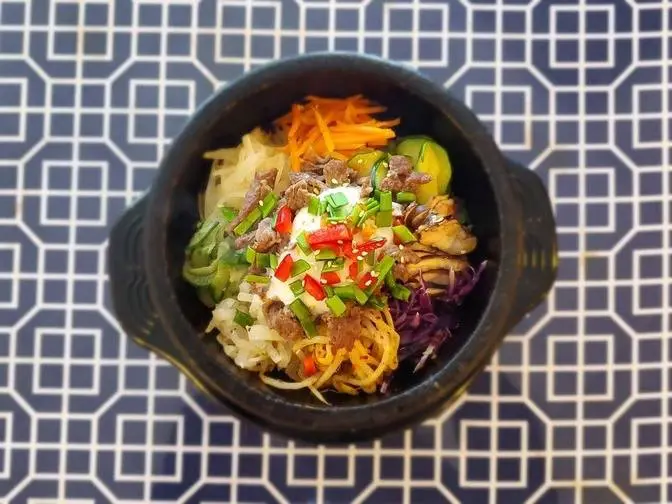
AI GeneratedMay contain errors
Video Summary
AI GeneratedThis video provides a comprehensive guide to making traditional Bibimbap, a Korean mixed rice bowl. The creator explains the dish's fundamental \"blueprint,\" emphasizing that while there are core components, the recipe is flexible. The tutorial covers the preparation of marinated beef, a gochujang-based sauce, various vegetable sides, and the final assembly.
Today we're going to make a traditional version of bibimbap, which is a Korean mixed rice bowl.
And I've kind of broken this down into a blueprint that you guys can follow to understand those base
components, because there's no one right or exact way that you make it every single time. And that's
kind of the beauty of this dish. So with that being said, I've got to taste test this in a
couple minutes. But first, what exactly is bibimbap? Let's break it down. So as Maangchi
notes in her cookbook, bibimbap means mixed and bap means cooked rice. So quite literally,
this dish is mixed rice. And as a whole, these can contain any number of ingredients. So you can make
it exactly how you want to or with whatever you have. However, the five base components that
typically make up this dish are one, the bap or cooked rice, which is the base of the bowl.
Two is the marinated protein. So most commonly you'll probably see beef, but tofu or any protein
could be used. Third are the vegetable sides. So whether simply stir fried or something pickled
in bibimbap, you're typically going to see three to five individually prepped vegetable sides,
though you could just roast a bunch of vegetables and use those if you wanted to.
Fourth is the bibimbap sauce, which is a gochujang based sauce that helps season the entire dish.
Now fifth and finally is a runny yolk egg, which is placed over the top and creates a glorious
texture and sauce while you're eating and mixing everything together. Now with that, we are ready
to make our bibimbap. To start, get out any cut of beef that you happen to have and just thinly
slice it. Now I'm using a chuck eye steak here, but a rib eye, flat iron, flank steak, or just
plain ground beef will do just fine. Once that's sliced, you're going to place that meat in a bowl
set over a scale and add 15 grams of soy sauce, 10 grams of sugar, five grams of sesame oil,
and then grate in three cloves of garlic before just mixing that together with your hands and
setting it aside to store in the fridge. For the bibimbap sauce, again, set a bowl over a scale
and add 30 grams of the gochujang, 15 grams of mirin or honey, five grams of sesame oil,
10 grams of rice vinegar, and then grate in two cloves of garlic and a one inch knob of ginger,
and then you can always add a bit of water to help thin out the sauce. So just mix that together
until it's nice and smooth before giving it a taste. And if it is too spicy, just add more
sugar or honey. And again, adjust as needed, but this is enough for about four bowls worth.
Now let's talk vegetables. So really any prepared vegetables can be used here. Anything you got in
the fridge, whatever you want. But I would recommend checking out Cook Korean by Robin
Ha or Maangchi's Real Korean Cooking for a look at any number of Korean vegetable side dishes,
but I'm making three cooked veg and one pickled one for mine. For the quick pickled sesame carrots,
first peel and julienne two carrots. Next, we're going to place those carrot sticks into a mortar
and pestle with a little pinch of salt and lightly bash them together to help bruise the carrot,
which is going to damage those cells and allow them to accept more flavor. Now transfer those
to a glass jar and add 15 grams of soy sauce, 15 grams of rice vinegar, about a teaspoon of
toasted sesame seeds, and then optionally for some spice, one teaspoon of gochugaru.
Then mix that together, shake it up, and pack those carrots tightly down before covering that
with a lid and just storing that in a fridge. And these things are so delicious. You can put them
on many things and they instantly make plain rice very, very good. Now for the cooked vegetables.
And I'm just very simply seasoning these with some salt and stir frying them basically because
I want them to be fairly basic because that bibimbap sauce is really what's going to help
touch everything and season the dish throughout once we mix it together. So for the spinach,
set a wok over medium low heat and add a little drizzle of sesame oil to the pan.
Then toss in a bunch of spinach and a pinch of salt. Now we're going to let this slowly cook down
until it's completely wilted. And then once it is, I just turn off the heat, add in a sprinkle of white
sesame seeds before removing and setting that aside. Now for the zucchini. So turn the wok to
high heat along with some oil and then drop in quartered zucchini slices. And again, just stir
fry these with a little bit of salt until they are really nicely browned. It should take about
two minutes. Then just like the other, transfer to container and we move on to the mushrooms.
Again, add a little more oil to the wok. And then I tossed in some bashed garlic cloves before adding
the mushrooms. And I use some shiitake mushrooms here, but any variety will do. Again, just very
simply stir frying these up with a little bit of salt to make them just shine in the dish and then
be helped and enhanced with that bibimbap sauce later on. Now with the vegetables done, we're
just going to add the beef to the wok and stir fry that until it's browned and cooked through.
And for as simple as the marinade was with this beef, it truly has an addictive quality.
Then lastly, we just need to get a fried egg, but it is time to assemble. So to start, we're going
to add about a cup of cooked rice. Then I like adding a drizzle of the bibimbap sauce right over
the top before adding the sesame spinach, the zucchini, the pickled carrots and mushrooms,
and finally that beef right in the center. And also I do like a little more sauce directly on
the beef. Now put that yolk right over the top in the center. And I like adding a couple of
black sesame seeds for some contrast. And now we are ready to eat. So we're going to break that yolk
and then when the sauce is mixed together with everything, it just makes it perfect. Let's taste
test. All right, everyone, it is taste test time. This has been sitting for far too long without me
eating it. So let's dive in. So truly just a very, very delicious, complete meal. It's just kind of
crushable, if that makes sense. So what I like best about it is you just kind of mix everything
up. I mean, no one eats it in that nicely presented way. You've got to disperse the sauce,
you've got to disperse the yolk and everything. And just having plainly seasoned vegetables is
nice. They don't try to overshadow everything and it just works very cohesively together. Now,
like I was saying, if you do make this for yourself, you don't have to follow everything
like I did. At the bare minimum, I would probably do, you know, get your marinated protein, get a
pickled item. So I would do, you know, the carrots. I really like these carrots. And then if you're
the vegetables, instead of doing like three or four separate ones, just throw them on a sheet pan,
roast them all up, do something like that, and mix in those three together with your sauce and your
egg yolk. You're going to have something very delicious. So I will also link down to a couple
Korean cookbooks that I've used in the past that are very good if you're looking for some more
ideas on things that you could add to your bibimbap. But with that being said, recipe for
this version will be up on the website, but that's going to wrap it up for me in this one. I'll catch
y'all in the next one. Peace y'all.