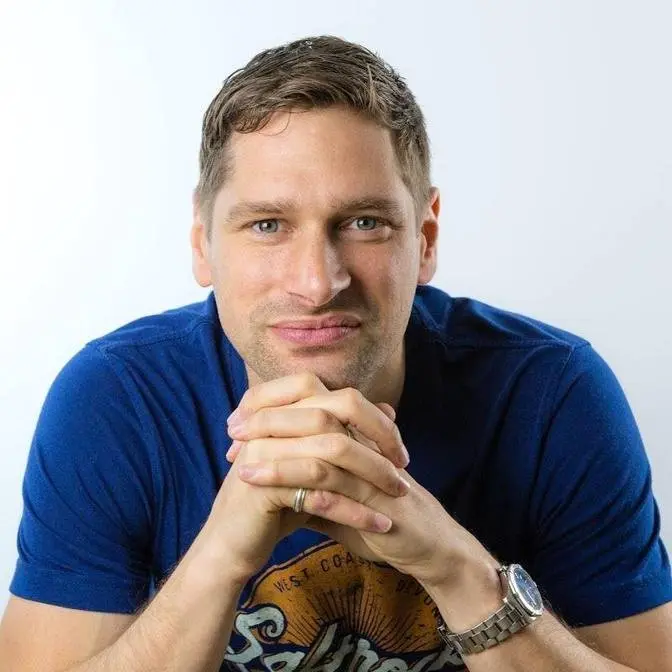
Starting a waste management business requires clarity. Hear a candid conversation about the challenges of launching a new venture.
Many entrepreneurs struggle when entering the waste industry because they lack a clear roadmap. This discussion highlights the common pitfalls when you want to execute perfectly but do not yet have the industry knowledge to do so. It is a raw look at the early stages of building a company from scratch.
Whether you are currently navigating your own startup or just curious about waste management business operations, this advice offers perspective on the reality of seeking guidance. We break down why finding the right direction is often harder than the execution itself.
Subscribe for weekly entrepreneurship tips, and comment below on the biggest challenge you have faced when starting a business.
This video is brought to you by @HelpBnk — the free peer-to-peer platform where entrepreneurs can get expert answers to their biggest business questions. Join 300,000+ members at https://helpbnk.com.
Want to read my backstory as a business coach, and how I help my clients? If so, visit my website below to read my client success stories and find out more info on my journey so far: https://www.robinwaite.com/
00:00 - How to start a business when you're new to entrepreneurship 01:43 - Why the best businesses are built on boring ideas 04:28 - How to overcome imposter syndrome as a first time founder 08:23 - Why business confidence works the same as sporting confidence 10:09 - Why waiting for a patent is killing your business before it starts 12:40 - How first mover advantage beats waiting for the perfect moment 15:08 - How to create a powerful brand message in three words 17:15 - How to stop self-sabotage and take your next step in business
AI Generated·May contain errors
Video Summary
AI Generated
Peter, an aspiring entrepreneur from Warsaw, discusses overcoming imposter syndrome and the fear of sharing his waste industry product. The conversation emphasizes that execution and market presence are more valuable than perfection or legal patents, urging a shift from technical specifications to a benefit-driven value proposition to achieve business growth.
I'm trying to build a product. I'm new to the business world.
So you feel a bit beholden to the pattern.
You want to do things the perfect way but you don't really know the perfect way.
The one thing you're not doing is...
That's a good one. Oi, that's a good one.
Hi, I just wanted some advice so you can help me out and give me direction and what are my next steps.
So on your business?
Yeah, my business.
Okay, what sort of business is it which you're doing?
So, let's just say I'm in the waste industry.
I'm trying to build a product and I want to put it through a pattern.
So I'm just trying to navigate through that.
I'm new to the business world, entrepreneurial world.
So even trying to have a secret but also trying to establish myself is kind of like a struggle.
What would you say is your biggest challenge at the moment?
I'd say my biggest challenge...
You can lay it down into one thing.
My biggest challenge at the moment is legalities.
Just being able to stay inside the constraints or the parameters of a patent.
Do you feel a bit beholden to the patent and maybe is the rest of the business getting a bit?
I think it's more of myself.
Obviously, maybe a bit of imposter syndrome so naturally I would just want to tell everyone my idea.
But I just know you have to follow certain legal rules and go through that due process.
So I would argue that that's not true.
Okay.
Do you want to do some work on it?
Sure.
Cool. Come and join me on the business bench.
So tell everybody, what's your name?
My name is Peter.
Are you based here in Bristol?
No, I'm not based in Bristol.
Okay, whereabouts are you based?
I'm based at the moment in Burma.
Okay.
You've travelled from Warsaw down to here today for the Founders Playground then?
Yeah, honestly, yeah.
What was that for?
Just out of curiosity, what was the big appeal, the draw?
I think it's finding like-minded people.
Okay.
I think with the entrepreneurial world, obviously people see the money, they see building businesses.
But for me, I'm just meeting people that are like-minded so I actually don't feel out of place.
And they understand the way I think.
To other people, they may see businesses but to me, I see ideas.
As a kid, I was probably just writing a random idea down and thinking, yeah, this can come to life.
But in the business world, these are actual things.
Obviously, you have logic, you have knowledge behind it.
And that's essentially what it is.
And it's helping me understand that and be comfortable with a part of myself I always knew was there.
Nice.
And tell us a little bit, just a few lines if you can.
I know you're worried about oversharing in terms of the details of the product.
We'll come on to that.
But just give us a bit of an insight into kind of how you came up with the idea.
What is the idea that you're working on?
Yeah, how I came up with the idea is crazy.
It just came like, well, I could say the setting.
The setting was church but it just randomly came to me.
Just randomly, just dropped into my head.
I think I have a very photographic memory.
So I saw the idea, saw how it could work and just saw how I would distribute it.
Like talking to different people in different settings.
And the idea is like, let's just say it's a bin.
Okay.
And that sounds very mundane.
But however, it's behind the bin.
The business behind the business is like the most important part of it.
Because I think a lot of people get hung up on the product or the idea or things like that.
And they make it all about that.
Whereas actually, if you learn the business skills behind the idea,
you can apply that to any product or service in the future.
Okay.
So you can get to a point where you can monetize your bin.
You've kind of solved 90% of the problems you'll ever experience as an entrepreneur.
And also, I said to you when we were offline before we started recording as well.
I was like, cool.
That's really cool.
A bin.
And I genuinely mean that as well.
Because the best businesses are sometimes the most boring mundane businesses.
Because if you think about something like the iPhone.
Right.
Beautiful product.
And the team at Apple have done a wonderful job of designing it and coming up with the concept of it.
And they're great at sales and marketing.
It all looks lovely.
But what it fundamentally comes down to is this goes into a production line,
has a screen popped onto it, a processor chip plugged into the back of it,
a camera soldered onto the back of it.
And that happens 440 million times a year.
So the process of running the business is fundamentally boring.
But look how successful they are by building a boring business when you actually think about it.
And then it's branding and marketing which then brings the product to life.
Yeah, the marketing, yeah.
Now, I know you have some reluctance to share details about the product.
Tell me what's going on there.
Just advice really.
Just advice.
I think at first it was more so I didn't really know what.
I'm just a kid that graduated nearly two years ago.
So I didn't really know what I was doing.
So first of all, I want you to stop thinking like that.
Yeah.
Even if you look at some of the biggest entrepreneurs in the world,
there was a first time when they walked into that room, right?
And you have to feel like it took me too long,
which is why I'm kind of hopefully giving you a bit of a shortcut.
You have to feel like you deserve your seat at the table.
And it's not fake it till you make it.
It's not being arrogant or egotistical.
You seem like a really cool, humble guy.
But it's about, no, no, I deserve to be here.
And I've got something of value to bring to the world.
And you have to keep on training your brain to a point where,
because otherwise what's going to happen is you'll talk yourself out.
But you can talk yourself out of just making, like just starting.
So that's the first hurdle you've got to get over.
But I noticed you've almost avoided the question which I asked you,
which was tell us about the product.
What's holding you back from shouting,
climbing to the rooftop set there, that balcony up there,
and shouting from the rooftops,
I've got the best idea for bins in the world.
It's going to transform this planet.
Feels a little bit like one of the things you said before we started recording
was that you're not feeling very confident about sort of putting yourself out there.
Yeah, I guess, yeah, I feel like, yeah, not myself.
Like if I'm confident, I'm confident about the product.
So it's like, yeah, it's the product that I'm confident about.
So I wish I could just, my product can just be my face.
But obviously on the side of legalities,
it's like you need to even, not even establish yourself,
you need to put yourself out there.
Even if I was going to talk to an investor,
in my time of learning, I learned that investor will buy into me,
not my product, essentially speaking.
So it doesn't actually matter what your product is.
It's more when it comes down to like you,
and like even off air when I was like,
hey, do you want to come and film?
You were a little bit hesitant, kind of stepped back.
But I'm trying to still stay in that space as well.
So that little bit of fear which you experienced there,
it's just about taking the edges off that
and fearing it ever so slightly less,
so that when an idiot like me comes along
and shoves a camera in your face, you're like, yeah, let's go.
Because you've got that energy.
You have got that energy in you, right?
Yeah, I do.
But I think it's when, like in the best way I can put it,
when I played football, I was good at football.
So I could talk to any coach, any coach.
It doesn't matter what team it is, I know I'm going to perform.
Yeah, but what did it take to get to that point
where you felt good and confident at football?
I saw the results, like I was just good at football.
I kept on training, kept on training.
Practice, training, playing matches, like pitch time.
But can you remember that point where little Peter
walked out on the pitch for the first time
and those other boys there probably judging you?
You probably maybe can't remember that exact moment,
but you can imagine that, can't you?
I could imagine that, but the thing is, you're so young.
I think the benefit was that I was,
and that's probably the problem, I was so young that...
Oh, right, so you got old now and now you're scared.
I feel like I'm doing new things now.
Now I'm older, I'm not doing things
that I normally did as a kid.
Like, I feel in boxing, for example,
that's a new thing I'll go into,
but I couldn't think for myself in that space.
Remember the first time you walked into the boxing training?
Yeah, I felt so out of place.
It's the coaches that made me feel comfortable,
and it's like...
But I still, in that moment, I still never...
I wouldn't come and talk to someone about my boxing.
Even my boxing, I barely used to post my boxing.
Even though I was winning my fights,
and I wouldn't really talk about it, and I guess...
With boxing, it doesn't matter, just win your fights.
Now, business, I kind of have to face the music.
Why is it any different?
You're starting something again, I get that,
but remember some of those internal lessons
which you learnt when you were going into that gym
the first time and starting to get to know your coach
and getting to know the other boxers
and then gradually found your placement?
It's no different in business.
In fact, I would argue, if anything in business,
people are far more forgiving.
There's far less judgment in business
if you surround yourself with the right people.
That's what surprised me.
Even speaking to you today, I think, surprised me a lot.
Yeah.
Like, I felt like I found the people
that actually either accept me,
and it's not even just about my product.
It's just actually, they're very open,
which is even...
That's why I was able...
I think me, if it was a random setting,
I'd probably be like,
no, I don't want to do the interview.
But because of the experience that I had with people,
even at this event,
I could stay in that moment,
even though internally I felt comfortable.
There was, like, a sense of trust
that I can just kind of stretch my arms
and wiggle about
and kind of get comfortable, basically.
It does take a lot of courage
to walk into a new situation.
And you've made it here.
But again, like, what is stopping you from...
Screaming.
Screaming literally from the rooftops,
that balcony up there,
and saying,
I've got the best bin in the world ever.
To be fair, that issue,
because I don't really need to expose, like,
the details and the specifics of my product to do that.
Why would you not do that?
Oh, the specifics and details?
Yeah.
I need to actually...
I need to file the patent.
That, on that side,
I actually need to file the patent
because one of the things behind filing my patent,
it needs to actually be a secret.
So we had one issue with a designer, right?
If I sit and I design sketches,
it wouldn't have been a secret no more,
so I can't patent it.
So it's just a matter of filing it.
I'm going to call, if it's okay,
with your permission,
bullshit on that.
Okay.
I think that's really bad advice
that we've had around that.
Okay.
There's something called first mover advantage.
That's one of the things we'll look at.
It's taking your product to market first.
90% of the time,
businesses win just because they're first to market.
Second thing, then, is survivorship bias.
Those that stay in business
and stick around and tough it out
through all the ups and downs,
90% of those businesses win
over the other ones who are just like,
nah, it's got a bit hard.
I think we'll stop doing this bin thing, okay?
So if you can take your bin to market
and start making some money from it,
one, you've proved your concept,
but second of all,
then, if you can stick around with your bin
and really do everything within your power
that's in your control
to make a success of it
more than anybody else in the market,
there'll be people who come along
and they copy you
and they're second to market.
They probably won't have the same staying power
because their mindset is,
oh, we'll just copy somebody else.
Right.
So waiting for the pattern to come around
and answering all of those questions,
what if that takes five years?
Once I find out, I can speak about it.
Yeah, but what if that process takes five years?
What if it's just a long,
elongated, protracted process?
Or two years or a year
and in the meantime,
yeah, you can read all of the books,
you can come to all the events,
you can have lots of coaching and mentoring,
but the one thing you're not doing
is building a business, okay?
What did you do in the boxing gym
and on the football pitch?
Just started training.
Kicked a ball.
Yeah.
You punched somebody in the face.
Yeah.
Right?
So I know it's not like that.
I know there's a lot more to it than that.
No, I don't mind.
I don't mind.
But you see, you were practising
and business is no different.
You have to practise business.
That means practising sales,
practising marketing,
practising admin,
practising finance.
You've actually got to get out there
and sell a product
and again, you'll learn like 90%
of everything you need to know,
everything you need to know about business
with that first product sale.
Yeah.
Do you see?
At the moment, our pattern.
I know.
I'll do that business thing later.
I just got to make sure
the product and the pattern is sorted.
A lawyer will tell you to wait.
Yeah.
Right?
An inexperienced business coach
will tell you to wait.
The most successful businesses are messy.
They just knuckle down.
They get on with it.
They make rubbish prototypes.
They go and ask for people's opinions
and feedback.
They build up to their second prototype
which works better
and people are like,
oh, that's better.
I can see this actually working.
They build a wait list
of people who might be interested
in that product.
So when they actually take
their third prototype to market,
they've already got a wait list
of 1,000 people
and 100 people buy it
just like that.
So imagine if rather than
in a year's time
you're still waiting for the legals
to sort themselves out,
in a year's time
you've got a wait list of 1,000 people
and sold your first 100 products.
Yeah.
Like patents.
Yeah, I understand that.
You can trademark ideas.
You can also protect your products
through something called design rights.
So there are other ways
to protect your idea.
There is also something called goodwill
which is an intellectual property.
The moment you put a product out there
and you start selling it,
building a brand up around it,
you're immediately building up
goodwill around that product.
So imagine again,
if you spent a year
building up goodwill,
sold those first 100 products
and then somebody comes along
and copies your idea,
you still have,
there is still a copyright infringement.
You can still go to lawyers
and do a cease and desist
because you came up with the idea first.
Irrespective of whether
you've got a patent or not.
So at the moment,
the patent is the one thing
which is standing in your way
from turning this into a real business.
It's debatable
because it was legalities
but it was more strategy
because I think
that imposter kind of syndrome
stopped me from having
conversations with people
for a long time.
It was kind of like,
you've got that
then you've got a fake paralysis
so you want to do things
the perfect way
but you don't really know
the perfect way.
So I think that's what
kind of stopped me
because once,
now after speaking to
so many people,
I know I can file it
this week basically.
I know I can file it this week.
Once I file it,
I'm going to talk about it.
But I finished strategy
because there was
that finding a designer,
what type of designer,
get someone we know
or do we do market research
and stuff and I'm working
with business partners.
Rather than thinking about
how the product works,
can you tell me about
what the end result of it is?
The end result?
What's the benefit
of your product?
Without disclosing anything.
The benefit is
that's a good one.
Oi, that's a good one.
That's a good one
because I'm trying to think
only because I've been
getting so much advice
and I want to show
respect to everyone
that's giving advice
but the benefit is
it will make places,
let me just put it like this,
it will make places clean
with a lot of instant noodles.
Okay, that's the best way
I can put it.
Cleanliness with convenience.
There you go.
Three words.
Cleanliness with convenience.
Actually look,
the joy is I'm probably
going to use that
like honestly speaking
I'm probably going to
because I couldn't ever
think of a motto
and I'm probably
going to use that as a motto.
Cleanliness with convenience.
When somebody asks you
about the product,
**** how it works,
**** the patent,
cleanliness with convenience.
Do you want that?
Yes, heck yes.
I don't want to have to
walk out of my house
when it's pissing down
with rain like this
to put rubbish out
or I don't know
the ins and outs
of the product
but anything that
keeps me dry,
warm and dry,
I'm down for that.
It fits the name.
The name of the company
is going to be
what was registered
so pocket waste.
So cleanliness
with convenience.
Cleanliness with convenience.
I'm going to change
waste management.
I'm going to make
the world a better place
one piece of rubbish
at a time.
That is your pitch.
That is how you should
be positioning
what you're doing.
Build a movement.
That's building it.
That's about building
a brand,
bringing a voice
to what you're doing.
It tells a story
without having
to disclose
any of the ins and outs
of your product.
I'm just thinking
for that.
I hope you were
recording that bit
and it didn't
stop recording.
Good.
Honestly,
if I could take
your contact
because after
I find it
I'm going to speak
to people.
Why don't you
see what I'm
talking about
It's so beautiful.
I get it.
I totally get it.
It's so beautiful.
Again,
there are these
dumb rules
which we create
for ourselves
as entrepreneurs
which stop us
from even
it creates
complete inertia
and we just
stop.
Over that
one little
pattern
and there's
a rule there
which is
I can't go
beyond this
x equals y
and I can't
go to z
without
having done
this first.
Whereas
I'll tell you
what we'll do.
We'll move
this interview
indoors.
We had to
take a slight
pause in
proceedings
because great
British
countryside
started to
rain.
We hit upon
something there
didn't we
I think.
We changed
the value
proposition.
We worked
on your
messaging now
so you can
get out
there and
start shouting
about it
but you need
to become
aware
so when you
hit that bit
of inertia
computer says
we stop here
and I can't
go further
beyond
that's like
your saboteur
at play there
he's trying to
protect you
give you a
nice warm
cuddle
but that
little
eight year
old version
of you
doesn't need
cuddles
anymore
he just needs
to be fearless
and step beyond
that.
The question
becomes
instead of
I'll do it
when
the question
becomes
what can
I do
to move
another step
forward
what do I
need to do
to sell
my first
product
what can
I do
to get
my first
investor
on board
what can
I do
to
so it's
always a
different
what can
I do
next
that's where
you want
to get to
and your
saboteur
will keep
on popping
up
and you'll
just find
yourself
sat there
doing
nothing
inertia
and that's
your cue
to move
and do
something
with it
and that's
what I love
about this
that's why I
came today
I'm just soaking
in the knowledge
yeah
because I haven't
had this type
of knowledge
before
so it's
just nice
thank you
very much
no trouble
my pleasure
so it's
shameless
plug time
to finish
up the
episode
so first
of all
thank you
Peter
for taking
the time
out of your
day here
in Bristol
it's been a
real pleasure
talking to you
don't forget
folks you can
get hold of
copies of
take your
shot by
going to
fearless.biz
forward slash
T Y S
for take your
shot
this is going
to be yours
as well
in fact to
tell you what
I'll do
I'll give you
dry copies
of it
rather than
wet copies
so those are
yours to take
away
for giving up
your time
this afternoon
just a couple
of resources
in there
that's more
of like a
workbook style
one
just to
kind of go
through
seven
like
thought
processes
to hopefully
take your
next step
in your
business
that one's
more of a
story
just about
one of my
first coaching
clients
a golf pro
called
Russ
so I
hope you
enjoy those
and I
look forward
to hearing
more about
your
incredible
bins
that are
going to
change the
world
later
thank you
hopefully
you're part
of the
story
hopefully
probably
hopefully
I use the
product to
do well
the product does
well
think of it
sell one
product
like just
keep build
one sell
one build
one sell
one build
one sell
keep every
step move
forward no
matter how
hard it is
you'll be
fine
absolutely fine
thank you
that was actually
amazing
I don't think, you don't realize but the motor is gonna do something.
Well, thank you very much.
My pleasure.