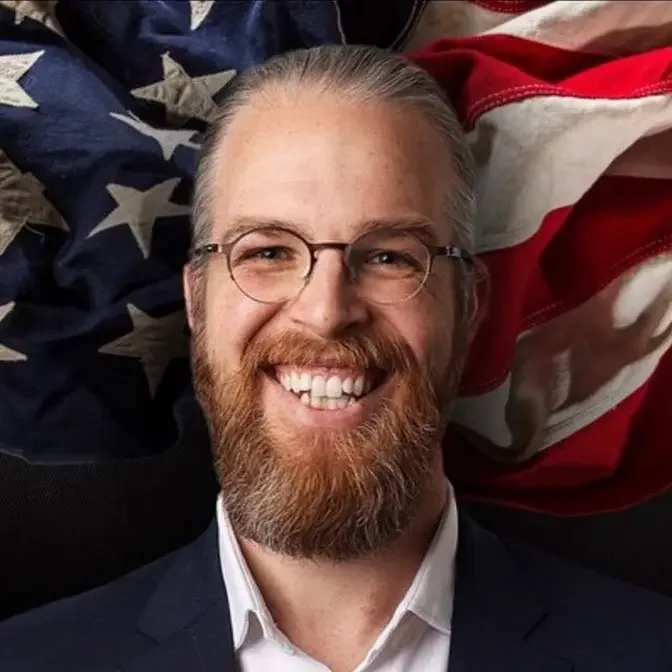
Liberty and God are intrinsically linked. Understand why the nation's founders believed that virtue is essential for self-governance to survive.
This discussion examines the historical perspective that liberty and God are inseparable concepts. We analyze the specific views of the founding fathers, including John Adams, regarding the nature of human government and the necessity of individual character. If you are interested in political philosophy and historical context, this breakdown offers clear insights into why they believed a moral framework was a prerequisite for freedom.
Use promo code SETH for 10% off Hydrate Complete at https://thedrardisshow.com/nature-win... — Dr. Ardis's powerful electrolyte formula packed with 11 minerals, 11 vitamins, and 17 amino acids to fight chronic dehydration at the cellular level.
To order the Freedom Cleanse Restore herbal kit and the stool sample test for parasites, go to https://sethcleanse.com
Visit ourfathersherbs.com/MIA and use code MANINAMERICA10 for 10% off Andrew's organic herbal tinctures, teas, and formulas.
For high quality storable foods and seeds, visit http://heavensharvest.com and use promo code SETH to save 15% on your order.
To learn more about investing in gold & silver, visit http://goldwithseth.com, or call 626-654-1906
Kimchi One from Brightcore – Improve your health, improve your life. 25% Off with code: MANINAMERICA at https://mybrightcore.com/maninamerica Or dial (888) 575-6488 for up to 50% OFF and Free Shipping – ONLY when you call!
To learn more about Red Light Therapy, visit http://myredlight.com and use promo code SETH to save.
The speaker argues that American liberty is inextricably linked to faith in God and moral virtue. He discusses his book on the American Revolution, asserting that the Founders viewed their struggle as a spiritual battle. He warns that forgetting this historical and spiritual foundation leads to societal decay and the eventual rise of tyranny.
the central lie is that you can have liberty without God. None of the founders believed that,
not one, not one of the founders, not one of the men who pledged their lives, who could have lost
their lives, many of whom suffered and died, in fact, believed that you could have liberty without
God. And so that's at the center of what they were doing. And it's not like my book is about
that. My book is just, you know, I hope a happy gallop through the history. It's meant to be,
you know, a fun read that tells, you know, everything leading up to Lexington and Concord
and, you know, crazy stuff, the Boston Massacre, the Boston Tea Party, and lots of other stuff
that maybe people wouldn't have heard of, crazy stuff. And then Lexington and Concord and Bunker
Hill and on and on Valley Forge and all those stories. I just wanted to tell those stories.
I said it's time because I think that a big part of the reason we're in the mess we're in
is that we have forgotten this stuff. Americans used to all know this. If you put a microphone
on anybody's face in mainstream America in 1960, everybody knew all the stuff that's in my book.
It just was part of the common knowledge of America. We have forgotten it. Some of it has
been aggressively pushed out. We need to understand this stuff. We need to know these
stories. But in the course of writing the stories, you know, and some of them are just
epic stories. I mean, Valley Forge and the crossing of the Delaware. I mean,
really amazing stories, exciting stories. But in the course just of writing these stories,
this stuff bubbled up over and over and over again that this was a spiritual battle between
good and evil and that none of the founders thought they could succeed without God.
They believed that, in fact, what they were fighting for was God's idea. They called it
the sacred cause. They had this covenant idea that unless we covenant with God and obey in
a way that honors God, God will not smile on our efforts. The British not only didn't think that
way, they mocked the Christian faith of the 13 colonies. They laughed at it. They were basically
cynical, debauched elites. And the Americans were really markedly Christian. The whole culture
was dramatically Christian. And so you have this battle between good and evil. And I say that we
are now in our third existential crisis. The Revolution was the first. The second was the
Civil War. We are now in the third. And if we don't go back and learn the history of what
happened, then if we don't look at the DNA of this is who we are, this is how you get liberty,
we can't keep liberty. And that, to me, is inescapable. It's vital. And so I wrote the
book really, again, wanting just to tell these stories because I think we need a one-volume
book that tells all these great stories. But in the course of that, I realized how important it
is that we know these stories. It's central, really, that we understand how this happened
and how these men saw the whole thing. And at the heart of it, as I said in the beginning there,
God is at the center of it. You don't get liberty without God. That's a phantasm.
Well, I think that one quote that's always stuck with me, and it was, I think, James
Madison, the Federalist Papers, who said, you see right here, he says that
there is not sufficient virtue among men for self-government. And he says,
and nothing less than the chains of despotism can restrain them from destroying and devouring
one another. Because he goes on, and you find this a lot when looking at all the founding
documents of Federalist Papers, et cetera, that they talk very, very clearly about a very simple
principle is that if man wants to have freedom, he has to have moral restraint. And if he doesn't
have moral restraint, the only thing that will create structure and order in society is tyranny.
And I think that's really one of the fundamental principles is that
if we want freedom and self-governance, there's this very modern American idea of independence,
discover who you are. Morality is what you want it to be. But what we find is that if freedom
without commandments and without principles, we end up following, I think, the demon nature,
we follow the evil that is tempting us in this world.
They all understood this. That's what's so interesting to me is that you can't find
any of them that didn't understand it, that didn't write about it. They all were on this page,
and we've drifted away from that. And my friend Oz Guinness puts it, he calls it the golden
triangle of freedom. And I write about that in my book, if you can keep it, but I write about it in
the epilogue of this book is that they basically said what you just said, that you cannot have
liberty without virtue. They said it over and over and over. They all said it. I mean,
Washington says it. Adams says it. They all see this. They know this. So then how do you get
virtue? How do you get people to behave in a way that they don't need to be constrained by
government? Well, it's simple. You need faith in a higher order. If you believe in the God of the
Bible, then to please him, you're going to behave in a virtuous way. You don't need the government
to force you. And so, you know, I see you're familiar with the golden triangle of freedom
since you put up an image of it. I'm the live editor. So I just did a quick search for it.
I've kind of pulled up. This is actually my first time of hearing about it.
Yeah, well, it's brilliantly put. It's Oz Guinness's brilliant idea. But the interesting
thing. So freedom, again, what is freedom? Freedom means I'm not going to be governed by
anyone. We're going to govern ourselves. Well, how do you do that? By being virtuous,
by doing the right thing without being forced to by government. OK, well, then in order to do that,
you need some kind of faith so that it's not the government that compels me. It's my faith in God
that says I'm going to do this and this. But then the third piece of the triangle is that
if freedom requires virtue, virtue requires faith. Faith in turn requires freedom. In other words,
true faith cannot be compelled. It can't be just, well, we've got a state church
where everybody, you know, we're going to put a gun to your head. You have to go to church or you
have to go to mosque or you have to. The government has to be agnostic. The government has to say
you are utterly free to figure that out yourself. We're not going to compel it.
And then if you choose it, it will be vibrant and beautiful. But if you're forced by government,
of course, that kills freedom to begin with. But it also breaks down.
The founders understood this idea. And so it's a gamble when, you know,
Benjamin Franklin is leaving Constitutional Convention in Philadelphia in 1787. I mean,
it gets past the revolution. But Mrs. Powell says, you know, what have you given us a monarchy,
a republic? He says, a republic, madam, if you can keep it. In other words,
we cannot compel you to keep the republic. We can't compel you to be free. You know,
we can't force you to be free. It doesn't work. Freedom has to be free. You have to do it
yourselves. And it's a big part of why I wrote the book. It's like if we don't know this stuff,
we drift away from it. So it's sort of up to us to teach this to our kids, to understand this.
And I think we've done a pretty bad job in the last, let's say,
60 years. We've drifted away from this. And of course, there are many people
that are openly hostile to this, that have pushed away from these ideas, that have this
ridiculous utopianist idea that, you know, we're just going to evolve into something wonderful.
Well, that utopianist impulse leads to, you know, the bloodbath of the French Revolution. It leads
to a Pol Pot, the Bolshevik Revolution, and the Gulag Archipelago. It leads to every horrible
thing. The founders were not utopianists. They were realists. And they said, you know,
according to these biblical ideas, if we obey God, we can govern ourselves. If we just kill
the king and try to govern ourselves without reference to God, it won't go well. And that,
of course, happens in the French Revolution just a few years later.
Yes, the world is getting crazier every day. We know that every time you check the news,
another crisis, conflict. You can't control what happens out there. You should know that by now,
but you can control how you prepare for it. You can make sure no matter what happens,
you have the basics covered in each one of these disasters that could reach your doorsteps.
Things like having food to eat when the shelves are empty. That's a big one. So,
when it comes to food security, MyPatriotSupply is a great option out there for you. Very
affordable. They've helped millions of Americans get prepared. They've got over 90,000 five-star
reviews. Right now, you can get their best-selling three-month emergency food supply for $100 off.
They rarely do deals like this. Check it out. If you want to stock up, just get a three-month
supply. I highly recommend having at least a month. Honestly, at least get to a month. Three
months is great. If you want to check it out, go to preparewithmia.com. The food kit gives you about
2,000 calories a day. It lasts up to 25 years. And again, it's $100 off. So, preparewithmia.com
and go get yours right now.