
WILD CONGO | The Lair of King Kong and the Deadly Predators #naturedocumentaries
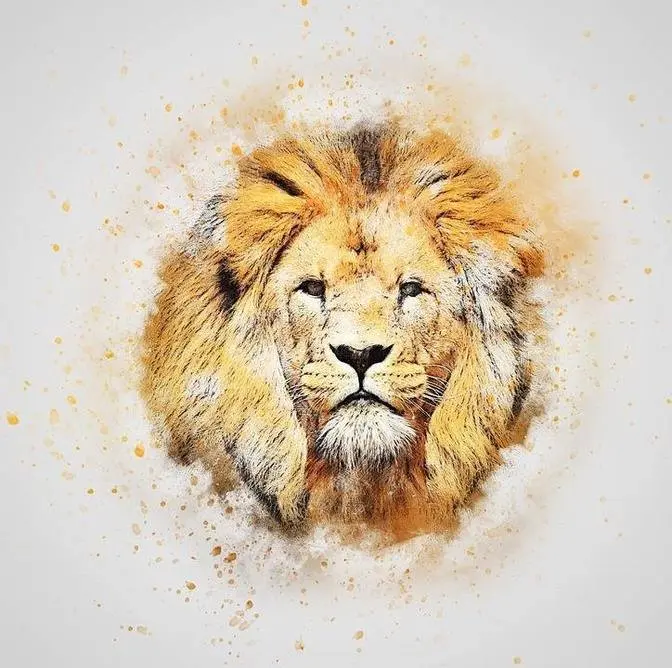
AI GeneratedMay contain errors
Welcome to Wild Congo, the lair of King Kong and the deadly predators.
In the heart of Africa, the Congo River runs deep as an abyss,
stretching nearly 5,000 miles through Central Africa, carrying with it legendary tales.
It is rumoured that the tropical rainforests surrounding it,
where sunlight barely filters through the towering trees, are the lair of King Kong.
Here, nature is not just wild, but also filled with mystery and peril.
Hidden in the darkness, the leopard waits for the perfect moment, as quiet as a shadow.
Its eyes-glowing dials lie motionless in the swamps and deep rivers like rocks in the water.
When prey comes within reach, the crocodile's snap is as swift as lightning.
A creature succumbs.
In this place where nature reigns supreme and King Kong remains a mysterious legend,
the most fearsome predators never cease their struggle to survive.
Every creature must fight for every minute, every second.
There is no peace, only vigilance.
The Democratic Republic of Congo, DRC, is one of the world's most mysterious and resource-rich lands,
home to the Congo Rainforest, the second-largest tropical rainforest, surpassed only by the Amazon.
Covering nearly 900,000 square miles, the DRC ranks third in Africa, just behind Sudan and Algeria.
With its breathtaking landscapes and diverse ecosystems, the Congo resembles an undiscovered natural kingdom,
where every forest and river carries tales of wildlife and the harshness of nature.
The wild lands of Congo rest on the Congo Craton, one of the oldest and most stable geological formations on earth.
In the east, the Virunga Mountains rise like ancient giants.
Mount Nyiragongo and Mount Nyamuragira, two of the most active volcanoes,
continuously erupt, sending streams of molten lava like the breath of the earth.
Nyiragongo, with the world's largest lava lake, can explode at any moment, like a furious wild beast.
Hundreds of millions of years ago, when the wilds of Congo were part of the supercontinent Gondwana,
the tectonic plates slowly separated, forming Africa and leaving the mark of time through ancient land masses.
The Congo Craton, one of the most stable continental platforms on earth,
has existed for more than 2.5 billion years.
This massive rock formation is the foundation of mineral wealth and vast rainforests,
nurturing the Congo's ecosystem as we know it today.
Around 200,000 years ago, early humans migrated to this region, surviving through hunting and gathering.
By 5,000 years ago, the Bantu civilization flourished, bringing agriculture and resource exploitation.
After gaining independence in 1960, Congo continued to face conflicts and unsustainable resource extraction.
Despite many challenges, conservation efforts have increased in the past decade.
Today, the Congo remains a symbol of nature's grandeur and untamed wilderness,
while ongoing conservation efforts offer hope for the future of this challenging land.
Located within the Congo River Basin in Central Africa,
the Congo Rainforest is one of the largest and most mysterious tropical rainforests on the planet.
Spanning over 500 million acres, the Congo Rainforest is like an endless green ocean stretching beneath the tropical skies.
It is known as the Green Lung of Africa, holding 30 billion tons of carbon, helping to cool the planet's burning breath.
The Congo Rainforest stretches across six African nations and covers 60% of the Democratic Republic of Congo's land area.
It serves as a vital shield protecting life, a heartbeat of the wild, and a natural treasure yet to be fully explored.
Here, trees soar hundreds of feet into the air, creating a lush green canopy that shelters the ground below.
More than 10,000 plant species thrive in this forest, with 30% being endemic, found nowhere else on Earth.
Amidst the dense trees and thick vegetation, the leopard dominates the northeastern Congolian lowland forests as an apex predator.
With its compact but muscular body, this large cat is perfectly adapted to move agilely through tall trees and across the forest floor,
where it can execute surprise attacks with precision.
The leopard's exceptional climbing ability allows it to evade dangerous enemies and ambush prey from above.
A highly versatile predator, leopards can hunt anything from small monkeys, duikers, and small antelopes to birds and even fish.
Leopards are masters of ambush hunting.
They move stealthily under the cover of darkness, using trees and dense undergrowth as perfect camouflage,
before launching swift attacks from behind or above, relying on their sharp claws and strength to bring down their prey.
With a single bite to the neck, the hunt ends in silence.
But leopards don't stop there.
They quickly ascend trees, carrying their prey high up into the branches, hiding it from other predators like hyenas or even rival leopards.
To the east of the Congo rainforest ecosystem lies the eastern Congolian swamp forests,
a region of perpetual wetlands where life thrives with every breath of the forest.
At elevations ranging from 980 to 1,310 feet, the largest tributaries of the Congo River meander through,
flowing past Stanley Falls near Kisangani, nourishing the lush swamp forests.
With annual rainfall exceeding 80 inches, the air here is dense, humid, and stifling.
There is no distinct dry season, only endless moisture, where water becomes the lifeblood of the land.
The eastern Congolian swamp forests are home to wildlife that hides in the stillness.
This region serves as a sanctuary for rare reptiles, amphibians, and primates.
The calls of water birds echo through the dense canopy.
Life in this forest is a perfect balance, where every plant and animal plays a crucial role in maintaining the delicate equilibrium.
Among the tall trees of the eastern Congolian swamp forests, the Angolan colobus moves gracefully through the canopy.
With its striking black and white fur, this monkey is also known as the Angolan black and white colobus.
Lacking thumbs, the Angolan colobus has evolved perfectly to climb through dense branches, where it spends most of its time foraging.
The Angolan colobus is a specialized herbivore, with a diet primarily consisting of leaves, bark, and young shoots,
while fruit serves only as a secondary food source.
In swamp areas like the eastern Congolian swamp forests, they rely on fibrous leaves,
which are less nutritious due to the scarcity of fruit throughout the year.
Angolan colobus monkeys particularly favor trees from the Fabercy and Morrissey families.
With their multi-chambered stomachs, they can digest leaves containing tannins and mild toxins,
an advantage that allows them to survive in this challenging environment.
When faced with predators, the Angolan colobus relies on its agility, moving swiftly through the treetops,
rarely descending to the ground to avoid danger.
The loud calls of adult males serve as a warning to the group, helping them escape from imminent threats.
The Angolan colobus is an integral part of the dynamic landscape of Congo's swamps and wetlands,
where life constantly evolves and adapts.
Approximately 25.65% of the eastern Congolian swamp forests lie within protected areas.
These regions include notable names like Salonga National Park, Lomami National Park, Yangambe Biosphere Reserve,
and other vital nature reserves.
Salonga, covering a vast area of over 14,000 square miles, is not only Africa's largest tropical forest park,
but also one of the world's biodiversity hotspots.
The park plays a crucial role in regulating the climate, acting as a giant green lung for the Congo basin.
Salonga is located in the heart of the Congo River basin and is divided into two parts,
North Salonga and South Salonga,
connected by dense tropical forest corridors that form a pristine closed ecosystem with minimal human interference.
This area was designated a UNESCO World Heritage Site in 1984.
With a humid tropical climate, average temperatures ranging from 73 to 81 degrees Fahrenheit,
and annual rainfall between 59 and 78 inches,
Salonga provides the perfect conditions for a rich and diverse ecosystem to thrive.
The park is home to numerous endemic species, many of which are listed as endangered by the IUCN.
One of these species is the bonobo, also known as the pygmy chimpanzee or dwarf chimpanzee.
This primate exists only in the Democratic Republic of Congo, DRC,
and Salonga is home to about 40% of the global bonobo population.
Bonobos are the closest living relatives to humans, sharing up to 98.7% of our DNA,
according to research by the Max Planck Institute for Evolutionary Anthropology in 2023.
The split from the common ancestor of the bonobo and common chimpanzee occurred around 1 to 2 million years ago,
when the Congo River divided primate populations, creating two distinct species.
While chimpanzees evolved to the north, bonobos primarily inhabit the southern vast rainforests.
One unique feature of bonobos is their matriarchal social structure.
Unlike chimpanzees, where males dominate, bonobo society is led by females.
Adult females form strong bonds and lead the group, while males hold lower social ranks.
Bonobos are omnivores, with a diet consisting mainly of fruits, leaves and insects.
Fruits from the Moraceae family make up a large portion of their diet,
but they also consume various soft plants and occasionally young birds.
At Salonga, bonobos travel up to three miles daily in search of seasonal fruit.
They play a critical role in maintaining the ecological balance of Salonga National Park
and preserving the priceless natural heritage of the Congo Basin.
The pristine forests of the northwestern Congolian lowland forests stretch across the tri-border region of Cameroon,
Gabon, the Republic of the Congo and the Central African Republic.
Like an endless green blanket, this forest extends more than 310 miles from west to east and 435 miles from north to south.
At an elevation of 1,740 feet, the Shilu Mountains rise like protective pillars for the entire region,
where the lush green vegetation stretches to the horizon.
This is a land of relentless rainfall, with an annual average of 55 to 79 inches.
A humid, tropical monsoon climate envelops the area in constant freshness.
The dense, evergreen broadleaf forests, which cover over 90% of the area, form a thick maze,
with towering trees like Entandra fragma congoense, Pericopsis elata and Gilbertio dendron duevre competing for the sky.
Rivers snake through the landscape, bordered by raffia palms serving as lifelines that nourish the ecosystem.
In the depths of these forests, life pulses with energy.
The calls of primates echo throughout the area.
This region is renowned for having the highest density of primate species in Africa.
Another remarkable primate that inhabits the dense rainforests of the northwestern Congolian lowland forests is the mandrill.
It is the largest and most colorful primate in the Cercopithecidae family.
Adult male mandrills can weigh up to 110 pounds and measure between 27 to 37 inches in length.
One of the most striking features of this species is their vibrant blue and red faces,
along with their brightly colored rumps, which not only attract mates, but also serve as indicators of health and dominance within the group.
Mandrills have a complex social structure, with groups that can consist of up to 200 individuals,
and during larger gatherings, called hordes, numbers can exceed 1,000.
These groups are typically led by dominant males, with a clear social hierarchy.
Older, more colorful males tend to hold leadership positions, while females and juveniles stay closer to the center of the group to avoid predators.
Located within the northwestern Congolian lowland forests, the Rwenzori Mountains, also known as the Mountains of the Moon,
rise majestically in eastern Democratic Republic of Congo, extending into Uganda.
With Margarita Peak towering at 16,762 feet, Rwenzori ranks as the third highest mountain in Africa, like a giant crown embracing the Congo rainforest.
At varying elevations, from the base to the summit, ecosystems shift dramatically,
from humid tropical rainforests at the lower levels, through montane grasslands, to the icy, snow-covered peaks at the highest points.
Rwenzori not only boasts extraordinary beauty, but also serves as a critical habitat for many.
The Lhwest's monkey, also known as the mountain monkey, is a characteristic primate of the hilly regions of central and east Africa,
particularly thriving in the dense, moist rainforests of the Rwenzori Mountains.
Belonging to the genus Allocrossibus, the Lhwest's monkey diverged from a common ancestor with other guenon monkeys about one to two million years ago.
Living at altitudes ranging from 2,950 to 8,200 feet, this monkey species has evolved to adapt to the harsh conditions of high-altitude forests.
They live in small groups of 10 to 20 individuals, with a tightly-knit social structure where adult males take on the role of leading and protecting the group.
Lhwest's monkeys are highly social, with group members frequently grooming and caring for one another to strengthen bonds.
When threatened by predators like leopards or crowned eagles, they quickly climb high into the treetops and emit alarm calls to protect the troop.
The mountainous and forested environment provides the ideal setting for Lhwest's monkey to aid in seed dispersal,
contributing to the plant diversity of the northwestern Congolian lowland forests.
Stretching nearly 750 miles along the western bank of the Congo River, the western Congolian swamp forests flow like a powerful current through vast, waterlogged forests.
This land, teeming with life and mystery, is like a deep green veil draping over central Africa, where waters weave through alluvial forests.
The Congo River, spanning up to 9 miles wide, winds like a silver ribbon around densely forested islands, bringing life to every creature here.
The wetlands and swamp forests of the western Congolian swamp forests provide an ideal habitat for the sitatunga, a unique semi-aquatic antelope found in central and east Africa.
With its rich network of rivers and marshes, this region offers abundant resources for the sitatunga, allowing it to move and forage easily in the waterlogged areas.
The sitatunga is a medium-sized antelope, with males typically weighing between 168 to 262 pounds and standing about 28 to 46 inches tall at the shoulder, while females are lighter, weighing between 53 to 126 pounds.
A distinguishing feature of males is their spiral-shaped horns, which can grow between 18 to 36 inches long, helping them navigate through dense vegetation.
To adapt to the swampy environment, sitatungas have long legs and wide-splayed hooves, shaped like bananas, which allow them to move easily through deep water.
Their water-resistant coat protects them from mud and wet grass. With flexible ankle joints and keen hearing, they can detect predators even in environments with limited visibility.
Sitatungas are herbivores, primarily feeding on fresh grasses, sedges and leaves.
During the dry season, when water levels recede, they can stand on their hind legs to reach high branches. Their foraging habits change with the seasons, and they mostly feed along the edges of the wetlands.
In the dense forests of the western Congolian swamp forests, the African forest elephant, Loxodonta cyclotis, moves silently through thick vegetation.
Though smaller than the African bush elephant, the forest elephant still exudes the grandeur of a giant. Adult males stand between 8 to 10 feet tall and weigh approximately 4,400 to 9,900 pounds.
The forest elephant lives in a complex social structure, led by a matriarch, an adult female. The matriarch is responsible for protecting the group and guiding the herd in search of food and water.
Forest elephant groups typically consist of females and their young, while adult males often live alone or in small bachelor groups.
These elephants communicate with each other using infrasound, low-frequency calls that can travel long distances through the dense jungle.
They also use their trunks for tactile communication, reinforcing social bonds and expressing care for other herd members.
Forest elephants are herbivores, feeding primarily on leaves, grasses, fruits and bark.
According to the Wildlife Conservation Society in 2023, a forest elephant can consume up to 330 pounds of vegetation daily to sustain its massive body.
During the dry season, when food is scarce, they use their tusks and trunks to strip bark and access nutrient-rich parts of plants.
These elephants are not only symbols of strength, but also silent protectors of the ecosystem, playing a crucial role in maintaining forest health by dispersing seeds and creating clearings.
However, they are on the brink of extinction.
Excessive hunting during the 20th century caused their population to plummet.
As of 2013, only about 30,000 forest elephants remained.
Since 2021, the IUCN has classified the forest elephant as critically endangered.
Conserving this species in the western Congolian swamp forests is not only a responsibility, but an urgent task to protect the Congo rainforest ecosystem.
Hidden beneath the mud of the western Congolian swamp forests, the dwarf crocodile lies in wait for its prey.
It is the smallest crocodile species in the crocodility family, with an average length of 5 to 6 feet and a weight of around 40 to 70 pounds.
This species is characterized by a stocky body, a large head and a short, broad snout, perfectly adapted for hunting in dense, swampy waters.
The dwarf crocodile can endure harsh conditions, from low oxygen environments underwater to holding its breath for long periods.
During the dry season, when water recedes and food becomes scarce, it burrows into the mud and enters a state of semi-hibernation, waiting for the rains to return.
Despite its resilience, the species faces significant threats.
According to the IUCN Red List in 2024, the dwarf crocodile is classified as vulnerable.
With only about 8,000 to 10,000 individuals remaining in the western Congolian swamp forests, in the shade of the dense canopy, the Congo grey parrot stands out with its dark grey feathers and signature red tail.
Its bright yellow eyes shine with intelligence and alertness.
This parrot is renowned for its ability to mimic human speech and surrounding sounds, a trait that makes it one of the smartest bird species in the world.
As a herbivorous species, the grey parrot feeds on seeds, fruits, berries and young shoots.
In the swamp forests, they have a particular affinity for the fruits of oil palm trees, which provide a critical food source.
While consuming fruit, they also play a key role in seed dispersal, helping to regenerate the plant diversity of the rainforest.
Their ability to fly long distances allows them to spread seeds across various parts of the forest, from the swamps to farther regions, contributing to forest regeneration.
However, the population of this species is under serious threat.
According to BirdLife International in 2024, the Congo grey parrot is now listed as critically endangered due to illegal trade and habitat loss, putting immense pressure on their numbers.
Located in the heart of the Democratic Republic of Congo, the central Congolian lowland forests unfold like a majestic portrait of untamed wilderness, where life seems to never stop.
With its vast expanse, this forest is one of the last remaining primary rainforests in Africa, a place seemingly untouched by time.
The equatorial climate blankets the entire region, maintaining a steady temperature of 75°F to 81°F year-round.
This stability creates the perfect environment for vegetation to thrive.
Torrential rains from March to June and September to November bring 60 to 80 inches of rainfall annually, keeping the soil moist and fertile.
In this world, countless rare and endangered wildlife species find refuge.
In the dense canopy of the central Congolian lowland forests, the crowned eagle soars silently above, its sharp eyes scanning the ground for prey.
With a wingspan ranging from 6 to 6.5 feet and a body length of 31 to 35 inches, the crowned eagle is one of Africa's largest and most formidable birds of prey.
Its dark brown plumage, prominent crest atop its head and striking white barred belly make this bird unmistakable.
In the watery habitats and mangrove forests of the western Congolian swamp forests, the Nile monitor moves silently through dense vegetation.
Measuring up to 8 feet in length and weighing between 11 to 33 pounds, it is one of the largest species in the Varanidae family in Africa.
Its tough, dark brown or grey scales, speckled with yellow, provide perfect camouflage in the swamps and forests.
A semi-aquatic species, the Nile monitor is an excellent swimmer. Its long, flattened tail acts like a paddle, allowing it to move swiftly through water.
The Nile monitor can swim at speeds of 1.2 to 1.8 miles per hour and hold its breath for up to 30 minutes, making it a formidable underwater predator.
Located in the heart of the Democratic Republic of Congo, Cuvette Centrale spans 56,000 square miles, resembling a giant mirror reflecting meandering rivers amidst deep, waterlogged swamps.
This is not only Africa's largest wetland, but also one of the world's most globally significant ecosystems, with its ability to regulate the environment and maintain extraordinary biodiversity.
Here, the network of rivers and swamps forms a complex web. Rivers like the Congo, Lulonga, Ruki and Chuapa flow continuously, carrying life and sustaining an irreplaceable ecological rhythm.
These wetlands are not only a refuge for many unique species, but also help reduce carbon emissions, slowing the process of climate change.
The peaceful waters of Cuvette Centrale conceal a complex and vibrant ecosystem. It is home to two iconic African crocodile species that play essential roles in the food chain of the swamps and rivers.
The Nile crocodile, a massive apex predator, can reach lengths of up to 20 feet and weigh as much as 2,200 pounds.
Its powerful body and long head, equipped with formidable teeth, allow it to easily overpower large prey.
In contrast, the African slender-snouted crocodile is a master of finesse.
With its long, narrow snout, this crocodile is perfectly adapted to hunting fish and smaller aquatic animals.
Much smaller than the Nile crocodile, it measures between 8 and 13 feet and weighs 275 to 715 pounds.
However, its underwater hunting skills are highly refined, especially in the deep swamps and slow-moving rivers of Cuvette Centrale, where fish make up its primary diet.
Unfortunately, as of the IUCN Red List 2024, the African slender-snouted crocodile has been classified as critically endangered, with only about 2,000 to 3,000 individuals remaining in the wild due to poaching and habitat loss.
Every migration season, the black stork travels more than 3,000 miles, crossing various terrains from the dry Sahara Desert to the tropical rainforests of Congo.
This long journey ensures stable food sources and access to suitable breeding environments in Europe and Asia during summer, before returning to Africa as the dry season begins.
In Cuvette Centrale, these birds use the swamps and river systems, such as the Congo, Lulonga and Ruki rivers, as critical stopover points to feed and regain energy.
The black stork walks slowly through shallow waters, carefully scanning for fish, amphibians, insects and shrimp.
Its long, sharp beak is an effective tool, allowing it to snatch up prey in a flash.
In the expansive wetlands, they often remain still for hours, waiting for the perfect moment to strike unsuspecting prey.
In contrast, the yellow-billed stork often hunts and lives in small groups of 5 to 10 individuals.
Though during breeding seasons, or when food is abundant, they can gather in larger flocks.
Their seasonal migration behavior takes them between wetland areas in Congo and other equatorial regions in search of water and food during the dry season.
When water becomes scarce, they migrate to places like Cuvette Centrale, where stable rainfall and abundant food sources are available year-round.
The yellow-billed stork is a large bird, measuring between 35 and 41 inches in length, with a wingspan reaching 59 to 65 inches.
Their average weight ranges from 5 to 5.5 pounds.
Their distinctive white plumage, contrasted by black wing and tail feathers, is easily recognizable, along with their long, curved, bright yellow bill.
Amid the vast expanse of the African rainforests, the Atlantic Equatorial Coastal Forests stretch over 73,200 square miles along the Atlantic coast.
From the low northern hills to distant southern and eastern mountain ranges, this ecosystem is a vibrant, living canvas.
These rainforests form a green mantle that covers the southwestern corner of Cameroon, the mainland of Equatorial Guinea, and the coastal plains of Gabon.
Major rivers like the Sanaga and Congo wind through the landscape, like silver threads weaving through the ancient forest.
In this forest, every tree branch and river is a vital part of a vast ecosystem.
Mangrove forests line the coastal edges, forming a natural boundary where endemic animals find shelter, making this one of the world's most biodiverse regions.
The Atlantic Equatorial Coastal Forests, with all its richness and grandeur, truly stand as a natural gem.
Hidden among the fallen leaves of the Atlantic Equatorial Coastal Forests, the Gaboon Viper, also known as the Gaboon Adder, waits silently for an unfortunate prey.
Its wide, triangular head and brilliantly patterned scales, blending hues of brown, yellow, and purple, make this snake a master of camouflage in the damp forest floor of the Congo rainforest.
It looks like a dried leaf, perfectly blending into the landscape, leaving prey unaware of the lurking danger.
When a rodent or bird unknowingly approaches, the Gaboon Viper strikes in less than 0.5 seconds, giving its prey no time to react.
With the longest fangs in the snake world, up to 2 inches, the Gaboon Viper injects a massive dose of venom, from 200 to 600 milligrams in a single bite.
There's no need to chase. The Gaboon Viper simply waits for its prey to succumb before swallowing it whole.
Its flexible jaw and expandable body allow it to consume prey many times larger than its head.
The Gaboon Viper's ambush strategy and potent venom make it one of the most formidable predators in the Atlantic Equatorial Coastal Forests.
The dense vegetation of the Atlantic Equatorial Coastal Forests provides an ideal hunting ground for the Serval.
Its long, slender legs help it navigate through tall grasses, giving it an advantage when hunting in grasslands and swampy areas.
The Serval preys not only on rodents, but also on amphibians like frogs, particularly in swampy regions.
Its long legs allow it to easily move through shallow water, catching frogs and other aquatic animals with high precision.
The Serval is the wild cat with the longest legs in proportion to its body, allowing it to spot and approach prey from a distance.
Its large, sensitive ears function like radars, picking up the smallest sounds.
When it detects prey, the Serval quietly stalks it, moving stealthily before launching a powerful leap of six to nine feet, leaving the prey with no time to react.
With sharp claws, the Serval grabs its prey and then bites its neck to bring it down.
It can consume a variety of prey in one day, but often leaves part of larger prey for scavengers to feed on.
Located in the southeast of the Democratic Republic of Congo, the Katanga Plateau rises to elevations between 3,900 and 5,900 feet, where grasslands and Mayombo woodlands intertwine with majestic hills.
Katanga also serves as a natural carbon storage region, helping regulate the flow of major rivers like the Congo, contributing significantly to mitigating climate change.
Its pristine landscape, with vast valleys and fast-flowing rivers, creates a vibrant land full of life.
The plateau not only shelters wildlife, but serves as the ecological heart of the region, safeguarding the natural balance and its exceptional biodiversity.
Here, lions, symbols of power and authority, play an essential role in the ecosystem.
On the Katanga Plateau, the terrain of hills mixed with grasslands and sparse forests provides an ideal environment for lions.
With abundant prey like antelope, buffalo and zebras, the lion population here remains stable.
Lions, the only large cats that live in pride, typically form groups of five to fifteen individuals.
A pride consists of dominant males, lionesses and cubs. Plateau, groups of three to five lionesses, have high success rates when hunting antelope and buffalo.
The harsh, dry season in Katanga tests the lions' survival skills. They adapt by hunting near water sources or in sparse forests where prey gathers.
Lions also adjust their hunting times, becoming more active at night to avoid the daytime heat.
Their hunting abilities and regulation of prey numbers help maintain the region's ecological balance and vegetation.
However, according to the IUCN Red List in 2024, the lion population on the Katanga Plateau is in steep decline,
with only 200 to 300 individuals remaining due to habitat loss and human-wildlife conflict.
In the wild expanse of the Katanga Plateau, the eerie laughter of the spotted hyena echoes, signaling ruthless hunts.
With a body length of 37 to 65 inches and an average weight ranging from 99 to 198 pounds, the spotted hyena is the largest member of the hyenidae family.
Known for its pack-hunting prowess, they live in matriarchal social structures where females dominate, controlling territory and food resources.
Their hunts rely not only on individual strength, but also on the unity and close coordination of pack members.
In the Katanga Plateau ecosystem, hyenas are not just hunters, but also fierce competitors.
They often confront larger predators like lions and leopards to compete for food and territory.
However, thanks to their aggressive nature and strong pack organization, they are able to steal prey from larger rivals in 20 to 30% of encounters, according to the Wildlife Conservation Society in 2023.
Upemba National Park, spanning over 4,530 square miles in the Southern Democratic Republic of Congo, is like a living masterpiece of Central African wilderness.
This landscape, where flooded grasslands, swamps and freshwater lakes converge, creates a richly diverse and vibrant ecosystem.
Large rivers like the Lualaba weave through the savannas and Mayombo woodlands, forming a hydrological network that acts as the lifeblood of the entire region.
During the dry months, as water recedes and the ground cracks, the resilient swamps retain the last remnants of water, sustaining countless species in this dynamic ecosystem.
In Upemba National Park, the Grants zebra thrives in grasslands, wetlands and open woodlands.
A subspecies of the plains zebra, Grants zebra displays the familiar black and white stripes, with dense, narrow stripes on its back and legs.
These stripes, while visually striking, also serve a functional role in deterring horseflies and parasitic insects.
As non-selective grazers, Grants zebras consume a wide range of grasses, from tough to tender varieties, making them well adapted to the harsh environment of the Katanga Plateau.
During the dry season, when food becomes scarce, they migrate seasonally, heading toward the wetlands around Lake Upemba in search of fresh grass and water.
Grants zebras can travel 12 to 18 miles daily during migration, searching for food and water.
Each day they consume 5.5 to 10 pounds of grass, not only maintaining their health, but also playing a key role in controlling grasslands and maintaining ecological balance in the area.
Upemba National Park, with its expansive wetlands and lush grasslands, provides the perfect habitat for the wattled crane, Africa's largest crane species.
These birds typically inhabit a nest in swamps and riverine wetlands, where they can easily find food and protect their nests.
During the dry season, wattled cranes migrate to lowland marshes or wetlands near rivers to ensure a continuous food supply.
A distinctive feature of the wattled crane is the pair of fleshy, wrinkled wattles under its chin, which play a crucial role in the species' social communication.
Their large, pale grey beak is strong enough to hunt insects and small animals.
As they move through wetlands, wattled cranes stimulate the growth of aquatic plants and help disperse seeds, while also regulating insect and small animal populations.
With their presence, the ecosystem maintains balance, allowing for a diverse and thriving habitat.
Located in the northeast of the Democratic Republic of Congo, Garamba National Park stretches across 1,900 square miles, a vast, untouched wilderness.
This precious gem of African wildlife brings together expansive savannas, grasslands, dense forests and wetlands, winding along the Dungu River.
Rivers flow through the park like veins, keeping the ecosystem alive by providing water to the land and its wildlife.
Garamba is one of the last strongholds of the Kordofan giraffe.
This subspecies is smaller than other giraffe species, standing between 13.7 and 17.7 feet tall.
The Kordofan giraffe has a light brown-yellow coat with irregular smaller dark patches compared to its distant relatives.
Its small, horn-like protrusions, known as ossiconis, are a distinctive feature of the species.
According to the Giraffe Conservation Foundation in 2024, the population of Kordofan giraffes in Garamba has dwindled to only about 40 to 50 individuals.
Poaching and habitat loss have pushed this subspecies to a critically endangered status.
It is now one of the most at-risk giraffe subspecies facing extinction in Africa.
Once a symbol of the grasslands in Garamba National Park, the northern white rhino now represents a tragic story of a species on the edge of extinction.
Weighing between 4,000 and 7,700 pounds, the northern white rhino is the second largest land animal after the elephant.
These rhinos have thick grey skin and two prominent horns, with the front horn reaching up to 5 feet in length.
These very horns made them the target of poachers, driving the species toward extinction.
In the past, Garamba was an ideal home for the northern white rhino, with vast grasslands providing abundant food.
The northern white rhino is a specialized grazer, using its broad lips to feed on short grasses, consuming between 110 and 130 pounds of grass each day.
Its role in maintaining ecological balance was crucial, as the rhino helped control grass growth, creating favorable conditions for other herbivores like antelopes, zebras and buffalo to access food resources.
However, due to rampant poaching and habitat destruction, the northern white rhino population declined dramatically.
Garamba was once a major habitat for this species, but today only two female northern white rhinos remain in captivity, both unable to reproduce naturally.
Conservation efforts are underway, with hopes of reviving the species through artificial reproduction techniques and embryo transfers from southern white rhinos.
Scientists are hopeful that, with modern technology, they may one day restore the population, bringing the northern white rhino back to roam Garamba's sunlit grasslands.
The dire situation facing wildlife struggling to survive in Congo has sounded an urgent alarm for humanity.
With uncontrolled human intervention, the impacts and changes caused by climate change are accelerating within the ecosystem at an unprecedented rate.
Congo's forests are withering, and along with them, a portion of Earth's life that may never be restored.
Climate change is altering the pulse of life in the Congo rainforest, where the delicate balance of nature has existed for millions of years.
Rainfall is no longer regular, and extended droughts tear through the once lush landscape.
The tropical rainforest, a complex ecosystem reliant on consistent rainfall, is now facing harsh dryness.
Rivers that once roared now quietly dry up.
Elephants, bonobos, and countless other species wander in search of water and food in a rapidly transforming environment.
The instability of the climate has also increased the risk of wildfires, particularly in the drier forests of eastern and southern Congo.
Wildfires, with their destructive force, not only burn vegetation, but also leave many animals homeless overnight.
According to the 2023 Climate Change Impact Report on Central Africa, forest areas burned have increased by more than 30% compared to the previous decade.
But climate change is only part of the story.
The extraction of valuable minerals like cobalt, copper, and diamonds has brought economic prosperity, but has been a nightmare for nature.
According to the WWF 2024 report, more than 70% of the world's cobalt supply comes from DRC.
However, the scars from mining have torn apart pristine forest areas, destroying habitats for countless species.
Streams that once ran crystal clear are now polluted with toxic chemicals from mining operations, causing irreversible negative impacts on the ecosystem.
Bonobos and chimpanzees, two primate species that depend on primary forests, are disappearing.
According to the IUCN Red List 2024, only about 15,000 to 20,000 bonobos remain, a significant decline from previous numbers.
Illegal hunting also poses a grave threat. Elephants, rhinoceroses, and many primates face extinction due to poaching.
According to WWF 2024, the elephant population in DRC has plummeted to just around 10,000 to 12,000, down from more than 100,000 in the 1980s.
The African grey parrot, known for its ability to mimic human speech, has also fallen victim to illegal trade networks, with its population declining by more than 50% in the last decade.
The forests, once the green lungs of the planet, are now being rapidly destroyed.
Congo has lost over 1 million hectares of forest in just the past decade, largely due to mining, agricultural expansion, and illegal hunting.
The legendary Lair of King Kong will soon become a distant memory, forgotten forever as primate species vanish.
The green heart of Africa will cease to beat if its strongest predators and rarest creatures fall, severing the food chain, and the bind beekeeping also help local people reduce their dependence on forest resource extraction.
Have you ever ventured into the colourful Congo rainforest and explored the Lair of King Kong?
If so, feel free to share your experiences in the comments below.
Your stories can inspire and motivate ongoing efforts to conserve nature and wildlife in Congo, while preserving ecosystems for future generations.
Don't forget to like, subscribe, and ring the notification bell to join us on more magical adventures, where nature's stories are still waiting to be told.