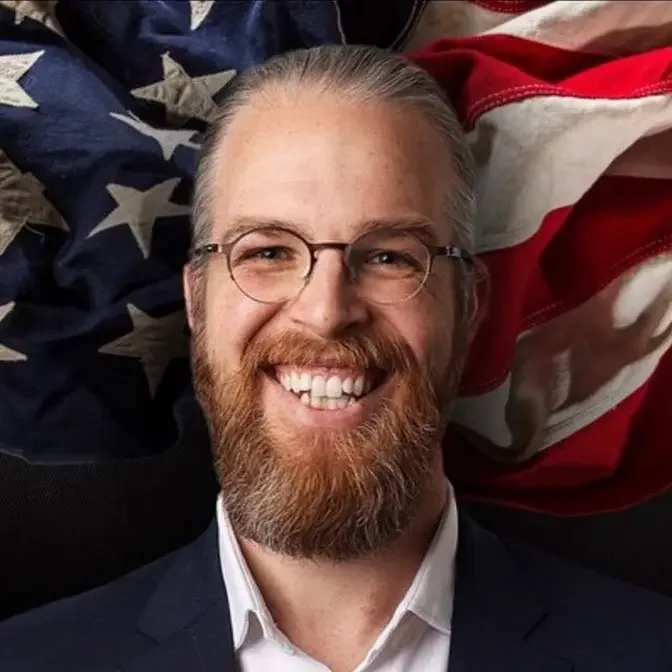
Ray Dalio just compared today's market to 1929, Berkshire Hathaway is sitting on its largest cash position ever, and the interest on America's national debt is now our single biggest expense. So why is everyone still celebrating? I sit down with trading educator Mark Wilburn to break down what is actually happening beneath the surface, including why the SpaceX IPO is a billionaire exit strategy disguised as an opportunity, why the AI bubble could make the 2000 crash look small, and why your 401k may not be as safe as you think. Nancy Pelosi once said "we have retirement accounts we haven't even tapped yet." That is not a promise. It is a warning. The system was not built to protect you, but once you understand how it works, you can stop being the bottom feeder and start playing a completely different game.
Mark is also hosting a free live Freedom Trading Summit on June 25th and June 27th where he teaches ordinary people how to read stock charts, protect their positions, and ask the questions their financial advisor hopes they never learn to ask. Reserve your free seat at https://MIA-NEOS.COM
For high quality storable foods and seeds, visit http://heavensharvest.com and use promo code SETH to save 15% on your order.
To learn more about investing in gold & silver, visit http://goldwithseth.com, or call 626-654-1906
Kimchi One from Brightcore – Improve your health, improve your life. 25% Off with code: MANINAMERICA at https://mybrightcore.com/maninamerica Or dial (888) 575-6488 for up to 50% OFF and Free Shipping – ONLY when you call!
To learn more about Red Light Therapy, visit http://myredlight.com and use promo code SETH to save.
The video warns of an imminent stock market crash, comparing current bubble levels to 1929 and 2000. It highlights the dangers of unsustainable U.S. national debt, AI-driven market fragility, and the predatory nature of IPOs. The speakers urge individuals to move beyond passive investing and seek financial education to protect their wealth from systemic risks and government instability.
What I'm about to say has me genuinely concerned. And I don't say that lightly. I'm not trying to be
a fear-monger here, but the numbers don't lie. And what's happening right now in the stock market
is something that every single American needs to pay attention to. Two weeks ago,
one of the richest and most respected investors on the planet, Ray Dalio, the guy who manages $150
billion, went on Bloomberg television and gave a warning that sent shockwaves through Wall Street.
He said, and I quote, the stock market is approaching the same bubble levels as 1929
and 2000. 1929, the Great Depression where people lost everything. Banks collapsed,
families are destroyed. 2000, the dot-com crash. The market lost $5 trillion in value. Retirement
accounts were wiped out overnight. My own father lost nearly his entire 401k. And Dalio is saying
we're tracking at 80% of those same extremes right now. His bubble indicator, this tool that
he uses to measure how overheated the market is, it's flashing red. He's pointing to massive market
concentration. So a handful of AI stocks are propping up the entire S&P 500. If those stocks
miss earnings by even just a little bit, the entire thing comes crashing down. But here's
where it gets kind of scary. At the same time that Dalio is warning about 1929, America's top
CEOs just told us what they think is coming. So the conference board released their CEO confidence
report for Q2 2026. The number came in at 47. So anything that's below 50 means that CEOs are
more negative than positive. So let me give you the numbers. So 47% of CEOs said the economy
is worse now than it was six months ago. 40% say it's going to get even worse in the next six
months. And 31% are planning to cut jobs. So these people aren't conspiracy theorists like me and you
are. These aren't internet commentators. These are people that are running the biggest companies in
America. And they're basically telling us to brace for impact. But on top of all this, the United
States government is now spending over a trillion dollars a year just on interest payments on the
national debt. So not paying down the debt, not investing in infrastructure, not helping American
families, just paying interest. That's more than we spend on defense. It's more than Medicare.
It's just interest. So here's why I really need you to understand. The people at the top, Wall
Street, the big banks, hedge funds, they know what's coming and they're already positioning.
They're moving money into specific sectors. They're reading the charts. They're getting out
of the things that are going to crash and they're getting into the things that are going to explode.
But everyday Americans, regular families, they're sitting ducks. Their retirement is in a 401k that
they don't really control. Their savings are in a system that was never designed to protect them.
And that's not an accident. Wall Street wants you to believe that trading is too complicated,
that you need this fancy degree or a Goldman Sachs desk to make money in the market. Because
every dollar you leave in their system, they make money off of it whether you win or lose.
Remember, they want you to own nothing and be happy and eat your bugs.
Welcome to Man in America, a voice of reason in a world gone mad. I'm your host, Seth Holhouse.
On this show, I talk to real Americans with real solutions to the real problems that we're facing
today. I help you connect the dots between the problems that we see in the present with decisions
made by powerful people throughout the past. Because once we understand how we got here and
what the real history of America is, we can remember where we came from, really learn from
the past and make sure that we get back to that and make the changes for a better future.
Now, what if I told you that there's someone who could show you how to read what the market's
telling you? Someone who's been training regular everyday people, not Wall Street guys, not hedge
fund managers, just regular people like you and me, train them how to take control of their money
and actually win in a rigged market. That's why I brought my guest on today. Mark Wilburn is the
president and the co-founder of Nios Capital Development Group. He's the author of Understanding
the Matthew Effect, a book about why the rich keep getting richer, but how everyday people can tap
into those exact same strategies. Mark has trained thousands of people how to properly trade the
stock market, not gambling, not guessing, not following some talking head on CNBC,
actually reading the charts and understanding what the big money is doing. His strategy has
produced 141 trades in 2025 with a 78.22% win rate. That means nearly 8 out of every 10 trades
were winners. At one of his prior events, he shared two stock picks live with the audience,
SMR, NuScale Power, and NNE, Nano Nuclear Energy. Both of those stocks went up over 200%
after that event. People who followed that doubled their money and then some.
So Mark is holding a free live training event on June 25th and June 27th. It's called the Freedom
Trading Summit, where he's going to break down exactly what's happening in the markets right now
and how you can position yourself on the right side of what's coming. He'll show you the truth
about what's really happening in the markets. So there's a link in the description. Click it,
sign up. It's 100% free. You can also scan the QR code with your phone if you're watching on a TV
or a laptop. He's even giving away a free digital copy of his book just for showing up.
So let's get into that interview. And also before we start, make sure you hit that like button.
Make sure you subscribe. Also to remind you that every show I do is done as a podcast as well. So
if you'd rather listen, just go to your favorite podcast app, search for Man in America, and you'll
find me there. All right, let's jump into this interview with Mark Wilburn. Mark, man, it's good
to have you back on. I'm really enjoying these discussions. I'm looking forward to diving into
some pretty interesting topics to say the least. So thanks for being here, man.
No, man. Thanks for having me. I love these conversations. And like you said,
we're in such interesting times. These conversations are really warranted right
now to keep people up to date and educated. Yeah. It's almost like how to navigate the
stock market in the days of Noah, right? Great way to put it.
Yeah, but I've been really enjoying it though, because I have completely avoided the stock market
and you're the one person, because I listen to a lot of people talking about it and everything,
but you're the one person that's got me thinking like, okay, I should probably start looking into
it. I think I'll probably join one of your upcoming summits. Actually, I'll pull that
up real quick just because I know that we kind of touched on this again, but
you've got a freedom trading summit, which is coming up June 25th or June 27th, right?
Yeah. So the 25th is on a Thursday and then we kind of do an encore 27th, but both of those
events are live. So they're both live. We'll do live Q and a there for people as well.
And a lot of folks get so much value just out of this. They walk away with insights and
understanding that they normally wouldn't have. So we really encourage people to come.
And again, it's free. Yeah, exactly. You can't. Yeah. It's like, yeah, there you go. It's free.
You learn more. It's actually probably, it's better than free. Cause if you make some money
off of it, then it's, it's like not just free. It's like, you're almost like you're being paid
to do it. If you follow the advice. Well, we do give, we do typically try to give
some ideas to look at. It just depends on where the market is at the moment where we host these
events because we only do it once every couple of months. And so if the market's in a really nice
situation and there's an opportunity, we always share that. But to me, Solomon said, knowledge
is better than gold. And anytime you can go somewhere and get knowledge, it's always beneficial
to do that. Oh, it is. It is. And so one thing I want to jump right into is, so we'll be looking
at a lot of, a lot of things happening in the stock world. SpaceX is a big one, AI stocks.
But Ray Dalio, he just saying just last week, I think put out a warning and this, you know,
for people who don't know him, I'd recommend you, you do look at him. And he has a book,
I think it's called Cycles, I think it is, but he's, he's a brilliant guy, but he just put a
warning out saying that the stock market is approaching 1929 and 2000 bubble levels. But
he also says that another crisis is past the point of no return. And I'd love to hear your
thoughts on this because this is, again, I'm not a stock guy, but I'm very interested in the global
economy because, you know, as, as we've discussed before, if you get into, you know, what's really
running the world, you guys, a lot of it goes back to the central banks, right? The Federal Reserve,
the, the BIS. So you can see that the financial system is, is the control mechanism, right? It's
kind of, it's, it's the center of how this society is controlled in the way it is. And so when I see
what this is talking about with Ray talking about, you know, warning about a potential crash coming,
you know, the indicators I've been looking at have been saying that for a long time.
And I say a long time, you know, probably the past three or four years, it's like, okay,
there's a bubble going, you're seeing the debt skyrocketing, you're seeing all these things
happening. Yet the stock market is, keeps going up and everyone's like, well, you know, my 401k
is getting 10% a year, so I'm happy with it. But, you know, for me, maybe it's just my, I'm very
suspicious of, of these kinds of things, of the markets in general. And so I'm just kind of kept
out of it. If you could go back in time and buy oil before the world relied on it, would you?
Of course you would. Anyone would. So why aren't you buying silver right now? You see, the people
who recognized oil early didn't just make money. They got ahead of one of the biggest economic
shifts in history. And today a similar opportunity is unfolding with silver because silver is a lot
more than just a precious metal. It's a critical resource used in solar panels,
electric vehicles, defense systems, AI infrastructure, and even these massive
data centers that are powering our digital world and the surveillance grid. So while demand keeps
growing, it's actually still affordable enough that the average American can start accumulating
it right now. And that's why investors are turning to silver to protect against inflation and own
one of the world's most important strategic resources. Don't be the person who looks back
in 10 years and says, I saw it coming, but I just didn't act. I'm sorry. So visit GoldWithSeth.com
and learn just how easy it is to own physical silver. Again, that's GoldWithSeth.com. And
here's something a little extra. If you just mention my name, when you reach out to Noble
Gold, they're going to send you a one-tenth ounce of gold coin just as a thank you when you open a
new qualified account. So again, that's GoldWithSeth.com. What do you say, when Dalio's
saying this, here's another article that he was also saying, right here, he's saying that,
covering his same, actually, sorry, this is from earlier this year, saying that America's wealth
to money ratio mirrors the 29 crash levels. When someone like that is putting out these kinds of
warnings on top of the fact that Berkshire Hathaway is holding its largest cash position,
there's a lot of other indicators. How do you make sense of that? How do you interpret
this warning from Ray Dalio? That's a great question. And like I said, he's brilliant.
He's got a couple of books out. I really recommend people to read. Big proponent of
financial education on that is Principles and the Changing World Order is his newer one. It's
fantastic. So just want to put both those out there for your viewers. This guy's made for making
some really bold predictions. He's had a lot of success in business. And so a lot of those
predictions have come about, but then others, not so much. Again, it's hard to dispute his
success in the markets. My opinion, we have to see it play out. And so personally, back in March,
we actually saw one of our proprietary indicators shoot off a bearish warning that up to this point
has hit three out of three times that we've seen it for more downside. And so when we didn't get
that, I was kind of like, OK, well, my job as a trader is to pivot when the market pivots.
And so the average person who's out there doesn't know what to look for and how to see it.
So on April 8th, all this pivot happened. We started having the market move back into new
highs. And we ended up doing that with the market. We called out shop Tesla, a couple other names for
17 percent returns in just a few weeks for our students. But the key, Seth,
is having the education to know what to look for in the markets. And I know that sounds hard,
but I promise it's really not that difficult to get to. So when I hear Dalio saying,
watch out, be careful, here's this huge prediction, the big question that you need to look
for is what is the time frame Dalio is actually looking at? Is he looking at the next six months
or is he looking at the next six years or 10 years or 20 years? We all know we're on an
unsustainable path with the national debt. I have to be brain dead to not understand that,
which is why so many politicians are fine with it. But looking at it from a realistic standpoint,
you can't have the amount of interest due on our debt and continue to go into debt to fund
these programs without major catastrophic repercussions. It is cause and effect. It's
literal science. So the best thing I think people can do is to grab education, understand what's
happening and try to grasp time frame and time horizons on those things.
Yeah. And so you make a point about the interest. It's almost like we're stuck in this cycle
where, what are we, 40 trillion in debt now? I haven't checked recently, but it's an insane
amount. But we're now approaching the point where the interest just on servicing that debt
is approaching a good chunk of our overall GDP. It's kind of crazy to think about it.
It's like you've got someone, let's just use an example of say Timmy, and Timmy's got
an unlimited black card from Amex. However, he's paying 20% annually, which is pretty low for
credit cards. But he keeps just spending and spending. Let's just say he makes a million
dollars a year, but the interest on his card is now $500,000 a year. And so he keeps spending and
he has a good salary. He's making a million bucks a year, but he keeps adding more debt to
that card. And you're looking, it's like, okay, hey man, if you continue for the next five years,
in five years, your interest is going to be a million dollars a year on your credit card.
And now you're making zero and you're just working to service the interest of your debt.
And so it seems like the only solution that the politicians, the bankers are giving is,
well, just print more money. And so we print more money. That money goes into circulation,
the money supply increases, the stock market goes up. Everyone's like, wow,
look at the market going up. It's like, well, because they're printing all this money.
So you have all this new money going in. It's like, wow, the Dow's at 50,000. It was only at
20,000 only a short while ago because the money supply is increasing and you keep going and going.
And it's like, yeah, eventually the whole thing has to just fall apart. I can't see a solution.
I thought maybe with Trump coming in that he's a businessman, maybe he's going to figure out
some sort of secret sauce to get us out of this debt trap or this debt spiral. But all I've seen
is more wars, more infrastructure spending, more money to the Middle East, et cetera.
And so where does it go from here? Well, the guy who ran on no more wars and yet here we are in
the middle of a war. So that's really interesting in and of itself. We can break that down.
But to get to the heart of your question, with this debt spiral, I think we're right at that
$39.3 trillion mark. We're spending almost a trillion dollars a year just in interest. It's
our biggest expense. It's over Medicaid at this point that we just spend on servicing debt,
which is crazy. It's like $100,000 plus per citizen, $300,000 per taxpayer,
because the debt goes to the people. There has to be something done.
And there's actually a really interesting clip from Pelosi back in, I want to say,
2016 to 2020 range. It's hard to know when because she's been in office so long. But
there's this clip where she came out and they asked her, I think we're right around $20 trillion.
They said, Nancy, are you worried about the national debt? Her little quote was,
no, we have retirement accounts we haven't even tapped yet.
And the reason, what she's talking about there is the 401k. All of the retirement accounts that are
pre-taxed accounts, you're playing Russian roulette with the government hoping that they
don't come in and raise the taxes on you and take a bigger slice of your retirement pie.
So let's just say that Timmy, for example, he's spending this money, but he's also got a ton of
retirement. He's got $5 million in retirement. And he thinks, man, I'm going to get retired.
My tax bracket on this is going to be 20%, whatever. And so because of that, I've got $4
million to live on. Now, all of a sudden, the government increases the tax burden to 50%
on retirement accounts. And he goes from 4 million to 2.5. That's a drastic drop. And all
they have to do is pass a single law and it can happen. And what's scary, Seth, is they have done
it back in the 40s during World War II. And so for me, helping Americans understand this kind
of stuff and better preparing is what drives us to do what we do. Exactly. But a lot of this,
so obviously you have this increase in money supply, but you also have the Mag 7, right?
You have so much of the stock market is really tied up in a handful of tech companies. And
these tech companies are really, they're kind of hinging on or they're riding off the back of the
AI boom. But the AI boom, as far as I understand, is it's not really showing itself to be profitable,
right? They're building and there's all this money going into it. There's this belief
that this is the future. Yet you're seeing all these indicators that companies that thought they
could replace half their staff with AI, they're now hiring people back because they let go of a
bunch of people and the AI is screwing things up. You've got the AI hallucinating, making up
information, making up quotes. Even with medical advice, people think, oh, AI can replace doctors
and everything. And you can see consistently that AI will get something completely wrong.
And so it's almost like a lot of this boom is really built on the back of AI, which you could
say that AI in many ways is similar to the .com crash that happened where everyone thought, wow,
this is the future. All these website businesses, this is just going to go, it's going to blow up.
It did blow up, but in the wrong way. And so you can see with that though, that if the AI bubble
pops, then that's just like, it's like the 2000 crash times a thousand. I mean, look at the scale
of what's going on here. Well, you know, AI, it's a beautiful tool. It's a really powerful tool, but
every business looks great on a perspective sheet. I've never seen one that's come across
my desk when they're like, hey, check out this new business idea that the perspective was going
down. It's always going up. The question is at what rate is it going up? And because of that,
we've seen companies like MU and Sandisk, so like these chip manufacturers, these data manufacturers
that have had these exponential moves. People are YOLOing, you only live once,
putting all their money in, trying to multiply, trying to make the quick dollar, riding this huge
wave. And to be honest with you, Seth, these are companies that I actually have been avoiding since
we've cashed out of our initial entry positions on. And they're like, well, don't you like things
that go up? I said, I do, but not exponentially because when things go up exponentially,
they always go down exponentially. It's literally a biblical law called growth and rest.
If you grow at a normal pace, you rest at a normal pace. If you grow exponentially,
you're going to rest exponentially. And unfortunately, I think we're going to see
that happen in a lot of these chip manufacturers, some of these AI industries. We're already seeing
a little bit of a topping in names in those spaces. You can see if you go look at Meta,
they put tons and tons of billions of dollars in the Metaverse. That didn't pan out. Zuckerberg had
to pivot, and yet the stock has dropped dramatically from its all-time highs and not recovering yet.
You've got Microsoft significantly off its highs. And there's a lot of experts warning that NVIDIA,
AMD, Broadcom, a lot of these chip manufacturers could be next. And if that happens, like you
mentioned, because they have such large market caps, it could drag the rest of the market down
with it. If Flint, Michigan taught this country anything, it's that your government's word on
water is worth exactly nothing. And Flint wasn't just a one-off, that problem is everywhere.
So that's why I switched to Cove Pure to purify my water. There are millions of lead service lines
actively carrying water to American homes, many that were installed before your parents were born.
And here's what the government doesn't tell you. The testing method that utilities use
to check lead levels is specifically designed to collect the least contaminated sample,
not the worst. EPA scientists have already confirmed this. The most recent federal data
shows that water systems serving more than 250 million Americans detected lead during 2021 to
2024. So lead has no taste, no smell. It doesn't change the color of your water. But here's the
scary part. There's no safe level of lead exposure, none. Even low levels are directly linked to brain
damage, learning disabilities, and irreversible developmental harm in children. Cove Pure
removes it. It's certified to eliminate up to 99.9% of contaminants. So that includes not just
lead but also PFAS, fluoride, pharmaceuticals, etc. And the setup couldn't be simpler. There's
no plumbing, no drilling. You just put it on your counter, you fill it up, you plug it in.
My wife Kate, she loves the fact that she can use it to get whatever temperature water she wants.
So she's been using it for hot tea at night and it's really great. You don't have to wait for the
kettle to boil. It's one tap and it's instantly ready. So I didn't really realize how water had
such a bad taste until I started drinking a glass from Cove Pure and compared the two. And there's
really no comparison. So your city tested the water and said it's fine and so did Flint's.
But Cove Pure is what will put you back on the track record so your family can eat healthy,
healthy water. So go to covepure.com slash MIA right now because you are a listener of the show.
You can get $250 off for a limited time. Again, that's Cove Pure. That's C-O-V-E-P-U-R-E.com
to get $250 off of your Cove Pure purchase for being a Man in America listener.
Now what about SpaceX? Because I know that they had their IPO and I forget, it's kind of changing
almost every hour, but it's a multi-trillion dollar company now, right? And a lot of people
are talking about it. Everyone's talking about it. People were pulling money out of other areas
to free up capital to be putting into the SpaceX IPO. And now you have this other massive tech
company entering into the space, which is really, it's like, well, okay. I mean, SpaceX, of course,
they're doing a lot of things, but they're also riding on the back of a lot of government
contracts, which is Elon Musk in general. This guy's wealth in many ways is built off of government
DOD contracts, if you're looking behind the scenes on that. But I mean, how do you make sense
of this SpaceX IPO? Is that something that you'd be saying, hey, everyone, get on board this rocket,
it's going really high? Or are you seeing, are you kind of hesitant with it?
I'm extremely hesitant with it. It's funny that you mentioned that because as soon as you did,
it made me think of Tony Stark and Iron Man where they make their living on government contracts,
right? Which is funny because it was actually in Iron Man too. He had a cameo. But as far as
SpaceX IPO, what a lot of people don't understand is the New York open of SpaceX was around 150,
but the IPO price was at 130. And that's where the shares went to institutions to purchase for that
IPO period. Before that, before the IPO was launched, there are investors that come in
at early stage investing, like early round investing fundraising, and their shares are
to be at $20 a share, $30 a share, $40 a share. And so they are absolutely crushing it on this
IPO. And it's the biggest IPO in history. It is a very historic event. We've never seen anything
like it. They opened up a trillion. Right now, they're worth about 2.5 trillion. They are the
sixth largest company on the planet, four days into trading, which is incredible.
But would I be buying here? That answer is no. And here's why. If you look historically at IPOs,
the vast majority have a run-up for one or two days, and then they tank. I mean, you can go back
and look at Facebook during its early stages. It went up from its IPO around 40-something dollars,
I think it was $42, and it dropped over 50%. Figma, last year, huge IPO. Everyone said,
oh, this is going to be the next greatest thing. It's down over 70% from its all-time highs. It
went up two or three days, and then just rug pulled. And the reason is, the investors who
invest in the early stages, the IPO is their exit. Actually, I was telling you beforehand,
I've got a friend in the venture capital space. He's been mentored by a guy who's got nine figures.
He will be present to ring the bell at the exchange two times this year, because they're
taking five companies public. He's invested in two of these. And he told me, he said, man,
he's like, Mark, I'm really excited for this, because I'm going to get you in on one of these
coming up. But this is our exit. The IPO is our exit, because we invest early through the stages.
When you go public, that's their exit. People talk about a lockup period, but the lockup period is
for people who invested at the initial offering price, the IPO price at 135. That money's locked
up. The early round, early, early stage investors, their money is not. So at the IPO,
they're waiting 24-ish hours, and then starting to sell and liquidate their positions, because
they're hitting grand slams. My friend, his head, his mentor, literally told him,
we exit on IPOs to all the bottom feeders. Because when you're worth a billion dollars,
it doesn't matter if you've got a million, 5 million, 10 million, 100 million. You're a bottom
feeder to somebody who's got a billion. And that's how these companies, unfortunately, view
everyone else, because people do chase this. Oh, SpaceX, we're going to go to the moon. We're
going to land on Mars. We've got satellite from a little disk that's right outside. I mean,
there's some really cool technology. But when you start looking at the numbers, Seth, it doesn't
match up the valuation of the company. And I believe it's only a matter of time till it falls.
I could be completely wrong on that. But historically speaking, IPOs are not very
good investments, because from that peak to the trough, there is a huge drop historically
before it recovers and moves up. So I like to wait for the recovery period,
then buy on the swing back up into the IPO price.
Which it makes sense. And this, again, it's like the rich get richer, right? It's the Matthew
puzzle, right? And you have a book on that, right? I do. It's called The Matthew Effect.
Okay, there you go. I thought it was like, oh, there's something... Okay, yeah, that's it,
right? But that's what you see, though, is that it's the people that are on the inside,
it's the billionaires, they're the ones making... And look at the Trump family, right? Look at all
the magical investments that are happening 20 minutes before some sort of update on the Iran
War or the crypto space. And it just is how it works, right? It's just how our society is built
now, that the people that are in that billion-dollar space, that $100 million-plus space,
they have a lot of insight, they get a lot of early things, that they're the ones that are
taking the companies public. And it makes sense. So it's like, yeah, take it public.
If they're going from $20 a share up to $120 a share, even if it's going to go to $160 three
months later, they're leaving at that $120, because they know that after $120, it can go
back down to $60, which makes perfect sense. That's right. And so if I can $6, $10, $12x my money,
and I'm putting in $20, $30, $50 million in that, I'm pulling my money off the table.
And that's what these guys are doing, and they're using it as exits. And again,
unfortunately for most people, they get really caught up in the emotion. I know SpaceX has done
really, really well. I mean, it's down about 5% as of this interview and today, but other than
that, Mark, well, you missed out because it had this 50% move, but what if it drops 70% from here?
I haven't missed out on anything. Exactly. But for people that are watching this,
and they're piecing it all together, they're hearing all the hype about SpaceX, they're
seeing all the hype about NVIDIA and all the AI stuff, yet they're also at the same time
paying attention to the warnings from Dalio, they're paying attention to other indicators,
they're looking at the national debt, and they're sitting there thinking, okay, I've got my 401k,
I've got this, whatever it is, their money, they're in the stock market in whatever form it is.
And they're worried because they're saying, okay, yeah, maybe they can make a lot of money,
but they're also thinking, yeah, what if there's another 29 crash? Or what if I saw my own family,
my dad's 401k was wiped out from the dot-com crash, right? So they're looking, they don't
forget those because when you have these crashes like that that happen, you never see the story
when there's a stock market crash, let's say 2008. The news, it wasn't the group of billionaires
that lost half their wealth and showing them salking. The news was showing the average person
sitting outside their home with a foreclosure sign on it. And that's just how it happens, right?
It's the bottom feeders that they're the ones that get hit. And so for people that are looking at
this and thinking, what do I do? What's your advice for them? The biggest thing you can do is grow in
your financial education so that you can have intelligent conversations with the people managing
money. If you don't know what questions to ask, if you don't know how to discuss your positions,
your finances, if you don't even know how to read it and understand what you're in, that's a problem.
That's a problem because now not only are you unprepared for something that could happen,
you don't know what questions to ask to get prepared for what could happen.
So growing in your mindset there, in my opinion, is one of the greatest things you can do. I mean,
you've done an excellent job educating your audience about silver and gold and homesteading
and so much more. So I know you're a believer in the power of education, but having the tools
to talk about your retirement, about your 401k, about these different vehicles that you're relying
on, just to have an intelligent conversation where you can keep up to speed gives you so much
more peace and puts you in control because essentially the money manager works for you
ultimately. They like to act that they're in control. You know, Seth, you need to do this
with your money because I'm the money manager. Well, when you start asking these intelligent
questions and you find out, oh, they're just sending it to different brokerage houses to
trade on your behalf and this is a script that they're reading, things start to get a little
different. When you ask them, well, what are you going to do if we actually take out the monthly
low and we have a 5% drawdown and we start getting into correction territory? Are you going to move
me to an inverse ETF just in case so I can offset the losses in my regular accounts? Then they start
to go, what? And they start stammering because now you can have an intelligent conversation.
And these are the kinds of things that we want to teach. In fact, we had a lady who came to
one of our free events about three months ago and her name was Laura. And she said, I'm sorry,
her name was Carol, but she was talking to her investment advisor named Laura.
And she said, I'm amazed by what you have learned since our last visit,
because she was able to talk about the fees. She was able to talk about the positions that
they were in and ask her, why are we in this? What are these dividends? Are these dividend
stocks that are actually in uptrends? Are they going higher? So I'm making money both on this
and the dividend, or are you hoping that the dividend offsets the losses in these funds?
What are we looking at here and why? And so when you can start asking intelligent questions like
this, when you can prompt that, it opens up opportunity for you to advance in your finances.
I think it's, I see the same pattern with health, where you have your doctor,
your average doctor who's trained by the official medical schools. They're trained to sell a
particular product. And I think for a lot of people, they spent their whole life just trusting
their doctor. In the same way, they're trusting their financial advisor. Those financial advisors
in a lot of ways are trained the exact same way as doctors are. They're going to the schools,
they're funded by the big Wall Street institutions. They're presenting to you,
hey, here are the things, here are the medications that are going to work for you that
they've got their commission on. Here's your financial medication. But I think what's happening
is that a lot of people are realizing, looking at medicine, it's like, oh, I can't just trust
whatever that doctor says. So I'm going to start asking questions. I'm going to start asking him,
hold on, hold on. What's in the shots of that childhood schedule? Why is this ingredient in
there? And the doctors, oftentimes, I'll hear these stories coming through, they can't answer.
And people are saying, okay, I need to start taking control of my own health. I'm going to
start learning how the body works. I'm going to start researching alternative ways of healing,
et cetera. And it's the same thing is happening with finance, that people are saying,
I'm just not going to go and, hey, here's my life savings, Mr. Investment Advisor,
and just make sure it's okay. I think people are going through a process where they're saying,
look, I want to learn. I want to learn the questions to ask. I want to learn how this all
works. And that gives them power. And as you talk about that knowledge, that's wealth.
And so I think it's key. This is why I like this topic, because it's not that I'm necessarily
anti-government or anti-system. I just think that the system itself is not designed to really help
us. It's designed to make sure that we play our role within the system and that we're kept,
because we're these cogs that fit into this bigger machine, that machine feeds off of us.
It gives us a little bit back here and there to make sure we're kind of happy. But I'm looking
at it and saying, I don't want that. I want to build my own system, which I think is encouraging,
because we were talking before the show. I think a lot of people, even people that have watched my
show, have now come in to a lot of training that you're giving, all the free training you're
giving, and they're learning. They're actually learning how the system works from somebody who
understands the system, but is outside of it, right? Because you're not just some Wall Street
guy selling some investment product, right? You're teaching people how the system works.
Well, you know, what's funny is you mentioned that about the doctor. I used to actually have
a Series 64 license, and in order to have a Series 64, Series 65, Series 3, all the 7s,
any of these licenses, you have to be sponsored by a broker-dealer. So you have to get one of
these firms to sponsor you to go take the test, and then the test is built around what you're
supposed to tell your clients and all the things. And so it's almost this brainwashing that comes in,
but I love what you're saying there as far as, you know, Jesus makes this cool comment. He says,
You have to operate in it. You have to learn the structures of it, but you don't have to be
part of it. And so my concept of what we do is you learn how the system works so that you can
use it for your advantage. You learn the game so that you can play it to fit your need. You're in
the system, but you're not part of the system. You go in, you use the system as needed for what
it's offering, but then you can kind of rebuff the negative side of it and stay focused on the
positives while you're building your own network, your own system, your own family, your own
fortress, if you would, for you and those around you. Exactly. So walk us through this
upcoming summit. So these are two different live events, right? It's either June 25th or June 27th.
It's free to access. It's free to join, right? Tell us what's going on with these.
So all you got to do is when, if you want to join this, click that link where it says,
reserve your seat. You'll have a little pop-up. It'll be a form that you can fill out. You can
choose what day. It'll basically be the same material covered each day. Both sessions are live
and we'll have a time of Q&A. And if you scroll down just a little bit, Seth, you'll be able to
see everything that people are going to find out and discover for themselves, right? A lot of people
come in thinking trading's complicated, risky, difficult, only for a certain lead, or you have
to have a level of education. And we break down a lot of these barriers in our mind so that we can
engage the market with higher levels of confidence. And so we'll talk about that. We'll talk about
opportunities we're seeing. You would be shocked at the amount of people who come away from these
events saying, man, I can actually read a stock chart now. I can see what's going on here now.
I know how to get in or where to get in and where to get out. I know how to position myself
for greater levels of success just from this one free event. Now, I do want to say that a lot of
people come in and they expect it to be one hour. We actually don't just go for one hour. We typically
go for an hour and a half to two hours because we do take the time to answer your questions. If
you're going to be there and give me your time, I want to maximize the value that we offer you.
And so at the end of the training, we will sit and take Q&A. And I think the last one that we did
a couple of months ago, we ended up doing like 45 minutes of Q&A. And finally, it was the afternoon
when I finally, I was like, guys, we got to jump because my wife's going to have dinner ready. I
got to go help her with the kids because we homeschool and everybody's, you know, we're
off summer now for homeschool, but you got to help your wife when you've got four boys.
Oh, yeah. I've got two kids and sometimes I'll be in an interview, it's running a little bit long,
I'm thinking, okay, I got to go get dinner on. I got to go help with this. And I understand that
completely. Or, you know, because I work from home, I'll hear a crisis going out there. It's
like, okay, someone got pushed off the trampoline or something, you know. So that's, yeah, I love
the Q&A stuff too, though, because I do a lot of, you know, kind of, I do a live show every week and
sometimes the Q&A ends up turning into an hour and a half afterwards where it's just, let's just
dig into it. So I'll pull this, the link up for this again, and I'll have the link for all the
stuff we're talking about is going to be in the show description. And so you just go there, make
sure that you click on that green spot button right there, easy to see, reserve your seat.
So these are about what, one, you know, one and a half to two hours or so on two separate days,
they can join either the 25th or the 27th, right? It's about one and a half to two hours of teaching
and then more Q&A. Oh, okay. Okay. Yeah. So that doesn't include the Q&A. My actual limit's three
hours just because my wife would get angry, but I love the stuff. I love helping people. I love
sharing this information with people. And so that's what we want to do. And again, this is how
Carol was able to find out the questions to go ask her financial advisor. And if you come,
if you're hearing this, you're like, man, I just want to know those questions. Send them to us and
we'll answer them in the Q&A. We have no problem doing that for you guys. Oh, that's great, man.
Okay. Well, I encourage people to check it out. I'll be attending one of these coming up soon.
I'm finally going to make that shift and say, okay, I'm going to kind of step out of my kind
of jaded perspective of the stock market and I'm going to try to start applying some of these
things because up until now, I've mostly just been, hey, just put my money in gold and silver,
kind of go store it away, forget about it. But while gold and silver are going up,
up and down, but up overall, I'm not cashing out a return every month on this. These aren't
generating new money that I can be using to buy more gold and silver. Well, I'll tell you something,
Seth. I got silver here too. I keep silver in my desk. I've got it in my safe. The one that you
come to on the Q&A, I'll actually show you how you can use gold and silver in the markets to make
more money so you can actually go buy more and put in your safe. And the reason I say it that way
is you can trade gold and silver closer to spot in the actual markets than you can getting the
physical and putting it in your safe. And so for me, I love having the gold and silver in my safe
and we have a lot of it in our safe, but we also have investments in their ETFs that we can get in
and out of really quickly at different price points that can grow and use more as an income
stream rather than a bigger savings and emergency fund, if that makes sense, right?
It makes perfect sense.
Because you're not going to go cash out your gold. You're not going to go cash out your
silver unless it went like crazy, crazy. But when silver hit 100, I actually was selling silver
in my investment portfolio that I bought at 11 back in 2020.
I see.
And so I was making a 10X return on some of that stuff. I actually took profits at 50,
at 75 and at 100. And then we waited for a pullback when it pulled back into 70,
gave us another move back up into 90. We actually participated in that move
in our investment account, not necessarily in the tangible.
I see.
And so we show you guys how to do that because if you love investing in those assets, which we,
my wife and I do for numerous reasons, spiritual reasons included, when you invest in those assets,
how can you turn that into something where you're not buying at 100 and then it drops to 60 and all
of a sudden you're down 40% and you don't feel so good about it, right?
And so we show you guys how to do that. And if you'll let me know whichever one you're going
to be at at the Q&A, we'll kind of walk through that one.
Okay, good. Okay. Well, good, man. Well, Mark, good talking to you. I encourage everyone again,
check out the link in the description, sign up. It's free. You're going to learn a lot.
And again, man, thank you for doing what you're doing. Thank you for giving me your time today.
And yeah, I'm looking forward to this. I'm going to look at my calendar and see which of these,
I'll let you know which of those I'll be, I will try to go to. I'll try my best to go to.
Sounds good.
Yeah. Well, awesome, man. Well, Mark, thank you. It's always good talking to you.
It's a pleasure to be here with you, man, and look forward to seeing you soon.
Awesome. Thank you.