A new EV motor has arrived—and it changes everything. Meet the Donut Motor, a revolutionary in-wheel electric motor that eliminates transmissions, axles, and complexity while delivering record-breaking torque and power density.
In this video, we dive deep into how Donut Lab designed the world’s most advanced EV motor platform—and why it could slash EV costs, reduce weight, and accelerate development times by 10X.
From hypercars to scooters and even drones, the Donut Motor family is built for every vehicle category. Could this be the end of the traditional drivetrain? Watch to find out.
AI Generated·May contain errors
Video Summary
AI Generated
Donut Lab has unveiled a disruptive family of donut-shaped in-wheel electric motors that eliminate the need for transmissions, axles, and differentials. This modular technology significantly reduces vehicle weight, slashes manufacturing costs by up to 50%, and offers industry-leading power and torque density across various vehicle types, from drones to heavy-duty trucks.
What if I told you that a new family of electric motors has just been revealed?
Motors so compact, they fit directly inside the wheels without needing a transmission,
and so powerful they can deliver over 4,000 Nm of torque per wheel?
Besides, this new motor design can cut vehicle weight by hundreds of kilograms
and reduce EV manufacturing costs by 50%. Sounds awesome, right?
For decades, engineers have dreamed of embedding electric motors directly into vehicle wheels,
but technical challenges always held them back. Until now.
A technology company called Donut Lab unveiled something truly disruptive.
A full lineup of donut-shaped in-wheel motors that eliminate the need for transmissions,
axles, differentials, or even engine compartments. In fact, Donut's platform
can eliminate up to 120 components in a single compact SUV, slashing build time by 8 hours per
vehicle and offer the highest torque and power density of any EV motor in the world, while
achieving speeds of 0 to 100 km per hour in under 2 seconds. In this video, we'll explore how Donut
Lab's new motor family works, what makes it different from anything else on the market,
and how it could completely rewrite the rules for electric vehicles. And yes, we'll also look at the
challenges that could stand in the way. Stay tuned, what you're about to see may be the biggest change
in electric propulsion since Tesla. Few are discussing it. Before we begin, please like
this video and subscribe for the latest in cutting-edge tech you might have missed.
At the heart of this story is a new class of electric motors. Donut Lab, a modular EV technology
company, has just introduced an entire motor family. Five new donut-shaped motors that can
be installed directly into the wheel rim. This means no need for driveshafts, no need for gearboxes,
and no need for a central motor. Each wheel becomes its own power unit, plug-and-play,
self-contained, and ready to drive. This isn't just about convenience, it solves some of the
most pressing challenges facing EV manufacturers today. High manufacturing costs, vehicle weight,
inefficient integration, and drivetrain complexity. And now, for the first time, there's a motor for
every vehicle category, from tiny drones to heavy-duty trucks, all built on the same modular
platform. Let's talk numbers. The largest of Donut Lab's new motors is a 21-inch wheel-integrated
monster. It weighs just 40 kilograms, but produces 630 kilowatts of power and 4,300 newton meters of
torque per motor. That's enough to launch a passenger vehicle into hypercar territory,
or redefine what a heavy-duty truck can do. And in a hypercar configuration, four donut motors
delivered a total of 1,500 kilowatts of power and 9,000 newton meters of torque,
good enough for accelerating 0 to 100 kilometers per hour in under two seconds. Even more shocking?
A semi-truck implementation saved over 1,100 kilograms in weight, while generating 18,000
newton meters of torque and slashing material costs by $15,000. Need something for a motorcycle?
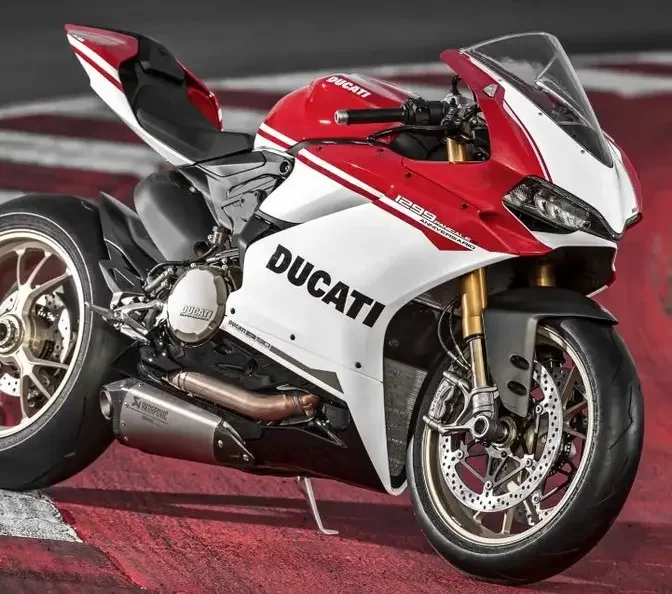
Donut Lab's 17-inch model generates 150 kilowatts and 1,200 newton meters of torque,
and it weighs just 21 kilograms. There's even a 12-inch variant for scooters and a mini donut
version for drones, weighing only 1.5 kilograms and still delivering 3 kilowatts of power.
These numbers don't just match the market, they obliterate it. Donut Lab claims these are the
highest power and torque densities ever achieved in a commercial motor of their size. But what's
even more groundbreaking is that these motors break the traditional trade-off between torque
and power. Historically, engineers had to choose either optimize a motor for high torque or high
power, never both. Donut Lab's architecture delivers both, in a smaller, lighter package.
If in-wheel motors are so great, why haven't they already taken over the market?
The biggest issue has always been unsprung mass. The weight of the motor, being part of the wheel,
can degrade ride quality and handling. But Donut Lab says they've finally cracked the code.
By maximizing torque and power density, they've made the motor so lightweight relative to its
output, that the added unsprung mass is now negligible. Heat management? Covered. Each unit
is built with advanced thermal design to keep the motor cool, even in demanding environments.
Durability. These motors are sealed, ruggedized, and ready to withstand the vibrations, mud,
and moisture of real-world driving. This is more than a concept. These motors were demonstrated
live at the CES event, and Donut Lab is already offering them to OEMs for integration.
Removing the powertrain changes everything. Without a central motor, transmission,
or differential, vehicles become dramatically simpler. There's more room inside the cabin.
The weight distribution becomes more balanced. Maintenance gets easier. And for manufacturers,
the cost savings are substantial. Think about the manufacturing process. In the traditional model,
parts from multiple suppliers need to be integrated, tested, calibrated. That's expensive
and slow. Donut Lab solves this with a modular technology platform. Their motors are designed
to plug seamlessly into a vehicle's software and hardware ecosystem. Not only that, they also offer
standardized battery modules, control computers, and vehicle management software, all built to work
together natively. For manufacturers, this means faster development, fewer bugs, and less integration
work. You don't build an EV from scratch anymore. You just pick parts from a catalog and click them
together. One of the boldest claims from Donut Lab is this. Their technology cuts manufacturing
costs not just through simpler assembly, but by reducing the amount of active materials used.
Because their motors deliver more performance per kilogram, less material is needed to achieve the
same output. Less copper. Less rare earth metals. Smaller batteries. Smaller cooling systems. And
since each motor is a self-contained unit, repairs are modular too. Just swap out a wheel unit.
No need to dismantle the drivetrain or crack open the chassis. This is a new model for vehicle
design. One where complexity is replaced by modularity and where costs can be driven down
dramatically without sacrificing performance. You'll be surprised to learn that this new motor
design could reduce vehicle weight by hundreds of kilograms, eliminate over a dozen mechanical
components, and cut EV manufacturing costs by up to 50 percent. Donut Lab's approach is flexible by
design. Want to build a high-performance sports car? Use four of their 21-inch units and break
some records. Designing a delivery scooter? Drop in the 12-inch motor with a tiny control module
and you're done. Even drones aren't left out. The 120 millimeter mini Donut motor delivers powerful
thrust for aerial applications. All within a featherweight 1.5 kilo unit. By building everything
on the same architecture, Donut Lab can support vehicles across every category while giving
engineers total control over form and function. This isn't just a motor family. It's a full
electric propulsion ecosystem. With all these breakthroughs, it's fair to ask what are the
Right now, one challenge is scaling. Manufacturing high-density motors with this level of precision
isn't easy, especially if demand spikes. Then there's industry inertia. Car companies have
decades of supply chains, factories, and partnerships built around traditional layouts.
Moving to a wheel-centric design means changing everything, and that takes time. And of course,
Donut Lab's claims, while impressive, will need to be validated over time in millions of real-world
miles. Still, the signs are strong. The motors are real, the performance is real, and now they're out
in the world. So is Donut Lab's new motor family the future of electric vehicles? All signs point
to yes. For the first time, in-wheel motors have broken past the limitations that held them back.
Donut Lab has delivered record-setting performance, solved the unsprung mass problem,
simplified vehicle design, and slash production costs, all in one elegant modular system. From
drones to delivery vans, from e-scooters to race-ready EVs, the applications are endless.
And if these motors deliver in the field the way they perform on paper, we might be witnessing the
start of a new chapter in electric transportation. Let us know in the comments. Would you drive a car
with donut-shaped motors in the wheels? Or do you think centralized motors still make more sense?
If you enjoyed this deep dive into EV tech that's flying under the radar,
don't forget to like and subscribe. We cover the future of energy, mobility, and technology,
one game-changing innovation at a time. Thank you for watching, and I'll see you in the next video.