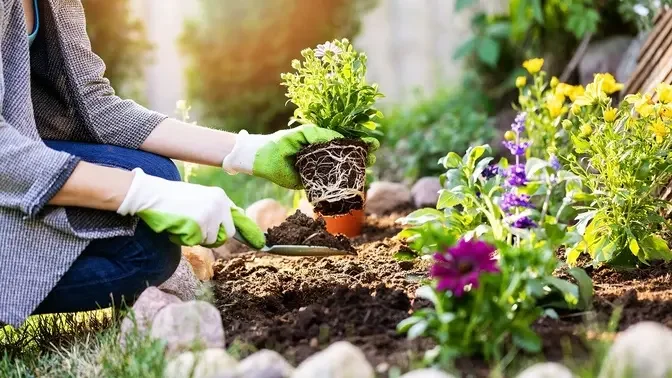
This video is a complete guide on how to grow peppers. Pepper plants can be manipulated into non-stop production, and in this video, I share everything I've learned growing peppers in the last 20 years. I also debunk countless pepper growing myths along the way. Don't fall for the myths and lies: do this now and your peppers will never stop producing all the way until frost!
AI Generated·May contain errors
Video Summary
AI Generated
This guide shares 20 years of expertise on maximizing pepper yields. It emphasizes a strategy of aggressive fertilization, the use of the \"Florida Weave\" for support, and the debunking of full-sun myths. By focusing on partial shade during peak summer and frequent harvesting, gardeners can prevent growth stalls and encourage continuous fruit production throughout the season.
What's growing on, gardeners? Peppers were the first plant that I ever learned how to master
in my annual vegetable garden, and on today's video I'm going to share with you all of the
lessons I have learned over the last 20 years to help you grow the most incredible pepper plants
you have ever grown. And we are also going to be dispelling lots of pepper growing myths along the
way. There is so much bad pepper growing advice out there, and I don't want you making these
common mistakes that so many gardeners are misled to make. Step number one is transplanting and
fertilizing. Now if you haven't transplanted your peppers yet, ensure that you amend the planting
hole that you transplant them into with slow-release organics. My master blend of organic fertilizers
is a mix of three to four parts of an organic all-purpose fertilizer, one to two parts bone meal,
one part crab and lobster shell meal, and one part azomite in a big bucket. Then I mix it all together
and I spread two tablespoons of the granular fertilizer into the planting hole at transplant.
But if that sounds too complicated, honestly you can just get yourself a good balanced all-purpose
organic fertilizer and bone meal and apply one tablespoon of each to the planting hole.
If you have already transplanted your peppers, don't worry. Just spread two tablespoons of the
fertilizers in a circle around the base of each plant and then add water to water it in and help
it break down. Organic granular fertilizers break down slowly over weeks by the microbiology in the
soil, so they will trickle feed your plants as they decay for a long period of time. It's important
that you amend your plants in this way every two weeks throughout the entire growing season. That
way you always have some organic fertilizer that is in the process of decay and feeding your plants
continuously all the way until frost. This fertilizing process is very important because
peppers are actually fairly heavy feeders given their size. So just six weeks ago all my pepper
plants looked like this and now they look like this. They are flowering like crazy and setting
absurd amounts of fruit in there. So if you push these peppers along by giving them ample food,
they will perform very well and you will see explosive results. Now everything is getting
overwhelmed by fruit and I'm going to show you how to keep the production of these pepper plants
like this. Nice and aggressive all the way until the season ends. By the way, if you're enjoying
this video from a real human instead of an AI voice, please consider subscribing to the channel.
YouTube has actually deprioritized long format creators this year in favor of promoting more
shorts, so it's been really hard to reach new audiences with the change. Subscribing to these
types of channels really help us get the word out and hopefully we can promote more educational
content that actually makes life better instead of more doom scrolling and brain rot. So your
support is greatly appreciated. Thank you. Step number two is to give your peppers some support.
Peppers can be planted fairly close together with about one square foot of space per plant and when
you plant them in this orientation when they grow in, they will almost kind of self-support themselves
to an extent. However, once they start getting tall and they start bearing fruit and the fruit
starts weighing them down, they do become vulnerable to wind and they can blow over.
All of these pepper plants were planted with exactly one square foot of space per plant. There
are 40 plants in this raised garden bed right here. Now all of the plants have mostly absorbed
the wind and have supported themselves and they're doing a great job in general. However, you'll
notice the plants on the end which are the most exposed to wind and they're also starting to set
some fruits, especially this one right here. Well, you're starting to see the wind vulnerable
plants get blown over. So because of that, I need to start supporting my peppers because hey, they're
only going to get more overwhelmed by fruit. Now one of the easiest ways that you can support a
pepper plant is to just give them one stake per plant and then use an expandable vinyl tape to
simply secure them to a stake. But when you have a big bed full of peppers like this, there's an
easier way to do it and it's called Florida Weave. Now I have four rows of 10 plants per row in this
garden bed for a total of 40 plants. So if I stake each one individually, I would need 40 stakes.
That's way too many. So instead I'm going to use the Florida Weave method where I'm going to take
one of these five foot stakes and put them on the end of each row. So I'll have one, two, three,
four on that end, one, two, three, and four on this end. And then we'll do four in the middle
of the bed in line with each row. So we have four stakes there on the end, we have four stakes in
the middle, and then we have four stakes on that end in line with each individual row of peppers.
Then we're going to use this synthetic nylon twine and we're going to weave around the plants
every other plant and that is going to support them. Now it's very important that you use a
synthetic twine, not a natural twine like cotton, because that will expand and contract as it rains
and it gets hotter and cooler. This is going to stay the same if it rains or if it's dry,
if it's hot or if it's cool. And by the way, I'll place the links to all of this stuff down
in the video description for your convenience. So I'm going to cut a very long piece of twine
that's significantly longer than running it back and forth between each row. So I've spooled up all
of the additional twine and I'm going to wrap it around the stake a few times and tie it off,
making sure that I leave a lot of additional string that I could knot the excess to later.
Then wrap it around a few more times and now what we're going to do is we're going to weave the
plant. So this string starts on the outside of the stake. I want to bring it inside of the first
plant and then weave it. That is going to hold the plant up on one side. Then I'm going to bring it
around to the front of the next plant and you're basically going to go every other plant. So you're
going to weave back, front, then back, then front, and you're just going to repeat that process
around every other plant until you get to the middle stake and ideally you'll put one stake
about every four or five pepper plants or so. If you were doing this with tomatoes you probably
would want to do it about every three tomato plants because they're bigger. So here's how it
works. We tie it onto the end stake, then we run it around the back of this plant, then the front
of this plant, the back of the next plant, the front of the next plant, and then we go to the
middle of the stake where it is wrapped around that stake for support and then we do the same
thing. We go back, front, back, front, back, front, all the way to the end stake where we have tied it
off and we have all of our excess twine. So now we're going to do the opposite. We have the twine
run in front of this plant, we're going to run it behind the plant. So watch how this is just
going to pick everything up. I have this twine run behind the back of this pepper plant right here,
then I'm going to bring it to the front of this pepper plant, this one is falling over,
well I'm going to run the twine behind it and then that is going to pick that pepper plant up
and then same thing with this pepper plant. This pepper plant has fallen over, it has the twine
behind it. I'm going to run it in front of this one and then I'm going to tie everything off to
the stake. That's why I left the additional twine at the very end right here. So I'll wrap the
string around a few times and then I will tie it off in a double knot and then just cut it.
And that right there is the Florida Weave. You can stake an entire row of peppers in only about
three or four minutes using this method and you just simply have to add a new string roughly every
six to twelve inches or so. Over the course of the season you'll probably do this maybe three or four
times to your pepper plants. And that will help turn this mess into this. Everything now is so
much better supported and wow you can really see there are some massive harvests on some of these
pepper plants. Dale what are you doing? Are you hunting for the bunny? Mr. Dale is on the hunt.
Step number three is all about pruning peppers. Here is my advice. Don't. A lot of people out
there will tell you when your pepper plants are young and freshly transplanted you should cut
them back because that is going to encourage branching and they're going to become bushier
and therefore a bushier pepper plant is going to produce more flowers and a bigger crop. And I don't
know if that's true or not but I can tell you this. I have never pruned my pepper plants in my life
and they get plenty bushy and they set tons of flowers and tons of fruits and I get massive
harvests out of them. Here's what will happen for sure though if you prune your pepper plants to
encourage bushing. You are going to set them back. They're going to go through about a one to two week
period where they're going to stall and then it's going to take another two weeks for them to grow
back and start bushing out again. So by pruning them you're going to basically delay the whole
process of flowering and fruiting by several weeks best case scenario. Meanwhile these plants are
growing plenty bushy on their own and I never trim them back and I never set them back. Just look how
incredibly bushy these pepper plants are just on their own and they are absolutely loaded with
flowers loaded with blooms and loaded with fruits. I mean look at this pepperoncini pepper right here.
Believe it or not I have already taken several peppers off of this plant and it is just producing
like gangbusters. Here's a nice cherry pepper right here loading up with tons of cherry peppers
in there and it's still so early in the season. What are you doing mister? Somebody is looking
for something. But anyway yeah I have never needed a reason to preemptively prune my pepper plants
and they just go absolutely bananas. I need to amend my statement. I have never preemptively
pruned my pepper plants early in the season in hopes that they would become bushier and set more
flowers and fruit. I have however rejuvenation pruned them mid-summer. I've had summers that
were so hot wet and humid that my pepper plants got bad disease so I cut them back in the middle
of the summer and then I gave them strong water soluble fertilizers as well as granular organics
and they put on a whole new flush of growth and a whole other crop of flowers and fruits that I was
able to harvest from the end of the summer all the way until frost. Rejuvenation pruning I have done
however this brings me to step number four. And that step number four is the myth that peppers
should be planted in full sun. Peppers are not a full sun species. They are a part shade species.
You see those pine trees right there? Those are full sun species. They are canopy trees.
They are always in the sun. But these peppers are a little bit shorter, wouldn't you say?
These are not pioneer species. They are scrubby little underbrush species. They adapted to grow
underneath forest canopies. They did not adapt to grow out in full sun in open fields and in open
farms and in wide open garden beds with no protection. Peppers hail from the tropical and
subtropical forests of Central and South America. So they're from places that don't experience frost
and freeze and they can meander along in the dappled light underbrush and grow for as long as
it takes. But you see when they were brought to places like Europe and North America things
changed and that is because we have truncated growing seasons. You see the United States was
basically settled in the Northeast and New England first and then migrated out to the Great Lakes.
So they couldn't plant these frost sensitive species in ground until the end of May
and their first frost would come in September or early October. So they were all planted out
in the sun to give them as much photosynthesis as possible so they would grow as fast as possible
and they would flower and fruit as quickly as possible. And these peppers could generally
tolerate the full sun of the Northeast, New England, and the Great Lakes where the summers
are very brief and mild. But things have changed since then. Much of the population has migrated
to the Midwest, to the South, to the West Coast where the growing seasons are much longer and the
sun is a lot stronger with very high UV and it just pounds the life out of the pepper plants
and that is why they stall out come mid-summer. These plants ideally would be grown in dappled
light for as long as possible or they would only be given morning light. In a pepper's perfect world
they would get the morning light from sunrise to about 11 a.m. maybe noon and then they would be
completely enshrined in the afternoon by a shade tree and get no afternoon sun or spend all day
every day under gentle dappled light. So if you notice that your peppers are stalling or they're
starting to wilt come the afternoon in the middle of the summer that's because they are not a full
sun species. They are a part shade dappled light species. But most of us don't have huge backyards
with perfect east-facing exposures that give us plenty of afternoon shade and even if we did that
may actually work against us early in the season and late in the season when the sun is weak. So for
most of us the best way to plant peppers is out in full sun during the spring and then when we get
the most powerful sun for the 45 to 60 days dead summer we put shade cloth overhead. So what I like
to do personally is I put 40% shade cloth above my pepper plants from about June 15th to August 15th
because that is when the sun is the most intense and that gives them basically full sun to grow in
in the spring uninterrupted so they grow really quickly but then they get that protection when
the sun is vicious in the middle of the summer and that prevents the notorious pepper stall. Now
this year is going to be a little bit different because I built a full roof over this part of my
garden and I put a 15 mil greenhouse plastic tarp on the roof and that tarp is basically going to
act as a 20 to 30 percent shade cloth because it blocks a lot of the uv. So basically even though
my peppers are going to be in full sun the amount of uv protection the tarp is going to give me is
going to have a similar effect as the shade cloth. So I'm assuming that you don't have a roof over
your garden. For most of you shade cloth is going to be the easiest and cheapest way to protect your
peppers when it gets really really hot and the good thing about this is this is going to reduce
the amount that you have to irrigate them. You're going to get a lot less disease on your peppers
because they're going to be a lot less stressed and you're not going to get that stall. They're
going to produce lots of flowers all throughout the heat of the summer when they would otherwise
give up on you when it gets too hot. Now of course the exception is if you live in a cool summer or
short season climate. If you live in the pacific northwest, the upper midwest, if you live in New
England or the northeast where you have growing seasons of 160 days or less and it's difficult
for you to grow peppers as is, obviously you don't want to use sun protection. You want to plant them
out in the open. I'm specifically talking about places where their peppers start to wilt come the
middle of the day in the summer where you have issues with fungal diseases where you can clearly
see a detriment due to the strength of the sun. So if you live in a place with a long warm growing
season chances are the shade cloth is going to be highly beneficial and that's going to be most of
you watching this video. Step number five is to aggressively pick your peppers. One of the biggest
mistakes that gardeners make when it comes to growing peppers is they don't regularly harvest
the crops on the plants and that will suppress their ability to flower and bloom. The way you
get pepper plants to flower and produce like crazy is to constantly harvest off of them and if you
fail to do that and they're weighed down by big heavy crops that are maturing on the plant that
will suppress their ability to bloom. Peppers are no different than any other plant. Their whole point
of existing is to produce mature seed and perpetuate the species. So if you let all of the
fruits on the plant sit there and hang until full maturity not only are you suppressing the plant's
ability to flower and fruit because it has to carry and maintain that big heavy fruit load and
feed those fruits but you're also signaling to the plant that it's producing mature seed and
there's no reason to overproduce. But what will happen is if you aggressively pick your pepper
plants that sends a signal to the plant that something is going wrong. There is a pest in the
area that is pilfering all of the fruits and the plant is failing to produce mature seeds. So those
plants are going to react by over producing peppers. They are going to say oh my goodness
we're not making mature seed. Double down on fruit production. So the more you harvest the more you
are going to get from your pepper plants. Don't be lazy with the harvesting. The more you pick
the more you get. And step number six is to supplement your plants with water soluble
fertilizers. Remember earlier in the video I told you that you should be giving your plants granular
organic fertilizers every two weeks. Well after you apply them you should wet them down with water
soluble fertilizers and this is how you really take production into hyperdrive. None of the production
of our pepper plants come free. Yes they can absorb sun via photosynthesis and make plant food
but they still need NPK and micronutrients from the soil. So we have to amend the soil with
fertilizers because the plants demand far more from the soil than the soil could make itself.
And yes granular organics will give the plants what they need to survive but if you really want
them to thrive and over produce the water solubles are where it's at. Because the water solubles
have already been broken down to the point where when you apply them the plants can immediately
uptake them and start putting those nutrients to good use. They don't have to wait for the soil
microbiology to break down the granular organics to get the food they want. So here's my recommended
routine. I'm going to take three one and a half gallon watering cans and I'm going to add to that
one tablespoon per gallon of a synthesized 20-20-20 such as this Jaxx 20-20-20. Now if you
don't have this product the fastest and easiest to get off the shelf substitute would be something
like Miracle-Gro Tomato but I do like the Jaxx product better. I'll put links down in the video
description if you want it. That is not organic but I find it works miracles. Then on top of that
I'm going to add a few tablespoons of Alaska fish fertilizer which is organic. I like to mix the
organics in because the organic fertilizers are more complete and they have all of the trace
micronutrients that are found in whole foods. So we'll add about two to three tablespoons per gallon
of the Alaska fish fertilizer and then we will fill the watering cans up with water and then
I'll mix everything around really well to make sure it is fully dissolved. Here's how I do it.
Every two weeks I take the granular organic fertilizer blend that I showed you how to make
earlier in the video and I place about one and a half to two tablespoons at the base of each plant
successively and I do this up and down each of the rows to all of my pepper plants in an efficient
assembly line like fashion. And when that's all done I take the water soluble fertilizers and I
water in the slow release granular organics because the granular organics have to become moist
in order to facilitate the decomposition process. They won't break down well if they are dry so it's
important that we put down the granular organics first then the water solubles on top of them.
And my final recommendation step seven is to please consider installing drip irrigation to
your raised garden beds. I have drip irrigation run to all of my raised garden beds here and it
makes the process so simple. Not only will you save countless hours of time but you will save
so much money on your water bill over the long run because drip irrigation is so much more efficient
than overhead watering because overhead watering not only spreads disease but it also evaporates
a lot whereas the drip irrigation penetrates deeply into the soil so you don't lose all of
that water to the evaporation process. Now to be completely honest I don't apply the water soluble
fertilizers to my garden the way I showed you in this video. Most people will want to use watering
cans but I just showed that as demonstration. What I actually do is I use a fertilizer injector that
I then inject the fish fertilizer and the 20-20-20 into my drip irrigation system from my faucet
outside and that evenly distributes all of the water solubles to my whole raised garden bed.
If you want to see how that's done I'll link to a video both above and down in the video
description that shows you exactly how to do that and also I'll link to a video above and
down in the video description that will show you how to install the drip irrigation. It's going to
be a little tricky to do if your plants are huge like mine but if they're a lot smaller or you
haven't transplanted them yet I'm telling you right now it will save you so much time. You'll
be so thankful you did it. Oh yeah one last tip. Did you know that peppers are not annuals they are
actually perennials? It's true. If they're not subjected to frost and freeze and disease and
pests peppers can grow many years. In fact last year I showed you how I overwintered a pepper
plant for six years. That is a must-see video. Again I'll link to that both above and down in
the video description. But this right here is a pepper plant that I dug up last year so it is a
year and a half old and I overwintered it in my sunroom and look at this sucker right here. This
thing is absolutely loaded with peppers. So if you have a really productive handful of plants you can
save some of them and dig them up at the end of the year and overwinter them and pick peppers
all winter long or at the very least get a huge jump on your growing season next year. And that
right there is everything that I have learned to have huge harvests of peppers all throughout the
growing season all the way until frost. So everybody I sure hope you found this video helpful. If you did
please make sure to hit the like button subscribe to the channel and please ring the notification
bell so you're notified when I release more videos like these. I place direct links down in the video
description to all of my favorite products that I featured in this video or that I use to grow
peppers. While you're down there in the video description check out my Amazon storefront for
everything I use in my yard and garden in real life and also check out my website themillennialgardener.com
for custom home design merch if you want to support my channel. Thank you all so much for
watching and I hope to see all of you again on the next video. Well Dale I ran out of fresh homemade
food for you so we have to do one meal of boring old dry food but that's okay because we have a
hard boiled egg for Daly. This is going to be for you. This is going to be for you. I just have to
Alright Mr. Dingle we have some nice sliced egg that we will add and I bought you some
some beef to make you for tomorrow so we'll have fresh hungries tomorrow okay. Oh he's so good he's
going to sit and wait like a good boy. Come on. Oh he teleported. Okay Mr. Handsome Pants
enjoy the egg. I made you some blueberry banana bread for dessert. Dog safe with
some cinnamon that we can have with our yogurt tonight. This boy is spoiled.