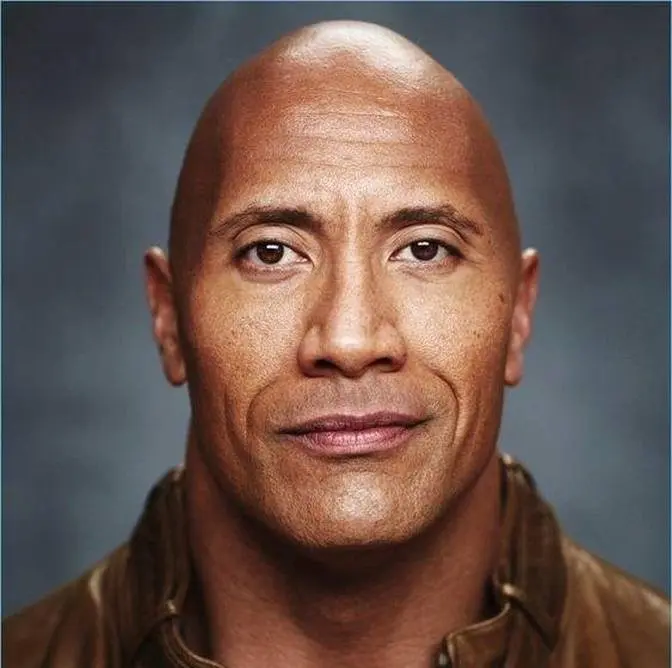
Taking a look at how Dwayne Johnson tried to take over the DC Universe by centering it around Black Adam and a planned showdown with Henry Cavill’s Superman. Backed by his agent Dany Garcia and clashing with DC Films president Walter Hamada, Johnson’s behind-the-scenes power moves derailed Shazam, sidelined Cavill, and fractured the DCEU. From blocked cameos to the failed Black Adam vs Superman plan, this is the wild story of what could have been.
Dwayne Johnson attempted to restructure the DC Cinematic Universe around Black Adam, envisioning a long-term rivalry with Henry Cavill's Superman. However, through aggressive power plays and a disregard for existing plans, his efforts backfired, contributing to the franchise's instability and ultimately leading to a total reboot under James Gunn and Peter Safran.
What if the DC Universe had revolved around Black Adam? Well, for a moment, it almost did.
If Dwayne Johnson's plan had gone through, the DC Cinematic Universe would have been restructured
around a long-simmering rivalry between Black Adam and Henry Cavill's Superman.
Cavill would still be wearing the cape, and Black Adam vs Superman would be the tentpole event
everything was building toward. But that's not how things played out. Instead, a series of power
plays, questionable decisions, and behind-the-scenes drama didn't just derail Johnson's vision,
it helped fracture the very universe he was trying to lead. To find out what went wrong,
let's take a look at how The Rock tried, and failed, to take over DC.
After making a successful leap from wrestling to Hollywood with his big-screen debut in The
Mummy Returns, Dwayne The Rock Johnson quickly emerged as a rising action star.
His breakout role was so well-received that he landed his own spinoff film, The Scorpion King,
cementing his transition into blockbuster leading-man territory. While Johnson showed
clear charisma and screen presence early on, many of his initial starring vehicles,
like The Rundown, Walking Tall, and Doom, had modest box office returns rather than breakout
success. As a result, his early career didn't immediately launch him into A-list status,
and he often took supporting roles in ensemble films like Be Cool and Get Smart to stay visible
and build credibility. And it was while he was filming Get Smart that Johnson was approached
by that film's director, Peter Sagal, about playing Shazam, a film Sagal was hired to direct
at the time. However, as Johnson learned more about the story, he found himself much more drawn
to Shazam's arch-nemesis, Black Adam, a morally ambiguous character with shades of grey, not
unlike the persona that made him a superstar in the WWF. By the time the project finally moved
forward nearly a decade later, Johnson had become one of the biggest movie stars on the planet.
As a result, when the studio presented him with the script to Shazam, which featured origin stories
for both the title character and Black Adam, Johnson and his team pushed back. While the
script was great, Johnson, rightfully so, felt he should be the lead. But since he was drawn
to playing Black Adam rather than Shazam, he lobbied to give each character their own movie,
which he argued would also allow each film to embrace a tone that fit its character,
light and fun for Shazam and dark and violent for Black Adam. Shazam hit theaters first and
proved to be a hit, but what would have been a perfect opportunity to connect the larger DC
universe instead highlighted just how poorly DC was being managed. The film's final scene was
supposed to feature a surprise cameo by Superman, who would sit down for lunch and have a conversation
with Shazam and Freddy, teasing a larger shared world. But in a movie that underscored the
disjointed state of DC's planning, Shazam's Zach Levi would say that they tried desperately to
get Henry Cavill but were thwarted. Reportedly, Cavill, or his agent Danny Garcia, who is also
the Rock's ex-wife and agent, felt the offer for the cameo was too low and declined unless
Cavill was paid what he believed he was worth. Other sources claim the holdout was a strategic
move by Garcia to negotiate a new Superman deal, as Cavill had only one film left on his contract,
the still unmade Man of Steel II. Regardless, negotiations broke down and with Cavill unavailable,
the scene was awkwardly shot using Zach Levi's stunt double seen only from the neck down. It was
a kind of sloppy world-building you'd never see in a Marvel film. For example, when Robert Downey
Jr. was written to the Incredible Hulk's post-credits scene, he showed up. Because even in the early days,
Downey and Marvel understood that these moments mattered when it came to building a cohesive
shared universe, and they treated them with the care and commitment they deserved. As a result,
the experience reportedly led to a straining in the relationship between Cavill, Garcia,
and Warner Bros. During this period, DC's box office fortunes began to decline. After Zack
Snyder exited Justice League, an internal shake-up followed the film's disappointing performance.
Warner Bros. brought in Walter Hamada, a former New Line cinema executive known for producing
horror hits like It and The Conjuring, to lead DC Films. His mandate was to shift the franchise
away from being driven by a single filmmaker, namely Zack Snyder, and toward a broader,
more commercially viable strategy. But despite a massive hit with Aquaman and a strong showing
from Shazam!, the studio couldn't maintain momentum. Birds of Prey, Wonder Woman 1984,
and the soft reboot of The Suicide Squad all fell short at the box office. After Black Adam was shot
and edited, the film performed disastrously at a test screening, scoring just as poorly
as Batgirl, which Warner Bros. would soon cancel entirely in favor of a tax write-off.
DC Films president Walter Hamada would learn of the Batgirl cancellation at this screening from
Warner Bros. executives. Furious at being left out of the decision, Hamada considered resigning,
but ultimately agreed to stay on through Black Adam's release. In response to the film's poor
reception, Warner Bros. ordered a costly 20-day round of reshoots in an attempt to improve the
movie. Originally greenlit at $190 million, the budget ballooned to $260 million. Since
the long-term plan was eventually to have Black Adam and Shazam! face off in a future film,
the original plan for Black Adam's post-credits scene featured Shazam! being recruited by Hawkman
to join the Justice Society of America, setting the stage for Shazam! and Black Adam's eventual
clash. But since behind-the-scenes DC Films was in chaos with Walter Hamada preparing to exit the
studio, Dwayne Johnson, seeing an opening, made a bold power play to reshape the DC universe around
Black Adam. He pitched Hamada on filming a new post-credits scene featuring Superman,
aiming to kickstart a long-term storyline where the two characters would dance around each other
in subsequent films, teasing and building toward a massive tentpole event where they'd finally face
off. But to Johnson's surprise, Hamada turned him down. Hamada had already mapped out a larger plan
for the DC Universe, one that would culminate in a crisis on Infinite Earth's adaptation.
The upcoming Flash movie was designed to lay the groundwork, introducing a multiverse and
bringing back legacy characters like Michael Keaton's Batman. Hamada's vision also included
launching a black Superman in his own series of films. Johnson, however, refused to take no for
an answer and went around Hamada to his bosses, pitching the same idea to Warner Bros. executives
who would greenlight it. But there was just one problem. Henry Cavill was only under contract for
one more Superman film, the long-awaited Man of Steel II, which was originally sidelined for Batman
vs. Superman and seemed less likely to happen as time went on. Additionally, Cavill and Johnson
shared the same agent, Johnson's ex-wife, Dani Garcia, pressed for time to get the cameo shot
for Black Adam's release. Cavill was given a verbal agreement by DC to return as Superman
in subsequent films, and paid $250,000 for his appearance at the end of Black Adam,
never actually signing a proper contract to return. Not only that, but Cavill also exited The Witcher,
sparking speculation that the role of Superman conflicted with his commitment to the series,
although later reports revealed deep creative differences between Cavill and the Witcher
showrunners. The Superman cameo was meant to be a fun and unexpected surprise for fans,
like most post-credits scenes are. But with Black Adam tracking modestly at the box office,
The Rock began hinting at Cavill's return ahead of time in an effort to build buzz and boost ticket
sales. Pressure was immense, as Johnson's entire plan to reshape the DC universe around Black Adam
depended on the film's success. Johnson's efforts to position Black Adam as more than just Shazam's
arch-nemesis ended up backfiring, hurting not just his own film, but the Shazam sequel as well.
After vetoing a planned post-credits cameo of Shazam and Black Adam and replacing him with
Superman, Johnson also blocked the use of Black Adam characters in the Shazam Fury of the Gods
post-credits scene. As a result, DC was forced to awkwardly plug in characters from the Peacemaker
TV series instead. When Black Adam was finally released, it underperformed both critically and
commercially, effectively derailing Johnson's long-term plans to reshape the DC universe around
his character. Around the same time, another major shake-up was unfolding behind the scenes.
Warner Bros. was acquired by Discovery, and their CEO, David Zaslav, wasted no time outlining his
vision for DC's future. Determined to bring order to the chaotic state of the DCEU, Zaslav began
searching for a creative and strategic czar to mirror Marvel's Kevin Feige, someone who could
establish a unified creative direction and long-term brand strategy. He spoke openly about
wanting to reset DC and build a 10-year plan modeled after Marvel Studios. As Walter Hamada
prepared to step down, Zaslav launched a search for new leadership before hiring Guardians of
Galaxy writer-director James Gunn and producer Peter Safran, naming them the co-CEOs of the newly
formed DC Studios. Wasting no time, the duo scrapped the previous regime's plans and announced
a full reboot of the DC universe following the release of the remaining films already in the
pipeline. Gunn saw Superman as a jewel in DC's crown, and made rebooting the character his top
priority. He also chose to write the script himself, reimagining Superman as a younger,
more idealistic version of the hero, which meant Henry Cavill would not be returning to the role.
Cavill, who had just returned to Superman for a cameo in Black Adam and publicly announced that
he was returning to the role, now had to backtrack those comments as he felt like a pawn in The Rock's
failed attempt to take over DC. Cavill would fire his agent, Danny Garcia, and while many speculated
that it was due to the Black Adam-Superman debacle, apparently him and Garcia had already parted ways
before James Gunn officially announced that Superman would be recast, bringing Cavill's
rollercoaster return to an unceremonious end. In the end, Johnson's attempt to reshape the DC
universe around himself backfired spectacularly. By elevating Black Adam, traditionally Shazam's
archenemy, into the centerpiece of the DC universe, Johnson disregarded the character's
roots and alienated fans who were familiar with the source material. In his push to position Black
Adam as a rival to Superman, he never seemed to ask the most important question. Did audiences
even want to see Black Adam face off against the Man of Steel in the first place, let alone have
them tease a confrontation over a multi-film arc? Johnson's behind-the-scenes maneuvering
alienated key players, and his misguided plan to sideline Shazam in favor of Superman, while
aggressively promoting what would be his own underwhelming film, only deepened the disconnect.
Instead of building a cohesive universe, he fractured it further, prioritizing personal
brand-building over storytelling, and leaving both the Black Adam and Shazam franchises worse
off in the process. Rather than saving DC, Johnson helped accelerate the collapse of
a shared universe already on shaky ground.