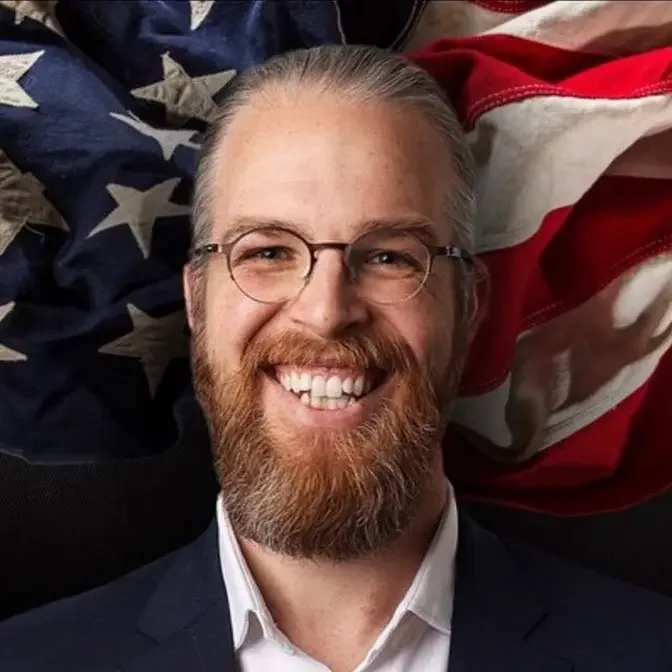
This is not a story about regulatory failure. It is a story about a system that worked exactly as it was designed to work. In this episode of America Hijacked, I go through four chemicals, four scandals, and one playbook used over 80 years to keep dangerous things in your food while the people who were supposed to stop it looked the other way. We follow the money, pull the original documents, and connect the dots from a classified 1974 Kissinger report all the way to who is buying up the farmland right now.
For high quality storable foods and seeds, visit http://heavensharvest.com and use promo code SETH to save 15% on your order.
To learn more about investing in gold & silver, visit http://goldwithseth.com, or call 626-654-1906
Kimchi One from Brightcore – Improve your health, improve your life. 25% Off with code: MANINAMERICA at https://mybrightcore.com/maninamerica Or dial (888) 575-6488 for up to 50% OFF and Free Shipping – ONLY when you call!
To learn more about Red Light Therapy, visit http://myredlight.com and use promo code SETH to save.
This video presents an investigative history arguing that the American food system is intentionally designed for corporate and geopolitical control. By analyzing declassified documents and industry patterns, the narrator claims that governments and private entities use chemicals and policy to shift power from individuals toward a centralized global governance structure.
He who controls the food controls the people. That quote's widely credited to Henry Kissinger.
Now, whether or not those were his exact words, what he wrote in a classified 1974 government
document tells you everything you need to know about whether he believed it. And I want you to
keep that in mind for the next 30 minutes because what I'm about to show you isn't a series of
accidents. It's not negligence. It's not a system that failed. It's a system that worked exactly as
it was designed to work. Four chemicals, four scandals, one playbook over 80 years. The names
change, the corporations change, the decades change, but the outcome never does. When you
read a 1974 classified U.S. government document where Kissinger's national security team recommends
using food as a tool of population control and then you watch the EPA dismiss four separate
international cancer classifications across four decades, you stop calling it negligence and you
start to see it for what it really is. The people who were supposed to protect American families
made a different choice and they made sure that you were the last one to find out. This is the
second episode of my America Hijacked series. It's an investigative history. We're digging
through the archives, pulling the original documents, presenting the receipts, specific
decisions, specific people, specific money. We go back to the exact moments when things change, find
out who made the call and why, and then we follow the money until the bigger plan comes into focus.
Alright, let's get into it. Before we get into the chemicals, I want to show you four documents
with four dates, because without these four pieces of paper, none of what follows is even
possible. Here's the first document, 1943, the Rockefeller Mexican Agricultural Program.
This is where it starts, not with a pesticide, but with a philosophy. The Rockefeller Foundation,
working with the Mexican government, begins redesigning global agriculture from the ground
up. The goal, officially, is to increase crop yields. What it actually does, though, is replace
the self-sufficient family farm, the farm that feeds itself, with one that's got to buy seeds,
fertilizers, and pesticides from a handful of corporations every single season. So, you don't
own your food supplies anymore, you rent them, season by season, from them. No one can call that
an accident of history, that was the design. Now, here's the second document, 1958, the Grass
Loophole. Congress passes the Food Additives Amendment, and buried inside it is one of the
most consequential sentences in the history of American food safety. Chemical companies can now
self-certify their own ingredients as safe. Go back and watch my first episode for a full breakdown
on that one. The burden of proof was reversed. Chemicals were allowed until they're proven
harmful, not proven safe before entry. Now, that's the legal door that's been left open for the rest
of this just come on through. Everything you're about to hear walks straight through that door.
And here's the third document, 1974, NSSM 200, the Kissinger Report.
This is the National Security Study Memorandum 200, completed December 10th, 1974. Classified
and then declassified in 1989 and then publicly available in 1990. Adopted as policy guidance
by President Ford via NSDM 314 in 1975. This isn't a theory, it's a significant document.
And what does it say? Well, listen to this. It recommends using food as a tool of geopolitical
control. It argues that population growth in developing nations is a threat to U.S. national
security and economic interests, and that controlling the food supply is one of the
mechanisms for managing that threat. Remember, this isn't a conspiracy theory. This is a
declassified government document. It's in black and white. You can read it yourself.
And the final document of the four, 2015, Agenda 2030. 193 nations adopt a framework
calling for the transformation of global food systems under coordinated international
governance. The framework is backed and actively funded by some of the most powerful private
institutions on earth. The Gates Foundation, the world's largest private charitable foundation,
run by Bill Gates himself, has contributed billions to global food and agriculture programs
tied directly to this agenda. The Rockefeller Foundation, the century-old dynasty that funded
the original shift to chemical-dependent farming back in 1943, is back at the table. The World
Economic Forum, the annual gathering of the world's wealthiest CEOs, heads of states,
and global power brokers in Davos, Switzerland, has made food system transformation one of its
flagship initiatives. And the corporations writing the checks include Nestle, the world's
largest food and beverage company, Cargill, the largest privately held corporation in the United
States and one of the biggest controllers of the global grain supply, and Unilever,
which manufactures the food, cleaning, and personal care products found in the homes of
3.4 billion people worldwide. These are not charities or governments. They're entities that
grow it, process it, package it, and sell it to you. And they all sat down together to design what
they are calling the future of food. Four documents from 1943 to 2015, 72 years of policy,
money, and laws all pulling in the same direction. Less control in your hands, more control in theirs.
Now let me show you how it plays out on the ground because now we get into the playbook.
But before I tell you a single chemical story, I want to name the pattern because once you see it,
you can't unsee it. I call it the pesticide playbook. There's five steps used four times
across 80 years and it goes like this. Step one, an independent scientist, someone with no financial
ties to the company making the chemical, finds evidence that the chemical causes harm to human
health, to animals, or to the environment. Step two, the chemical industry, the corporations that
manufacture and profits from that chemical, funds its own counter studies designed to cast doubt on
the independent findings. And then they go after the scientist, not their data, the person, the
reputation, their career, their funding, their mental stability. They make sure that by the time
the public hears the name of that scientist, the first thing that they think is, can you really
trust this person? Step three, the regulatory agency gets involved. In America, that's the EPA,
the Environmental Protection Agency. Their one job is to protect you from dangerous chemicals in
your food and water. So what do they do? Well, they look at the independent science. They look
at the industry science and they choose the industry science, not because it's more accurate,
but because the chemical companies have lobbyists in Washington. They make donations to political
campaigns, massive donations, and their former executives often end up working inside the
agencies that are supposed to regulate them. That's called the revolving door. And it means
the fox is guarding the hen house. Step four, Europe looks at the same independent science and
reaches a different conclusion. They banned the chemical. They pulled off the market. Farmers in
Europe can no longer buy or spray it. Their citizens are no longer eating it, while Americans are still
consuming it every single day. Step five, America dismisses Europe's findings. Americans keep
consuming it for years, sometimes decades, and then eventually the lawsuits start. Thousands of
sick people, many of them dying, who can prove that this chemical was in their body and that their body
then developed cancer or another serious disease. The company gets dragged into court. After years
and years of fighting, they agree to pay out billions of dollars to the victims to make the
cases go away. But here's the part that should make your blood boil. They admit no wrongdoing.
Legally, on the record, they never did anything wrong. The money changes hands, the victims are
silenced, and the chemical often stays on the market. That's the playbook. And here's the number
I want you to be aware of. According to the data from the USDA and the Food and Agricultural
Organization of the United Nations, the U.S. uses approximately 20 to 24 percent of the world's
pesticides, while representing four percent of the world's population. Four percent of the people
using up to a quarter of the poison. This next part is what I want you to think about through
every story you're about to hear, because this is not just about killing people. So I sat down
with Kim Bright, who spent the last 50 years in natural health, and I asked her what she thought
the real target was. Yeah, well, you know, there's there's mounting evidence that pesticides are
being used as part of a deliberate population control program, which makes sense, I'm sure to you.
I mean, it's for increasing our risk of cancer and other chronic diseases. But it's not just that,
Seth. They're actually attacking, which I don't think people really understand, they're attacking
cognitive abilities in a way that could be nothing less than intentional targeting.
What I'm talking about here is problems with memory, higher rates of dementia,
Parkinson's disease, effects on our mood like anxiety and depression,
raising our risk for other chronic diseases like heart disease, asthma, and cancer. I mean, for
those that simply see Agenda 2030 as a scheme for depopulation, I think that you'd be missing how
just how intricate in detail some of these attacks actually are. I don't think the goal is simply
depopulation. They want to depopulate and disarm those who have the presence of mind and know how
to fight like you and I, you know, everything I know about this agenda has played. It's indicating
that they want to target older individuals first. And this could be for a variety of reasons. But I
believe it's because the younger generations have already been conditioned to comply.
So that that tendency to resist or question or even be aware that something's very wrong,
it eludes most of them. And they want a new generation made up of TikTok robots seeking
instant gratification. They want to populate these 15 minute cities we're talking about with people
who are incapable of recognizing injustice, essentially those that are too naive to think
for themselves. Now, let me show you the first time the playbook ran. In 1939, Swiss chemist
Paul Mueller discovers that a synthetic pesticide called DDT is extraordinarily effective at killing
insects. It works by attacking their nervous system. But here's the problem. It does not stay
in the insect. It moves up the food chain. It accumulates in the fat tissues of animals and
humans. It soaks into the soil, runs into the water, and eventually it ends up inside the human
body. The Swiss patent follows in 1940. By 1942, it's patented in the United States. In 1948,
Paul Mueller wins the Nobel Prize in Physiology or Medicine for that discovery.
So the U.S. government calls DDT a miracle. The USDA calls it safe.
Because we're fighting a total war, our forces must be marshaled against every enemy, unseen as
well as seen, in every place, all of the time. Millions of insects constitute an important part
of our foes, in their way as militant as the axis. Their menace multiplies as they multiply.
Because in some areas, more men were being incapacitated from action by insect-borne
diseases than by battle casualties, a search for a more powerful insecticide than had previously
been known was imperative. The answer to the quest for a poison to eradicate the insects
which threaten the morale, health, and military efficiency of our troops was found in DDT.
1945 to 1960s, DDT is getting sprayed on homes, schools, farms, and children. Not metaphorically,
literally on children in schools at public events. Aerial spraying over neighborhoods.
The government's telling the public there's nothing to worry about.
1962, a marine biologist named Rachel Carson publishes a book called Silent Spring.
She documents the devastation that DDT is causing on bird populations, ecosystems,
and the broader food chain. She's really careful, she's methodical, and she's meticulous.
So, the chemical industry responds by spending what would be millions of dollars in today's
money to absolutely destroy her. They call her hysterical, they call her a communist,
they call her unscientific. Internal memos from the chemical companies documented this
coordinated smear campaign. They're part of the public record. She's a woman who told the truth,
and the people who were profiting from the lie came after her with everything they had.
1972, 10 years after Silent Spring, 10 years, DDT is finally banned in the United States.
But here's what the ban didn't fix. Present day, DDT metabolites, the chemical breakdown
products of DDT, are still found in the blood of Americans born decades after the ban.
It passes from mother to child in the womb. The chemical outlasted the law that was supposed to
stop it. Step 1 through 5, this is the first time, that's the pesticide playbook.
1965, Dow Chemical introduces chlorpyrifos to the American market. Now, I won't tell you exactly
what chlorpyrifos is. It belongs to a class of chemistry called organophosphates. That same
class of chemistry produced the nerve agents developed during WWII, sarin, tabun, and the
compounds that make soldiers collapse within seconds of exposure. The pesticide on your
vegetables and the nerve agent in a chemical weapon come from the same branch of the same
chemistry tree. So, Dow gets it approved for use on food. Yes, food. 1996, Congress passes the Food
Quality Protection Act. It instructs the EPA to reassess the safety of chlorpyrifos. A 20-year
review begins. 20 years. Your children grew up and had children of their own in the time that it took
the EPA to look at this. 2012, EPA scientists working alongside researchers at Columbia
University find direct links between chlorpyrifos exposure and reduced IQ in children. It's not in
rats. It's not in some lab simulation. It's in children. Real kids. Lower IQs. From a chemical
that was already on your food. 2016, EPA scientists formally conclude there's no safe level of
chlorpyrifos for children. None. Zero. They write it up. They recommend a ban. They did their jobs.
And then they waited. On March 9, 2017, Scott Pruitt, the EPA administrator appointed by
President Trump, sits down privately with Andrew Liveris, the CEO of Dow Chemical,
the company that makes chlorpyrifos. The meeting lasts about 30 minutes. 20 days later, on March
29, Pruitt announces that the EPA will not ban chlorpyrifos. His own agency's scientists had
told him that there was no safe level of exposure for children. He looked at that finding, walked
into the meeting, and came out on the other side having made a different choice. And Dow Chemical
had donated $1 million to President Trump's inauguration fund just weeks before. 2021,
a federal appeals court, not Congress, not the EPA, a court orders the EPA to ban chlorpyrifos
within 60 days. Because the agency had refused to act on its own scientists' findings for so long,
a judge had to step in and do it for them. 56 years. From the day chlorpyrifos was introduced
to American farms in 1965 to the day that a court finally forced it off the market. 56 years. But
the story isn't over. In 2023, a different federal court reversed that ban, and it's still in use
today. The same pesticide playbook, the second time. 1958, a Swiss chemical company called
Siebe-Geige introduces a herbicide called astrazine. A herbicide is a chemical that's
sprayed on crops specifically to kill weeds. Now, most Americans had never heard of Siebe-Geige,
but their products had been on American farms for decades. Siebe-Geige would later merge with
another chemical giant and rebrand itself as Syngenta, which is the name that you're going
to hear in the courtroom documents. But the company that created astrazine, and the company
that fought to keep it on the market are the same company, just with a newer, cleaner name.
It becomes the second most widely used herbicide in the United States behind only glyphosate.
It's used mostly on corn, but it runs off into rivers, streams, and groundwater.
It ends up in the tap water of tens of millions of Americans.
In the early 2000s, a scientist at UC Berkeley named Dr. Tyrone Hayes
conducts independent research on astrazine. What he finds is this. Astrazine chemically
castrates male frogs at concentrations found in American tap water, not in a laboratory
with extreme doses, at levels already present in the water people are drinking. Syngenta's
response isn't to conduct safety studies. Their response, documented in internal emails obtained
through litigation, emails that are now on public record, is to coordinate a campaign
to discredit Hayes personally, to monitor his movements, and attempt to buy his silence.
They tried to pay him to stop talking, and he didn't stop. Instead, he kept talking. He kept
publishing. He kept showing up at conferences. He kept giving interviews. He kept standing in
front of audiences and saying the same thing that he had always said. The data is the data.
A scientist from South Carolina, the first in his family to go to college, up against one of
the most powerful chemical corporations on earth, and he wouldn't sit back down. Syngenta spent
years and millions of dollars trying to make him go away. He's still talking today. 2004,
the European Union bans Atrazine. 2006, the EPA reviews Atrazine. It declines to ban it,
citing industry-funded studies over Hayes' independent findings. The NRDC, the National
Resources Defense Council, a non-profit environmental law organization, files a
lawsuit that forces the EPA to publicly acknowledge that Atrazine is contaminating drinking water
supplies across the Midwest. It's drinking water. The tap water that's coming out of the
faucet in people's homes. November 2025, the International Agency for Research on Cancer,
the IARC, classifies Atrazine as a Group 2A probable human carcinogen. Group 2A means the
evidence in humans is strong enough to raise serious concern, but not yet definitive enough
to call it a confirmed cause of cancer. It's one step below the highest classification.
The finding is published in the Lancet Oncology, one of the most respected medical journals in the
world, the kind of journal where a finding does not get published unless the science behind it
has been reviewed and scrutinized by other experts. It's not some fringe study. This is
the global scientific establishment putting Atrazine on the list of things that probably
cause cancer in people. The EPA's response is to dismiss the IARC classification. Atrazine is
still legal in the United States. It's still being sprayed. It's the pesticide playbook.
It's the third time. So you already know how this story goes. 1974, Monsanto introduces Roundup.
Monsanto is a chemical company founded in 1901. Over the decades, it's made pesticides,
industrial chemicals, and Agent Orange. By the 1970s, it's turned its attention to agriculture.
So Roundup is its new weed killer and the active ingredient is glyphosate. So glyphosate works by
blocking a process inside plants they need to survive. It does not target one type of weed,
it kills almost any plant that it touches. You spray it on a field and everything green dies.
Except starting in the 1990s. For the crops that Monsanto has engineered in its own laboratory,
spray it on a field and everything green dies. Except for the crops that Monsanto has engineered
in its own laboratory to survive it in the 90s. Crops that come with a patent. Crops that farmers
must buy from Monsanto every single year. 1996, Roundup Ready GMO crops arrive. GMO
stands for Genetically Modified Organism. These are crops that have been engineered in a laboratory
to survive being sprayed with Roundup. Every other plant in the field dies. The GMO crop
doesn't. So farmers who plant them have to buy Monsanto's seeds fresh from the company
every single season. They are legally prohibited by contract from saving their own seeds.
Let that sink in for a moment. Because for all of human history going back thousands of years,
farmers saved seeds. You harvest your crop. You set aside your best seeds. You plant them again
next spring. That's how farming works. That's how it's always worked. Monsanto looked at that
and said, not anymore. In 1998, a canola farmer named Percy Schmeiser in Canada
found Roundup Ready plants growing on his land. He says that they blew in from a neighbor's field.
Monsanto sued him anyway. The case went all the way to the Supreme Court of Canada.
You never guess it, the Supreme Court ruled in favor of Monsanto. Percy Schmeiser had farmed
that land for 50 years. He was in his late 60s. Monsanto had been in seed business for two.
2015, the IARC classifies glyphosate as a Group 2A probable human carcinogen,
linking it to non-Hodgkin lymphoma. Several regulatory agencies, including the EPA and
World Health Organization's own JMPR, the Joint Meeting on Pesticide Residues, the expert panel
the WHO uses to evaluate whether pesticide levels in food are safe, have disagreed with the IARC
finding. Here's why that makes what happens next more damning. 2017, the EPA signs with Monsanto,
declares glyphosate not likely carcinogenic to humans. Then the Monsanto papers come out.
Internal documents released in litigation show that Monsanto ghost wrote scientific studies
and paid academics to put their names on them. That they coordinated directly with EPA officials
to block independent reviews. That they knew. They knew what their product might be doing and
they buried it. And then the lawsuits came. 2020 through to present, Bayer, which acquired
Monsanto in 2018, has paid over $10 billion in glyphosate cancer settlements. A proposed
additional settlement of $7.25 billion was announced in February 2026, but the company
admits no wrongdoing. 2022, glyphosates detected in the urine of more than 80% of Americans tested,
including children. Exposures increased 500% since Roundup ready crops were introduced in 1996.
And then, while the lawsuits were still being settled, something else happened.
An executive order was signed at the White House, the title,
Promoting the National Defense by Ensuring an Adequate Supply of Glyphosate-Based Herbicides.
They tied glyphosate to national security, not to protect you, to protect the companies that make
it. At the same time, a Republican House Farm Bill was moving through Congress that would make
it illegal for local governments to warn their own residents about the dangers of pesticides.
Think about that. Not just refusing to ban it, but making it illegal to warn people about it.
The same pesticide playbook. The fourth time. No consequences. No end. But now,
immunity. The old system didn't collapse. It got upgraded. 2021, Bill Gates is confirmed as the
largest private farmland owner in the United States. Approximately 270,000 acres across 17
to 19 states, depending on the year of the accounting. So, let's talk about what Gates
is actually doing, because this is where it gets really interesting. His key investments include
Impossible Foods, Beyond Meat, and Appeal Sciences. Appeal is a fruit coating that has
been approved for use on USDA organic produce that can't be washed off. Let that sink in.
It's a coating on your organic apple that you can't remove, approved by the same system that's
supposed to protect you. And then there's AGRA, the Alliance for a Green Revolution in Africa,
co-funded by the Gates Foundation and the Rockefeller Foundation. Their stated goal?
To end hunger in Africa. Right. Feed the poor. Very noble. Except, the Oakland Institute,
which has studied this for years, documented that the AGRA has actually increased food insecurity
in several African nations. Not decreased it, but increased it, by pushing chemical-dependent
patent and seed systems onto substance farmers who were already feeding themselves just fine.
So, Gates and the AGRA dispute those findings. Of course they do. And then there's this. Gates
is the second largest funder of the World Health Organization on the planet Earth,
behind only the United States government. So, the same man that's investing in your food supply
also has enormous influence over global health policy. His public message is that he wants to
replace chemical agriculture with lab-grown food and patented seed systems. A cleaner future. A
safer future. His critics say something very different though. They say this is not an
alternative to the broken system, it's more a complete version of it. It's the same dependency
model, same centralized control, just newer patents and a much friendlier face. I want to
bring you back to where we started. The four documents. The Rockefeller playbook from 1943,
the Grass loophole from 1958, the Kissinger report from 1974, Agenda 2030 from 2015. Everything you
just watched. DDT, chlorpyrifos, atrazine, glyphosate, and now Gates buying the land.
It all fits inside those four documents. It's not a series of regulatory failures. This isn't
incompetence or negligence. This is a system that's working exactly as it was designed.
So the next time you walk into a grocery store and you can't afford real food but that processed
stuff is really cheap, you now know how we got there. That price gap wasn't an accident. The
next time you hear that a chemical has been in our food supply for 30 years and the EPA is just
now getting around to reviewing it, you now know why. That delay was built in. The next time a new
lab-grown product shows up on your shelf with a health claim on the label and a patent behind it,
you now know whose hands it came from and what model it was built on. The next time a scientist
gets ignored, discredited, or silenced for publishing data that inconveniences a billion
dollar company, you now know that's not a bug in the system. That is the system.
Everything you just watched happened in the past, but it's not over. It's still happening right now
in your kitchen, in your kid's lunchbox, in the water coming out of your tap. The question was
four times, the same five steps over 80 years. The question is, now that you know,
what are you going to do about it? You know the playbook now. The next phase is already underway
and knowing the facts and the history of this is the first step of resistance.
The next step is using that knowledge and those facts to make better decisions for you and your
family in your daily life. So here's what you can do. Choose real food. The closer it is to
ground it came from, the better. The closer to you that it was grown or produced, that matters too.
Support your local farmers and independent farmers. The family farm that feeds itself
isn't nostalgia. It's a threat to the system we just talked about. That's exactly why it
was replaced. Another important thing you need to do is just read your labels,
not just for what's in the food, but look who made it, who owns the brand.
See where the money goes. Follow your dollar and vote with every purchase that you make.
Refuse appeal. If you see it on your produce, just put it back. And build community. Because
the answer to a system that was designed to make you dependent is a community designed to make you
free. And that's why I'm building the ARC community. That's what it's all about. That's what the whole
project has been focused on. So if you want to get on the waiting list for that, there's a link
in the description below. And look, I've got two little girls, two and five, and I'm still hopeful.
Even after everything I just walked you through, I'm still hopeful, but not because
I think this isn't serious. I think it's extremely serious, but because I believe that we've got the
ability to opt out. Not perfectly, not all at once, but step by step, choice by choice.
And my hope ultimately isn't in any regulatory agency or political figure. My hope is in God,
the Creator, and that's what carries me. And I think that that's what this moment is calling
us towards. A deeper dependence on the one who made us, and a deeper independence from the
systems that were built to control us. So that's today's episode. Connecting the dots from the past
to show you how America was hijacked. If it helped you, make sure you hit that like button,
whichever platform you're watching on. Leave a comment, share the episode with a friend,
and I'll see you next week for more America Hijacked.