
Marilyn Monroe Recreated by AI in 2026 The Future of Legends Part 4
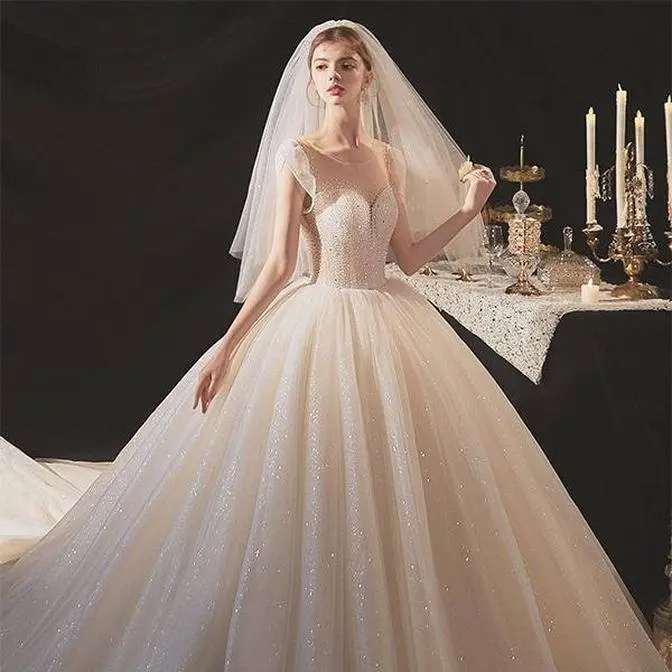
AI GeneratedMay contain errors
In 2026, artificial intelligence is doing something that once belonged only to imagination.
It is taking fragments of the past and turning them into living, moving moments.
Old photographs are no longer silent memories. Film reels are no longer frozen in time.
With the help of modern technology, faces, voices and expressions can be carefully studied, analysed and digitally recreated.
And one of the most fascinating examples of this new power is the digital rebirth of Marilyn Monroe.
For decades, Marilyn existed only in classic movies, magazine covers and faded photographs.
She was a symbol of another era, preserved inside history books and old Hollywood stories.
But now AI is giving us a new way to see her, not as a still image from the past, but as something that feels almost alive again.
The process of recreating Marilyn begins with data.
Thousands of photographs, hours of film footage and countless audio recordings are collected and fed into advanced algorithms.
The AI studies every detail, the shape of her smile, the movement of her eyes, the way her face reacted to light.
Little by little, the system learns what made Marilyn look and feel like Marilyn.
What once required human artists and months of work can now be done by intelligent machines in a fraction of the time.
A single black and white photo can be transformed into a realistic colour portrait.
A silent film clip can be expanded into a smooth, natural video.
Even tiny facial expressions can be generated with astonishing accuracy.
Watching this transformation happen feels almost magical.
A woman who lived in the 1950s can suddenly appear to breathe, to blink, to gently smile, as if she were standing in front of us today.
But this technology is not about replacing the real Marilyn Monroe.
It is about exploring how memory and innovation can meet in the middle.
Every digital recreation is built carefully, step by step, with deep respect for who she was.
Engineers and artists work together to make sure the final result feels authentic rather than artificial.
The goal is not to create a new version of Marilyn, but to honour the original one.
In modern studios, huge screens display complex layers of digital information.
Face meshes, motion patterns, and lighting simulations all combine to rebuild her image from the ground up.
Voices are analysed, tones are reconstructed, and movements are refined until the illusion becomes almost seamless.
It is an incredible mixture of art and science.
Yet even as this technology impresses us, it also makes us pause.
Because recreating a person is not the same as recreating a building or a landscape.
Marilyn Monroe was more than a collection of pixels and sounds.
She was a real human being with real emotions and experiences.
Her algorithm, no matter how advanced, can truly bring back her inner world.
What AI can do is create a bridge between generations.
Younger audiences who never saw Marilyn on a cinema screen can now experience something close to her presence.
Historians and filmmakers can imagine new ways to tell her story.
Fans can reconnect with the magic that made her unforgettable.
In that sense, technology becomes a tool for keeping cultural memory alive.
But there is always a delicate balance.
If we rely too much on digital recreations, we risk forgetting the importance of the original moments.
A, I can imitate the surface of a person, but it cannot replace the truth of their life.
That is why every step of this process must be guided by responsibility.
The recreation of Marilyn Monroe is not just a technical experiment.
It is a test of how we treat the past in the digital age.
Are we using technology to celebrate history?
Or are we turning history into something artificial and empty?
These questions follow every new advancement.
Still, there is something undeniably powerful about seeing an icon from another time appear again in a modern world.
When a recreated Marilyn Monroe softly smiles on a screen, it reminds us why she mattered in the first place.
It reminds us of the charm, the warmth, and the fragile humanity that made her a legend.
And as impressive as this digital rebirth may be, it also opens the door to an even bigger idea.
If artificial intelligence can bring Marilyn Monroe back into our visual world, what else might be possible?
Could other legends be recreated in the same way?
Could technology one day allow figures from different eras to share the same space?
These possibilities lead us directly to the heart of this entire journey.
The recreation of Marilyn Monroe is not the final destination, it is only the beginning.
Because somewhere beyond this experiment lies an even more extraordinary vision.
A vision where Marilyn Monroe and Michael Jackson, two icons who never met in real life, might finally appear together through the power of AI.
That idea once belonged only to dreams and fantasies.
But in 2026, dreams are beginning to look surprisingly real.
And that is where our story is heading next.