
Iconic Old Hollywood Dresses Episode One
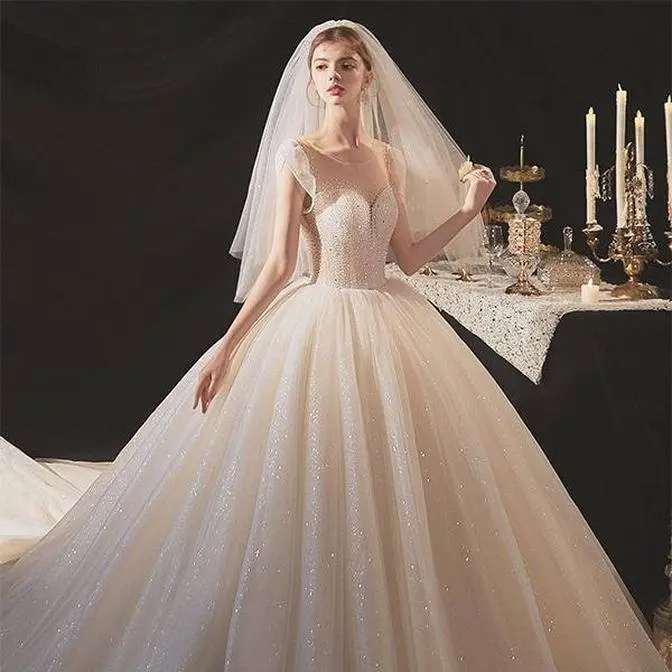
AI GeneratedMay contain errors
Welcome to iconic old Hollywood dresses. In this multi-part series we recreate in vivid detail
the gowns, dresses and ensembles that defined Hollywood's most glamorous era.
In our first episode we begin with no one less than Audrey Hepburn.
She appears in the legendary ascot gown from the 1964 film My Fair Lady. Designed by Cecil Beaton
the dress formed part of a striking black and white tableau.
Delicate white lace and a sculpted silhouette transformed the scene into a living fashion
illustration. We move now to our next recreation. Deborah Carr in her elegant lavender ball gown
from the 1956 film The King and I. Designed by Irene Sharaf the gown reflects both romance
and restraint. Blending classical European ballroom style with a refined interpretation
of Siamese court elegance. Our next recreation takes us back to Vivian Lee as Scarlett O'Hara
in her striking crimson gown from the 1939 epic Gone with the Wind. Designed by Walter Plunkett
the dress was deliberately bold. A declaration of defiance at a pivotal moment in the story.
We move now to Marlena Dietrich in her feathered black ensemble from Shanghai Express
1932. Designed by Travis Banton the gown exemplified early 1930s art deco elegance.
Sculpted velvet theatrical feathers and lighting crafted to shape her face in shadow.
Next comes one of old Hollywood's grandest achievements in costume design. Norma Shearer
as Marie Antoinette in the 1938 MGM production. Created by Adrian the elaborate silver court gowns
required extraordinary craftsmanship. Reflecting both 18th century opulence and Hollywood's own
flair for spectacle. From regal spectacle we descend into shadow and quiet danger with Ava
Gardner in The Killers 1946. Draped in sleek black satin her gown relied not on ornament
but on line and light. Under the stark glow of film noir cinematography the simplicity of the
design allowed shadow to do its work. Defining the post-war image of the femme fatale with restraint
and poise. The mood shifts beneath the stage lights of Ziegfeld Girl 1941 where Hedy Lamarr
costumed by Adrian appeared in dazzling star-inspired creations. Architectural headpieces
and mirrored embellishments transformed the performer into spectacle itself. Capturing the
grandeur of Broadway fantasy at its height. In the early years of sound cinema sophistication
took on a new form. Jean Harlow's white satin gown in Dinner at Eight 1933 also designed by
Adrian was cut on the bias so that the fabric flowed effortlessly with the body. Its fluid
silhouette reflected Parisian couture influence and helped define the streamlined sensuality of
pre-code Hollywood. A very different statement was made in 1938 when Betty Davis in Jezebel
entered the screen in a bold red ball gown created by Ori Kelly. Within the story the dress was meant
to be red a deliberate act of rebellion against southern convention. Yet because the film was
photographed in black and white the gown itself was crafted in a warm rust and copper tone.
Post-war elegance found a softer expression in A Place in the Sun 1951. Elizabeth Taylor's ivory
gown designed by Edith Head achieved its beauty through balance and understatement. The delicate
bodice and flowing skirt framed youthful radiance without overwhelming it. By the late 1950s the
language of glamour had begun to evolve. In La Femme et le Pontin 1958 Brigitte Bardot appeared in a
yellow dress whose clean lines and sunlit tone suggested a freer more modern femininity.
Less structured yet no less striking. Movement and discipline met in The Bandwagon 1953 where
Sid Charisse in a sculpted black gown by Ori Kelly demonstrated how costume and choreography
could become inseparable. The design elongated her silhouette allowing fabric to move with the
precision of dance itself. Few images capture musical romance more vividly than Ginger Rogers
gliding across the floor in Top Hat 1935. Designed by Bernard Newman her pale blue feathered gown
created the illusion of weightlessness though its delicate plumes famously proved less
cooperative behind the scenes. Suspense and sophistication converged in Alfred Hitchcock's
Rear Window 1954 where Grace Kelly dressed by Edith Head appeared in a refined black and white
ensemble that balanced couture elegance with cinematic precision. Its structured bodice and
sweeping skirt reflected Parisian influence while the crisp contrast of light and dark
echoed Hitchcock's meticulous visual design. In our next recreation we move to Marilyn Monroe
in Gentlemen Prefer Blondes 1953 appearing in a striking orange stage gown designed by
William Trevilla crafted in richly ruched chiffon and accented with sequined embellishment. The
dress was designed to emphasize movement and silhouette under technicolor lighting.
Its warm vibrant tone was carefully chosen to glow on screen. Hollywood's influence extended
well beyond the screen in 1932 when Joan Crawford appeared in Letty Linton wearing
Adrian's dramatic white ruffled gown. With its exaggerated sleeves and cascading layers
the design blended romantic fantasy with bold modernity. Department stores across America
quickly produced copies sparking a nationwide fashion phenomenon. Next we move to the Radiance
of Performance with Josephine Baker in Zuzu 1934. Produced within the Parisian studio tradition
her feather-trimmed costumes were crafted for rhythm and light. Their sweeping lines and
sculptural detail emphasized movement ensuring that each gesture shimmered beneath the stage
lamps. We conclude with a portrait of European refinement, Eleanor Parker as the Baroness in
The Sound of Music 1965. Designed by Dorothy Jeakins her evening gowns reflected aristocratic
composure and disciplined elegance. Thank you for joining us for this first episode of Iconic
Old Hollywood Dresses. We would be delighted to hear your thoughts. Which gown remains most
memorable to you and which star you would like to see featured in future episodes?
For more music, films and curated pieces inspired by the golden age
we invite you to visit our website. Until next time!