
Josef Strauss - Amazonen-Quadrille, Op. 118 (1862)
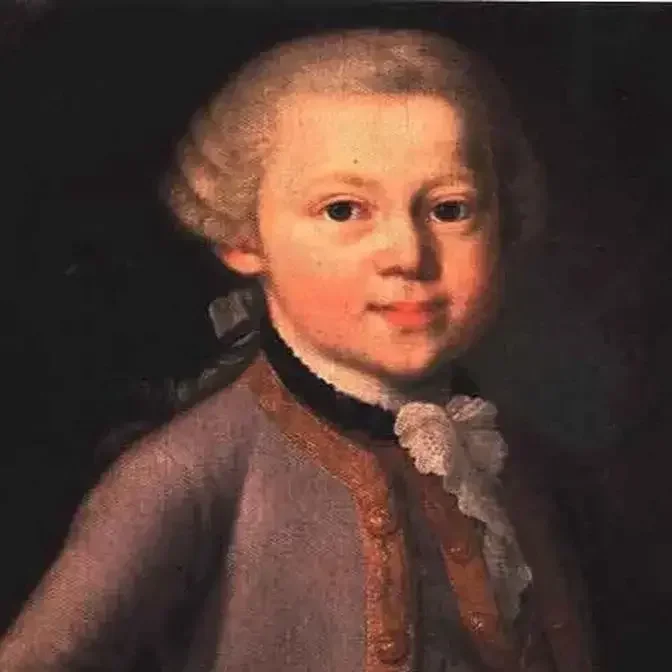
Josef Luckhardt Strauss (20 August 1827 – 22 July 1870) was an Austrian composer. He was the brother of Johann Strauss II and Eduard Strauss. His father wanted him to choose a career in the Austrian Habsburg military. He studied music with Franz Dolleschal and learned to play the violin with Franz Anton Ries.
Please support my channel:
https://ko-fi.com/bartjebartmans
Amazonen-Quadrille, Op. 118 (1862)
Budapest Strauss Symphony Orchestra conducted by Alfred Walter
The parts of a quadrille were called:
1. Le Pantalon ("Trousers")
2. L'été ("Summer")
3. La Poule (The Hen")
4. La Pastourelle ("The Shepherd Girl")
5. Finale
All the parts were popular dances and songs from that time (19th century): Le Pantalon was a popular song, the second and third part were popular dances, La Pastourelle was a well-known ballad by the cornet player Collinet. The finale was very lively.
Sometimes La Pastourelle was replaced by another figure; La Trénis. This was a figure made by the dance master Trenitz. In the Viennese version of the quadrille both figures were used: La Trénis became the fourth part, and La Pastourelle the fifth, making a total of six parts.
Notable quadrilles include among others the following: Le beau monde, Le piège de Méduse and Le prophète (the quadrille from the latter was also included in the arrangement Les Patineurs).
The term quadrille originated in 17th-century military parades in which four mounted horsemen executed square formations. The word probably derived from the Italian quadriglia (diminutive of quadra, hence a small square).
The dance was introduced in France around 1760: originally it was a form of cotillion in which only two couples were used, but two more couples were eventually added to form the sides of a square. The couples in each corner of the square took turns, in performing the dance, where one couple danced, and the other couples rested. The "quadrille des contredanses" was now a lively dance with four couples, arranged in the shape of a square, each couple facing the center. One pair was called the "head" couple, the adjacent pairs the "side" couples. A dance figure was often performed first by the head couple and then repeated by the side couples. Terms used in the dance are mostly the same as those in ballet, such as jeté, chassé, croisé, plié and arabesque.
Reaching English high society in 1816 through Lady Jersey, the quadrille became a craze. As it became ever more popular in the 19th century it evolved into forms that used elements of the waltz, including The Caledonians and The Lancers. In Germany and Austria dance composers (Josef Lanner and the Strauss family) composed for the quadrille. Its popularity made it a metaphor, the "stately quadrille", of the constant formation of fresh political alliances with different partners in order to maintain the balance of power in Europe. Lewis Carroll lampooned the dance in Alice's Adventures in Wonderland's "The Lobster Quadrille" (1865)