
Plant These in MAY! 11 Tough Perennials That Thrive on Neglect All Summer Long
40 Video Views·May 1, 2026
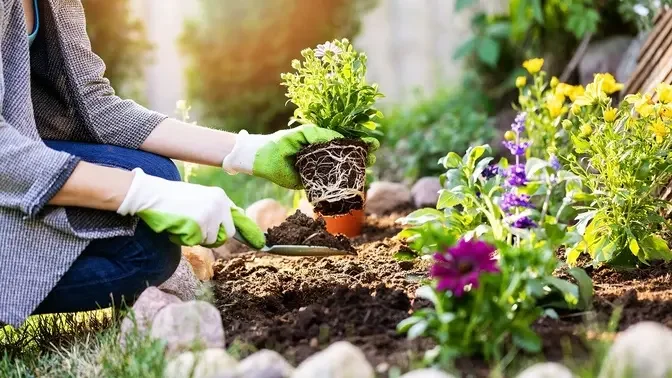
Stop blaming yourself for killing plants — you've just been growing the wrong ones. In this video, we give you 11 battle-tested perennials that come back every single year, handle drought, heat, and poor soil without complaint, and flower like it's their full-time job. From the ancient prairie genetics of Echinacea and Gaillardia to the pollinator powerhouses Catmint and Agastache, every plant on this list was chosen for one reason: it performs when you're not looking. Real zone data. Rare growing tips. Zero filler. These are the plants that belong in your May garden — and the ones that will make your whole summer extraordinary.
You planted something last May, watered it, nursed it, maybe even talked to it.
And by July? Dead.
Or worse, barely surviving, looking like it was doing you a personal favour by staying alive.
Here's the truth.
Most plants sold in May look great on a garden centre shelf.
They're not actually built to survive your summer.
So if you've been blaming yourself for killing plants,
stop. You've just been growing the wrong ones.
Today I'm giving you 11 tough perennials that come back every single year,
handle drought, heat and poor soil.
And still flower like it's their job.
Real information. Rare tips.
Zero filler.
Subscribe right now.
Because if you miss plant number 7, you will regret it all summer long.
And drop a comment below right now.
What's the one plant that has completely broken your heart?
Let's get into it.
Plant 1.
Echinacea.
Let's start with a plant that has been quietly saving failing gardens for decades,
and most people still underestimate it.
Echinacea.
The purple coneflower.
You've probably seen it.
Big, daisy-like blooms.
Deep purple petals drooping around a spiky orange cone.
Beautiful plant.
But here's what most people don't actually know about it.
It's not just tough.
It is almost unkillable once it's established.
And there's a specific reason for that.
Echinacea is native to the North American prairies.
And when you understand that, everything makes sense.
Prairie plants evolved over thousands of years to handle massive summer heat,
rocky or clay-heavy soil,
and months of drought without complaint.
That is not a fragile ornamental.
That is a survivor.
And when you put that plant in your garden in May,
you are making an intelligent decision.
Now for the zone information, because this is the kind of detail that actually matters.
Echinacea is hardy from USDA zones 3 all the way through 9.
That is one of the widest cold and heat tolerance ranges
of any flowering perennial you can buy at a garden center.
If you are in Minnesota or Manitoba dealing with brutal minus 30 winters,
it comes back in spring.
If you're in Texas or Georgia dealing with brutal July summers, it still comes back.
Zone 3 through 9 is essentially the entire continental United States and most of Canada.
That's not a coincidence.
That's prairie genetics doing exactly what they were designed to do.
Here is the rare tip that most gardening videos completely skip over.
Echinacea actually performs better in poor, lean soil.
If you enrich the soil too much, heavy compost, frequent fertilizer,
you get lush foliage and weak, floppy stems that fall over by July.
Lean, unfertilized soil gives you compact, upright plants with stronger flower stems
and more vivid flower color.
So for once, doing less is literally the correct horticultural answer.
Plant your Echinacea in full sun.
Minimum 6 hours of direct light daily.
It needs that sun exposure to flower properly.
Once it's in the ground and has had one thorough watering to settle the roots,
you can mostly walk away.
It will establish itself through the summer,
spread slowly and politely through self-seeding over the years,
and bloom reliably from June through September.
And here is something that makes Echinacea even more worth growing.
If you leave the seed heads standing through autumn and into winter
instead of cutting everything back,
goldfinches, chickadees, and other seed-eating birds
will feed on them all through the cold months.
You are not just planting a flower,
you are planting a bird feeder that also happens to look beautiful
from your window in December.
One more piece of golden information.
The name Echinacea comes from the Greek word for hedgehog,
a reference to that spiky central seed cone,
and indigenous communities across North America,
including the Lakota, Cheyenne, and Comanche,
used Echinacea medicinally for centuries before European settlers ever saw it.
Modern research has since confirmed it contains active immunostimulant compounds.
This is not a new or trendy garden plant.
It is ancient, field-tested, and completely reliable.
Coming up next, I have a plant that blooms in one of the most difficult colours
to pull off elegantly in a garden,
and this one does it completely on its own every summer.
Plant two, Black-Eyed Susan Golden Yellow.
Most gardeners will tell you it's one of the hardest colours to use
without it looking cheap, overwhelming, or just plain messy.
And then they plant Black-Eyed Susan, and all of that changes overnight.
Rudbeckia, the Black-Eyed Susan, is one of those plants
that earns its space in a garden ten times over.
Bold, golden-yellow daisy flowers with a dark brown or black central cone
that gives it that dramatic contrast.
It blooms from July all the way through October.
That is a longer continuous flowering window than almost anything else you will plant this May.
USDA Hardiness Zones 3 through 9.
Same broad tolerance as Echinacea.
And this is not a coincidence.
Both are North American prairie natives.
Both evolved under the same unforgiving conditions of summer heat and winter cold.
And both reward gardeners who resist the urge to over-manage them.
Here is the golden information most people miss with Rudbeckia.
It is technically classified as a short-lived perennial,
meaning in some gardens an individual plant might only persist
for three to four years before fading out.
But here is exactly why that does not matter in practice.
Rudbeckia self-seeds aggressively, reliably.
New plants fill in the gaps before you have even noticed the old ones are gone.
So you treat it like a perennial because in every practical sense it behaves like one.
You plant it once, and it stays.
Rudbeckia handles clay soil better than almost any other flowering perennial
in this hardiness range.
If you have the kind of heavy, sticky, waterlogged clay that makes roses sulk and lavender rot,
this is your plant.
Plant it in full sun, give it average moisture through the first season
to get the roots established, and then genuinely stop worrying about it.
It will manage itself.
Here is a rare ecological detail that is genuinely worth knowing.
Rudbeckia is one of the highest value nectar sources for native bees
during late summer and early fall.
Precisely the window when most other flowers are finished
and pollinators are scrambling to build fat reserves before winter.
You are not just filling a visual gap in your garden.
You are filling a food gap in your local ecosystem that very few plants address.
That matters.
And if you have a difficult slope, a roadside strip, a dry bank,
or any area where you simply cannot be bothered to maintain anything,
mass plant Rudbeckia.
It will colonize that space, hold the soil with its fibrous roots,
and look genuinely magnificent every summer without a single intervention from you.
Stay with me, Harkani.
Because plant number three is one that almost every gardener wants
and somehow keeps killing for one very specific reason.
And once you know what that reason is, you will never make that mistake again.
Plant three.
Lavender.
Let me be completely direct with you about this.
More lavender plants have died from too much care than from too little.
That is the honest truth.
And it is the thing nobody says clearly enough.
Lavender is the plant everyone wants in their garden and somehow keeps losing.
But it is not a difficult plant.
People simply apply the wrong logic to it.
They treat it like a thirsty, hungry garden plant.
And lavender is fundamentally neither of those things.
Lavender is native to the rocky, dry, sun-baked hillsides of the Mediterranean coast.
Thin, almost gravelly soil.
Full sun all day.
No meaningful summer rainfall.
It did not evolve to handle rich, heavily amended garden beds,
regular watering schedules, or humid, poorly draining conditions.
Give it those things and the crown rots from the inside out.
Give it what it actually evolved to want,
lean, sharp-draining soil, full sun, and benign neglect.
And it will live for 10 to 15 years and fill your garden with fragrance every June.
USDA Zones.
English Lavender, Lavandula, and Gustifolia is reliably hardy in Zones 5 through 8.
If you're in Zone 4 and want to try lavender,
specifically look for the cultivars Hidcote or Munstead.
These are the most cold, hardy named varieties available
and have survived temperatures as low as negative 20 degrees Fahrenheit
in sheltered, well-drained sites.
If you're in Zones 9 or 10,
Coastal California, the Gulf South, or similar climates,
English Lavender will struggle with the heat and humidity.
Choose Spanish Lavender, Lavandula Stoichis,
or French Lavender, Lavandula Dentata instead.
They handle warmth and occasional summer moisture significantly better.
Here is the single piece of information that will save your lavender immediately if you apply it.
Drainage is not just important.
It is everything.
More important than sunlight.
More important than pruning.
More important than what variety you choose.
If your soil holds water after rain,
if it is clay-heavy, compacted, or slow-draining,
mix coarse horticultural grit or pea gravel into the planting hole
at a ratio of roughly one part grit to two parts existing soil.
Some experienced growers plant lavender on a slight raised mound
to encourage water to move away from the crown naturally.
That one adjustment has saved more lavender plants than any other technique I know.
Here is a rare fact that rarely surfaces in mainstream gardening content.
Lavender actively influences the soil microbiology around its root zone
through the release of aromatic compounds.
Research has found that these compounds suppress certain soil pathogens
while encouraging beneficial fungal networks.
Your lavender is not just sitting there looking beautiful.
It is quietly improving the soil environment around itself.
That is a plant worth having.
Planted in May, in the sunniest position you have,
in the most well-drained soil you can offer.
After the first main flush of bloom,
cut the plant back by about one third.
Not into the old woody stem,
always into green growth.
This encourages a second flush
and prevents the plant from going hollow and woody at the base.
That is the full care routine.
And then genuinely, honestly, walk away.
Keep going.
Because plant number four might be the single most hard-working perennial
on this entire list.
And I think there is a real chance you have been overlooking it.
Plant four.
Daylily.
If you could only plant one perennial this May, just one,
the honest answer from most experienced gardeners
would be a daylily.
And they would not be wrong.
The name tells you part of the story.
Each individual flower lasts exactly one day.
But each plant produces dozens,
sometimes well over a hundred buds over a blooming season.
What you get is continuous rolling colour
for four to six weeks straight from a single clump.
And that clump gets larger, more floriferous
and more impressive every single year,
without any intervention from you.
USDA zones three through nine,
with some modern heat-tolerant hybrids
extending into zone 10 with afternoon shade protection.
Daylilies handle clay, sandy or loamy soil equally well.
They manage drought once their roots are established.
They tolerate poor soil fertility without complaint.
They even tolerate light shade,
though they bloom significantly more abundantly in full sun.
There are almost no ordinary garden conditions they flatly refuse.
Here is the golden information that most gardening channels
simply do not tell you.
And it matters enormously for what you actually plant.
Not all daylilies are the same.
There are over 80,000 registered daylily cultivars in existence.
The common orange ditch lily you see naturalised along highways
and fence rows, Hemerocallis fulva,
is essentially indestructible,
but it spreads aggressively through underground stolons
and is considered invasive in parts of the northeast and midwest.
For a managed garden setting, choose named hybrid cultivars.
Stella de Oro is the most widely sold perennial
in North American history for a reason.
It is compact, repeat blooming from June through September,
and hardy to zone 3.
Happy Returns gives you a long season of soft yellow flowers
and re-blooms reliably.
These hybrid types re-bloom multiple times through the summer.
The wild species does not.
Here is the rare detail that occasionally surprises people.
Daylilies are severely toxic to cats.
Every part of the plant, now flowers, leaves, pollen,
even the water in a vase,
can cause acute kidney failure in cats.
If you have cats that spend time outdoors
or that have access to your garden,
choose a different plant from this list.
For dog owners and households without cats,
they are completely safe.
And as a practical bonus,
deer strongly dislike daylilies and generally avoid them,
which is a genuine advantage
if you garden in areas with significant deer pressure.
Divide your daylily clumps every 3-4 years in spring or fall.
This keeps them vigorous and flowering at peak performance.
Every division you separate becomes a new plant you can transplant,
give to a neighbor,
or use to fill bare spots elsewhere in your garden.
One original plant can realistically multiply
into 20 or more divisions over a decade.
That is remarkable long-term value from a single May purchase.
We are almost halfway through this list.
But I want to stop you here for a moment,
because the second half of this video contains some plants
that most gardeners have genuinely never considered,
and a few of them might completely change
how you approach your garden this summer.
Stay with me.
Plant 5. Salvia
When you want continuous color from May
all the way through the first autumn frost,
not most of the summer, not a good chunk of it,
but genuinely all of it,
ornamental salvia is the answer.
Perennial salvia produces tall, elegant spikes
of intensely colored blue, purple, pink,
or red flowers from late spring through autumn.
It attracts hummingbirds.
It attracts bumblebees.
It has a tall, vertical architecture
that makes a garden look designed rather than random.
And it is one of the most legitimately
drought-tolerant flowering perennials
you can plant in a temperate garden.
USDA hardiness varies by species,
and knowing this makes a real difference in what you choose.
Salvia nemorosa, the most widely available
and reliable perennial sage,
is hardy in zones 4 through 9.
This is the one you'll find most commonly at garden centers,
and it is excellent.
Salvia greggii, the autumn sage native to Texas
and northern Mexico,
handles zones 6 through 9
and is exceptional in the American south and southwest,
where summers are brutally hot and dry
for months at a stretch.
Salvia leucantha, the Mexican bush sage,
is zones 8 through 10
and produces the most visually dramatic flower spikes
of the entire genus.
Long, velvety purple and white plumes
that look almost artificial.
They are so perfect.
Here is the management technique
that most people don't know,
and it dramatically changes your results.
After the first flush of salvia bloom
fades and the spent flower spikes look tired,
cut the entire plant back by roughly half.
It feels wrong.
It looks brutal when you're doing it.
But within three to four weeks,
you will get a second complete flush of bloom,
often as strong and colorful as the first.
Some dedicated gardeners do this cut back
three times through a season
and have salvia in flower
right up to the first hard frost.
Very few perennials offer you
that level of seasonal control.
The rare golden detail.
Salvia foliage contains aromatic volatile oils
that naturally repel certain common garden pests,
including aphids, whitefly,
and some species of beetles.
Plant it near roses,
vegetable beds,
or other pest-prone plants,
and you gain a degree of passive,
chemical-free pest management
with no spraying required.
A plant that flowers for six months
and protects its neighbors while doing it.
That earns its space twice over.
Full sun.
Well-drained soil.
Water sparingly once established.
Divide every three to four years
to maintain vigor.
That is the entirety of the care routine.
Plant six.
Yarrow yarrow might be the single toughest plant
on this entire list,
and I want to explain precisely why,
because the reason is genuinely fascinating.
Achillea millefolium,
so common yarrow,
is a weed in much of the world.
It grows in roadsides,
coastal clifftops,
mountain meadows,
cracks in pavement,
and disturbed ground across Europe,
Asia,
and North America.
It is one of the most environmentally
adaptable flowering plants on earth.
And when plant breeders
took that wild genetic toughness
and crossed it into garden varieties,
which is exactly what the ornamental
yarrow industry has done,
the result is extraordinary.
Garden yarrow is available in red,
orange,
yellow,
coral,
cream,
and white.
It produces flat-topped flower clusters
called coryms.
Dense,
horizontal platforms of tiny flowers
that butterflies,
particularly swallowtails and fritillaries,
are intensely attracted to.
It blooms from June through September,
and deadheading is optional
rather than essential.
Yarrow is one of the very few perennials
that performs equally reliably
in a zone 3 Canadian winter,
where temperatures drop to minus 40,
and a zone 9 Texas summer,
where soil temperatures can exceed
100 degrees Fahrenheit at the surface.
Its roots are rhizomatous.
They spread laterally underground,
which is why established plants
are virtually impossible to kill
once they are in place.
Here is the historical,
golden information.
Yarrow's scientific name,
Achillea,
comes from the Greek hero Achilles.
According to ancient accounts,
Achilles used yarrow leaves
to treat the bleeding wounds of his soldiers
during the Trojan War,
a practice that was common
across multiple ancient cultures.
This is not just mythology.
Modern pharmacological research
has confirmed that Achillea millefolium
contains achillane,
a compound with documented
hemostatic properties,
meaning it genuinely does assist
in blood clotting.
You are planting something
with one of the longest verified
human relationships of any garden plant
in the Northern Hemisphere.
Critical growing guidance,
and this is the opposite
of what most people do.
Plant yarrow in the worst,
driest,
most neglected,
most nutrient-poor spot in your garden.
Rich, heavily composted soil
makes yarrow floppy,
overly lush,
and weak-stemmed.
Poor, lean,
gravelly or sandy soil
makes it compact,
upright,
fragrant,
and absolutely covered in flowers.
This is one of the only plants
where deliberate neglect
is the formally correct
horticultural approach.
Divide it every two to three years
in early spring
to keep it vigorous
and prevent the centre of the clump
from dying out.
Trim back spent flower heads
to the next side bud
to extend the blooming period
and give it physical space,
a border edge,
or buried vertical barrier
if you don't want it naturalising
into adjacent areas.
Plant seven.
Catmint.
I told you in the opening of this video
that number seven
would be worth waiting for.
Here it is.
Catmint.
And I want to make a case for this plant
that I genuinely do not think
any other gardening channel
has made clearly enough.
Catmint, specifically Nepeta ex fascinii
and its many named cultivars,
is the single best value for space.
Return on investment flowering perennial
you can plant in May.
I will stand behind that statement completely.
Here is the full case.
It blooms from late May through July
in massive cascading waves
of lavender blue flowers.
Then you cut it back by two thirds
and within four to five weeks
it produces a second complete flush of bloom
from August all the way through October.
That is effectively two full blooming seasons
from one plant
every year without fail.
It fills space with a relaxed
cottage garden elegance
that spills beautifully over path edges
and along border fronts.
And the fragrance is remarkable.
A clean, herbal, slightly minty,
slightly anise warmth
that fills the garden on a warm afternoon
in a way that nothing else quite replicates.
USDA zones three through eight.
The cultivar Walker's Low,
the most widely sold
and most recommended catmint variety,
reaches 18 to 24 inches in height and spread.
Despite the name,
it is not actually a low or ground-hugging plant.
It is a full, rounded, substantial perennial.
Walker's Low won the Perennial Plant Association's
Plant of the Year Award in 2007
and it earned that recognition legitimately.
Here is the rare information
that genuinely surprises most people.
Catmint is more drought tolerant than lavender.
Yes, more than lavender.
Once catmint has been in the ground
for approximately six to eight weeks
and established its root system,
you can stop watering almost entirely
in most temperate climates
and it will be absolutely fine.
In USDA zones six through eight,
where summers combine heat and humidity
in a way that stresses lavender,
catmint consistently outperforms lavender
because it tolerates that heat-humidity combination
that Mediterranean plants genetically struggle with.
If you have tried and failed with lavender
in a humid zone,
plant catmint in the same spot.
You will get a similar visual effect
with significantly more reliability.
And yes, cats do react to it.
Not as intensely as they respond
to true catnip, Nepeta cataria,
but they will investigate it,
rub against it,
and occasionally roll in it.
If neighborhood cats accessing your beds are a concern,
use small wire hoops or mesh around the plant
for its first season
while it establishes enough size
to withstand feline attention.
One more piece of information worth knowing.
Nepeta has been ranked
in multiple independent university pollinator studies
as one of the top five nectar sources for bumblebees
among all temperate garden perennials.
A mass planting of catmint in full bloom
generates audible bee activity.
You can genuinely hear it from a distance.
If pollinator support matters to you,
and at this point in our collective understanding
of what is happening to global bee populations,
it absolutely should,
catmint is non-negotiable.
Most plants on this list are tough.
Sedum is in a different category.
Sedum is essentially a succulent
that decided to live in a regular temperate garden,
and it brings every bit of that succulent resilience
along with it.
The tall border sedums,
recently reclassified botanically as hylitolithium,
but still widely sold under the sedum name at nurseries,
produce thick, fleshy architectural foliage
from spring onwards in blue-green,
burgundy or silver tones.
And then, in August and September,
precisely when the rest of your garden
is beginning to look tired,
sun-bleached and exhausted,
sedum bursts into massive,
flat-topped flower heads of pink,
red,
copper
or rust.
It is deliberately a late-season plant.
Its entire design is optimised for impact
when everything around it is winding down.
USDA zones 3 through 9.
The variety Autumn Joy,
as still one of the most widely sold perennials in the world
and for genuinely good reason,
is a classic for zones 3 through 9.
Matrona offers distinctive burgundy stems
and dusty rose flowers,
and performs equally well across the same zone range.
Angelina is a completely different type.
A spreading, ground-covering sedum
with striking, golden chartreuse foliage
that turns vivid orange and red in cold autumn weather.
Different look,
same toughness.
Here is the golden information
that explains everything about sedum's drought performance.
Sedum stores water directly in its leaves.
This is not metaphorical.
Those thick, succulent leaves
are literal water reservoirs
that the plant draws on during dry periods.
That is why you can genuinely forget to water
an established sedum for three weeks in August
and find it looking completely untroubled.
In USDA zones 7 and above,
established sedum in a reasonably shaded or mulched bed
requires essentially zero supplemental irrigation
once the summer heat sets in.
It manages its own water budget
from stored reserves and periodic rainfall.
Here is the rare ecological detail.
Tall border sedums,
particularly Autumn Joy and similar cultivars,
are documented refueling stops for monarch butterflies
during their autumn migrations south to Mexico.
If you live anywhere in the central
or eastern monarch flyway,
broadly anywhere east of the Rocky Mountains,
a mass planting of sedum in bloom in September
can serve as a literal feeding station
for migrating monarchs.
These butterflies need nectar energy
for a journey of over 2,000 miles.
Your garden can be part of that story.
Do not cut sedum back in autumn.
Leave the dried flower heads standing through winter.
They hold frost and snow in a way
that is visually beautiful
and that provides genuine structural interest
to an otherwise bare winter garden.
Cut them back to ground level in early spring,
just before new growth begins to emerge from the base.
If you have a spot in your garden
that gets full, blazing, all-day sun,
the kind of brutal exposure
where most plants wilt by noon
and look defeated by August,
Coriopsis is your answer.
Not a good option.
The answer.
Coriopsis produces cheerful,
daisy-form flowers in clear yellow,
gold, warm pink,
or bicolour combinations with extraordinary generosity.
But what makes it genuinely special
is not the colour range.
It is the sheer duration of bloom.
A regularly dead-headed Coriopsis
can flower continuously from May through October.
That is five full months of colour
from a plant that, once established,
asks for essentially nothing in return.
USDA zones 4 through 9
for the most reliable perennial species.
Coriopsis grandiflora
gives you larger, bolder flowers
but can be slightly shorter-lived.
Coriopsis verticillata
Threadleaf Coriopsis
has fine, feathery foliage
and exceptional heat and drought performance.
The compact verticillata cultivar Zagreb
is particularly outstanding,
consistently performing in zones 3 through 9
and handling summer heat and drought
better than almost any other Coriopsis variety
available.
Here is the genuine golden information.
Coriopsis is native to the southeastern United States.
It is the official state wildflower of Florida
and it evolved in flat, open, sandy,
nutrient-poor conditions under relentless sun.
That origin means it actively prefers
infertile, well-drained soil.
Rich, heavily amended garden soil
and excess moisture cause the exact problems
you are trying to avoid.
Root rot, floppy stems
and shortened plant life.
If you have a hot, dry, sandy patch
where nothing else will grow,
you have not found a problem area.
You have found the ideal Coriopsis habitat.
Rare cultural history worth knowing.
Cherokee communities used Coriopsis
root preparations medicinally
and several Coriopsis species
are now being studied by pharmacological researchers
for documented anti-inflammatory
and antioxidant compounds.
This is not just another yellow daisy
wearing a nice dress.
It has a history and a biochemical depth
that most gardeners never discover.
Deadhead spent flowers regularly
to extend the blooming window
through the full season.
Divide established clumps
every two to three years in spring
and if you occasionally forget to do either,
it is still fine.
It will just bloom for a slightly shorter window,
which for a plant explicitly on this neglect list
seems more than reasonable.
Plant 10.
Agastache.
We are entering the territory now
of plants that will make people
stop in front of your garden
and ask you what on earth
that incredible thing is.
Because Agastache is spectacular
in a way that surprises almost everyone
who encounters it for the first time.
Agastache, pronounced ag-uh-stay-key,
produces tall, bottle-brush style
flower spikes in sunset colours.
Orange, coral, pink, deep purple,
and rich red.
It blooms from July
right through the first hard frost.
The foliage, when you brush it with your hand,
releases a remarkable scent,
somewhere between fresh mint and anise
with a slight warmth underneath.
And hummingbirds do not just visit it,
they compete for it.
If you want hummingbirds
consistently present in your garden,
in your garden specifically,
not just passing through the neighbourhood,
plant Agastache and let them find it.
USDA zone information here is more nuanced
than the other plants on this list,
and it matters.
Agastache funiculum,
the anise hyssop with blue-purple flower spikes,
is hardy in zones 4 through 9.
Agastache rupestris,
the sunset hyssop with orange-pink flowers,
is zones 5 through 10.
Agastache orantiaca varieties,
including Apricot Sprite and Coronado,
are zones 6 through 10.
The reliable general principle,
the more orange and warm tone
the flower colour,
the more heat tolerant the variety
and the higher its zone ceiling.
Match your colour choice to your zone
and you will have a reliably perennial plant.
Here is the golden information
that explains why most Agastache failures happen.
It is native to semi-arid regions
of the American Southwest and highland Mexico.
It evolved under conditions of intense full sun,
rocky alkaline soil
and minimal summer moisture.
That means it is not just drought tolerant,
it actively performs worse
when watered too generously.
Overwatering is the number one cause
of Agastache failure in garden settings
by a significant margin.
The care instruction is,
plant it,
water it consistently
for the first two to three weeks
while the roots establish,
then pull back substantially
and let the soil dry between waterings.
That is the full program.
Here is the rare fact
that puts Agastache in a completely different class
for pollinator value.
Agastache has been measured
in botanical studies
as having one of the highest
nectar sugar concentrations
of any commonly cultivated garden perennial,
meaning the energy value
of each nectar visit for a pollinator
is exceptionally high.
Monarch butterflies,
multiple bumblebee species,
sphinx moths
and at least 12 documented species of native bee
have been recorded feeding on it
in controlled botanical garden research.
You are planting something
that functions as a high calorie pollinator resource
at a time when those resources
are genuinely diminishing
across most developed landscapes.
In zones 4 and 5,
provide excellent drainage
and a layer of protective mulch
over the crown in winter.
In zone 7 and above,
it is essentially bulletproof.
Allow it to self-seed lightly
for additional plants the following year.
It seeds modestly,
not aggressively
and the seedlings are easy to move
if they appear somewhere inconvenient.
Plant 11,
Gallaudia.
We have arrived at number 11
and I have held this one specifically for last
because Gallaudia is the plant
that can make your garden
look like a professionally designed landscape
in a difficult spot,
in a difficult summer,
with essentially no meaningful effort on your part.
Gallaudia produces some of the most vivid,
boldly patterned flowers
of any perennial in existence.
Deep crimson centers ringed
by radiating bands of orange, gold
and sometimes burgundy nuts
like someone compressed a prairie sunset
into a single 4-inch flower
and planted it at your feet.
It blooms from June
through the first hard autumn frost.
It reseeds readily
without becoming invasive
and it positively thrives
in the conditions
that defeat most other plants.
USD,
A zones 3 through 10.
Read that again,
3 through 10.
That is essentially the complete
USD A zone range
for North American gardening.
Gallaudia is one of the most climate-flexible
flowering perennials in existence.
It handles alkaline prairie soils,
sandy coastal soils
and clay-based soils
as long as that clay drains
at least reasonably.
It tolerates drought
at a level comparable to yarrow
and it handles coastal wind
and salt air
which eliminates almost every other
flowering perennial
from consideration in those environments.
Here is the honest golden information
about Gallaudia
that most sources gloss over.
In climates with genuinely humid summers,
the Deep South,
the Pacific Northwest,
parts of the Midwest,
Gallaudia is technically
a short-lived perennial.
An individual plant
may only persist 3 to 4 years
before the crown rots
in persistent summer moisture.
Here is why that does not matter
and why you should plant it anyway.
Gallaudia self-seeds
with extraordinary reliability.
Every plant you eventually lose
is replaced by 2 or 3 seedlings nearby
without any effort from you.
Approach it not as a permanent fixture
but as a self-renewing resource
and you will always have it,
always in bloom,
always covering the ground
you need covered.
Here is the rare historical
and botanical information
that gives Gallaudia a context
most people never consider.
Gallaudia pulchella,
the annual species that is the parent
of most modern perennial hybrids,
is so naturally widespread
across the American Great Plains
and prairies
that botanists regard it
as one of the defining visual characteristics
of the North American grassland biome.
When the early European explorers
described the mid-continent prairies
as covered in drifts
of red and gold wildflowers,
they were describing Gallaudia.
When you plant blanket flower,
you are working with the genetics
of the Great Prairies,
a plant that has covered
the heart of a continent
for thousands of years
and is not intimidated by your summer.
Plant it in full sun,
in lean to average soil
with the best drainage you can offer.
Water it through its first season
to establish the root system.
After that, genuinely,
sincerely walk away.
Come back in July
and be amazed at what has happened without you.
And there you have it.
11 perennials that are ready for May planting,
ready for summer neglect,
and ready to come back
and do the whole thing again next year.
Better and bigger each time.
Let me give you the honest big picture summary
before you go
because this is what ties everything together.
Every single plant on this list
shares three fundamental traits.
They are adapted to their native growing conditions,
which means they are not fighting your garden.
They are at home in it.
They prioritize deep root development
over surface leaf growth in their first season,
which is precisely why
summer drought cannot finish them.
And every one of them has been proven
across verified USDA zone data
and in real gardens
across multiple climate types
to perform reliably
without intensive maintenance.
That is not luck
and it is not magic.
That is the result of choosing the right plant
for the right purpose.
Here is the challenge I want to leave you with.
Do not try to plant all 11 this May.
Pick three from this list,
just three that suit your zone,
your soil,
and the spots you need to fill.
Plant them,
water them in,
and then genuinely step back.
Give them a full season.
Come back to this video in September
and I promise you that you will wish
you had planted all 11 in May.
If any of this was genuinely useful to you today,
if one of these plants surprised you,
if you already grow one of them
and want to share your experience,
or if you have a difficult garden spot
you are trying to crack,
drop it in the comments right now.
I read every single comment
and some of the best,
most practical gardening conversations
I have ever had
have happened right there
in the comment section of this channel.
If you are not subscribed yet,
now is the moment.
Hit the subscribe button right now.
Every week I bring you exactly this kind of content.
Real growing information.
Real zone data.
No recycled tips and no filler.
Thank you for giving me a few minutes of your day.
Now close the screen,
get your hands in the soil,
and plant something this May
that is going to make your whole summer extraordinary.
I will see you in the next one.