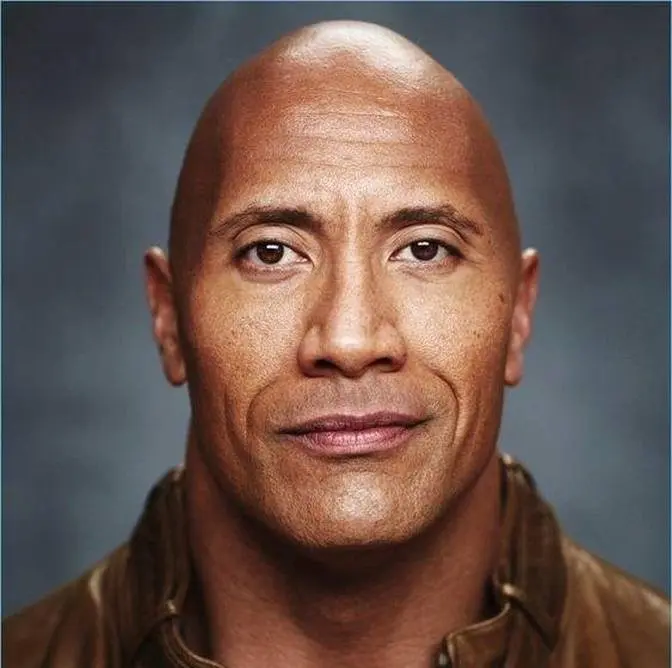
Dwayne “The Rock” Johnson discusses his health journey —and the test results that pushed him to take more control of his health.
In this powerful episode of The Dr. Hyman Show, Dwayne opens up about the advanced diagnostics that made him take a deeper dive into his health.
From dangerous inflammation markers to gut imbalances, he shares how functional medicine and targeted data helped him turn things around.
Dwayne talks about what it means to be present as a father, leader, and human being—and why taking care of your health is the most powerful form of self-respect.
In This Conversation: Dwayne’s functional lab results—and the action plan he built from them How chronic inflammation and hidden stress were silently impacting his energy, brain, and mood The exact gut health protocols and daily shifts he uses to stay ahead How AI, biomarkers, and customized testing gave him a new form of clarity
If you think you’re doing everything right but still feel off—this episode is for you. Dwayne’s story emphasizes the importance of knowing what’s really happening under the surface.
Dr. Mark Hyman helps connect the dots between performance and prevention, resilience and rest, and the science that could extend your health span—not just your lifespan. #film#entertainment#Dwaynejohnson#actor
My grandfather was a tough guy.
He had all these aches and pains, refused to go see the doctor.
What was the pain?
Cancer.
It had metastasized to a point where there was just no going back.
Dwayne Johnson.
The Rock.
DJ.
He's here.
And he's getting personal about his health.
I got this gut issue and he was like, what's going on?
I said, I've seen doctors and I can't quite nail it.
I can't quite fix it.
It's in my digestion.
Even someone like you that eats really healthy and takes care of himself,
you had a lot of nutritional deficiencies.
Basically things that are super easy to fix.
The noise comes in many forms.
You're doing it wrong.
There's gurus.
There's influencers.
Here's what's not noise, is data.
And the data that, for example, the function of health can provide,
like that's not noise.
That is real.
It's data.
It's factual.
And you take that, that will inform how you move forward.
You said your health is a gift to your kids, right?
That's right.
It's the best gift that we can give.
Well, DJ, it's so good to have you on the podcast, man.
Good to see you, Mark.
Thank you, man.
Good to see you too.
It's been a long time coming.
You've been someone who's been focused on your health and well-being,
but you also struggle with the healthcare system
and getting the answers you needed and figuring out what's going on.
And maybe you could share like how we got connected
and how this all started with us.
And just as transparency, like I'm your doctor,
so this is like an intimate conversation, everybody.
And DJ told me to share a lot about what he learned
and what he's found about himself.
But how did you kind of end up in my lap?
So to speak, right.
I'm like Santa.
Santa Hyman.
To start where we started was,
so probably going on a couple of years now,
and I was having some gut issues.
And at that time, you and I didn't know each other.
And we have a common friend.
We have a lot of common friends come to find out.
But we have a common friend in Ari Emanuel.
And I was talking to Ari at the end of 2023.
And we were just talking.
We're talking about our stuff.
He's been a longtime business partner of mine.
He's been my lead agent as well for years and years, decades.
And I was talking to him about my gut.
And I said, man, I got this gut issue.
And he's like, what's going on?
I said, I've seen doctors and I can't quite nail it.
I can't quite fix it.
It's in my digestion.
I feel great.
And that's the odd thing, but I just can't crack it.
And he said, I'm going to introduce you to a friend of mine.
His name is Dr. Mark Hyman.
And I'm going to connect you.
And as you know, Ari, and anyone out there who knows Ari,
these conversations last 30 seconds.
So this was a five-minute call that I had with him, which is a long time.
And so he connected you and I via text.
And then you and I spoke.
And I'll never forget when I talked to you, it was a Zoom.
And you had said, hey, just curious, are you familiar with who I am and what I do?
And I said, not one bit.
I have no idea.
And you said, do you know anything about functional medicine?
I said, well, I've heard about it a little bit.
And I said, tell me a little bit about it.
And he goes, well, this is my specialty and this is what I do.
And you had said very succinctly, you had said, I'm not going to treat your symptoms.
I'm going to go deeper than that.
And I'm going to treat the root cause of what's going on.
And I said, I love that.
And that speaks to some of the challenges that I've had with my own health journey in the past
with some of the doctors and not indicting any doctors now, but because it's how they operate
and it's what they do.
It's how they're trained.
Yes, exactly.
But I found, I was so challenged with them to try and get to the root cause of this problem
and a few others in the past.
And I remember asking you, I said, this sounds fantastic.
I said, but can I ask you, how about my gut?
And you said, well, that's what I specialize in.
And then you went on to tell me.
You used to call me Dr. See Every Poop.
By the way, you brought that up.
You said, hey, we're going to do a deep dive with your blood panel and we're going to do
a stool test and we're going to do all these tests.
We're going to find out what's going on.
And that was at the beginning of 2024.
And I was just getting ready to launch into what would become a nine month work for me,
workload for me of nonstop work.
And it was all in front of me.
And I was thinking, holy ----, how am I going to get through this with my gut issues?
I'm not digesting properly.
And I would say probably six to eight weeks later, you had me on the right track.
And things started to come around and recalibrate.
It's so true.
I think a lot of people, when they go to the doctor, they're usually getting symptomatic
treatment and not the root cause.
Yes.
And what we found was rather than just sort of like giving you symptomatic treatment,
we dug into the why.
And we found out that you had taken an antibiotic or something you had.
Two.
Remember that?
Two rounds of antibiotics.
Yes.
That's right.
And then your gut changed.
But regular doctors don't pay much attention to that.
And to the detective work of taking your history, finding out, oh, that's what was
the moment when things changed.
Yes.
We were able to go, oh, that means you probably killed off the good guys in your gut.
That's right.
So we then were able to rebuild.
And we found when we did the stool test.
Was there a lining that was missing?
Yeah, there's a very important bacteria that can easily kill when you take an antibiotic
called acromantia, which is basically coating the lining of your intestine.
It protects you from having food and proteins and bacteria leaking in and causing inflammation
in your body.
And when you have gut issues, it can spread.
It can lead to your whole body being out of balance.
So basically by doing kind of a program where we basically rehabbed your gut, actually gave
you probiotics, gave you various plant chemicals like pomegranate and green tea and cranberry.
It basically helped to rebuild this bacteria in your gut and resolve your symptoms.
It was this amazing gut health shake that had about, I think, 10 ingredients, maybe
more that we put together for me and some other things as well.
But you bring up a great point.
I feel like that's the microcosm of a larger issue here, right?
Which is just this idea that it was finally through you understanding the power of, wait,
let's hold on.
We know what the symptoms are.
Let's not treat the symptoms.
Let's go deeper and look under the hood and find out what the root cause is.
Because what happened prior to me meeting you, I was seeing my doctors and it was, well,
it feels like it's this.
It's probably this.
Let's take some of this.
Let's take a little bit of that.
And then four weeks later, no, nothing's changed.
And I got to tell you, one of the things that I realized that once you and I got together
and once you and I really became close and I started to understand function, health,
and really deep diving is just this idea of doctors really not only writing a prescription
for what they're sensing and what our symptoms are, but also I think just having the aperture
to go, well, let's take a look and go deeper.
And the challenging thing for me was their very consistent declaration of this is what
you have.
And you realize, and as someone who-
And you're stuck with it.
But then if you don't know, like I didn't know at that time, I would think, oh, this
is what I have then.
And I'm going to get treated by this particular pill or two.
But it's that declaration that I realized after you and I got together that that's the
declaration.
That's one of the challenges out there.
That when you declare things like this without doing a deeper dive in the blood panel, without
doing a stool test, you realize how antiquated at times that system and that kind of training
can be.
Yeah, it's true.
And we're not trained to be proactive.
We're not trained to be preventive.
We're not trained to look at the cause.
And that's where medicine's changing.
And you mentioned function, health.
That's where you can get the deep dive on your body that really it's hard to find other
places.
And we did that for you.
And one of the things you called me about later was your heart.
And-
Yes.
You got a bit of a scare.
You want to talk about what that was and how we ended up figuring out what was going on?
Because I think it speaks to the importance of actually looking at your risk factors in
a deep way that we did with you with function, health panel.
And we were able to find so many things that kind of gave us a sense of relief rather than
being a lifelong medication.
Well, a huge sense of relief, by the way.
And I just, I was never a medication guy.
Like I wasn't taking any kind of medications or anything like that.
And even now, as it relates to my heart, you know, all of a sudden you're rolling along
in life and things are good.
And then you reach your fifth level of life and you realize that, oh, you're of age.
53 now.
And when you become 53, and then so when you become of age, that's when all the tests
start to happen, right?
Okay.
Where's the colonoscopy line?
Let's do that.
All right.
Hey, here's the cardiovascular workup and let's look at the heart and let's look at
all the valves and things like that.
So when I was looking at the valves, and this was a little bit before you and I met.
Yeah.
But just as we met.
I was looking at the valves and I had a complete cardiovascular workup and everything looked
great.
Thank God, knock on wood.
And then there was what looked to be, what looked to be some, what looked to be some
stuff inside there.
Like a buildup of what they thought was plaque.
What they thought was plaque in the circumflex valve.
In the artery, yeah.
In the artery, right.
And I didn't even know what that, I never even heard of that.
It sounds cool.
The artery goes around the back of your heart.
It goes in the back.
Now I know that, right?
I always hear the main two.
That's what you hear.
But for those listening, like me, I was unaware that we also have a really important one that
goes around the back, the circumflex.
There was some buildup or so they thought.
And then when we looked at that on the old school, traditional MRI and the scans, it
looked like I had buildup.
And then immediately the call to action was, all right, well, let's get you on this
medication.
It's a multi-month medication and here we go.
We got to get on it right away.
And I thought, God, and I was so hesitant because I wasn't taking a medication.
So then I called you and I said, doc, listen, here's what I got.
I'm not indicting anybody.
I'm not throwing anybody under the bus, but what do you think?
And here's what their suggestion is.
And again, I'll never forget on that Zoom.
You went, okay, hold on.
Let's not jump to conclusions.
I don't want you getting on that right now.
Don't get on the medication.
There's a couple of steps here.
I think that we can do that could be invaluable.
For example, let's get a scan done, but let's get an AI scan done.
That is incredible.
And I said, okay, we got the scan done.
You sent it to your guy.
And then it came back and it was almost like, when you hear a song for the first time, you're
like, holy ****, I love that song.
That song sounds great.
So I remember when you told me, you said, hey, look, here's the report from our head
cardiologist, who's a very good friend of yours.
That he said, looks great.
It is just an anatomical thing that's happening back there.
It's not buildup at all.
His valves look great.
Come back in three years.
And what was amazing was your cholesterol was actually pretty good.
I mean, you had low HDL genetically, which is the good cholesterol.
It's a little oversimplification, but we did a deeper panel of your cardiovascular risk
factors.
And we looked at things like ApoB, which is now being declared as the best biomarker for
your heart, which again, most doctors don't do.
They don't do that, right?
We looked at your insulin, metabolic health, blood sugar, insulin, which nobody really
looks at, and your insulin resistance score, which was perfect.
You didn't really have any of the risk factors.
Your inflammation level was super low.
So here you are about to start a drug or a problem that you maybe had or maybe didn't
have that they were concerned about that you would have had to take for the rest of your
life that you didn't need.
And can I ask you, I just want to go back on something that I found really interesting,
which is the ApoB, which I didn't know about until you and I started talking and you started
educating me.
Why is that so important?
Well, that's a great question.
So, I mean, that's a great question.
The problem with America is we're all metabolically unhealthy, meaning we eat too much
starch and sugar that turns our metabolism into a system that doesn't work like it was
designed.
And so we have kind of busted metabolism and we end up in this-
93% of us have some degree of insulin resistance, pre-diabetes, type 2 diabetes, like it's
in that spectrum.
And what kills people is that.
That's what's killing people from heart disease and cancer and dementia and even things
like depression are all related to this phenomenon of poor metabolic health.
What's amazing was now with the ApoB test and with the other kind of even more sophisticated
tests that we did, which looks at the size and number of your cholesterol particles,
we can tell what's happening with your metabolic health because all the bad cholesterol
particles tend to be the result of eating too much starch and sugar, not necessarily
fat.
Like that's kind of a myth we had for a long time, that we should eat a low-fat diet,
that we should have margarine and all this stuff.
But that was a bad idea.
And it turns out that the sugar and starch is driving it.
So ApoB is basically an indicator of all the dangerous cholesterol particles in your blood.
Let me ask you this again, who's someone who's not an expert, but just as someone who cares,
is ApoB, why isn't ApoB, in your opinion, part of the old school traditional testing
that just-
Why is it not?
Rather, yes.
Why is it not?
It's just, you know, it's like, it sounds kind of stupid, but like it just, doctors
get their order forms and they order their panel of tests and they probably establish
that order form when they started practice in whatever year they started and they don't
change.
And it's very hard for doctors to change their practice, to change the workflow, to
change their mind, to be influenced by new ideas.
And it's unfortunate because, you know, the amount of change that is happening is so rapid
in medicine and science.
And even if you are wanting to change and adapt, it's hard to keep up.
Even if you're a doctor who wants to change, yeah.
Even if you want to, it's hard.
The science is advancing so fast.
Like, you know, you have a family history of dementia.
I imagine it's scary, right?
Yes.
And it's one of those diseases you just don't know how to work out.
It's like the C word or the A word, you know?
Right, right.
And we were able to-
What was that biomarker that connects to dementia that you had looked at and you said, oh,
actually this looks pretty good.
There's a test that you can do.
What is that?
Can you talk a little bit about that?
It's APOE testing, which is a kind of-
APOE.
It's called APOE.
We can go on with all means, but basically there's different varieties.
There's a two, a three, and a four.
And if you have a four and a four, that's the high risk.
But there's a lot you can do to actually prevent it.
Now we know that Alzheimer's is preventable.
That by intensive lifestyle therapy, you can even slow it down or even reverse it.
And we can actually now look at that APOE and everybody, we want it to know for you
because we're like, well, are you at risk?
And we have to do something different proactively so you don't end up getting dementia when
and your kids are still relatively young and you can't remember their names.
That's not fun.
So we now actually have even blood tests that are blood biomarkers.
One's called PTOW217, which looks at some of the proteins that get released when you
have Alzheimer's in your blood.
And you can-
That's what I took.
Yeah.
Yes.
And we can look at that.
And if you don't have that, you're clean.
And you can combine that with the APOE testing and the brain imaging.
And so you get a 360 view of what's going on.
We have all the conditions that really can become things that we don't die from anymore,
that we can pick up early, that we can then change the trajectory of.
And so we found out you actually had what we call the jackpot gene, which is the opposite.
You had like the APOE2, which is a gene that means you kind of live a long time.
You know, those people who like smoke and drink and live forever?
Yeah.
You're kind of one of those.
All you have, you don't have the 2-2, which is the true jackpot.
Wait a second.
So if I'm understanding this-
You have a 2-3.
No amount of tequila.
Well, I don't know about that.
There is an amount of tequila that can override your genes, that's for sure.
There's a limit that exceeds your genetic capacity.
Okay, got it, got it, got it.
A little bit of once in a while.
That's why you're on speed dial for me.
Doc, is this okay?
I'm going to open up my second bottle.
Second bottle of the night, of the year?
Yeah.
But that's what's so exciting now with these.
It's very exciting.
Let me ask you something, Doc.
Then when it comes to like APOEB and inflammation and things like that.
So really, even if I didn't get the AI scan, the detailed AI scan, just by looking at that,
right, looking at all those other markers that are the deep dive would have helped indicate,
hey, here's how we should move forward.
Because everything else looks so good, this doesn't make sense.
Yeah, right.
And I've seen this, you know, where you can do the opposite.
You can find someone who's got great labs, but their heart scan looks bad, or you can
have someone with bad labs and a heart scan looks perfect.
So I think, you know, people just need to know their data.
And I imagine sometimes, you know, it's scary for people.
And I think, you know, we talked about it, you know, you being a little,
sort of diving into this was a little scary in a way, because you're like,
what am I going to find?
And it's going to be bad.
There's always that like, kind of,
bury your head in the sand kind of move, which guys don't, you know?
We have a tendency to do that.
And I know that I was like that too, as well.
And I remember the first couple of times we sat down, and we went over.
You were so nice enough to come over, and you and I were sitting.
It's like, we're sitting side by side, and I'm going over everything with you,
and you're going over everything with me.
And I'm like, Jesus, half of this, I don't understand.
And I kept asking you, okay, so I'm good.
Am I good here?
You're like, you're really good.
You're really good.
It's funny, because you could feel good, and you feel like, hey, I look good,
and I'm rolling along in life, and I feel like I'm making all the right moves here.
But then when it comes time, like, hey, let's take a deeper dive underneath this hood.
You never know.
And that's the scary part, I think, for a lot of guys.
And I know I was hesitant with you.
How far do I go?
How far do we need to go?
We started slow.
You started looking at a few things.
I was like, how about we do a little bit deeper?
You're like, okay, okay.
I trust you now.
You fixed my tummy.
Poops are good.
I'm like, let's trust you with the rest of my body.
You fixed my tummy.
That's the name of my next book, right?
We'll co-author it.
You fixed my tummy.
But you're right.
Why do you think dudes in general are like that?
I have a thought, too, but let me hear yours.
We see this as pretty classic in medicine.
Women always are more proactive about their health.
They go to the doctor better.
They start earlier.
They got ecological exams.
They're used to it.
Men just are scared of doctors.
They're scared what they're going to find.
They know.
They just don't want to know.
And I think it also has to do with this.
You think it's a vulnerability aspect.
Yeah, guys don't want to be vulnerable.
They don't want to be weak.
They don't want to be seen as fragile.
And I think there's a macho thing of, well, I'm just going to tough through it.
I have these symptoms, but I'm not going to go to the doctor,
which is often what happens.
And then by the time you end up having to go, it's often too late.
Yeah.
My grandfather was a prime example of that, of just toughing through it.
And he was a tough guy.
He was a Samoan.
He was one of the first Samoan professional wrestlers.
Wow.
And his name was Haipipi.
Did you come by to snack?
Well, yeah.
He kind of toughed through it.
And he had all these aches and pains, refused to go see the doctor.
And one of his guys, one of his fellow wrestlers,
used to have him come over every day.
And this was in Hawaii.
He goes, I need you to pound on my back.
Oh, wow.
He would just pound on his back, just constantly thinking,
like just that old school, probably barbaric head in the sand kind of mentality.
He was 45 when he died.
What was the pain?
Was it something?
Cancer.
Yeah.
And he refused it for months and months and months.
And then it had metastasized to a point where there was just no going back.
And that was it.
By the time they caught it, reached a point where I got to go see a doctor and see what's happening.
That's really heartbreaking.
We're at a point in medicine where those stories can be a part of history.
That's right.
And that really, for the first time, I think, in history,
we can actually do comprehensive blood screening.
We can do liquid biopsies for cancer.
And we can do whole body MRIs.
By the way, let's talk about that.
Really quickly.
I'm so sorry, because that's amazing news.
So the full body scans, which I have not had one yet.
I've got to say that.
We're going to get you one.
We've got to get me one, yes.
I'll get you in the big dump.
That are usually an hour.
So this new technology that you guys acquired brings it down from an hour to 22 minutes.
22 minutes.
And we use very sophisticated AI to make the interpretation much more accurate,
much higher resolution, and get huge amounts of data.
And it's such a low cost that you can do it annually.
But the cost of these are generally like a couple of grand, right?
$2,500, $2,500, yeah.
How much is the function?
$499.
So for $499, you can get your comprehensive lab testing and comprehensive imaging,
and be able to actually make cancer a thing of the past.
Dying from cancer.
We can't get rid of cancer, because it's going to come,
because we live in such a toxic world.
Yeah.
But imagine a world where everybody gets screened every year.
Like, imagine if your grandfather was screened.
He would still maybe be here.
I don't know.
You never know, man.
Yes, you never know.
And he certainly didn't have to die at 45.
If you have a stage one or two cancer, the five-year survival rate is like in the 90%.
So basically, if you catch it early, in early stages, you can cure it.
Cancer's curable.
And you can basically cut it out.
But if you catch it late, it's only a matter of time, actually.
Right.
You know, it's only a matter of time.
Of course, yeah.
So having this available is really revolutionary.
Yes.
And when you hear those stories, like my father also, he died of cancer,
lung cancer.
He was a smoker when he was younger.
He quit, but it caught up with him.
And he ended up dying of lung cancer.
Oh, man.
And if he'd had the scanning, my father wouldn't have had to die.
When he did, he would have lived.
I mean, he'd still be alive.
He's a very stubborn guy.
My sister died of bile duct cancer, something again.
It picks up very late.
And this kind of screening would have picked it up early.
The amount of lives we can save, the amount of suffering we can end is just incredible.
Before, it was sort of only really for wealthy or elite.
And I think that's changing.
Now we're able to democratize healthcare.
We're providing solutions outside the healthcare system because it's still very ossified.
It takes a long time for medicine to change.
But when you start to think about what this unlocks for people, being able to get their
data on a longitudinal basis, being able to get their imaging data, their lab data, follow
it regularly over time for basically a couple of bucks a day, it's a game changer.
Really, it's for everybody, how important that is.
Because ultimately, and this is the thing that you and I have talked about, which is
what I advocate for in my own little way, however I can help, is you want to take agency
of your own life.
You want to take accountability of your own health.
There's so much noise out there in social media and just out there in the world as it
relates to health.
The noise comes in many forms.
You're doing it wrong.
Do it better.
There's gurus, there's experts, there's influencers.
Here's what's not noise, is data.
And the data that, for example, a function of health can provide, that's not noise.
That is real, it's data, it's factual, and you take that and you can inform yourself
and that will inform how you move forward with your own life.
You want to take control of your life.
Yeah, it's true.
I think that's an area where I think where people are sort of getting that medicine's
a little bit antiquated and that things are, like you said, held back from them.
There are doctors out there not knowing about it.
There's innovations that are taking decades for things to get into practice.
And so the beautiful thing about function is it's literally able to take all the world's
scientific literature using technology and AI machine learning to inform what it means
and to tell you what to do about your results.
That, with knowledge experts, with tens of thousands of pages of training we've created,
provides a model where it actually tells you this is what it means for you.
This is why it's important.
This is how it relates to everything else.
These are the things that you might be headed towards, and these are the things you can
do to take agency over your health now without necessarily even medical care.
You may need medical care, but you may not.
In fact, 80% of health happens outside the doctor's office.
It's where you live.
It's where you eat.
It's where you play.
You pray.
That's where health happens, not in the clinic or the hospital.
That's for disease treatment.
But health, what you eat, your lifestyle, exercise, how you sleep, how you manage stress,
optimizing your nutritional status or sometimes supplements, which are important because our
diet's so deficient.
It's all sort of critical parts of optimizing your health and your function, which is the
whole point of function is to help you function better, right?
So you can do your life.
It's not about being healthy for health's sake.
It's so you can engage in the work you love, so you can be with your family and be present
with your kids and show up for your friends and be available to actually fully engage
and not feel like crap all the time.
Yes, yes.
And even someone like you who eats really healthy, who takes care of himself, you had
a lot of nutritional deficiencies.
You had low vitamin D, some of the omega-3s that were low.
You had low magnesium.
You had low folate and basically things that are super simple and easy to fix.
And we're able to get these insights from doing your diagnostic labs.
And doctors don't check nutrition levels.
They don't check your toxin levels.
They don't check for what's going on with your gut or all the things that we check for
for your insulin and metabolic health.
So there's this really incredible moment now where we've got this movement in America
where people are starting to wake up about their health.
We have people realizing that the emperor has no clothes in some ways and healthcare
is necessarily providing all the answers that they want.
And I can't see everybody.
I wish I could see millions of patients, but I can't.
But this can scale to billions of people and really help unlock a lot of agency and ownership
of people's health where they don't have to suffer from things needlessly.
Because for me, that's what's driven me.
There's so many millions of people that suffer needlessly from problems they don't have to
deal with if they knew what to do.
And so much of that, I feel like the connective tissue goes back to you said nutrition and
supplements.
And that's one of the things that I was really amazed at when you and I started working together
and we started talking about my gut and gut health and how to fix it.
You were like, hey, let's look at what you're eating.
And I said, you're going to laugh at what I'm eating because I eat the same thing every
day for years.
It's like complex carbohydrates, protein, and fat.
That's it.
And greens.
This podcast is special because it's coming around Father's Day.
And a lot of guys totally neglect their health and miss the boat when it comes to picking
up things that affect their body of life or affect even them being alive.
You know, like half of the time when guys find out they have heart disease, it's sudden
death.
It's too late, man.
Just as dudes too as well.
There's a lot of stuff that we take control of.
The car we drive, the job we have, you know, if we see a beautiful girl, you want to talk
to her, whatever the thing may be.
But then when it comes to health stuff and this idea of sometimes looking into the hood
can make you feel vulnerable, maybe a little bit weak.
You don't want to do that.
We shy away from that.
We put our head in the sand, as you say.
And that's the thing that I thought, oh, well, what an opportunity this is with Function
Health to give dudes and guys like, hey, permission.
Like go after it.
But by the way, speaking of Father's Day, like we have one of my favorite country artists
is a good buddy of mine, Sturgill Simpson.
There's a great line in one of his songs, after life is over, the afterlife goes on.
So we're all going to get there one day.
So I feel like the space between right now, you and I talking and people watching and
listening to when we're walking in the clouds, we can really take accountability of that
space in there.
And why not?
And why not get as much data and information as possible and make the right decision so
we can be around for a lot more Father's Days.
And we can be around to raise our kids and be there for the graduations and the weddings
and all the other stuff.
And I always like to say, if wellness was a wagon, I'll fall off it every once in a
while, like tonight, I'll open the bottle of tequila.
I'll have a cookie or two.
But anyway, that's why it was so important to me.
And I felt like it was really personalized to me to share that with everybody who was
listening.
Yeah, it's beautiful because it sometimes can be scary, right?
And you said it was a little scary for you.
And I think, what would you say to people who are maybe scared to look under the hood?
I get it.
It's scary to look under the hood, especially if you're not an expert.
I'm not an expert.
I'm just somebody who cares.
All the guys who I know, with the exception of yourself, we're not experts.
We just care.
I get that it can be scary.
I get that you don't want to be vulnerable.
I get that.
You know, there's a good buddy of mine who, you know, you reach a fifth level in life
and you become of age.
And he was getting all of his blood work done and his tests and his stool tests and everything.
And he goes, I got to get all my cardiovascular workup done.
And he was really scared.
He was like, I'm praying every day.
I'm like, I get it, brother.
I'll pray with you, but we got to get it done.
So I would say, I get it, but you can take control of this and you have an opportunity
to take control of this.
So why not?
Why not?
And if you can extend your life by a day or two or years or decades, you never know.
I lived it.
I watch it with my grandfather where he kind of just refused to.
Pound on my back.
Yeah.
It's the name of my next book I'm going to write.
And for fathers, I think particularly, I was at your house.
I met your kids.
I mean, they were pretty young.
So you're an older dad.
And so you're thinking like if you're a dad, you want to be around when your kids are young.
You want to be able to do stuff with them.
You want to be able to be there and see your grandkids, right?
In order to do that, you can't just wait around and hope nothing happens to you.
You have to be proactive.
That is, and for a lot of people watching and listening right now, especially as dads
and fathers, whether you're younger dads or older dads, there's the why.
The why is the little ones who are running around and keeping you up at night and driving
you crazy and making a mess of things.
And that's the reason why to do this.
And that's the reason why to take accountability and responsibility for your health.
And again, there's so much other stuff out there that we will chase as guys.
And we'll go after, we'll chase this thing and that thing.
And we'll chase a lot of stuff that we shouldn't be chasing.
But the one thing we should, which is our health.
Yeah.
And you said, you know, your health is a gift to your kids, right?
That's right.
It is.
It's the best gift that we can give.
Yeah.
Because we want to be around and we want to, not only do we want to be around, but also
we want to be the example for them.
And, Hey, listen, this is what daddy's doing.
And this, but this is why I'm doing it.
Yeah.
By the way, when you left that day and you left the house and you're like, who is that guy?
He's taller than you.
Who's that guy?
Taller, but not wider.
And I told him, I said, well, that's my doctor.
I've been with him for a couple of years now.
And here's what we do.
And you know, when I get the function health blood panel done, they're right there.
Yeah.
They're watching the blood panel getting done.
It's pretty cool for them too, as well.
Yeah.
It's awesome.
And, and you're, and you're actually modeling for them.
Yes, exactly.
Leaning into your health.
To show them leaning into the health.
And so we have a pretty healthy household with the exception of one day out of the week,
when I have my cheat day, you know, that they're right there.
You know, you, you, you sort of, I think.
Leaned into a lot of this in a way that I was surprised because, you know,
you could be doing anything with your time and energy and effort and that
you care so much about this as a lot about you.
And you, you said, this isn't just a message.
It's a mindset for you.
What does it look like to kind of own your own health and for you?
And, and also, you know, what would it look like for more people to do that?
Well, for me, what it looks like to own my own health is just to make the move.
It could be scary.
It could be uncertain, especially the uncertain stuff.
And you and I experienced that.
And I got vulnerable with you, doc.
I don't know why, like, I don't, I don't know what I got to find.
You know, it might look fine on the outside aesthetically, but you never know.
And took the dive and, and, and I'm glad I did it by the way.
And you had not been for the grace of God and the universe and I'm knocking on wood again.
You never know how those things go and that's okay.
But the fact that I did do it modeling, not only for my kids,
showing them that this is what we need to do.
I want to be around for you.
Also, it's, it's very empowering when you take control that way and you do it.
And again, just as guys and women too, but I'm going to speak on behalf of dudes, like
we take accountability over a lot of things.
And we go after a lot of things that are important.
Success is important and making it, it, what it looked like for me was taking the step
and taking action, you know, in the universe.
I feel like that all meets you halfway when you take those steps.
And so for other people out there who are considering this, and I have talked to so
many guys who I know who are in my inner circle, who are kind of on my inner outer circle.
And then just people who I see out in the gym or whatever, wherever, if they get a quick
minute with me, it's usually, I usually get a couple of questions from them within a couple
of minutes.
If we have a couple of minutes, it's, hey, do you got any keys to success?
They say, well, here, I can share this with you.
This is my experience.
And how about on the health side?
I get versions of health, wellness, mental hellness, mental wellness, that kind of thing.
Mental hellness is what we have in order to get to the mental wellness.
You got to go through the mental hellness, but I get a lot of that.
And I would say for people out there, take the step.
Yeah.
Take the step because the alternative is you don't.
And we know what the pathology is to that.
And we know where that road eventually for all of us where it ends.
But if you can, I think in my opinion, I feel like if you can get in there and you can get as
much information and data, it's hard data.
It's like, as you told me when we first met, hey, think of this, hold the mirror up to
your biology and see what that looks like.
And are you willing to do that?
And once you are, then man, I can help you and we can help you and function health can
help you.
And then let's go.
Yeah.
Test, don't guess.
That's right.
Test, don't guess.
You know, everybody thinks of you like as the rock, right?
You're the rock, which is invincible.
Sexist man alive.
I got a lot of sex.
I mean, I thought I was a sexist man alive.
You are.
Sexist Dr. Love.
People think of you as sort of invincible and even your name, like the rock is sort
of emblematic of that.
The pressure of that, doc.
We gotta talk about that.
Jesus Christ.
All right.
But you've been really vulnerable here.
You've shared your medical story.
You've shared what's going on.
You've shared some of the fears you've had, some of the stuff in your family.
What do you people take away from seeing you sharing your own vulnerability around this?
Oh, I can do it too.
I mean, that's it.
It feels like that's the stripped down takeaway of this is, oh, if my guy DJ can do it, I
can do it.
And if you want to be vulnerable, great.
I'm an advocate for that.
And I get it.
It's not the easiest thing for guys.
It's not the easiest thing for anybody to do.
But especially guys, just how we're wired.
It's how we are.
We don't want to be vulnerable.
We don't want to be weak.
We want to have all the answers.
We want to be tough.
We want to be strong in the face of our kids, our girlfriends, wives, whatever it is.
We don't want to show all this stuff.
And whether you're in your 20s, 30s, 40s, 50s, whatever age you are and whatever level
of life you are, it's all the same.
It doesn't change.
There's one person who controls it.
For me, when I think about this and I think about people out there watching and listening
and people who I talk to, go for it.
It's going to be scary.
You never know what you're going to find.
But you're going to want to find it as opposed to not.
And then all of a sudden, you're in a situation that you don't want to be in.
Well, I just want to thank you for being so courageous, for leaning in your own house,
for actually using your voice to raise awareness about this.
Because a lot of people don't know that they can know.
Well, my pleasure.
And you're doing tremendous work, by the way.
I know how busy you are.
With everyone who you're seeing, who you sit down with, you talk to in a podcast,
in an interview, everyone.
But also, just all the work you're doing, period.
It's really commendable, man.
History always looks back.
One day, when you and I are walking in the clouds, they'll look back on all the work
that you're doing here.
And you're going, that's our guy.
That's the guy.
Seeing the gym up in the sky.
Thanks for being on the podcast.
This conversation.
Thank you for all your help.
I appreciate it.
Oh, anytime.
All the time.
On the tequila, you can text me.
Thank you.
I'm on my third bottle.
Is this good?
You're like, on the night?
So this conversation has really been all about empowerment and taking care of your health
and making informed and proactive choices.
So I want to share that we're really excited to invite everybody on this mission with us.
And we believe everybody deserves to access their own health data.
And we believe in affordability.
It shouldn't be a barrier.
And that's why we really are offering, as part of this podcast, a special $100 credit
toward your Function Health membership for the first thousand people who sign up.
All you have to do is enter the promo code,
TakeControl100 at checkout and take the first step toward owning your health today.
All right.
Thanks, DJ, for being here.
Thank you, brother.
A pleasure.
If you loved that last video, you're going to love the next one.
Check it out here.