
Marie-Antoinette exhibition at Bratislava Castle
10 Video Views·Apr 17, 2026
Hi lovelies,
today I’m taking to the Marie Antoinette exhibition at Bratislava Castle. The display is a mix of extant 18th-century garments and reconstructed dresses, and it was so interesting to see the originals up close next to the replicas.
If you want to see it for yourself, the exhibition is running until April 2026!
You can find me here:
Instagram: @auris_lothol
Ko-fi (shop + digital downloads): https://ko-fi.com/aurislothol
Website: https://auris-lothol.info
From Paris ateliers to 18th century originals.
Today I'm taking you to a Marie Antoinette exhibition at Bratislava Castle in Slovakia.
Hi everyone and welcome back. I'm Marie and I make videos about Japanese and historical fashion,
sewing and lace making.
Right now there's a Marie Antoinette exhibition running at Bratislava Castle
and it's open until April 2026.
So if you're interested you still have time to check it out.
We took the train to Bratislava from Vienna and then grabbed an Uber to the castle,
which was the fastest way without a car.
The ride from the train station cost just €4.50, an absolute steal.
The exhibition ticket is €10 if you just want to see Marie Antoinette,
but there's also a slightly more expensive option that includes the permanent exhibition.
The view from the castle ground was breathtaking,
even though the weather was completely grey.
The exhibition itself is small but interesting with a mix of painted portraits,
reconstructed dresses and actual 18th century garments.
The first room is all portraits.
There were paintings of various Habsburgs and old images of Bratislava Castle,
back then called Pressburg in German, part of the Hungarian Empire.
This stunning robe de corps looks beautiful,
but when I first saw it, it didn't really feel like an original 18th century dress.
And I was right.
This is one of the replica pieces on display made by Atelier Caraco in Paris.
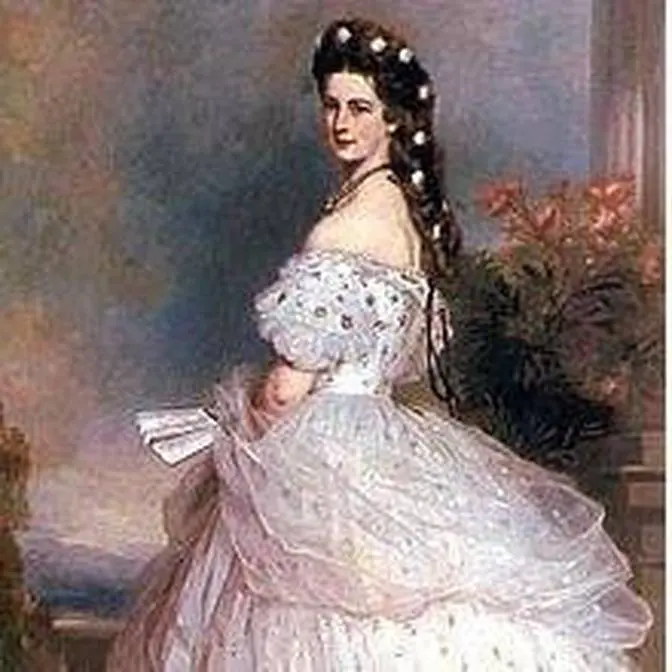
It was reconstructed after this famous painting of Marie Antoinette
and it shows a very different side of her compared to her chemise à la reine we will see later.
A robe de corps like this is heavy and highly impractical,
designed to occupy space and visually communicate wealth and status.
This is a real 18th century piece, a man's frock in black.
It's simple and dark, but elegant.
One of my favorite pieces was this three-piece men's suit with amazing silk embroidery.
Just look at the embroidery on the coat and the details,
especially around the cuffs, pockets and front edges.
The craftsmanship is just incredible.
I wish I could be at this level.
This 18th century white frock was hidden behind a mirror, but at least you can see both sides.
It's made out of beige silk, but that's all the information I could gather about it.
This wig is also replica.
There are also occasional rumors that Marie Antoinette may have used wigs or hair pieces
more often later on, possibly due to hair thinning.
But in general, these elaborate court hairstyles were often very normal for the period.
This blue dress is another replica and honestly my least favorite.
The lace looks cheap and the whole dress feels bland.
I know handmade lace is so rare these days,
but maybe higher quality lace would have helped.
On the bright side, the back is spectacular.
Here is another men's two-piece suit.
Check out the embroidery at the front.
I first thought it was painted, but getting closer I realized it was all embroidered again.
I love how detailed men's clothing was in this era.
This is a real 18th century dress.
Marie Antoinette popularized English styles like this and it's made from Spitalfield silk.
Spitalfield silk was a luxury patterned silk cloth
woven in the Spitalfields district of East London in the 18th century.
This workshop produced rich colored brocades and satins with elaborate floral designs,
prized by the British elites.
Another English dress from the 18th century,
with gorgeous pleats and stripped and floral pattern.
I couldn't find more information about the dress nor the museum from which it was on loan.
Right at the back of the exhibition hall,
there was a small cinema showing a Marie Antoinette ballet.
As I'm not a ballet fan, we left shortly after.
There was a small niche right before the cinema
showing off the dress Marie Antoinette could have worn in prison,
but as the drawing in the back is from the 19th century,
I'm not so sure about that reconstruction.
This men's frock is also an excellent garment of the 18th century
and it has, what I thought was fascinating, thread-wrapped buttons.
This robe de begeret, also made by Atelier Carreco,
is inspired by La Galerie de Maude from around 1778.
The name literally translates to shepherd's dress.
It's part of a late 18th century trend,
where aristocratic fashion borrowed this romantic idea of rural simplicity.
The chemise à la reine is one of my favorite here.
Even though it's a replica, I just love long, airy white dresses.
It's based on a famous 1783 portrait of Marie Antoinette
painted by Elisabeth Vigée Le Brun.
And that painting actually caused a huge scandal at the time,
because the chemise style was so simple and informal
that people thought she looked like she was basically posing in her underwear.
Another 18th century French dress.
This dress has a beautiful pleated wood-tool style back
and closes with buttons in front.
It's made of silk with stripped and floral pattern.
Here is another replica wig.
Women's hairstyles were often heavily constructed, especially at court.
And here are two fabric pieces for furniture.
This orange polished style cape is gorgeous with painted floral details.
The term doesn't mean it was literally made in Poland.
It was more about the style and the exotic look
that people associated with Eastern Europe.
This dress from Atelier Carreco is a robe a la francaise with wood-tool pleats.
They tried really hard with the dress and added embroidery frills and whatnot,
but I decided to add cheap rhinestones to it,
and it just ruined the whole dress for me.
All in all, I have to say it was a very small exhibition
and I loved seeing the original extant garment from the 18th century.
The price of 10 euros was totally fine for it though.
What I would have loved to see were maybe more extant garments
and better lights.
Also, maybe placing them against the wall on individual sockets
could have helped even more.
Thank you so much for watching.
I hope you enjoyed this video and see you again next time.
Bye bye!