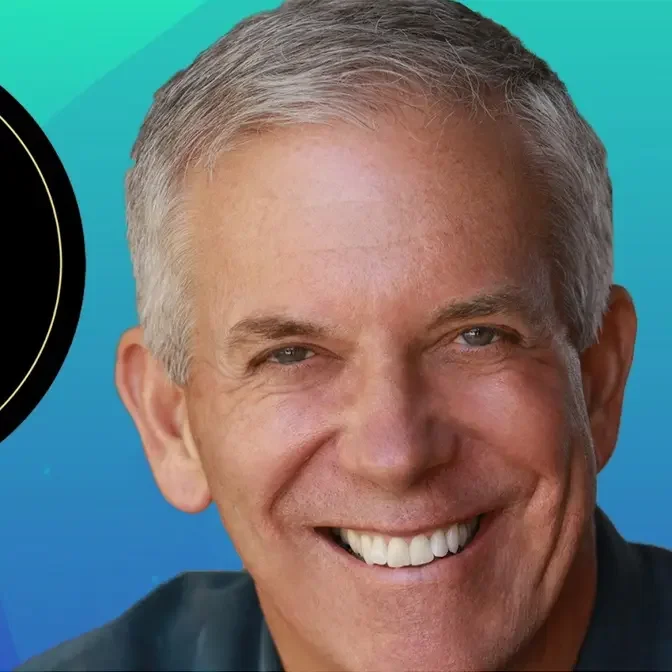
Discover California’s most overlooked and unforgettable wine regions in this episode of Pat Pattison’s Best of California. We explore the stories, flavors, and people behind some of the state’s most authentic wine destinations — perfect for travelers seeking something beyond the usual Napa and Sonoma routes. 🍷 Featured Wine Regions & Stops • Suisun Valley – A rising star with bold reds, family‑run vineyards, and a relaxed, uncrowded vibe • Riverbench Winery (Santa Maria Valley) – Sparkling wines, sustainable vineyards, and the charm of the Central Coast • Lodi Wine Education Center – Learn, taste, and explore one of California’s most diverse wine-growing regions • Orcutt Food Finds – Local favorites, small‑town flavors, and hidden culinary gems Whether you're planning your next California road trip, looking for senior‑friendly travel ideas, or simply love discovering new wine destinations, this episode is packed with insider tips, history, and delicious surprises. 📺 About the Show Pat Pattison’s Best of California is an Emmy‑nominated travel series celebrating the people, places, and stories that make the Golden State shine — with a special focus on accessible, meaningful travel for older adults. 👍 Like, subscribe, and share to support more hidden‑gem adventures across California.
Watch us in: Los Angeles KAZA (MeTV) Ch. 54 Sundays 7:30am
Welcome to Pat Pattison's Best of California. This episode, wine regions here in California,
the hidden gems. You know Napa, you know Sonoma, Mendocino, Temecula, but what about some of the
ones you don't know about? Los Angeles. I'm standing on an estate that was once a 700 acre vineyard
and is now the Duke Magian Wilderness. Beautiful stone barn that's been maintained by the
Crescenta Valley Historical Society. What about Sassoon Valley? Have you heard of it? It's the
number one wine region in the country now. Lodi. I didn't think of Lodi in wine, but now I do.
And how about Santa Maria Valley? We're going to go up to the Riverbench winery up there. We're
going to have food in Orcutt. We're going to have all sorts of surprises as we discover the best
hidden gem wine regions in California. Grab your goblet and let's get going.
I'm Pat Pattison and I love California.
Hi, this is Liza with the Best of California. I am here at Riverbench Winery with Grant
Harmsen. He is the Tasting Room Director. Now, tell me about that awesome job. Yeah, absolutely.
Glad to have you guys. Thanks for coming by today. I get the privilege of sharing all the great wines
that we craft here at Riverbench with our guests coming here from some of the local communities
like Santa Maria, Orcutt, Los Olivos, Santa Barbara, but also with folks that fly in from across the
country and even from all corners of the world. So it's a lot of fun getting to share our story
with everyone that shows up. And what is one of your favorite wines, kind of the wine you push
towards people that are coming out of the country? Absolutely. So great question. We actually have a
really unique variety in the vineyard called Pinot Meunier. And we were the first winery to plant that
here in Santa Barbara County back in 2014. And so that's something I love to share with
with guests because you can't find it everywhere. Tell us a little bit about the building behind it.
Yeah, so this beautiful building that now houses our tasting room and our offices was built in 1926
and 27. So a very early craftsman style home. And it was originally part of the 300 acre dairy ranch
that was run here. Very common for most of Santa Maria Valley was a lot of old dairy ranching.
And in 1973, the dairy ranch was converted to a vineyard. So we're one of the first five vineyards
here in Santa Maria Valley, a very historical property. And now we've got about 60 acres of
vines today. All right, so here we are. Tell me a little bit about these gorgeous vines.
Yeah, Block 37S here, one of the most historic sections of vines at Riverbench. Originally
planted as Cabernet Sauvignon ungrafted in 1973. We switched the vineyard over to Chardonnay in 1988
to kind of keep up with that trend. And rather than rip out every single vine and lose all of
that great history, we decided just to cut the tops off, plop on a little bit of Chardonnay
and meld those two vines. So yeah, it's got some great quality. We keep that nutrient uptake of
the old rootstock and it just pushes those Chardonnay vines right into production.
Exactly. Well, I love Chardonnay. So do you have some for us to try? We do. We've got a
little Chardonnay for everybody. Oh, perfect. Let's go give it a shot. Let's do it. All right.
Give us a tour. So we've got three of our most popular wines in front of us. In your glass is
far and away our best-selling wine. That's our One Palm Pinot Noir, named in honor of our One Palm
tree on the property. But just kind of that classic Santa Maria style of Pinot, a lot of
cherry fruit at the core. Generally one of our most fruit-forward Pinots, but it's going to have
a lot of great spice and a little bit tobacco, barrel spice in there. For me, a little bit of
black tea on the finish. All clones, six, six, seven of Pinot. So we keep all of our Pinots
as single clonal bottlings to add a little bit of nuance and diversity to our Pinot Noir lineup,
since we do kind of just work with that one red varietal. Yeah. All right. And what would you pair
this with? Oh, gosh. Eating wise? Well, of course, the obvious answer here in Santa Maria would be
tri-tip. We've got our classic style of Santa Maria barbecue here. So typically I don't always
recommend Pinot Noir to pair with beef, but there's something magical that happens here in
Santa Maria. And as I like to say, if it grows together, it goes together. Love that. Yeah.
We also have a sparkling wine here that I've got in the glass. This is our Cork Jumper Cuvée.
It's our little homage to the great wines of Champagne. It's going to be an even blend between
Chardonnay, Pinot Noir, and Pinot Meunier, which are your three main grapes they use over in Champagne
France. So we call our wines, you know, sparkling, sparkling wine from California. Well, I can respect
that. We do make it in the same exact method as they do it in Champagne, the traditional method.
So it's a double fermentation. The first fermentation makes wine. The second fermentation
makes it sparkling. And what's neat about the traditional method of sparkling wine is that
that secondary fermentation happens in every single bottle. So this wine was made in this
bottle, which is pretty cool. There's not a lot of wines that you can say that about. Fantastic.
Well, cheers. Cheers. Thank you so much. You're very welcome. We're happy to have you.
Look forward to seeing all of you up here at Riverbench sometime soon.
So we're at Kay's Country Kitchen. We're in Orcutt. I ordered the veggie omelette. Jeff
got the Mediterranean Scramble. I got fruit instead of hash browns. But just so I have
something to look forward to, I've also got a short stack of pancakes. Great coffee.
I'm an orange juice nut, so I love to check out the orange juice. Fresh orange juice. Fresh
squeezed orange juice. One of my favorite things in the morning. Old Town Orcutt. You got to check
it out when you're here in the Santa Maria Valley. We are in Lodi wine country, and we are at ground
zero of all the wine brands. And I'm with Paul Marsh. Our main purpose is to make sure that
we help showcase the grapes of Lodi and the producers in Lodi. This way, we've got a great
pull of everybody around. 700 independent growers fund us. Wait a minute. What? A great pull of 700
independent growers that fund us and keep our lights on so we can bang that drum that is Lodi
wine for everybody. What do you recommend people to get started here in Lodi? Is there a certain
wine that you prefer that is a way to experience Lodi? First of all, they're doing the perfect
part. They're doing research and development at this point. There we go. But, you know,
we're known for Zinfandel. The Gold Rush happened, and so many grapes wound up out here.
You know, it's a great place to really experiment. And with 136 different grape varietals that go
into the bottle commercially in Lodi, there's something for everybody. The Lodi Wine Center
is amazing. You gotta check this place out when you're next in Lodi. Tell me where we are. We are
at Appalachian Lodi Wine and Roses Resort and Spa. What are some of the amenities people can expect
when they come here? So this is a 66-room luxury boutique hotel that also features an award-winning
spa. No big deal. Yes, and an amazing restaurant and an amazing cafe. And Appalachian Lodi is new.
Wine and Roses has been around for 25 years, but now it's Appalachian Lodi, which it brings in
Chef Charlie Palmer's influence to the cuisine of the restaurant and also the kind of culinary
forward approach to this hotel. But I love to buy sourdough bread here, and their pastries are
amazing at the cafe. And they're attached to the Wine and Visitors Center, so that's not a bad
thing either. Well, when you're in Lodi, come check it out, guys. I have just been wandering around in awe.
I already sent a video to my boyfriend of this garden saying, see, this is what I'm trying to
make our yard look like. I mean, look at all of these. We've got foxgloves. We've got sweet peas.
We've got everything here. It's beautiful. So Oricon, this is incredible. The Pizzeria of
I had the stone fruit pizza. Jeff, our illustrious cameraman,
had the three-beard knotty oak. Incredible. You've got to check out this place, Oricon.
Back at the Jelly Belly Factory with my good friend John Jamieson. And John,
thanks for having us back. Oh, it seems like it was just yesterday that you were here.
Oh, thank you. Oh my gosh, I love this guy. So you're going to show us the new museum. Yes. And
we're going to do the chocolate and wine pairing. We're also going to do the train ride today. Train
ride. Don't forget the train. So much happens when you go away. Well, let's go check it out.
And how long has the factory been in this location? So the factory's been here since 1986.
The Visitors Center was first built in 1999. Is it safe to say this is the factory that Ronald
Reagan built? Well, Ronald Reagan certainly got... I mean, that would be the 80s. Yeah,
the early 80s. Yeah. So we were in Oakland from 1922 until 1986 when we built this facility.
So here's our museum. Wow, so nice. Look at that.
I love these giant beans. Now, pop quiz. What flavor is that one? That one's Juicy Pear and
Green Apple, Strawberry Cheesecake, Toasted Marshmallow, Berry Cherry, Mango. I mean,
they're unlimited. Wow. And there's an olive? No, you just need to put your glasses down.
That's a bean in front of the other beans. Oh my God, look at that. Maybe I want a martini.
This is the family. Yeah, so throughout, we talk about the history of the family starting in 1869
through today. And we also show the evolution of candy making from more of a hand-cranked way
of making candy to more automation. So let's check that out. So here's an example of a cooling table
and also some different equipment. And so candy would be fed through the equipment
and we could create different types of candies.
So John, I remember to referring to the tumblers. The pans. Pans. Yes. Tumbling the beans as kind
of looking like a cement mixer. What's the deal? Well, when our owner first needed a pan,
he didn't have the money, he didn't have the pan. Right. So he actually had a cement mixer. Wow. And
these had built adobe bricks for the family for a house. From there, then we got new pans. Right.
So this is the actual. This is the actual one. Oh my God. This is the actual one.
Tell us the importance of Ronald Reagan and the history of Jelly Beans. So we started sending
Governor Reagan at the time back in the 60s. We were sending him our jelly beans. These were our
gourmet jelly beans, but they weren't quite yet a jelly belt. Okay. So then when he was running for
president first in 1976, that's exactly the year that we invented Jelly Belly. So we
switched him over from our gourmet jelly beans to Jelly Belly and he just loved it. And of course,
when he became then the president of the United States, he asked for a red, white and blue mix.
And we didn't have the blue, but we made blueberry. We had the blue from the flag
and we made a red, white and blue mix that we passed out to many of his VIPs on inauguration
day. And when he was the president, they were on airports. They were everywhere. On Marine One,
there's a little holder that was built. So his jar of jelly beans could go. Jelly Belly could
go right in there. When we think of Jelly Belly, we think of jelly beans, but they also make
chocolate here at the visitor center and they have a chocolate and wine experience. John,
tell us what we're going to do here. So what we're going to do today is I'm going to set up
your pairings for six wines. We're going to have six wines. We're going to be paired with six
chocolates. So that's the experience. And then when the guests do purchase the experience,
they also get to take home a Jelly Belly wine glass. Got to have a Jelly Belly wine glass.
And is it true that these are mostly local wines? These are all local wines.
Everything is a state grown in the Sassoon Valley.
We paired this with a dark chocolate truffle, dark chocolate, corn syrup,
butter and cream. Four secret ingredients. Oh, that's great. That's really good.
Now the last one is going to be served in a chocolate shot glass.
Oh, that's a classic dessert. Oh, my God. Cheers, you guys.
John, I'm Jelly Bellied up. This is incredible. Thank you so much. Thanks for all of that. We
appreciate it. That's so great. So when you're in Fairfield, Jelly Belly factory tour,
chocolate and wine experience, the museum. So much to do here in Fairfield.
So excited. We're in Fairfield and I met the famous Caymus Sassoon, right? Right. And I'm with
Chris. Last name again? Vitiello. Vitiello. And what's your title here, Chris? I am the Global
Ambassador. Global Ambassador. And so tell me, I know about Caymus Napa. Tell me what's going on
here in Fairfield. So we have great things happening here in Fairfield. So as you know,
Caymus Napa was super famous in the Napa Valley. And then the Wagners were always looking around
the state of California for other places to farm. And we've had operations in Monterey.
And then around 2014, we became aware of the quality of the grapes here right next door to
Napa and the proximity and the quality and the similarity of soil types and weather patterns.
It was just a natural fit for us. Wow. Wow. And explain to me, you mentioned an AVA.
Tell me what an AVA is. So AVA means literally American Viticultural Area. And those are like
areas that are designated by the state of California and the United States as
areas that are unique in some way to produce wine and be distinct from other areas or
general California designation. And so basically you're saying this part of Fairfield will always
be like this? It will always be. Wow. Tell me a little bit about the family. Multi-generational here in
this area of Napa, right next door over the ridge. And always vintners? Always farmers.
He still sees himself today as a farmer first and a winemaker second. Okay. In terms of a family-owned
and operated made in California company, you can't really beat this. You can't really beat it. And people think,
I think that they're less involved than they are, but they're here every single day.
They're making wines. They're doing experimental wines in different grape varieties and sitting
down with us in the tasting room and tasting it and talking about it. Out in the, we'll run into
them in the fields. How great. Unbelievable. Who's the architect of this building? BCJ was the architect
and they've designed Apple stores around the state. Wow. So this is the main tasting area.
So when people come to this facility, what are some of the things they can do?
So you can just walk in if you want to do just by the glass and that would be just in this middle
area here. And you can come right up to a tasting bar and taste any of the wines by the glass.
If you wanted to sit for the full 75 minute tasting experience, you'd book on talk or call
us directly, get a dedicated wine educator, and they would sit you down and go through the wines
in the family stores. Wow. Do people also just walk around? You take them around? Is it a guided
tour? Yeah. I mean, we can walk the property. So any of our wine educators can walk around the
properties and show them what we have going and going and growing here. So we try to grow a little
bit of everything that people grow in the area because Sassoon Valley is a diverse agricultural
region, unlike Napa and Sonoma, which are pretty much monocultures of grapes. So here we try to
plant a little bit of everything that's going on. I think that's what's so cool about Fairfield
is there's so much diversity in terms of the agriculture and the businesses. Yeah. Everything
from olive oil to jelly beans. Yeah. Where do they grow the jelly? No, they're not. They're not
doing any jelly bean planting. You were talking about how great a community it is in terms of the
sharing and talk about that. Yeah, it really is a close, close knit kind of small family community
and they'll all get together and share equipment. And there's one winery, Wooden Valley
Winery, that does most of the bottling for everybody. And they're just, you know,
you know, you just let them know when you need to do it. And at the where you were at the olive oil
place, they press the oil for everyone in the community. So everyone's oil gets done there
pretty much. Well, Chris, thank you. Thank you. You got to come visit this place in Fairfield
sometime soon. Unbelievable. I hope you enjoyed our best hidden gem wine regions of California.
I know I had a ball. And come check out this amazing, amazing Duke Major Wilderness
and the Crescenta Valley Historical Society that maintains this. You could even buy some
wine on their website. Check it out. See you next time. Talk to you soon.
I'm Pat Patterson and I love California.